Understanding opposites Math Worksheets for Ages 6-7
3 filtered results
-
From - To
"Understanding Opposites Math Worksheets for Ages 6-7" provide engaging and educational materials to help young learners grasp the fundamental concept of opposites. These thoughtfully designed worksheets help kids develop critical thinking and comparison skills while enhancing their understanding of everyday math. Combining colorful illustrations and fun activities, the worksheets keep children entertained while they learn. Perfect for classroom or home use, each worksheet encourages kids to identify, compare, and contrast items, boosting their observational and analytical abilities. Ideal for ages 6-7, these resources foster a love for learning while laying a solid foundation for future math success.
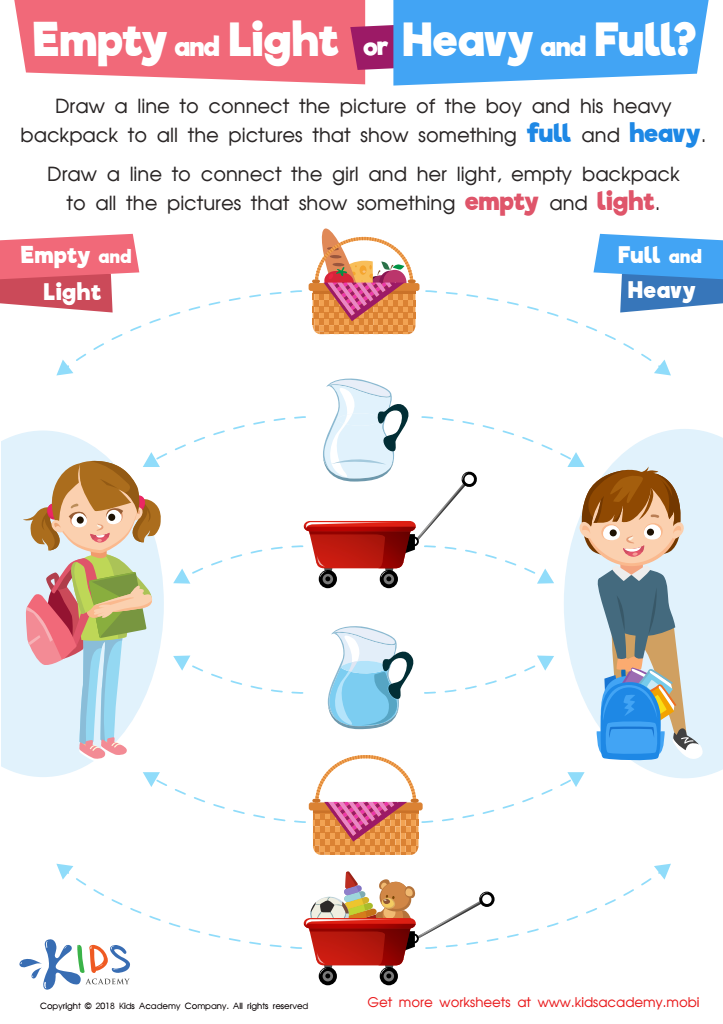
Empty and Light or Heavy and Full? Worksheet
 Assign to My Students
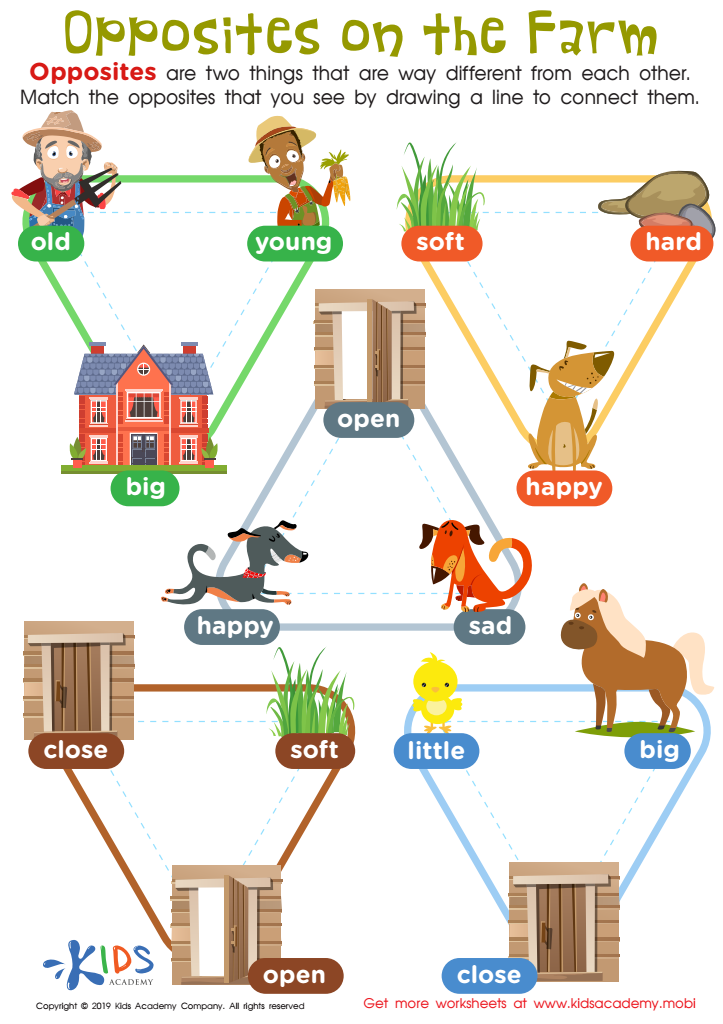
Opposites on the Farm Worksheet
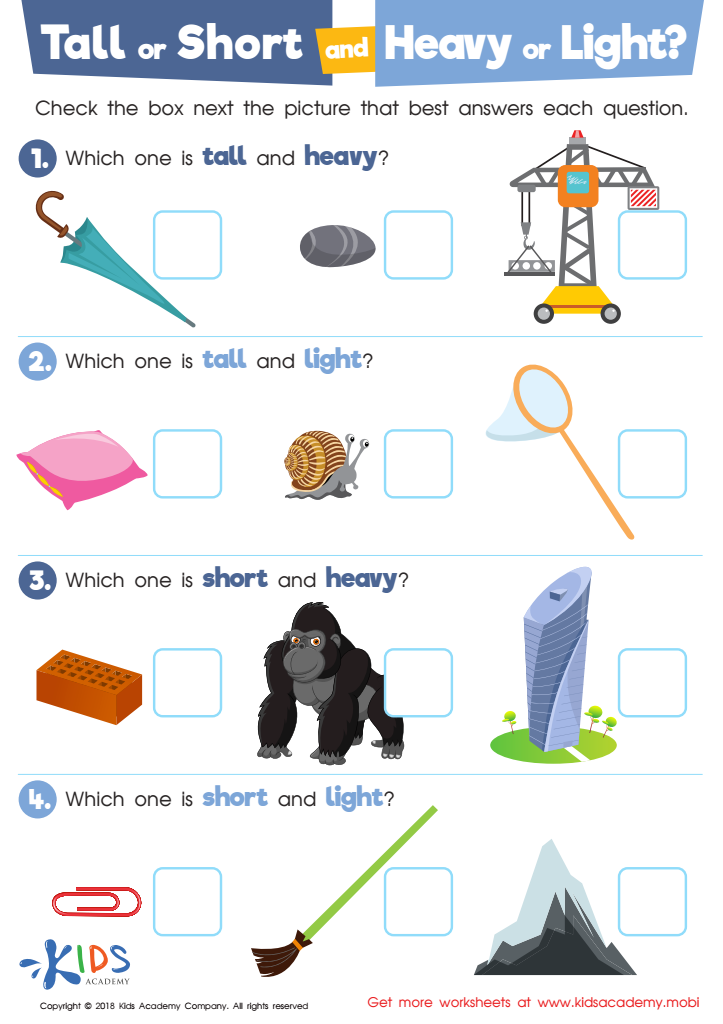
Tall or Short and Heavy or Light? Worksheet





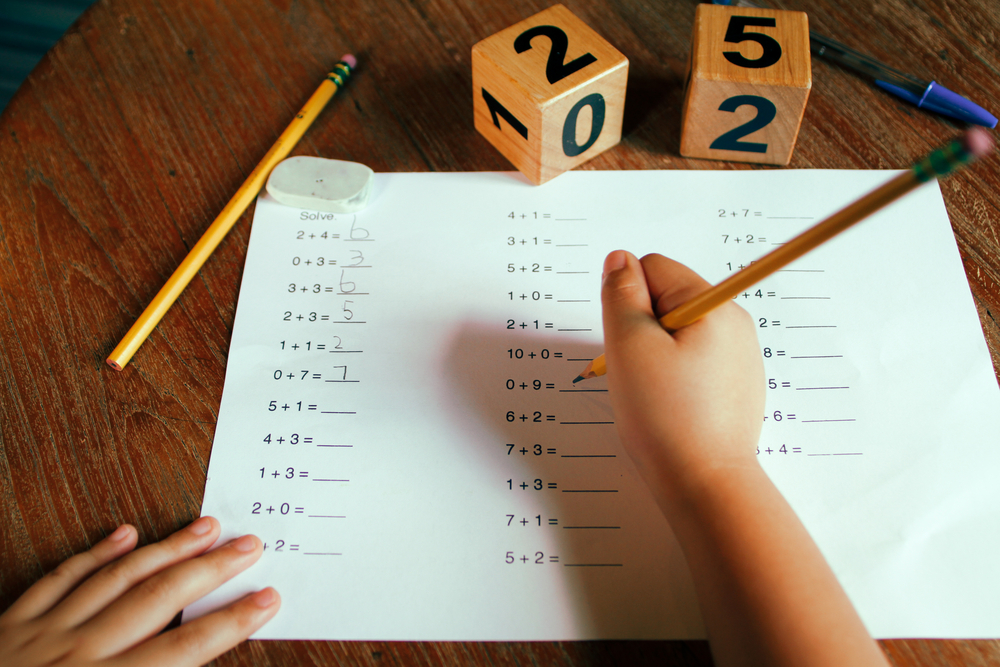
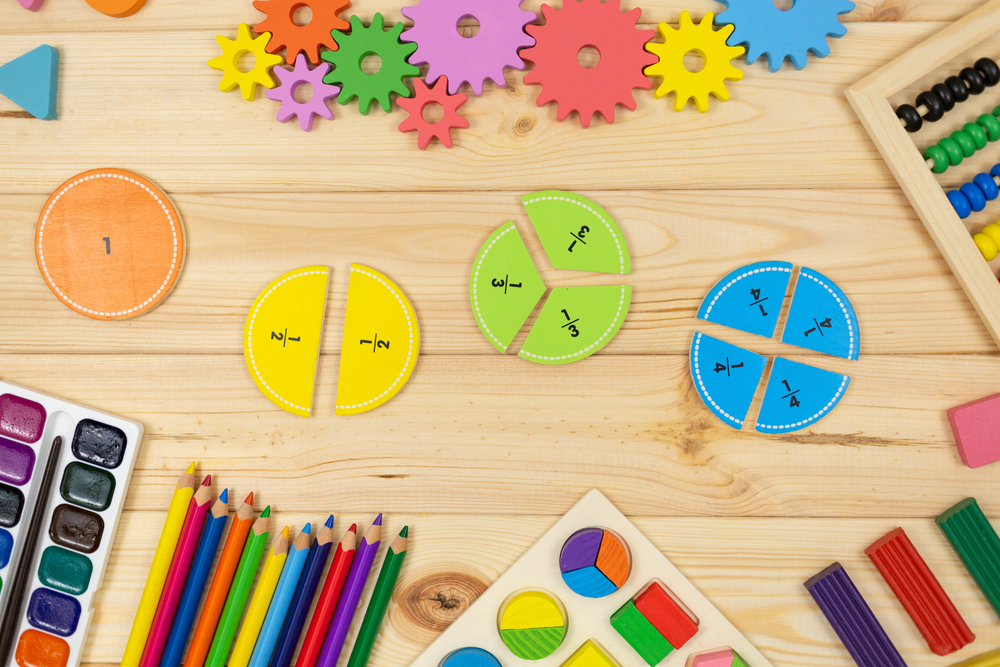

Understanding opposites in math, often referred to as oppositional or inverse relationships, is crucial for children aged 6-7 as it lays the groundwork for more advanced mathematical concepts. At this age, kids are typically introduced to basic arithmetic operations like addition and subtraction, and developing an understanding of opposites can significantly aid their comprehension of these operations.
First, recognizing opposites helps children understand the concept of balance, which is fundamental in math. For instance, knowing that subtraction undoes addition (and vice versa) helps them grasp how to reverse or check their work, fostering accuracy and confidence. This foundational understanding will be vital when they encounter more complex operations in the future.
Second, understanding opposites enhances problem-solving skills. Children learn to think critically and view problems from different perspectives. For example, if 7 + 3 = 10, then understanding that 10 - 7 = 3 reinforces their learning and promotes mental flexibility.
Lastly, this concept supports cognitive development by encouraging logical and analytical thinking. It helps children to develop greater number sense and reinforces memory and recall through patterns and relationships in numbers.
In summary, parents and teachers should emphasize understanding opposites in math for children aged 6-7 as it strengthens their foundational math skills, aids in problem-solving, and supports overall cognitive development.








