
Understanding time Math Worksheets for Ages 6-7
10 filtered results
Difficulty Level
Grade
Age
-
From - To
Subject
Activity
Standards
Unlock the magic of time-telling with our "Understanding Time Math Worksheets for Ages 6-7"! These engaging worksheets are designed to help young learners grasp fundamental time concepts, including reading analog and digital clocks, understanding hours and minutes, and solving time-based problems. Each colorful and fun-filled activity encourages kids to practice and reinforce their time-telling skills through exercises crafted by educational experts. Perfect for use at home or in the classroom, our worksheets provide essential practice that will set your child on the path to mastering this important skill effortlessly and confidently. Time for fun learning!
Favorites
With answer key
Interactive
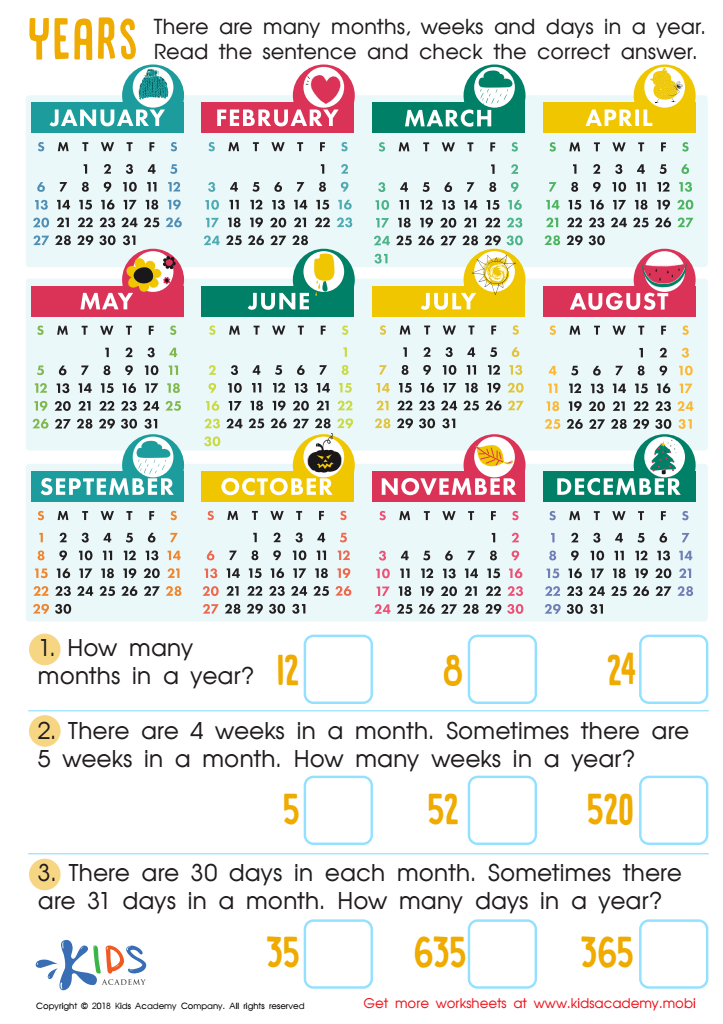
Years Worksheet
This worksheet is a great way to test your children's knowledge of the calendar. Ask them if they can name the days of the week and months in a year. Read and discuss the questions with them and help them find the right answers. Encourage them to check their answers.
 Assign to My Students
Years Worksheet
Worksheet
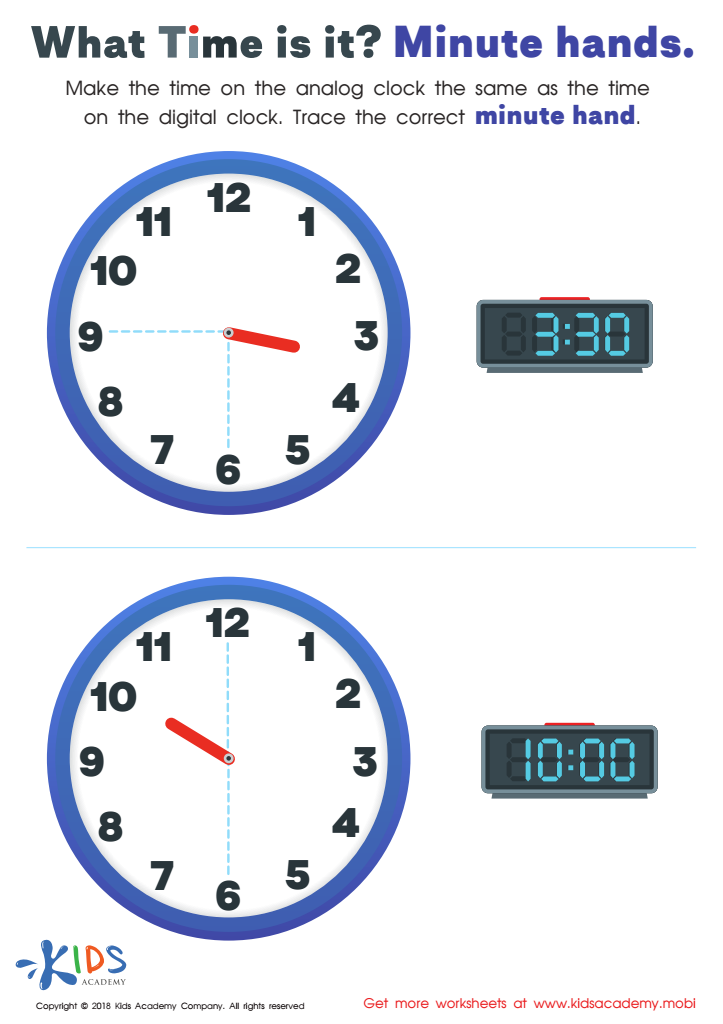
What Time Is it? Minute Hands Worksheet
Help your kids telling time with the minute hand correctly with this tracing sheet. Trace the correct minute hand to make the time on the analog clock the same as the time on the digital clock. Give them a pictured demonstration of how to do it and you'll be all set!
What Time Is it? Minute Hands Worksheet
Worksheet
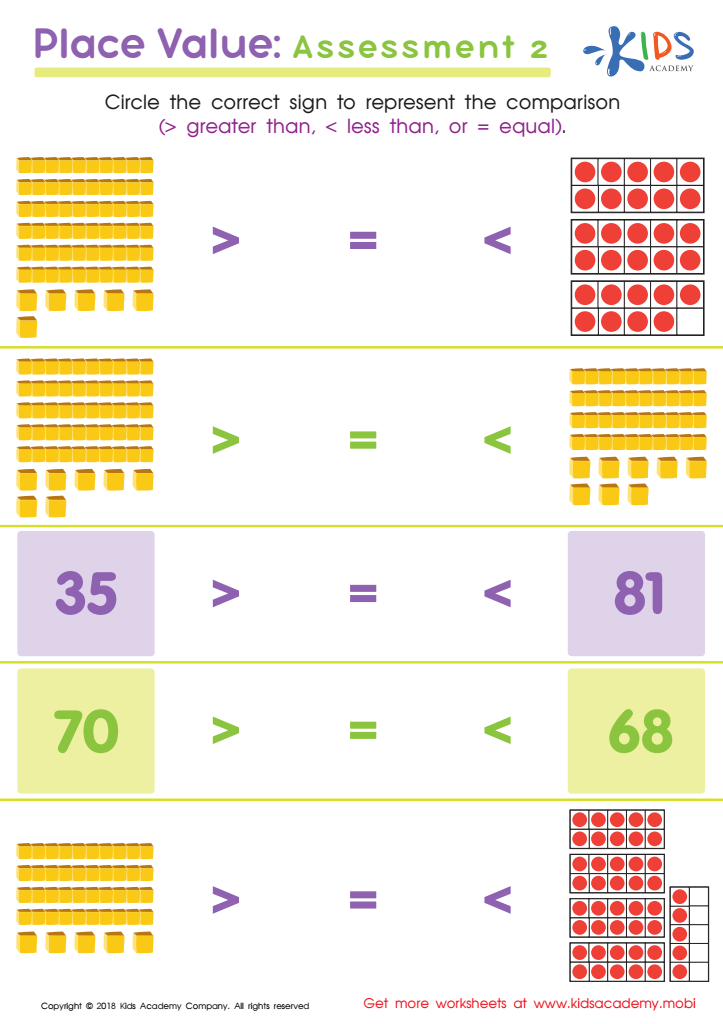
Place Value: Assessment 2 Worksheet
Children must learn to recognize the value of numbers and break them into chunks of ten. They must also be able to compare numbers to know if one is greater, less than or equal to another. The Place Value Assessment PDF is a great tool to assess their skills and identify what requires more practice.
Place Value: Assessment 2 Worksheet
Worksheet
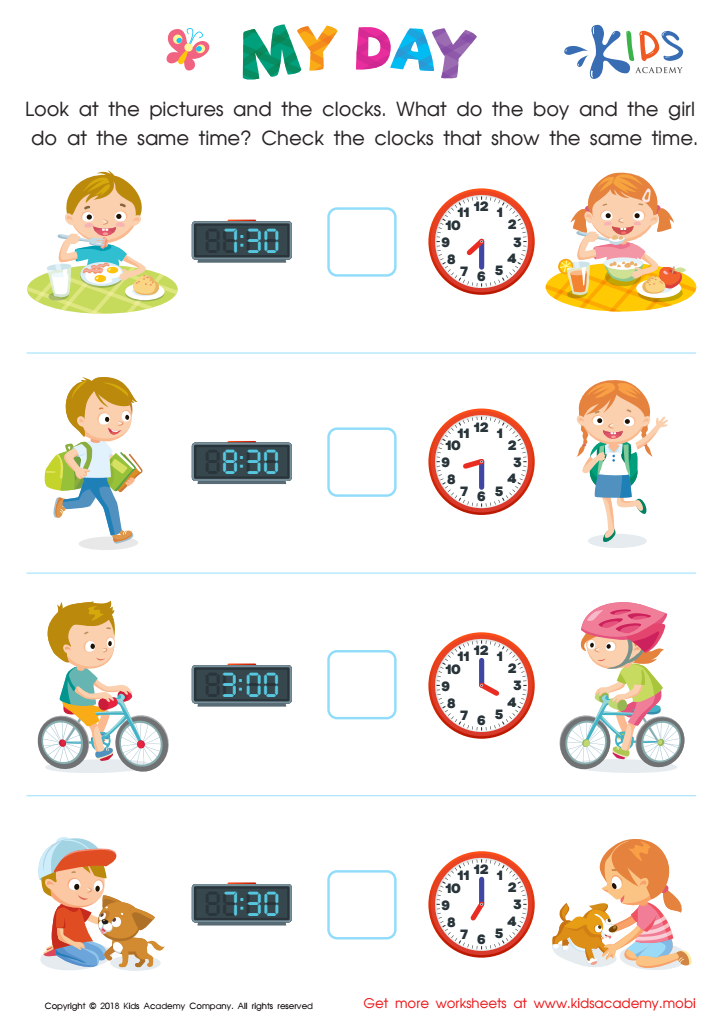
My Day Worksheet
Show your students the pictures and clocks in the colorful worksheet. Ask what the boy and girl are doing in each, then what time the clocks show. Finally, ask what activities they both do at the same time. Help them check the clocks showing the same time in both pictures.
My Day Worksheet
Worksheet
Join Kids Academy for Free
Who is primarily going to use this learning content?





Understanding time is a foundational math skill that carries immense cognitive and practical benefits for children aged 6-7. At this early stage, a child’s brain is rapidly developing the capacity for abstract thinking and logical reasoning. Learning to tell time hones their ability to understand concepts of before, after, and the sequence of events—key building blocks for more advanced math and daily decision-making.
Practically, knowing how to read a clock fosters independence and responsibility. Children become more adept at managing their own schedules, such as knowing when it’s time for school, activities, or bedtime. This skill is not only crucial for their current daily routines but sets a precedent for lifelong time-management skills.
From an educational standpoint, telling time involves both numerical understanding and comprehension of spatial arrangements, as the clocks combine number sequences and angular measures. This multidisciplinary approach reinforces math proficiency broadly.
Moreover, time-telling aids in developing patience and the concept of future planning. As children comprehend deadlines and duration, they transform vague notions of waiting into clear, manageable slots. Ultimately, parents and teachers should prioritize teaching time to build confidence in math, enhance daily functionality, and cultivate essential life skills.








