Reading clocks Time Worksheets for Ages 6-7
3 filtered results
-
From - To
Discover our extensive collection of reading clocks time worksheets designed for children ages 6-7. These engaging and interactive activities help young learners develop essential time-telling skills through colorful visuals and fun exercises. With a variety of worksheets focusing on analog and digital clocks, kids will gain confidence in understanding hours and minutes. Our printable resources are perfect for both classroom and home learning settings, providing countless opportunities for practice and reinforcement. Enhance your child's math abilities and make learning about time enjoyable with our thoughtfully created worksheets. Start helping your child master reading clocks today!
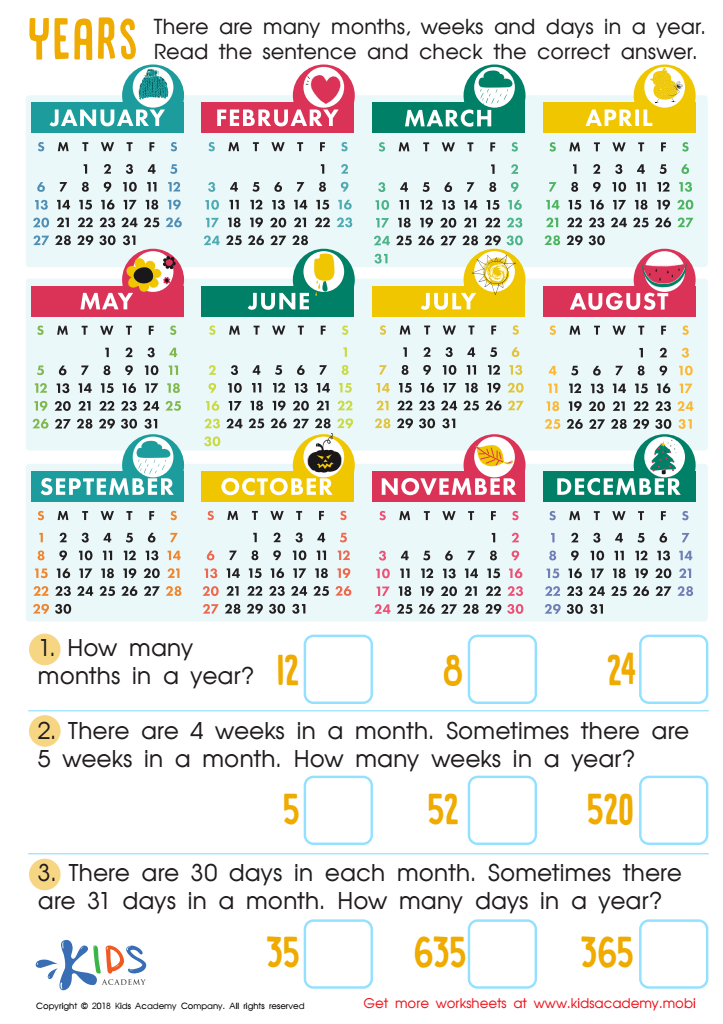
Years Worksheet
 Assign to My Students
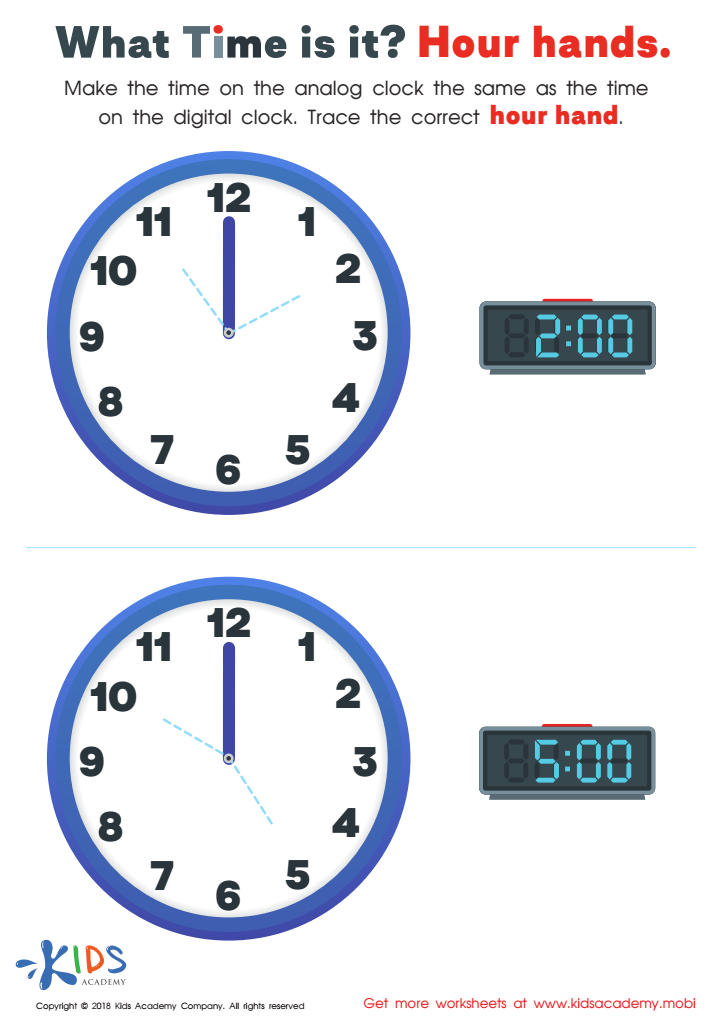
What Time Is it? Hour Hands Worksheet
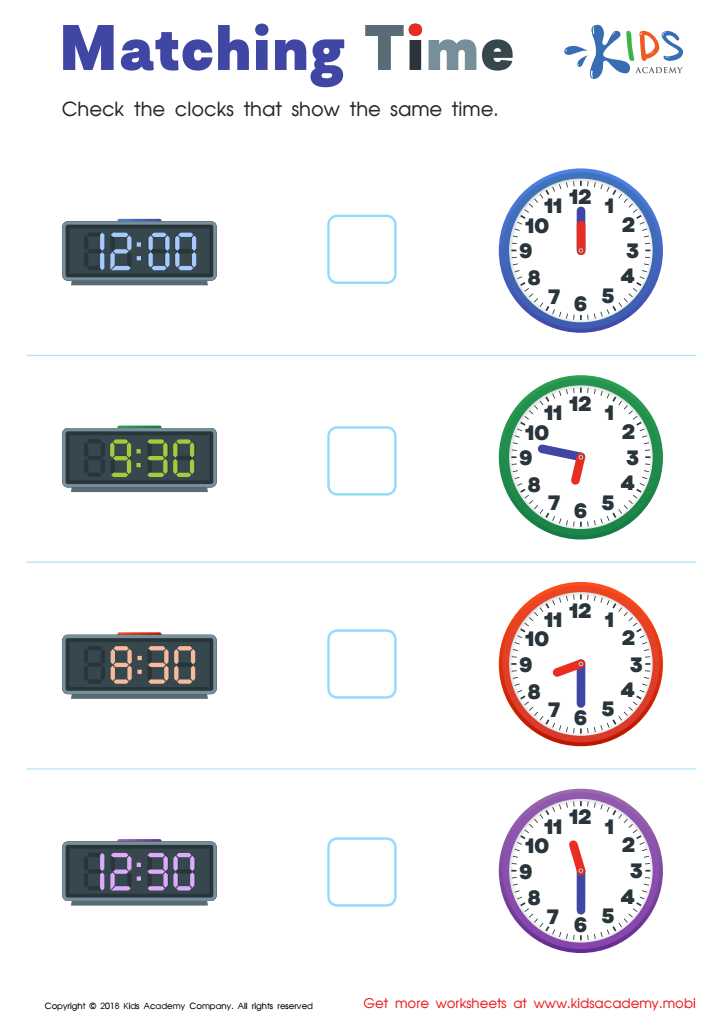
Matching Time Worksheet








Understanding how to read clocks and tell time is a vital skill for children ages 6-7, as it lays the foundation for various aspects of their daily lives. First and foremost, it fosters independence. By learning to tell time, children can manage their schedules, understand routines, and develop better awareness of time management. This skill also enhances critical thinking and cognitive development, as children engage in counting, recognizing patterns, and making predictions based on time increments.
Additionally, reading clocks connects to math skills, reinforcing concepts such as addition and subtraction when calculating durations. It also supports language development, as children learn to articulate time-related vocabulary, fostering effective communication skills.
Moreover, telling time can serve as a bridge for real-world applications, helping them understand the importance of punctuality and responsibility. As they transition to more structured environments, like school or extracurricular activities, the ability to read time becomes increasingly essential.
For these reasons, parents and teachers should prioritize teaching children to read clocks, nurturing a sense of autonomy, reinforcing academic concepts, and preparing them for future challenges in both their personal and educational lives. Invest time in this foundational skill, and children will reap the lifelong benefits.








