Contextual understanding Building Vocabulary Worksheets for Ages 6-7
6 filtered results
-
From - To
Enhance your child's vocabulary with our specially designed Contextual Understanding Worksheets for ages 6-7. These engaging activities encourage young learners to explore words within various contexts, fostering a deeper comprehension of language. Our worksheets are crafted to help children make connections between words and their meanings through activities like reading passages and answering comprehension questions. As kids practice contextual clues, they develop critical thinking skills necessary for effective communication. Ideal for both classroom use and at-home learning, these resources are perfect for building a solid vocabulary foundation. Empower your child's language journey today with our fun and interactive worksheets!
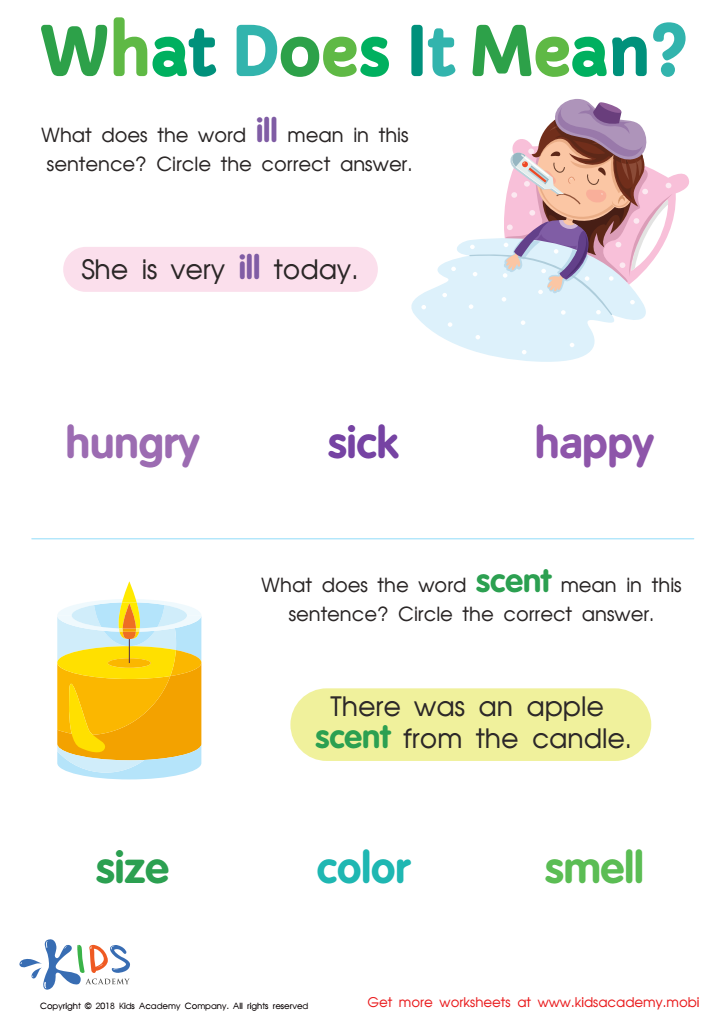
What Does It Mean? Worksheet
 Assign to My Students











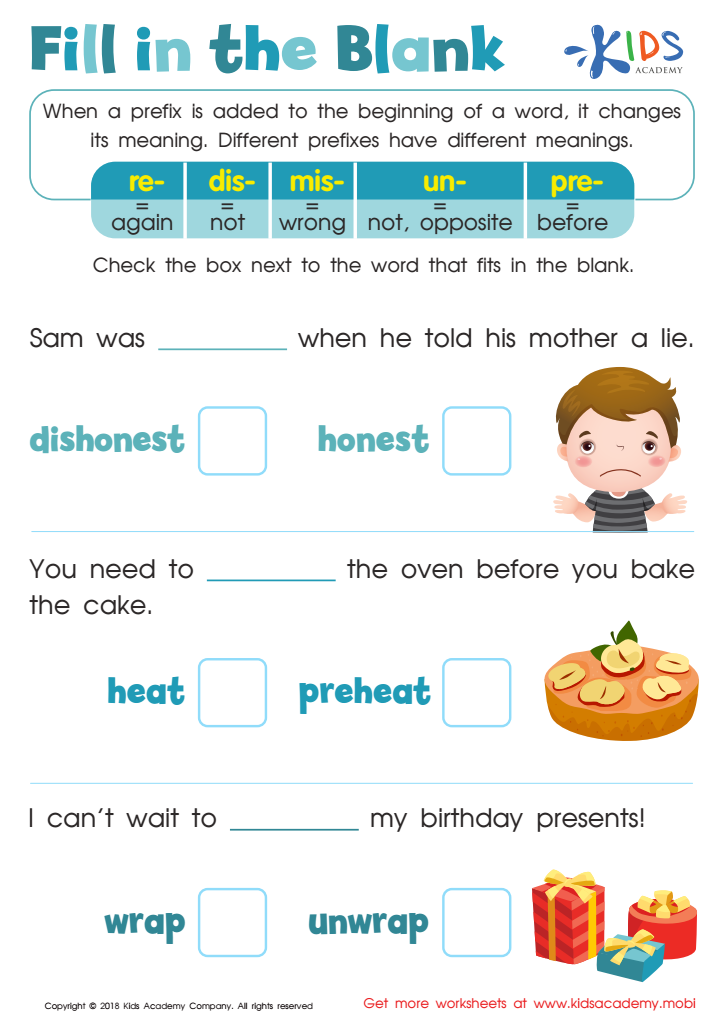
Reading: Fill in the Blank Worksheet
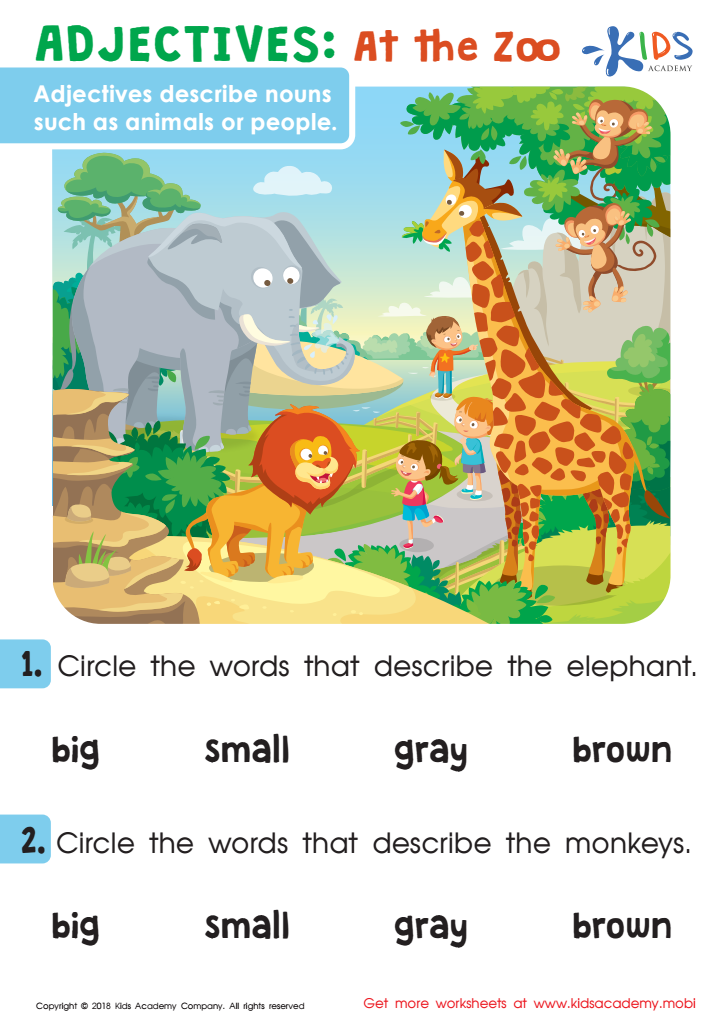
Adjectives: At The Zoo Worksheet
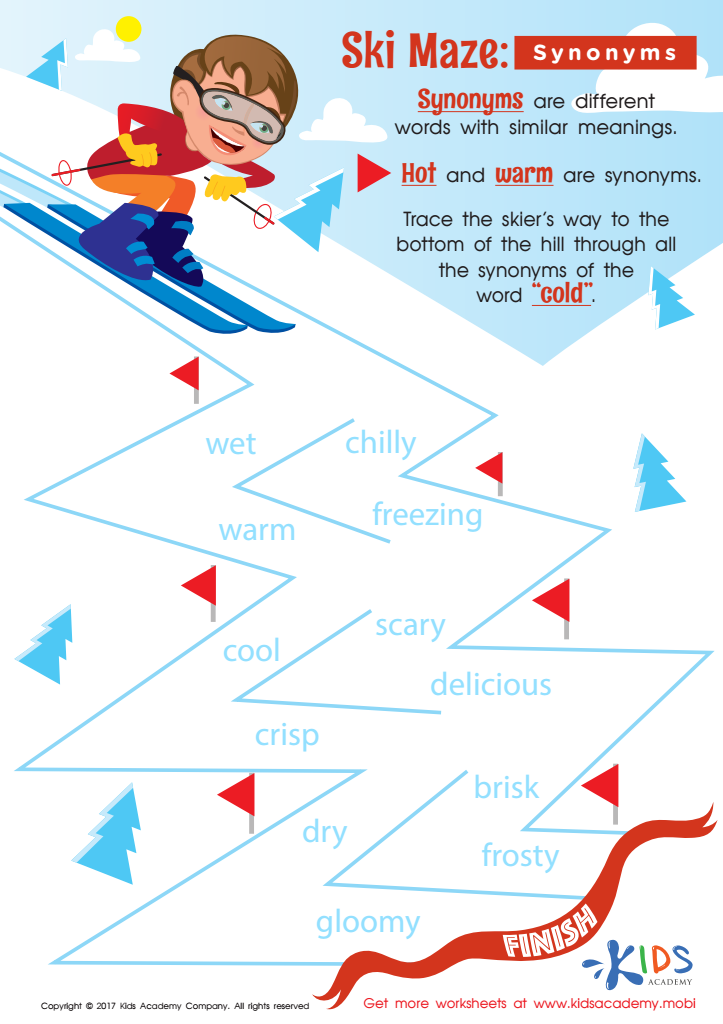
Free Printable Synonym Worksheet
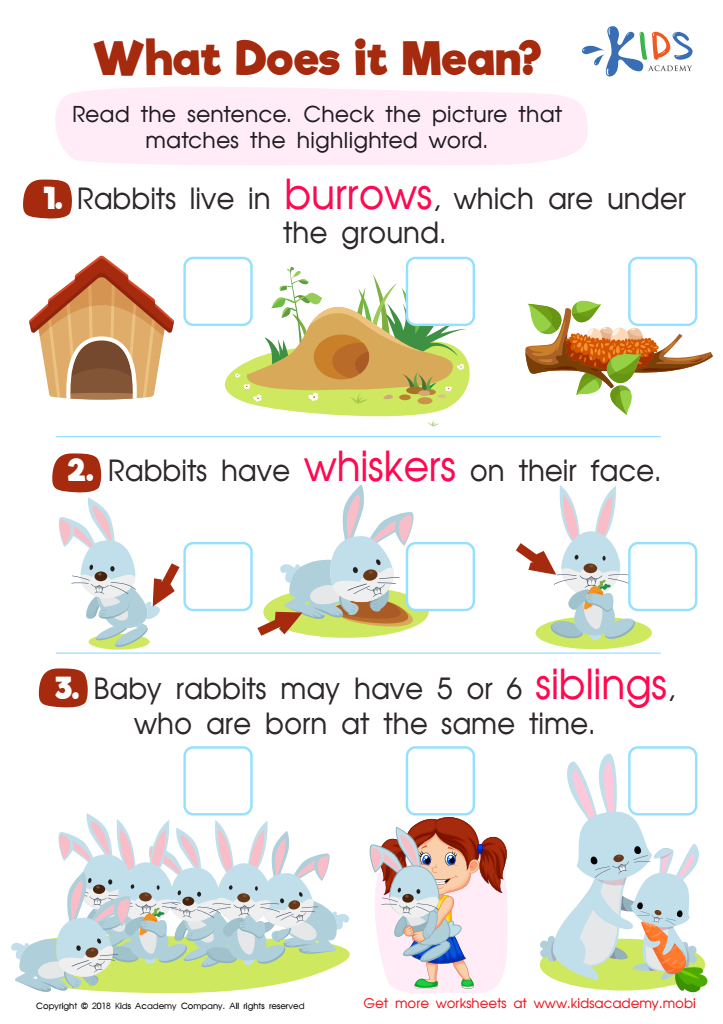
What Does It Mean? Worksheet
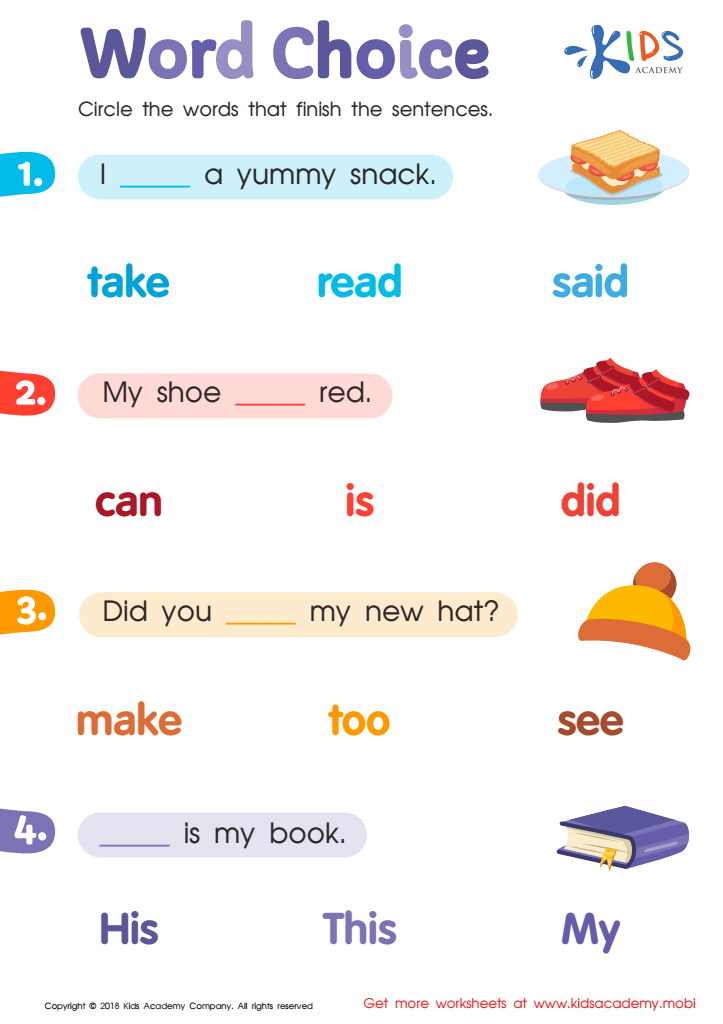
Word Choice Worksheet








For children aged 6 to 7, contextual understanding and vocabulary building are crucial components of their literacy development. At this stage, children are transitioning from learning to read to reading to learn. Developing strong contextual understanding helps them make connections between words and their meanings, enabling them to interpret the text more effectively. When children can grasp the context in which a word is used, they are better equipped to comprehend stories, instructions, and information, leading to improved academic performance across subjects.
Building vocabulary at this age not only expands children’s language skills but also enhances their ability to express themselves clearly, fostering confidence in communication. A rich vocabulary allows children to articulate their thoughts, feelings, and ideas, which is essential for developing social skills and engaging in classroom discussions.
Additionally, a strong vocabulary lays the foundation for critical thinking and problem-solving skills. When parents and teachers prioritize contextual understanding and vocabulary-building activities, such as interactive reading, word games, and discussions about everyday experiences, they help cultivate lifelong learners. Ultimately, investing in these skills enables children to navigate the world around them more effectively and sets them on a path of success in literacy and beyond.








