Animal identification Reading Worksheets for Ages 6-7
4 filtered results
-
From - To
Introduce young learners to the world of animals with our "Animal Identification Reading Worksheets for Ages 6-7." Tailored to spark curiosity and enhance reading skills, these engaging worksheets help first and second graders learn to identify various animals while boosting their comprehension and vocabulary. Each worksheet features vibrant illustrations and fun activities designed to keep children engaged as they match names with animal pictures and fascinating facts. Perfect for classroom use or at-home practice, these resources foster a love for reading and a passion for wildlife in a playful, educational manner. Transform reading time into an exciting adventure today!
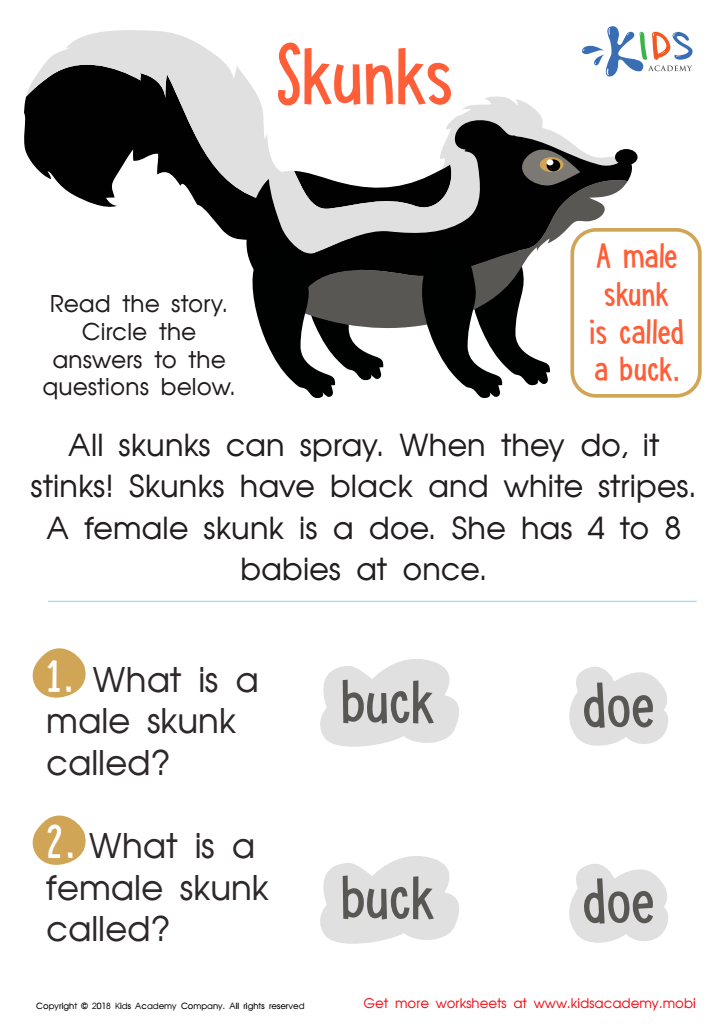
Skunks Worksheet
 Assign to My Students
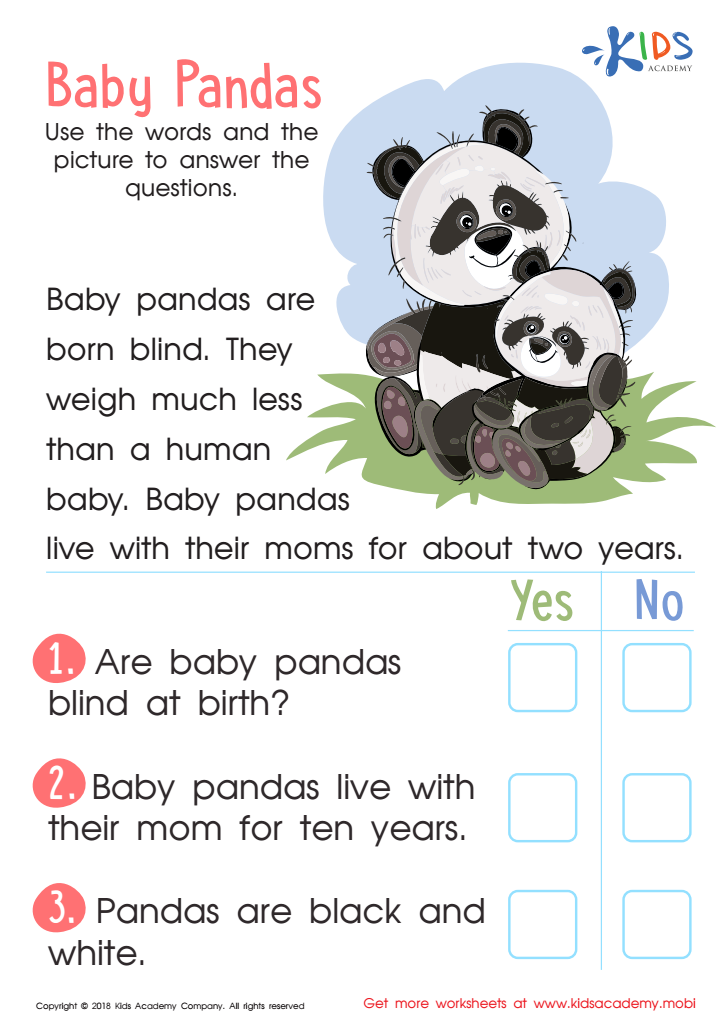
Baby Pandas Worksheet
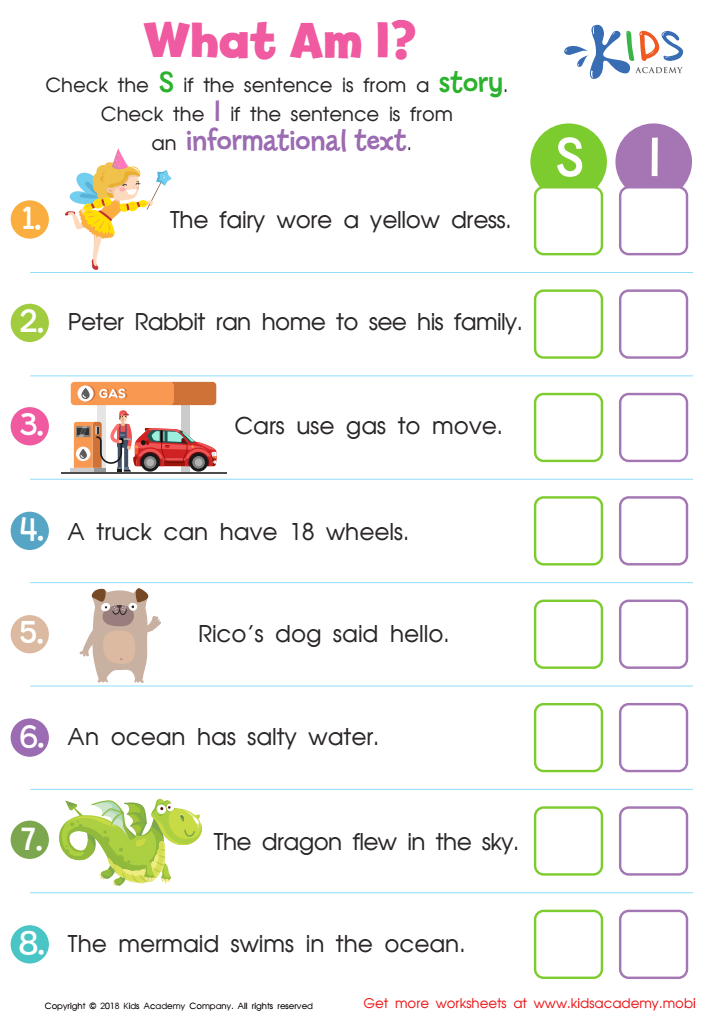
What Am I? Worksheet
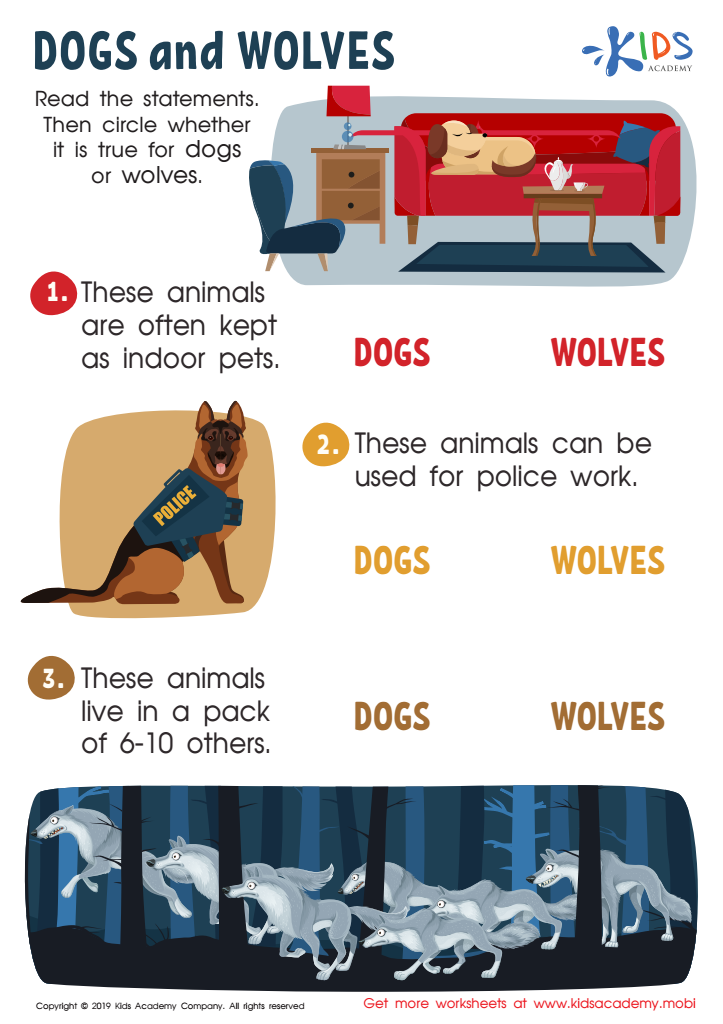
Dogs and Wolves Worksheet







Animal identification reading for children aged 6-7 is essential for multiple reasons it cultivates critical early developmental skills. First, understanding and recognizing different animals and their characteristics enhances a child's vocabulary and language abilities. Young readers expand their descriptive language, learning terms related to size, color, habitat, and behavior. This enriches their ability to articulate thoughts clearly.
Second, it fosters a sense of curiosity and love for nature, encouraging a broader interest in the natural world. By sparking children’s interest in animals, teachers and parents help them develop observation skills and an appreciation for biodiversity. This can foster a lifelong respect for conservation and animal rights, shaping more environmentally conscious individuals.
Third, animal identification books can serve as an excellent tool for integrating subjects like science, geography, and reading. They provide interdisciplinary learning experiences that make concepts come to life, bridging learning with enjoyable activities.
Lastly, interactive reading about animals is engaging and fun, helping to nurture a positive attitude towards reading. In an age where digital distractions abound, the excitement of learning about fascinating creatures can make children more inclined to pick up a book and read. By prioritizing animal identification reading, parents and teachers invest in well-rounded, motivated learners.








