Attention to Detail Reading Worksheets for Ages 6-7
6 filtered results
-
From - To
Unlock the potential in young readers with our "Attention to Detail Reading Worksheets for Ages 6-7." Specially crafted for first and second graders, these engaging worksheets focus on improving children's ability to notice specific details, enhancing their comprehension and retention skills. Each activity combines fun and learning, helping students discern fine points within texts, crucial for academic success. Catered to early learners, our worksheets feature colorful illustrations and relatable themes to keep them captivated. Start boosting your child's meticulousness in reading today with Kids Academy's expertly designed resources, tailored to make learning a delightful adventure.
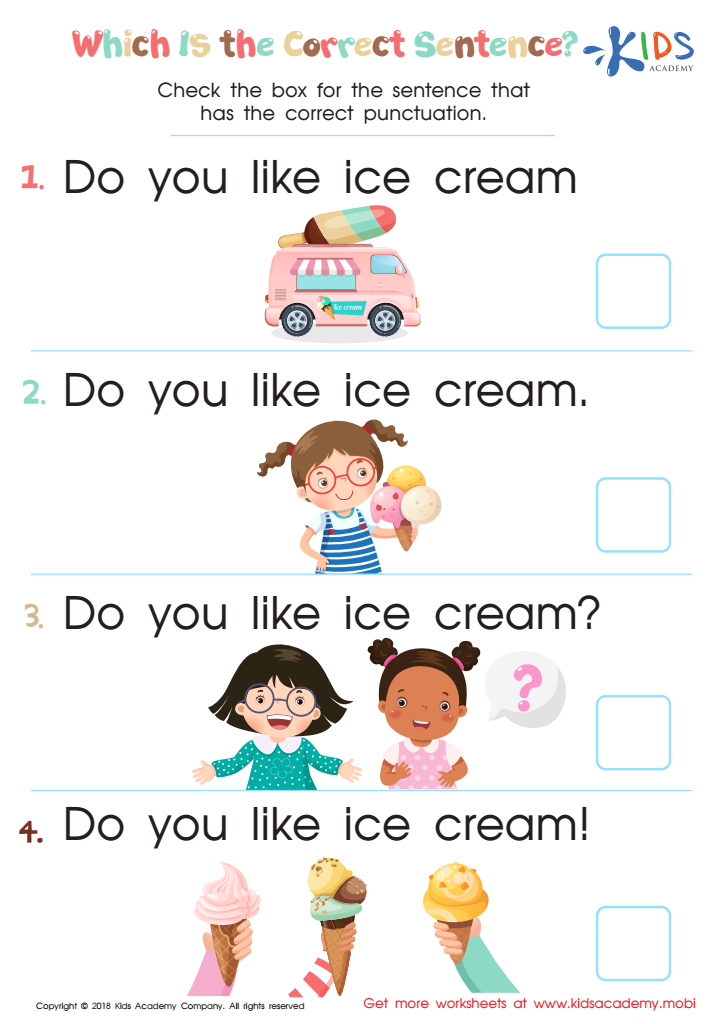
Which is the Correct Sentence? Worksheet
 Assign to My Students
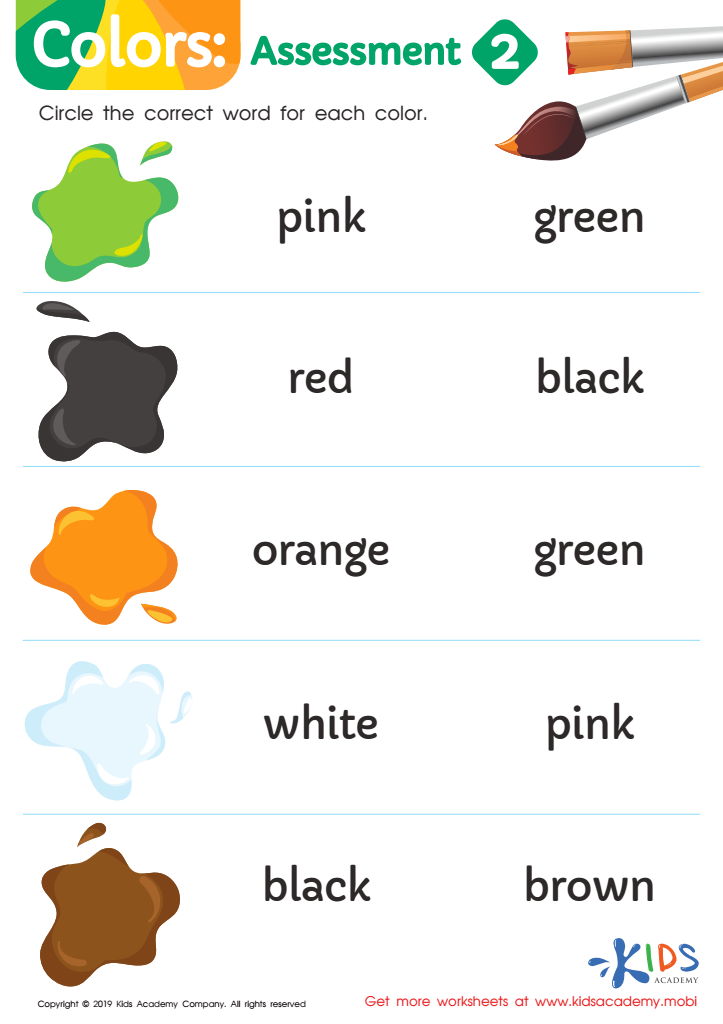
Colors: Assessment 2 Worksheet
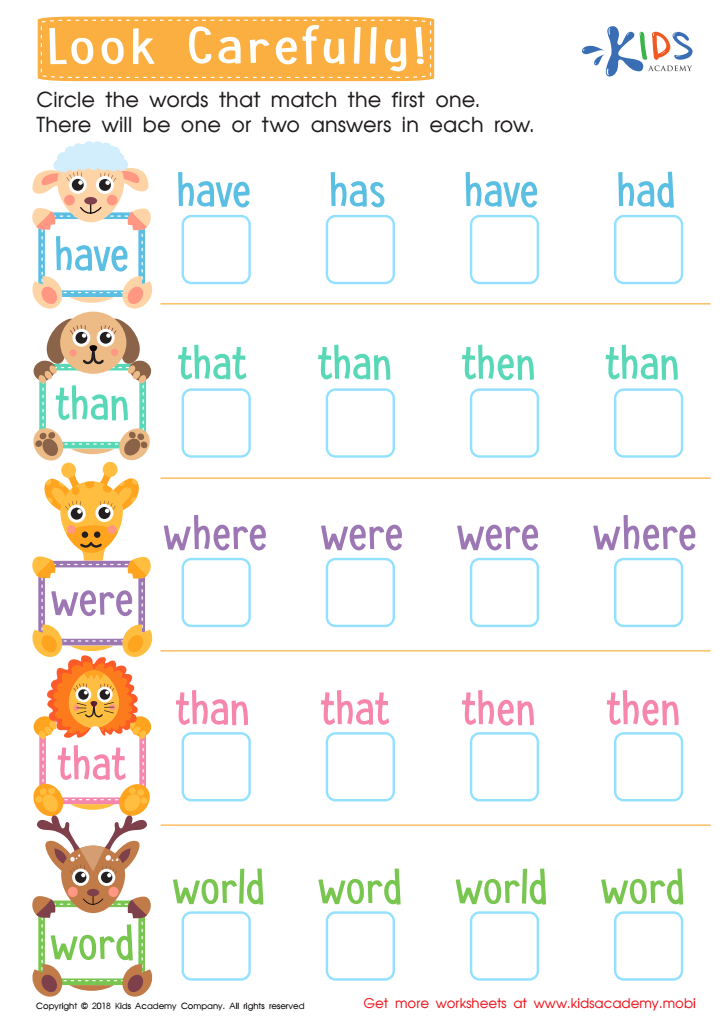
Look Carefully Worksheet
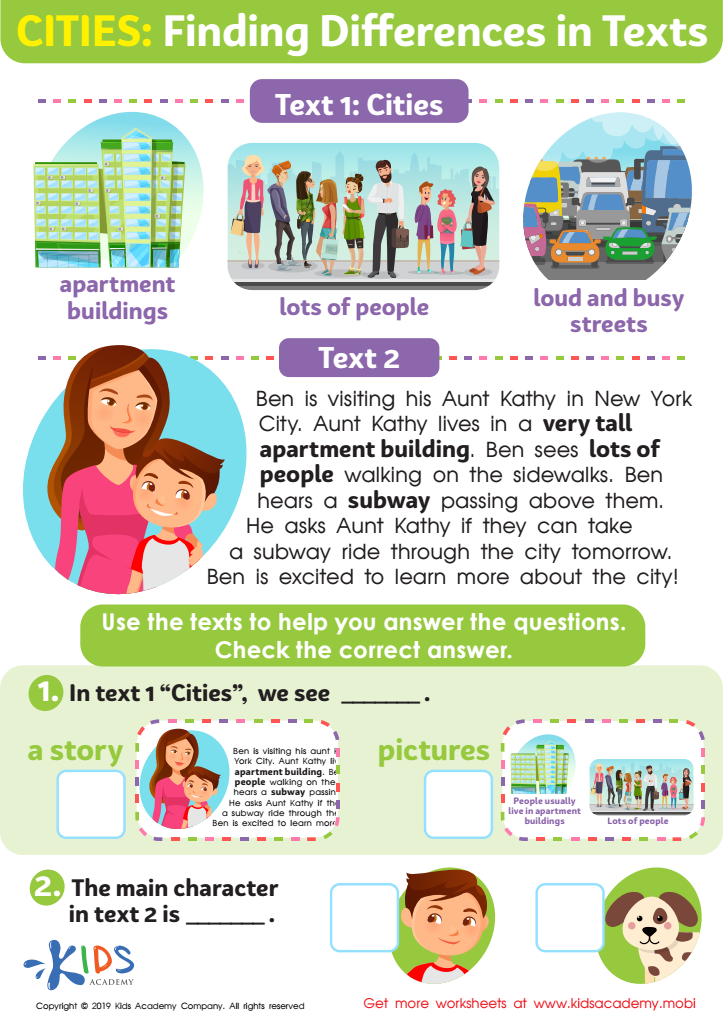
Cities: Finding Differences Worksheet

Take a Look - Part 1 Worksheet
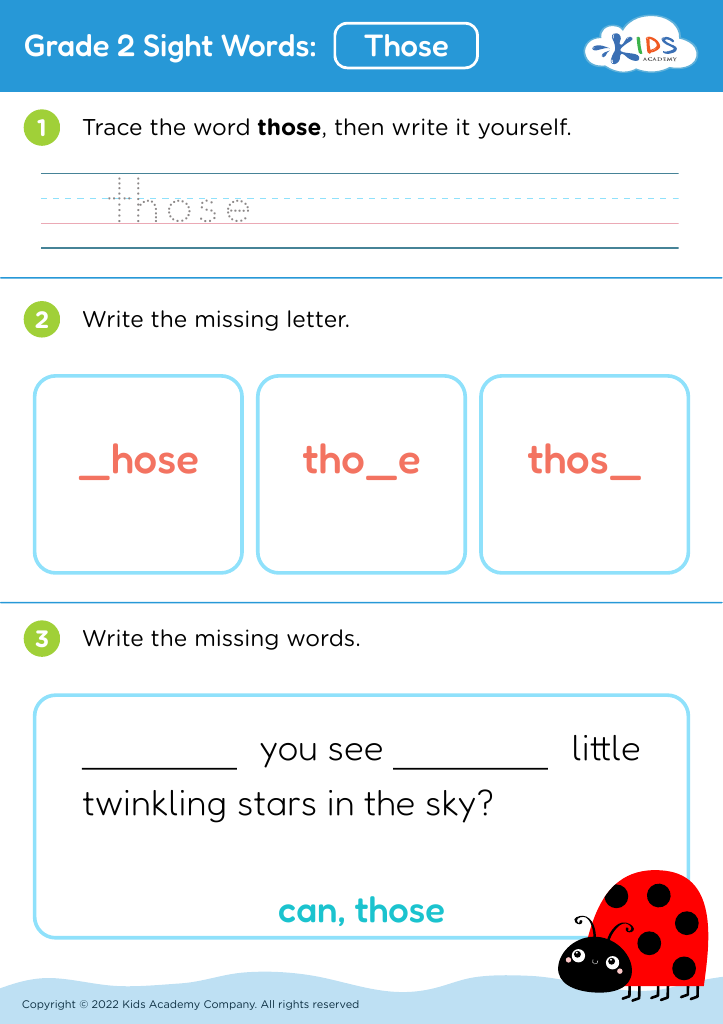








Attention to detail in reading is crucial for children aged 6-7 because it sets the foundation for future academic success and critical thinking skills. At this unique developmental stage, children transition from learning to read to reading to learn. Paying attention to detail in text helps young readers improve comprehension, enabling them to grasp the main ideas and understand context. This skill also plays a vital role in broadening vocabulary, as children begin to notice new words and their usage.
Moreover, a focus on detail instructs children in recognizing punctuation and sentence structure, which enhances their overall reading fluency and accuracy. It also teaches them to appreciate subtleties such as implied meanings or emotions expressed in a story, fostering a deeper connection with the text.
In classroom settings, fostering attention to detail bolsters learning across subjects, aiding children in following instructions accurately and minimizing misunderstandings that could hamper progress. At home, parents who emphasize this skill encourage a lifelong love of reading by making the experience enjoyable and educational.
Ultimately, honing attention to detail in reading at an early age nurtures disciplined, observant, and capable readers. This invaluable asset paves the way for effective communication skills and success in all areas of life.








