
Number identification Reading Worksheets for Ages 6-7
3 filtered results
Difficulty Level
Grade
Age
-
From - To
Subject
Activity
Standards
Discover engaging Number Identification Reading Worksheets tailored for children aged 6-7! Our worksheets are designed to enhance kids' number recognition skills while making learning fun. Each activity combines colorful visuals and interactive elements that captivate young learners’ attention. Children will practice identifying numbers, spelling them out, and using them in context, fostering both reading and math skills. Perfect for home or classroom use, these worksheets encourage independent learning and reinforce foundational knowledge. Spark your child's love for numbers and literacy today! Explore our wide selection of worksheets and watch your little learners thrive as they master number identification with confidence.
Favorites
With answer key
Interactive
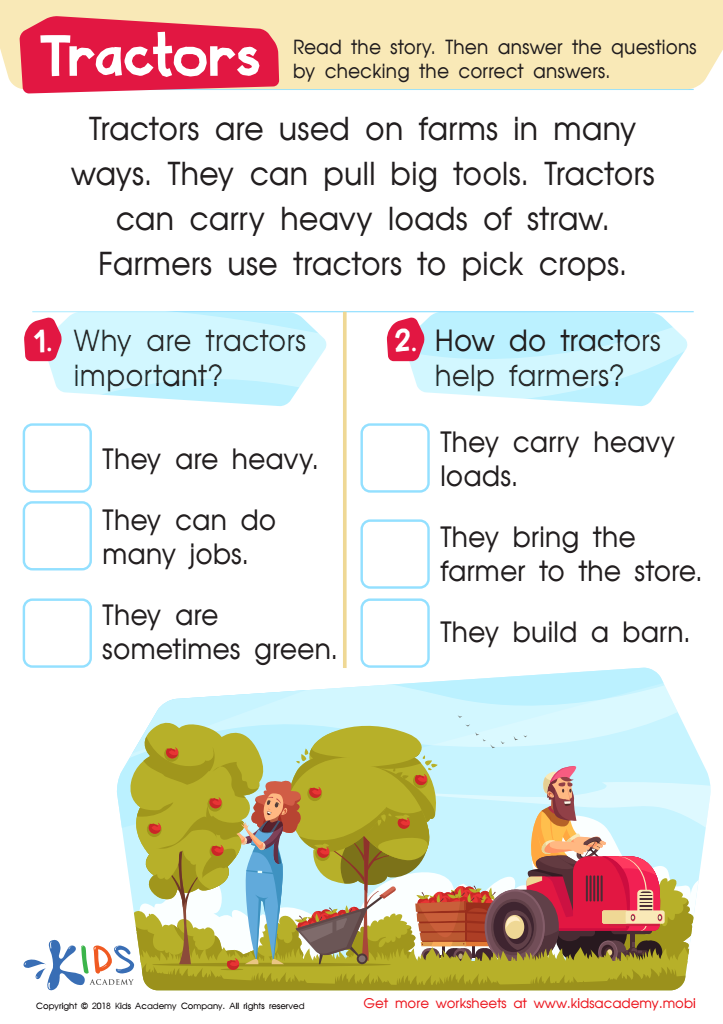
Tractors Worksheet
Kids love tractors! Let them read about what they do, what they use, and who uses them with this free worksheet. After reading, they can answer reading comprehension questions to test their knowledge; multiple choices make it easy! Little do they know, they're boosting their literacy skills along the way!
 Assign to My Students
Tractors Worksheet
Worksheet
Join Kids Academy for Free
Who is primarily going to use this learning content?








Number identification reading for ages 6-7 is a vital foundation for children's mathematical understanding and overall cognitive development. At this age, children begin to grasp basic number concepts, which are critical for their academic success in mathematics. Parents and teachers should care about fostering strong number identification skills as these abilities enhance numeracy, contributing to a child's confidence in handling more complex mathematical operations in the future.
Moreover, number recognition is linked to literacy skills, as children learn to associate numbers with their corresponding quantities and applications in real-world contexts. This dual-focus not only prepares them for math assessments but also encourages problem-solving and critical thinking, essential skills in everyday life.
Engaging children through fun and interactive activities can transform number identification from a mundane task into an enjoyable experience, promoting a positive attitude toward learning. By ensuring that children feel comfortable with numbers, parents and teachers can help them cultivate a sense of achievement and reduce math anxiety down the road.
Ultimately, fostering number identification reading lays the groundwork for lifelong learning and curiosity, empowering children to navigate the world around them with confidence and competence. Therefore, prioritizing this skill is essential for every parent and educator.








