Rhyming skills development Reading Worksheets for Ages 6-7
3 filtered results
-
From - To
Enhance your child's reading skills with our engaging Rhyming Skills Development Worksheets tailored specifically for ages 6-7! These interactive and colorful activities not only make learning fun but also strengthen phonemic awareness, a crucial foundation for reading success. Each worksheet features a variety of exercises, including matching rhyming words, completing rhymes, and creative writing prompts that encourage imagination. Designed by educators, these worksheets cater to diverse learning styles, ensuring every child can practice at their own pace. Foster a love for language and improve vocabulary while making your reading sessions both enjoyable and educational. Download and inspire young learners today!
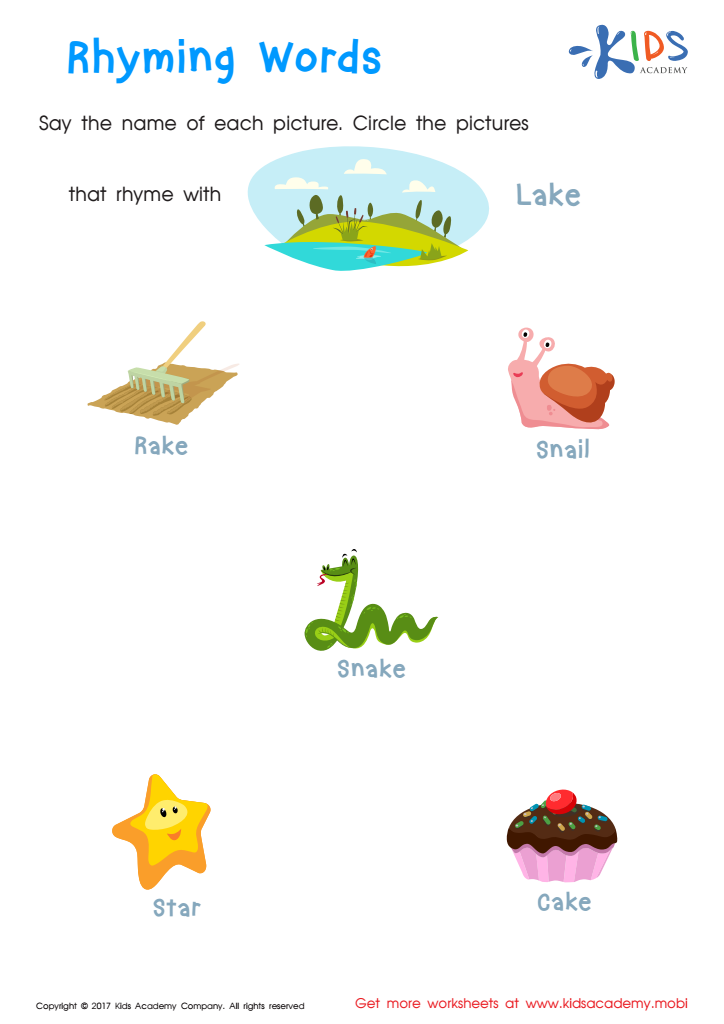
Rhyming Words Rhyming Worksheet
 Assign to My Students
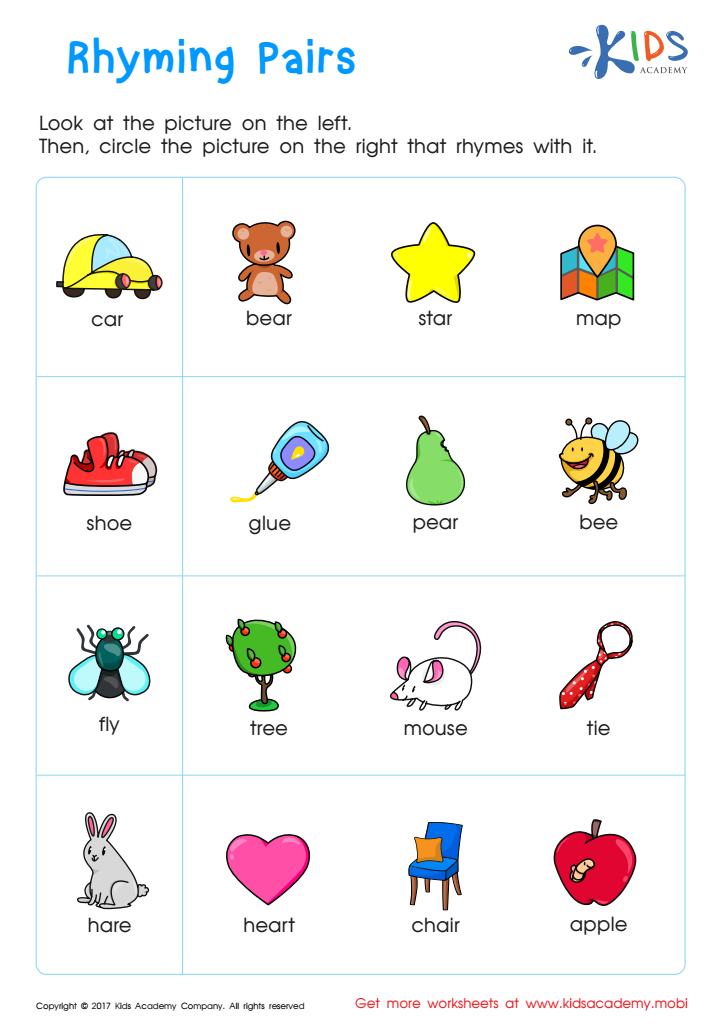
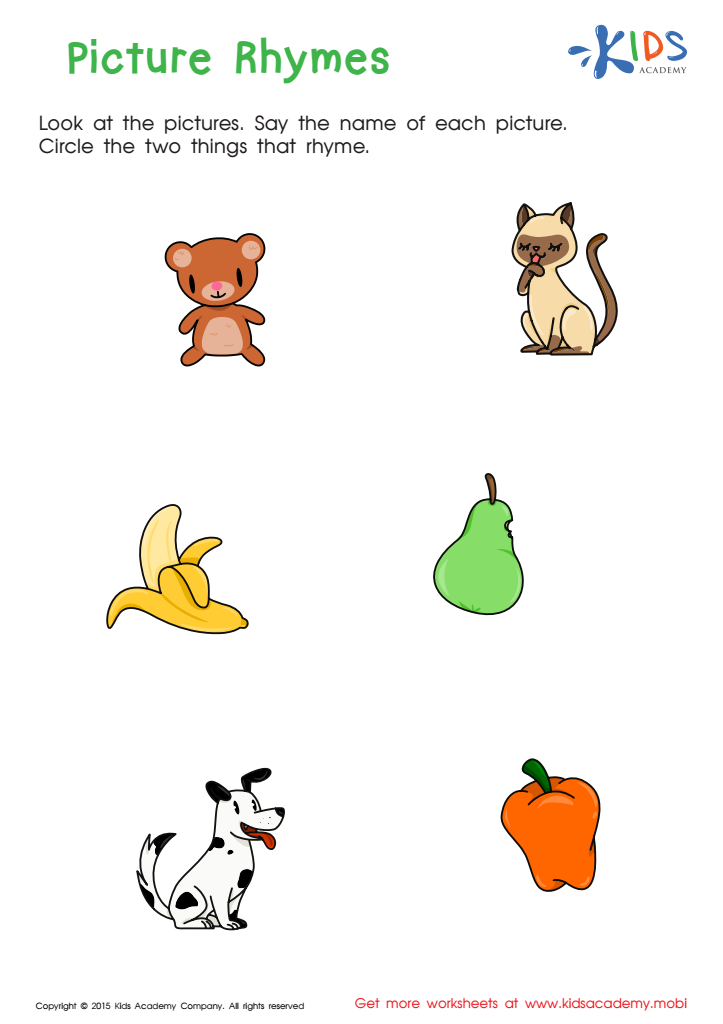
First Words: Picture Rhymes Worksheet








Rhyming skills are crucial in the reading development of children aged 6-7 for several reasons. Firstly, rhyming enhances phonemic awareness, which is the understanding that words are made up of individual sounds. This foundational skill is directly linked to improving reading abilities, as children who can recognize and manipulate the sounds in words are better equipped to decode new vocabulary.
Moreover, rhyming supports vocabulary growth. As children are exposed to rhyming texts and wordplay, they encounter new words in a playful context, which helps them understand and remember meanings more effectively. This engagement fosters a love for language, making reading more enjoyable and less daunting.
Additionally, rhyming encourages auditory discrimination—children learn to identify similarities and differences in sounds, a skill that enhances listening and comprehension. It also promotes cognitive development by encouraging predictive and analytical thinking, as children begin to anticipate and generate words that rhyme in context.
Incorporating rhyming activities, such as nursery rhymes, songs, and rhyme-based games in homes and classrooms can significantly enrich a child's literacy experience, laying a strong foundation for future reading success and enjoyment. Thus, cultivating rhyming skills is a vital step in supporting young learners' overall reading journey.








