Understanding Rhymes Reading Worksheets for Ages 6-7
3 filtered results
-
From - To
Explore our engaging "Understanding Rhymes Reading Worksheets" designed specifically for children aged 6-7! These interactive resources help young learners develop essential phonemic awareness by recognizing and creating rhymes. Each worksheet features fun activities that encourage children to identify words with similar sounds, enhancing their reading fluency and comprehension skills. Ideal for classroom or at-home learning, these worksheets combine creativity with educational goals, making learning enjoyable and effective. Watch your child gain confidence in their reading abilities while they play with words! Download and inspire a love for reading through the magic of rhymes today!
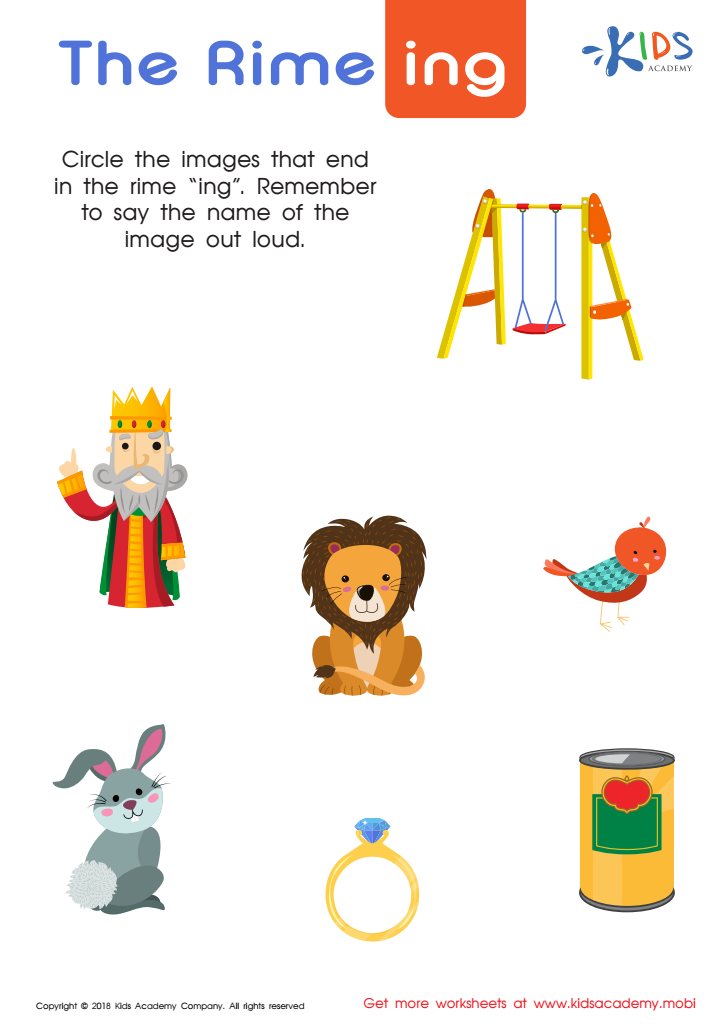
The Rime "ing" Worksheet
 Assign to My Students
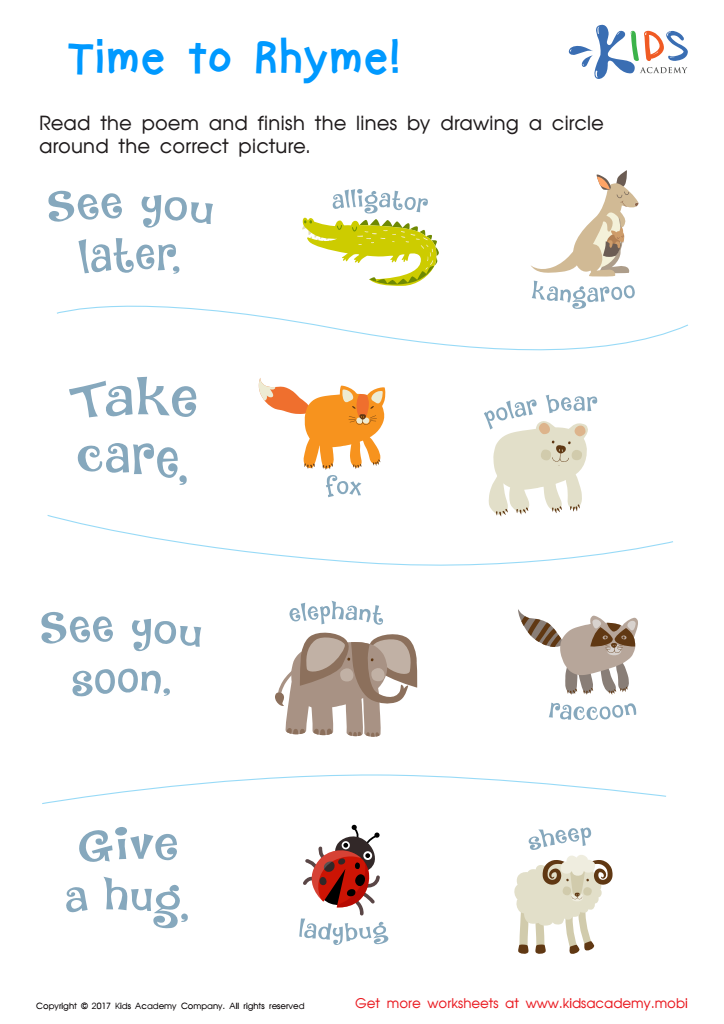
Time to Rhyme Rhyming Worksheet
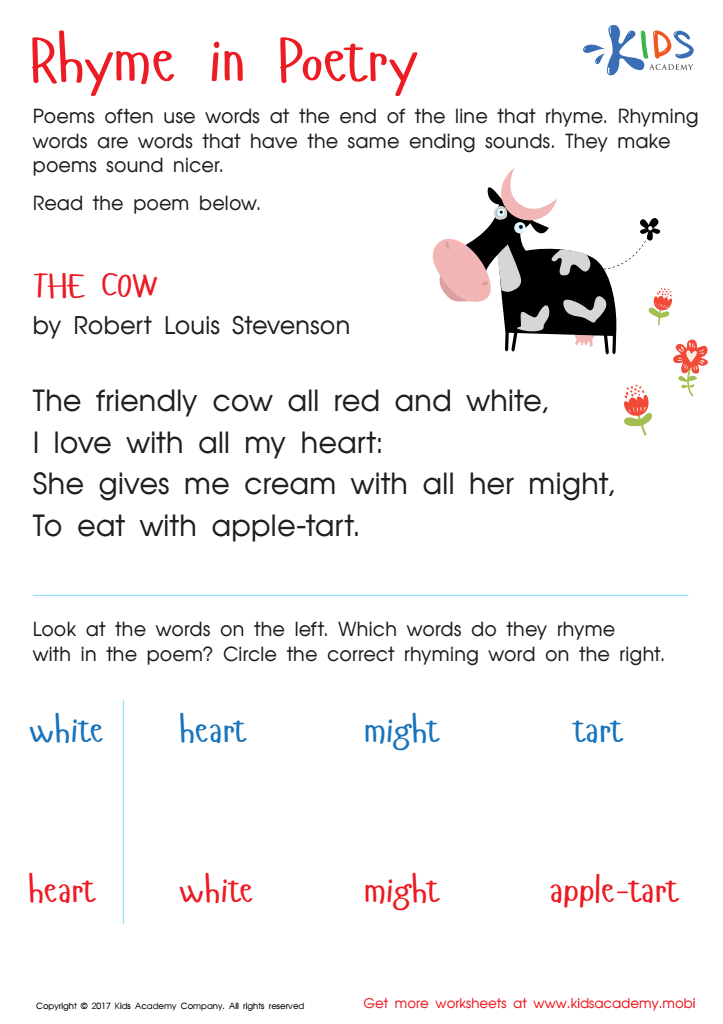
Rhyme In Poetry Worksheet








Understanding rhymes is crucial for children aged 6-7 as it significantly enhances their literacy skills and overall cognitive development. At this age, children are transitioning from learning to read to reading to learn. Rhyming playfully engages them with language, helping in phonemic awareness, which is the ability to recognize and manipulate sounds in words. This skill is foundational for spelling and decoding unfamiliar words.
Moreover, rhymes promote memory retention. The musicality and rhythm of rhyming words create patterns that make them easier for children to remember, fostering vocabulary growth. Engaging with rhymes also sparks creativity, encouraging children to play with language and develop their own phrases or poems.
Additionally, understanding rhymes builds a framework for comprehension skills. As children encounter literary structures similar to rhymes in various texts, they become more adept at alternative language forms, including stories and other narrative styles. Lastly, parents and teachers who focus on rhyming activities can create enjoyable and interactive reading experiences, strengthening the bond between adult and child while cultivating a lifelong love of reading. In summary, awareness of rhymes is a vital part of early literacy development, making it essential for parents and educators to focus on.








