Visual interpretation Reading Worksheets for Ages 6-7
6 filtered results
-
From - To
Discover our engaging Visual Interpretation Reading Worksheets designed specifically for children aged 6-7! These worksheets help young learners enhance their reading comprehension by encouraging them to analyze images, make connections, and draw conclusions based on visual cues. With a variety of fun and interactive activities, kids will cultivate critical thinking and interpretation skills while fostering a love for reading. Each worksheet aligns with educational standards, making it a valuable tool for teachers and parents alike. Empower your child with the ability to read between the lines, see beyond the text, and develop a deeper understanding of stories through visual interpretation. Start exploring today!
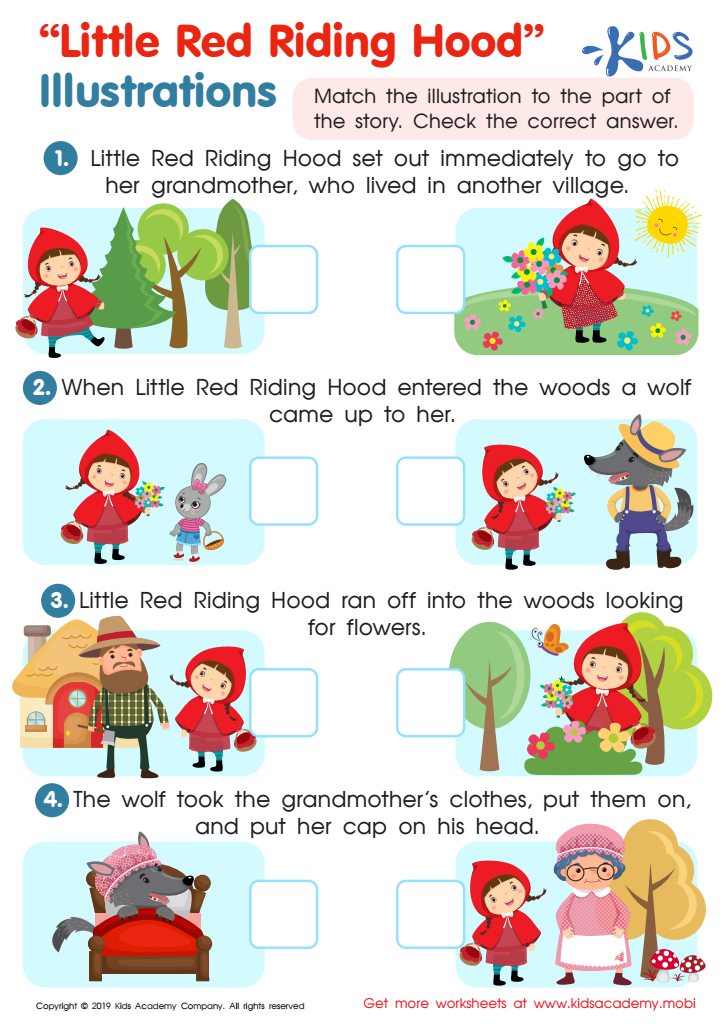
Little Red Riding Hood: Illustrations Worksheet
 Assign to My Students
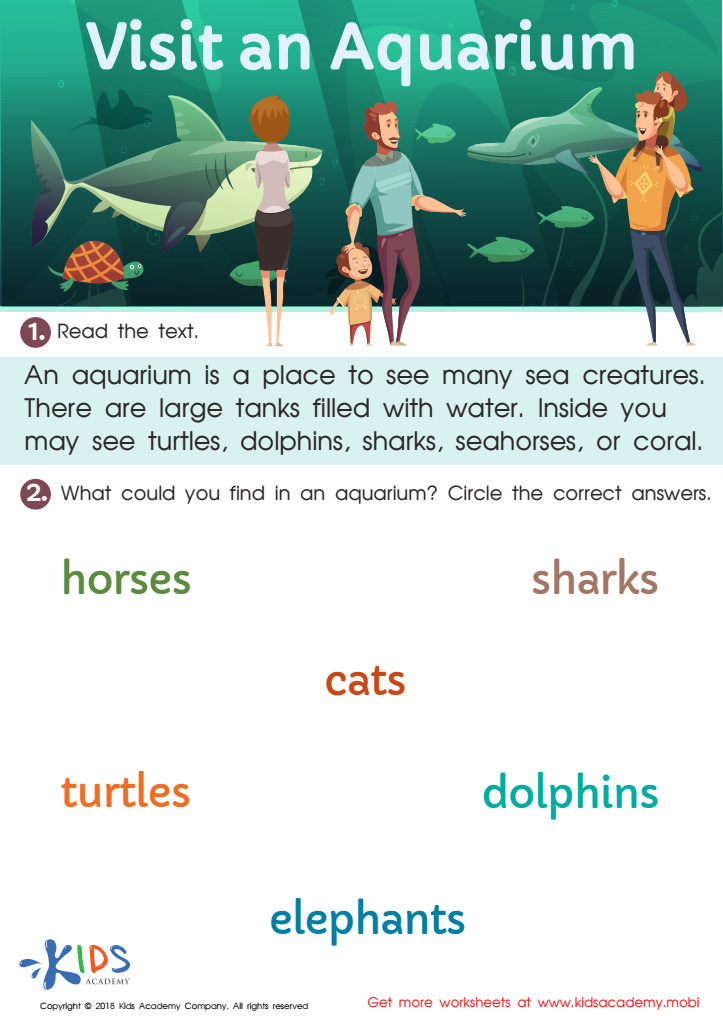
Visit an Aquarium Worksheet
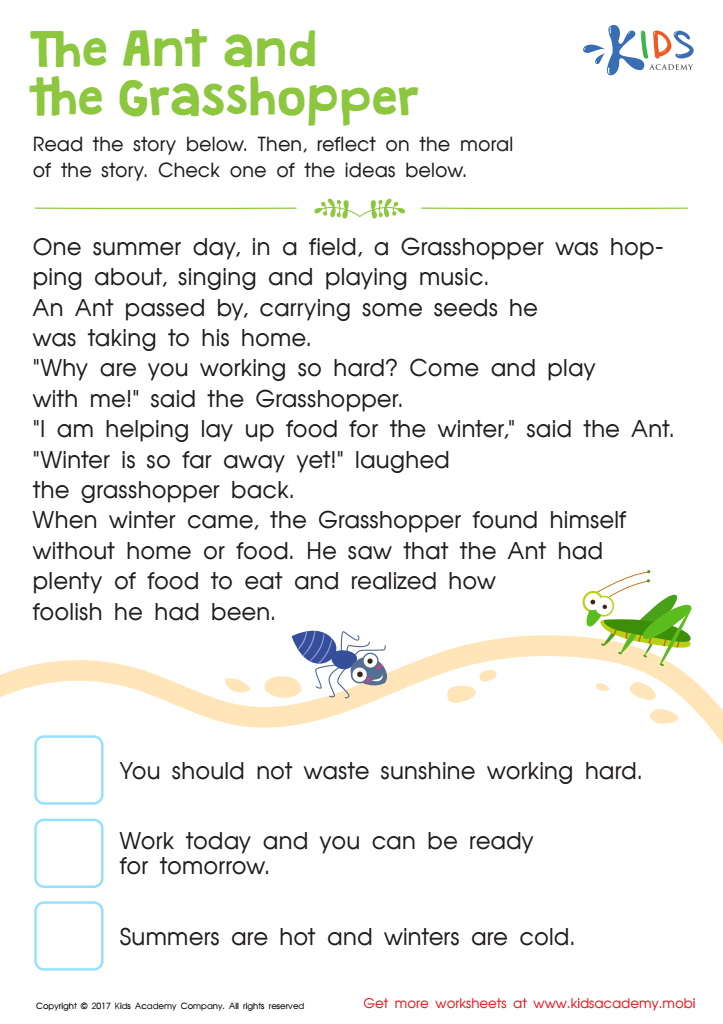
The Ant and The Grasshopper Printable
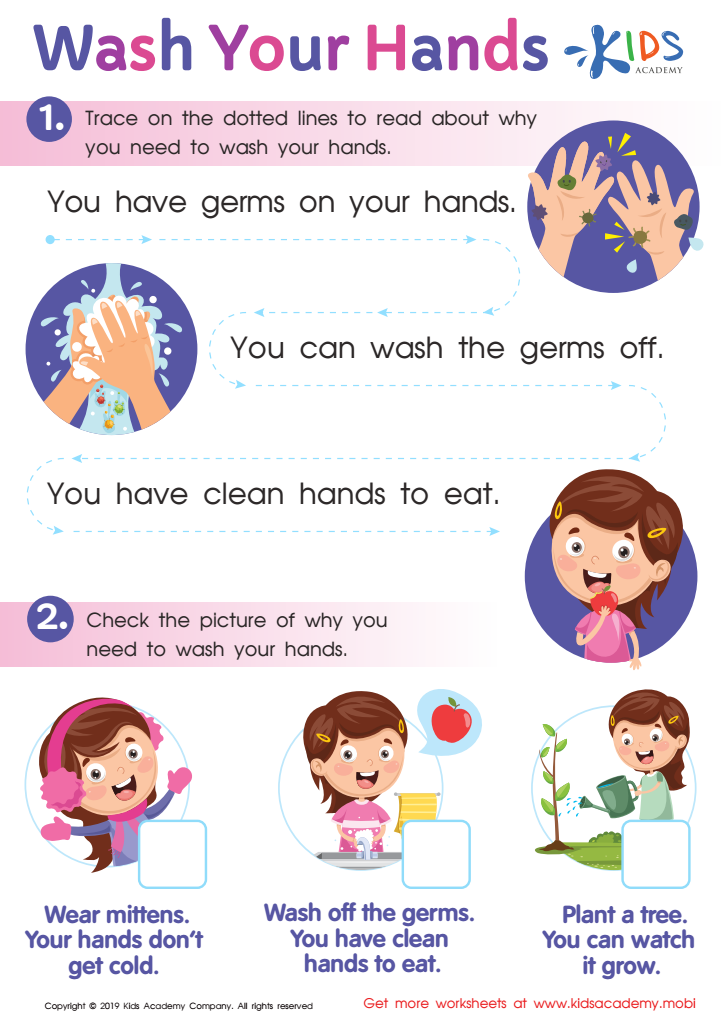
Wash Your Hands Worksheet
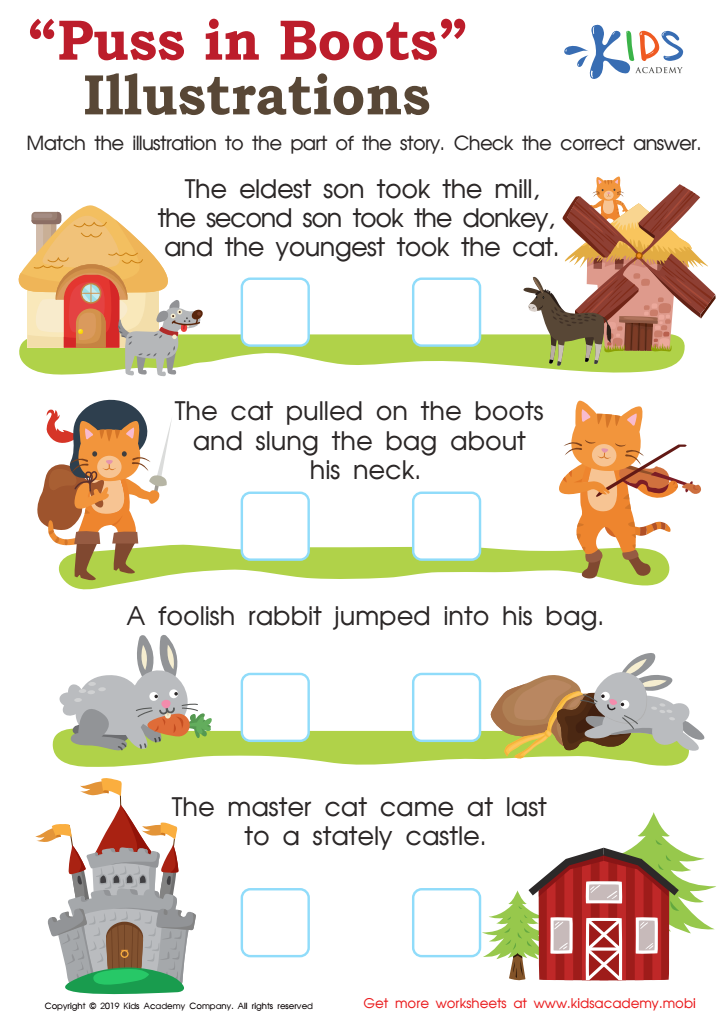
Puss in Boots Illustrations Worksheet
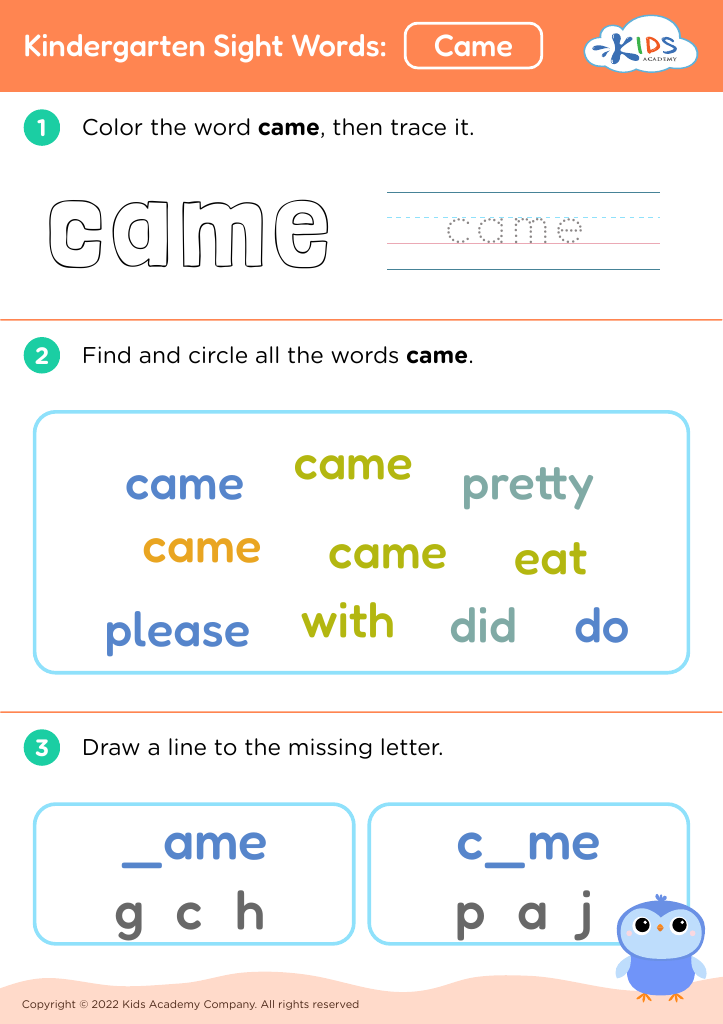








Visual interpretation reading is crucial for children aged 6-7 as it fosters essential cognitive skills and enhances overall literacy development. At this age, children begin to decode text and develop a deeper understanding of written language. Visual interpretation involves analyzing and making sense of images, graphics, and illustrations, which are often key components in books and learning materials. By engaging with visual content, children enhance their comprehension skills, allowing them to connect text with imagery, which aids in retention and understanding.
Moreover, visual interpretation cultivates critical thinking and creative problem-solving. Children learn to infer meanings, draw conclusions, and question information presented in both visual and textual formats. This skill is not just applicable to reading; it extends to various areas such as art, science, and everyday life, ultimately preparing children for a visually-driven world.
Teachers and parents should prioritize visual interpretation activities, such as story sequencing with pictures, drawing conclusions from illustrations, and discussing visual elements in stories. These activities can significantly enrich children's reading experiences, making literature more engaging and accessible, thereby nurturing a lifelong love for reading and learning. By investing in these skills now, adults pave the way for their children's successful academic and personal futures.








