Filters

33 filtered results

Clear all filters
Favorites
With answer key
Interactive

33 filtered results

Difficulty Level

Grade


Check out this FREE Trial Lesson on Reading Fiction for age 6-7!

Answer Questions About Key Details in a Story

Favorites
With answer key
Interactive
  • 6-7
  • Critical Thinking
  • Reading Fiction
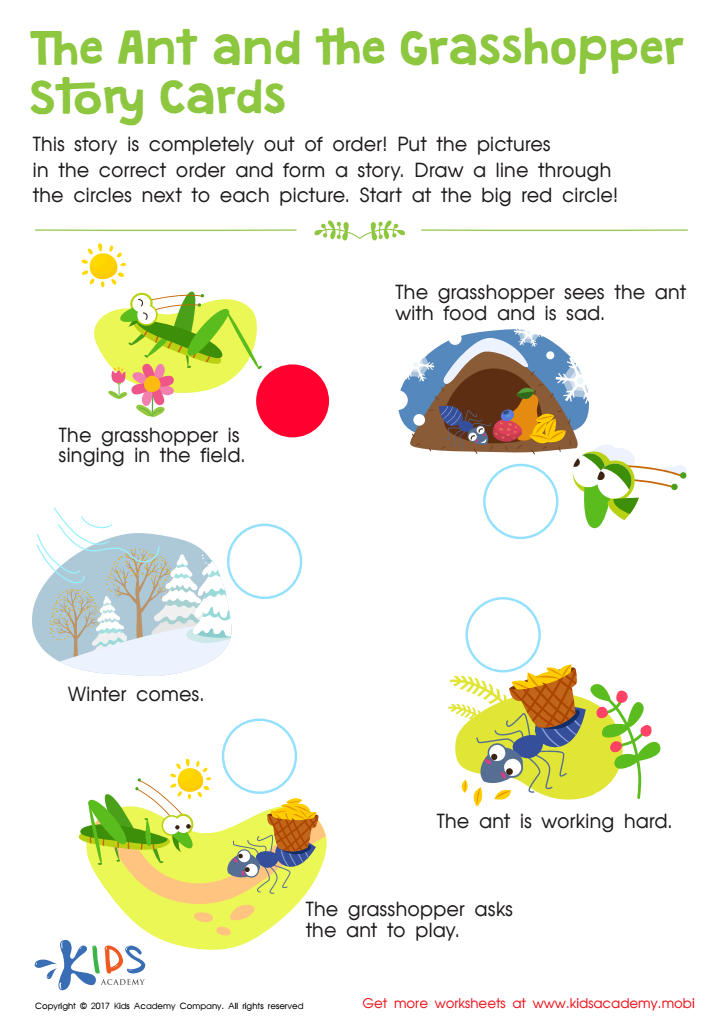
The Ant and the Grasshopper worksheet PDF

The Ant and The Grasshopper Worksheet

This worksheet uses the beloved childhood fable "The Ant and the Grasshopper" to teach your child about plot and order of events. Your child must read the events and put them in the right order. Once completed, review the story with your child to ensure its accuracy.
The Ant and The Grasshopper Worksheet
Worksheet
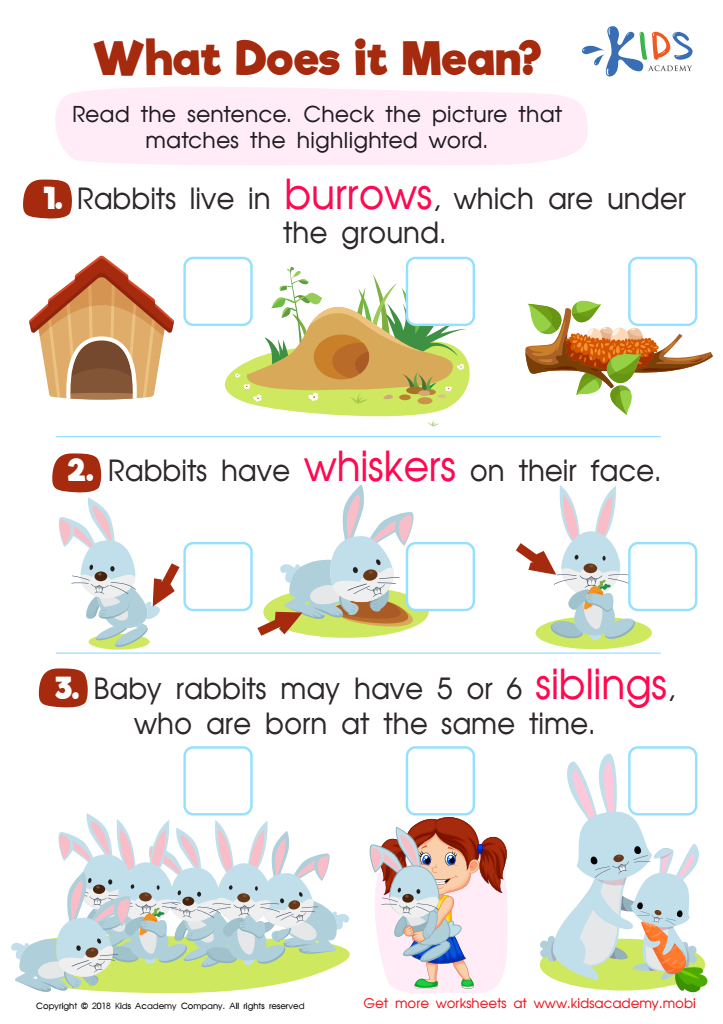
What Does It Mean? Worksheet

What Does It Mean? Worksheet

Teach your child to use context clues with this engaging Kids Academy worksheet. Read the sentences and find the pink-highlighted word. Use the other words in the sentence to figure out the meaning, then check the box next to the picture that represents it.
What Does It Mean? Worksheet
Worksheet
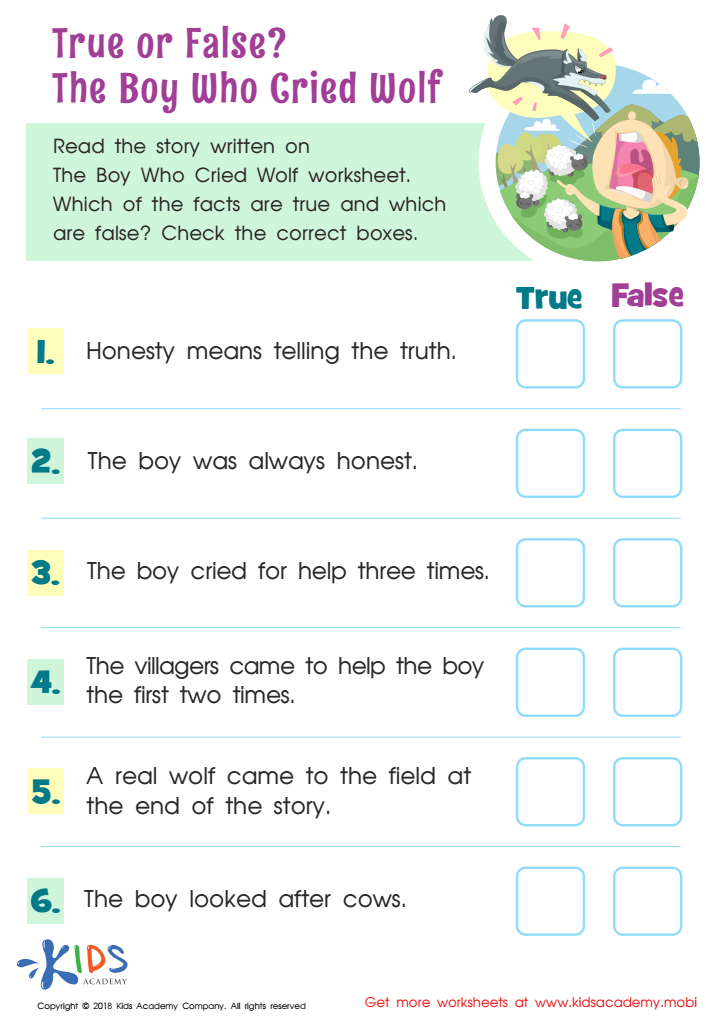
True or False? The Boy Who Cried Wolf Worksheet

True or False? The Boy Who Cried Wolf Worksheet

Test students' understanding of The Boy Who Cried Wolf with this free downloadable worksheet. It contains true/false questions to assess comprehension of key events. Easy to complete, it checks students can recall facts from the story. Try it and see!
True or False? The Boy Who Cried Wolf Worksheet
Worksheet
Rapunzel Questions Worksheet
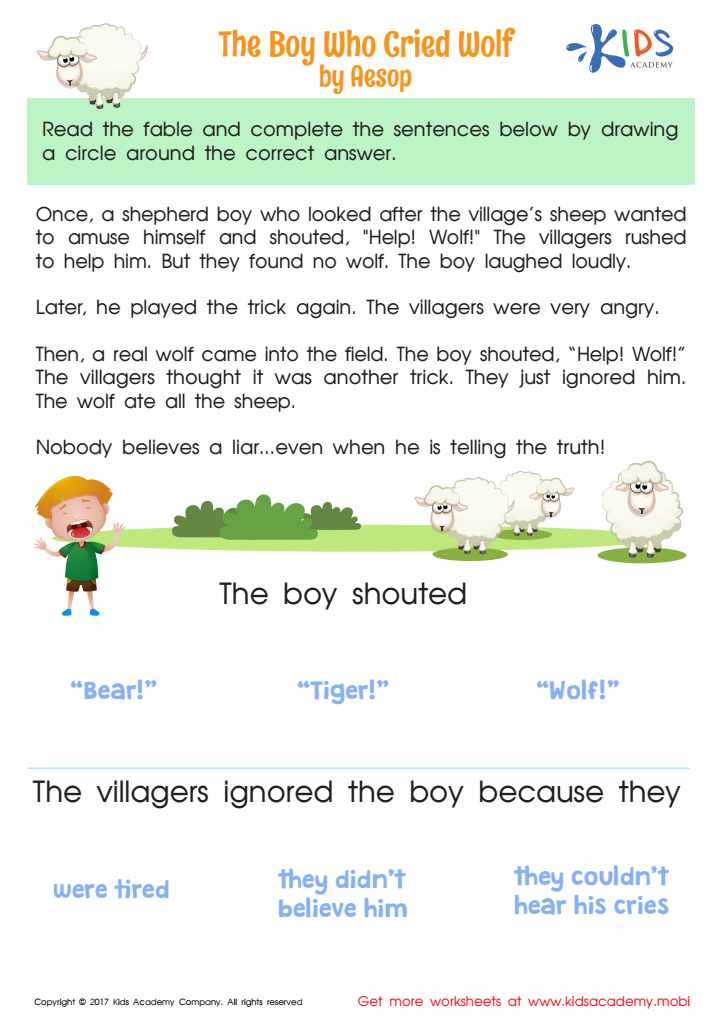

Rapunzel Questions Worksheet

Read the fairy tale 'Rapunzel' to your kids. For those who really enjoyed it, read it twice and ask questions to test their understanding. Then, get them to check the pictures related to the questions to test their comprehension of the story.
Rapunzel Questions Worksheet
Worksheet
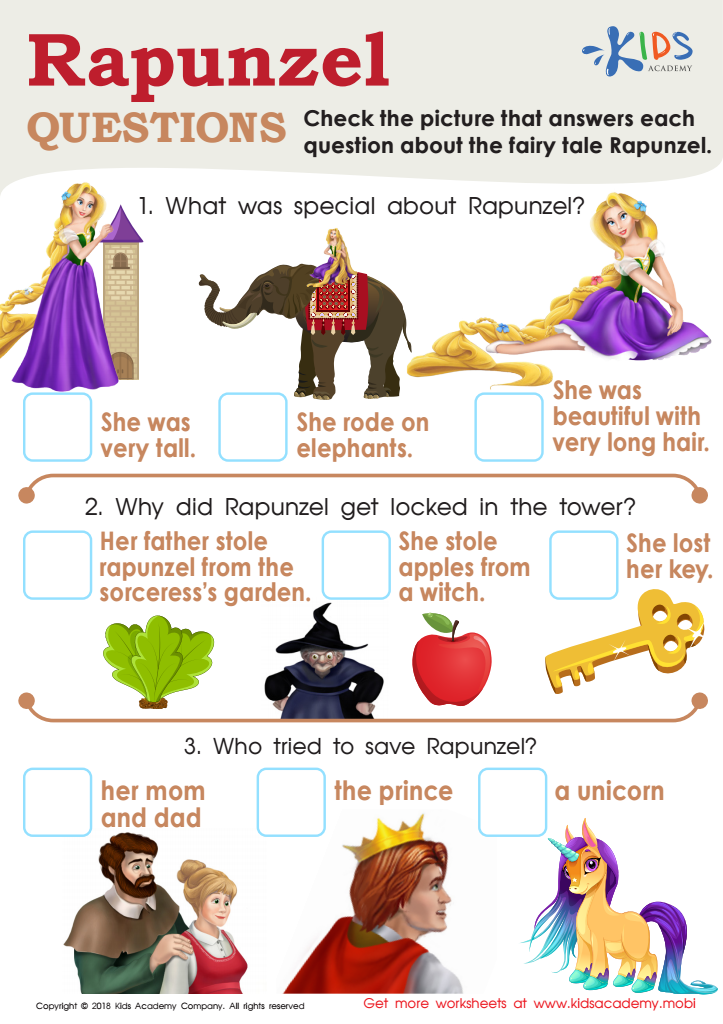
Worksheet: The Boy Who Cried Wolf

The Boy Who Cried Wolf Worksheet

Test your child's reading comprehension with The Boy Who Cried Wolf worksheet. Read the fable, then answer the questions. Use the text to help your child check their answers are correct. Boost reading skills in a fun, interactive way!
The Boy Who Cried Wolf Worksheet
Worksheet
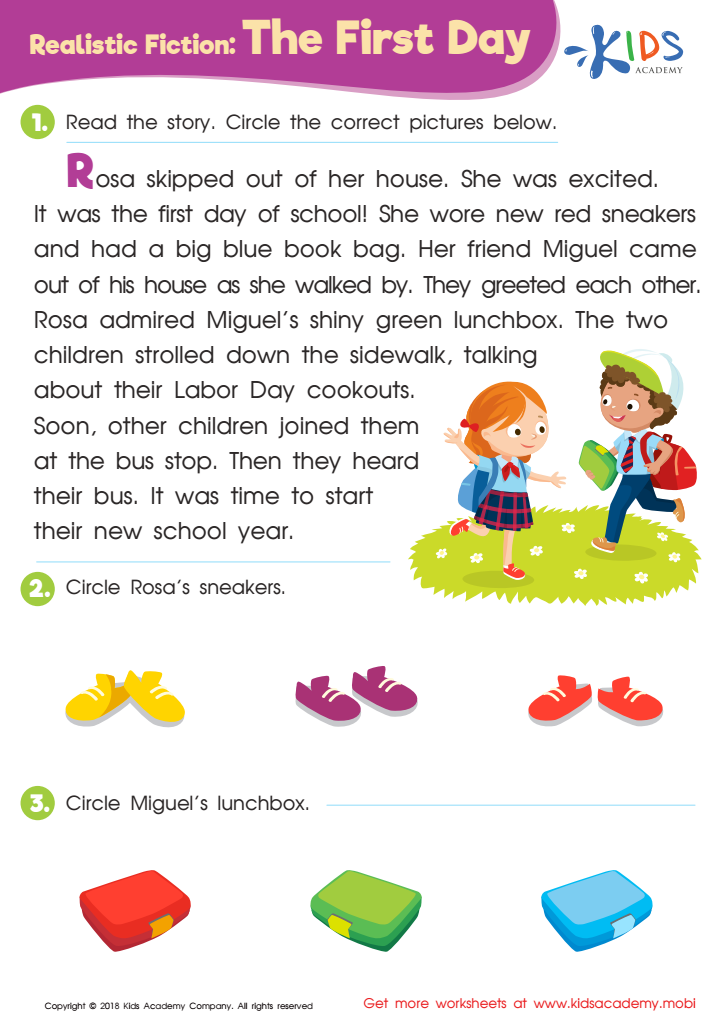
Realistic Fiction: The First Day Worksheet

Realistic Fiction: The First Day Worksheet

Fiction is made-up events, so story-writing is fiction writing. In this worksheet, there's a short story about Rosa, her friend Miguel, and their first day back at school. Read the story aloud to your kids and help them circle the right pictures to the questions. Repeat if needed.
Realistic Fiction: The First Day Worksheet
Worksheet
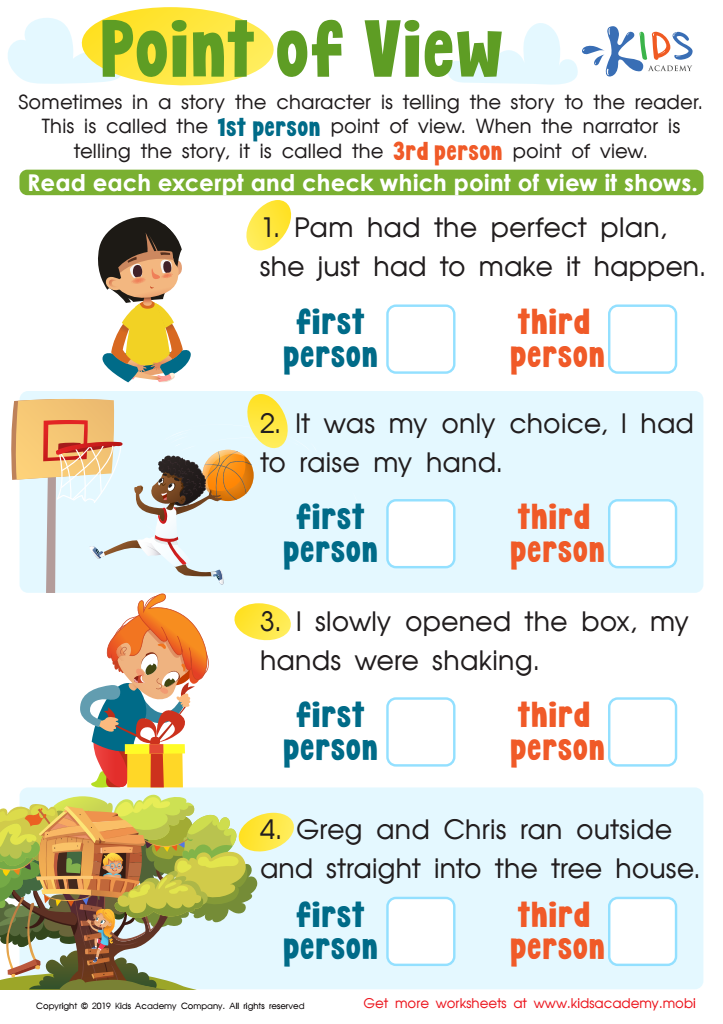
Point of View Printable

Point of View Printable

Teach your kids about points of view with this worksheet! In a story, characters can tell the story in first person or it can come from a narrator in third person. Read the excerpt in the worksheet and ask your kids to identify which point of view it is.
Point of View Printable
Worksheet
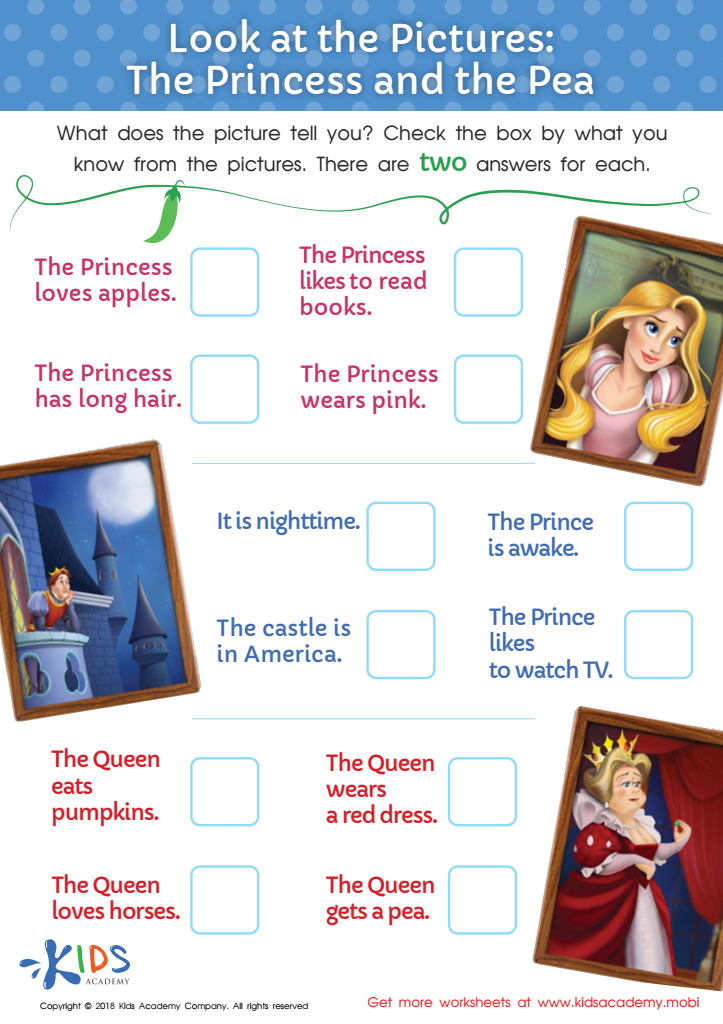
Look at the Pictures: The Princess and the Pea Worksheet

Look at the Pictures: The Princess and the Pea Worksheet

Early readers can benefit from picture clues to understand stories and text. Looking at images helps them learn the meaning of words and comprehend events. Use this worksheet on The Princess and the Pea to let students observe and learn from the pictures. It's a great way to help them comprehend early reading materials.
Look at the Pictures: The Princess and the Pea Worksheet
Worksheet
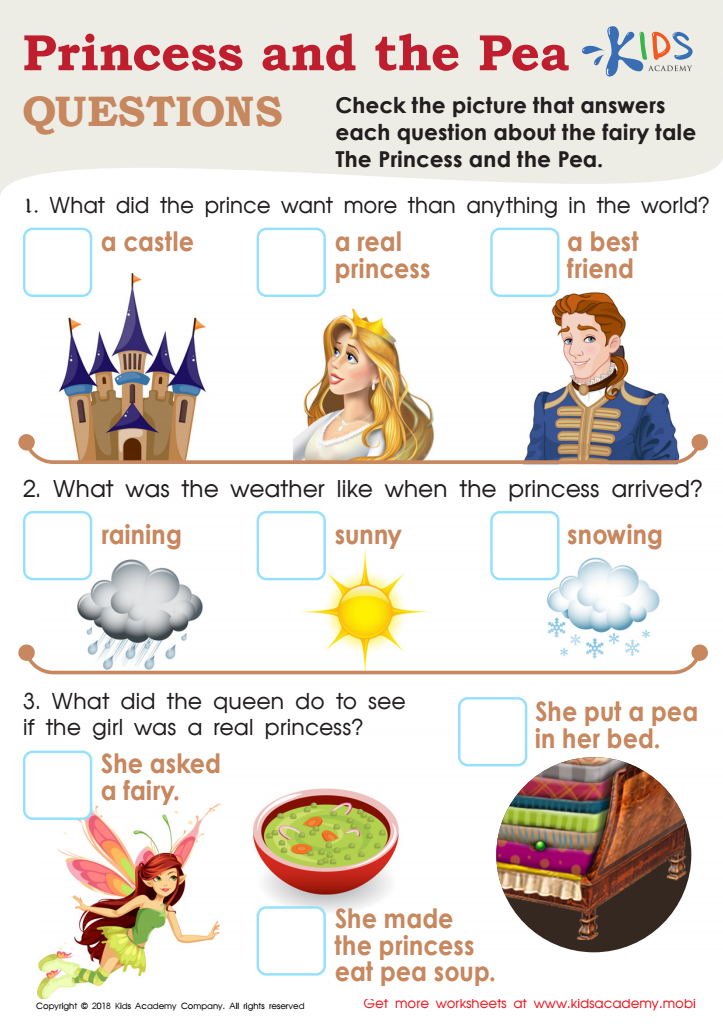
Princess and the Pea Questions Worksheet


Princess and the Pea Questions Worksheet

Your kid knows The Princess and the Pea inside-out? Test their knowledge with this worksheet. Ask your little one to read the questions and match each one to the picture. It's a fun way to see just how much attention they've paid to their bedtime story.
Princess and the Pea Questions Worksheet
Worksheet


Critical thinking through reading fiction is crucial for children aged 6-7, as it lays the foundation for essential skills they will use throughout their lives. At this developmental stage, children are beginning to understand complex narratives, characters, and emotions. Engaging with fiction enables them to make connections between their own experiences and the lives of the characters, fostering empathy and social awareness.

When parents and teachers encourage critical thinking in reading fiction, they help children develop analytical skills. This means asking questions about the story, such as why a character made a certain choice or how a conflict could be resolved differently. Such discussions promote cognitive engagement and inspire curiosity, which are essential for further learning.

Moreover, critical thinking skills applied to fiction enhance comprehension and retention. It allows young readers to go beyond surface-level understanding, promoting deeper insights into themes, morals, and diverse perspectives. This ability not only improves their reading skills but also translates to success in other subjects and everyday life.

By nurturing critical thinking through fiction, adults empower children to become thoughtful, independent thinkers, ready to tackle challenges and think creatively in an increasingly complex world.