Identifying story elements Reading Fiction Worksheets for Ages 6-7
4 filtered results
-
From - To
Enhance your child's reading comprehension skills with our "Identifying Story Elements Reading Fiction Worksheets for Ages 6-7." These engaging, age-appropriate activities help young readers recognize key story components such as characters, setting, plot, and more. Designed by educational experts, our worksheets support foundational literacy development while making learning fun. Perfect for classroom use or at-home practice, these printable resources encourage critical thinking and improve narrative understanding. Boost your child's ability to retell and analyze stories confidently with our specially crafted worksheets. Discover the joy of fiction and help your child become a proficient, enthusiastic reader today!
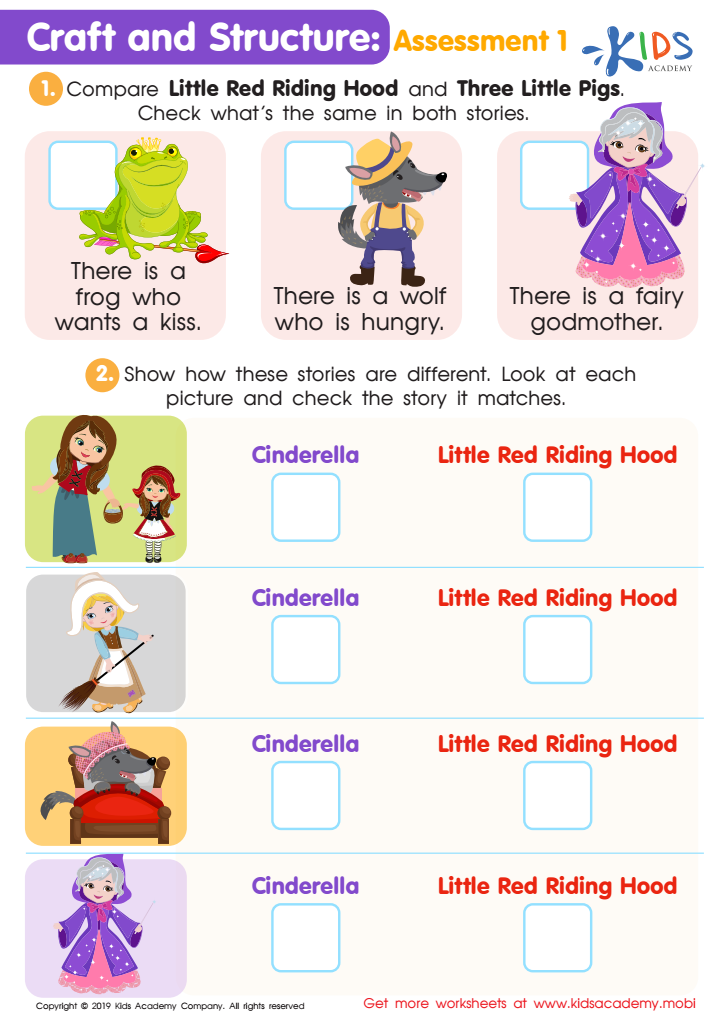
Craft and Structure: Assessment 1 Worksheet
 Assign to My Students
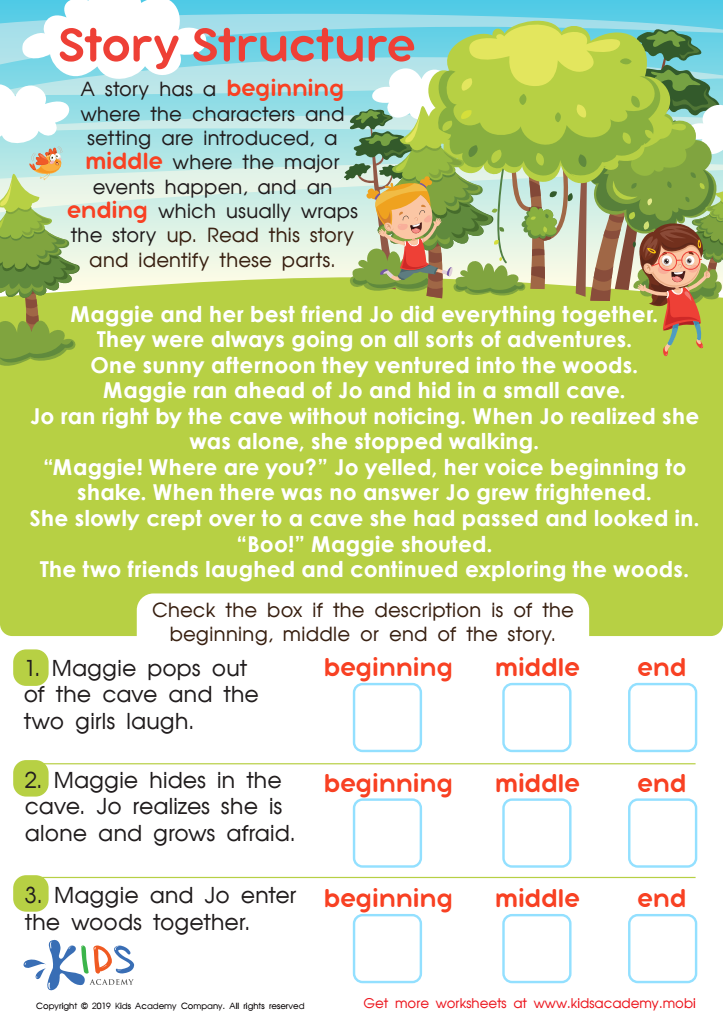
Story Structure Worksheet
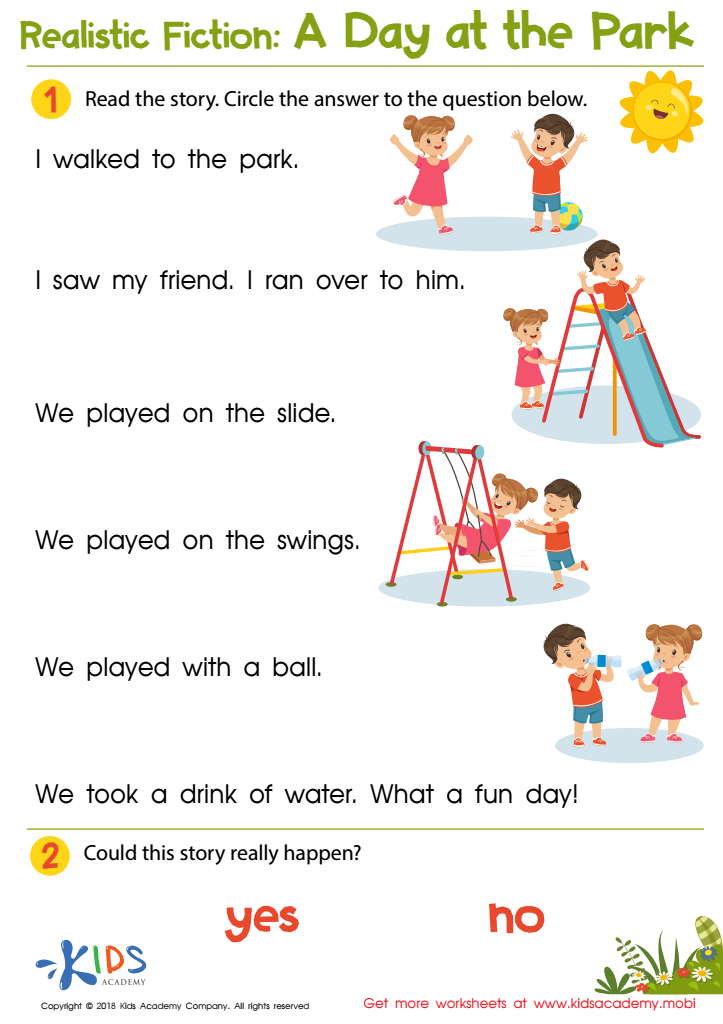
A Day at the Park Worksheet
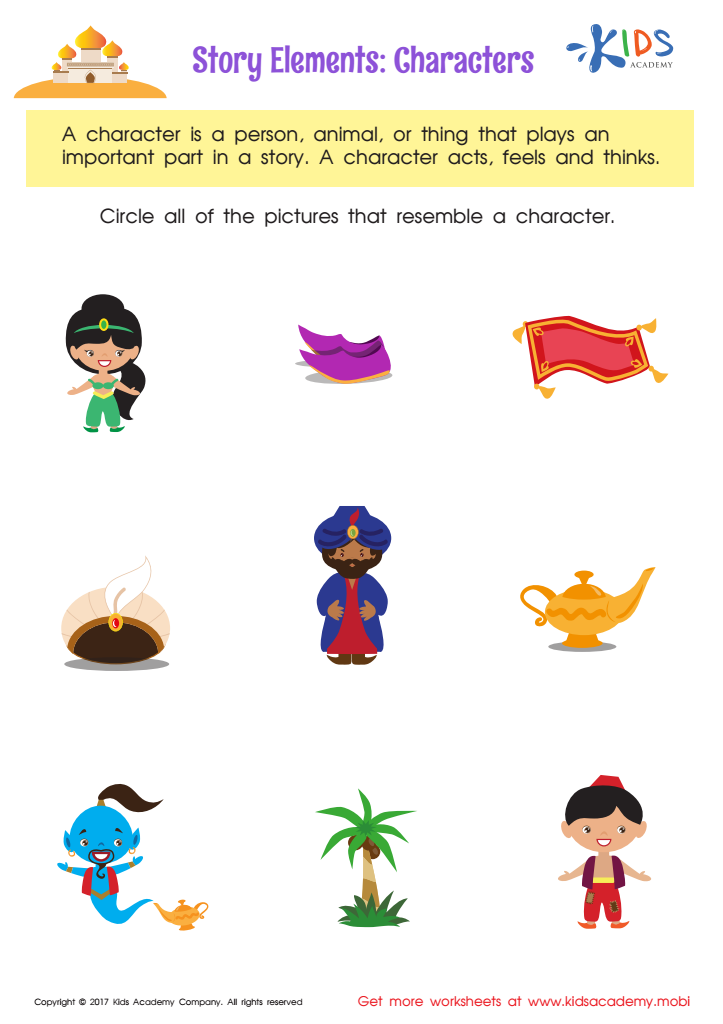
Story Elements Printable








Identifying story elements is crucial for young readers, particularly in the 6-7 age group, as it lays the foundation for strong reading comprehension and critical thinking skills. At this developmental stage, children are transitioning from decoding words to understanding broader narrative structures. Knowing the basic elements of a story—like characters, setting, plot, conflict, and resolution—helps them to better organize information and follow the storyline more efficiently.
When teachers and parents guide children in identifying these elements, they enhance the child's ability to make predictions, draw connections, and engage deeply with the text. This, in turn, fosters a love for reading and builds confidence. Moreover, recognizing story elements can improve vocabulary and language development, as discussing different parts of a story introduces new words and grammatical structures.
Additionally, these skills are transferable to other subjects and real-life situations. Understanding cause and effect, for instance, is a critical thinking skill that goes beyond literature. By instilling these habits early, we equip children with tools to interpret not just stories, but the world around them. Thus, investing time in teaching story elements provides a multi-faceted benefit, influencing academic success and overall cognitive development.








