Information retention Reading Non-Fiction Worksheets for Ages 6-7
3 filtered results
-
From - To
Boost your child's understanding with our Information Retention Reading Non-Fiction Worksheets designed for ages 6-7. These engaging worksheets help young learners grasp important details from non-fiction texts, enhancing comprehension and memory. Perfect for early grade students, each activity encourages reading and critical thinking through fun exercises and relatable content. Your child will practice retaining key information, a crucial skill for academic success. Ideal for both classroom and at-home learning, these worksheets ensure young readers stay ahead! Give your child the tools they need to excel in their reading journey with our expertly crafted worksheets, available at Kids Academy.
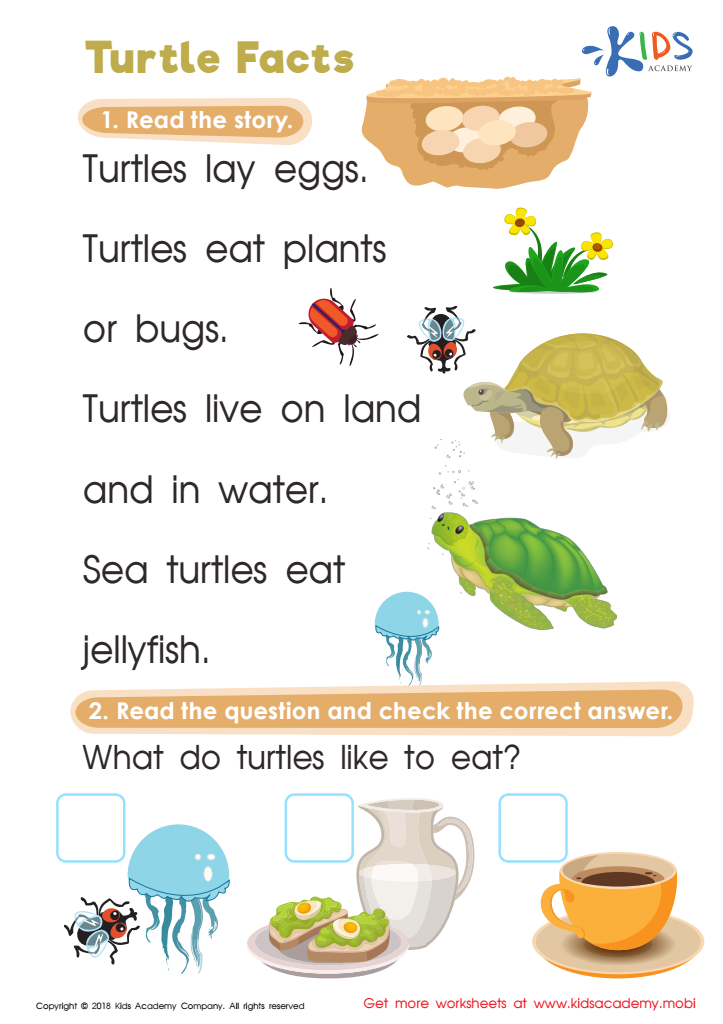
Turtle Facts Worksheet
 Assign to My Students
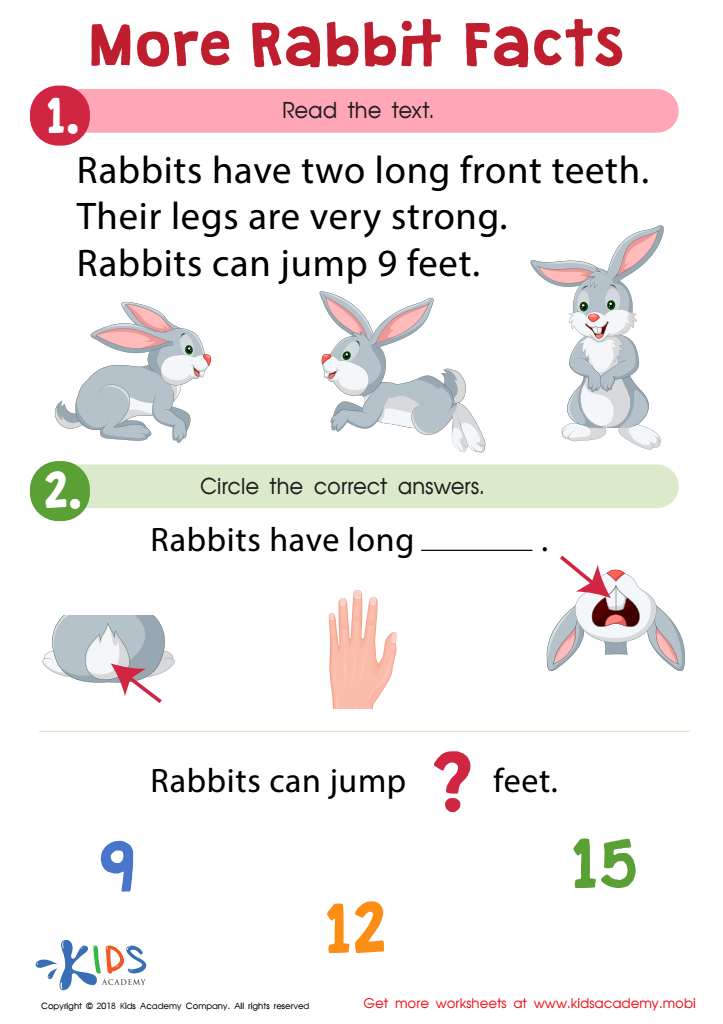
More Rabbit Facts Worksheet
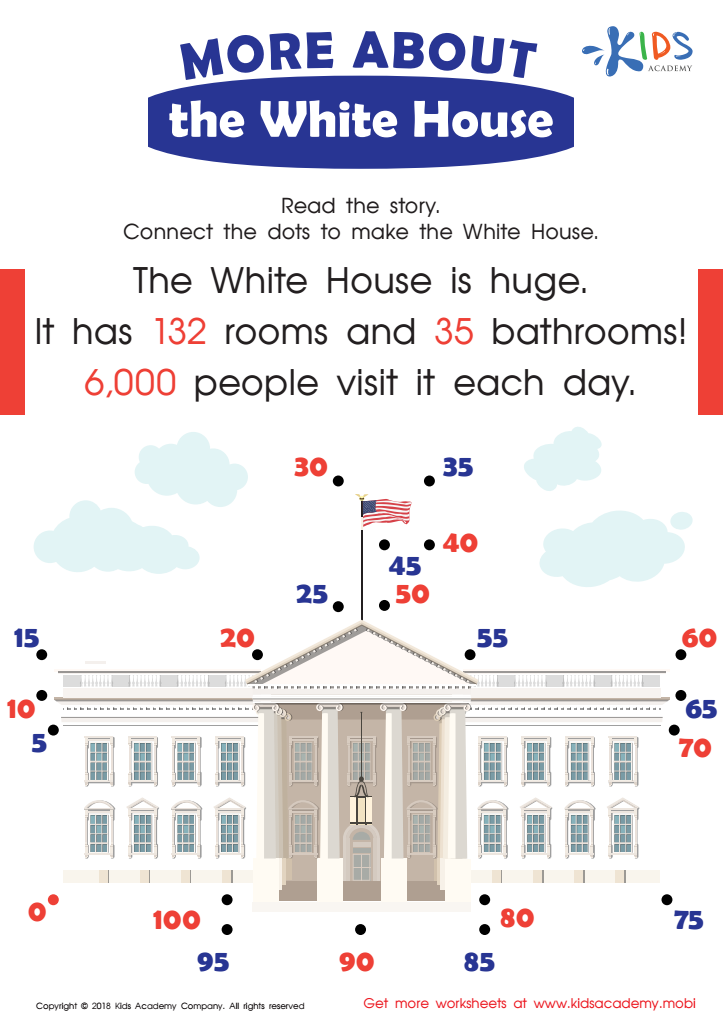
More About the White House Worksheet








Parents and teachers should prioritize information retention through reading non-fiction for children ages 6-7 because it builds a foundational knowledge base essential for future learning. Non-fiction books introduce young readers to real-world concepts, expanding their horizons and satisfying their natural curiosity. Retaining this information fosters cognitive development and critical thinking skills, enabling children to make connections between new information and existing knowledge.
Moreover, early retention of factual information enhances a child's ability to understand and engage with their environment more meaningfully. For example, learning about animals, geography, or simple machines through non-fiction can spur greater interest in science and other academic subjects. This interest, cultivated early, can lead to a lifelong passion for learning and academic success.
Information retention also plays a crucial role in developing vocabulary and language skills specific to various topics, enriching children's communication abilities. When they consistently comprehend and remember facts from non-fiction texts, they build confidence in their learning capabilities.
Parents and teachers who support non-fiction reading habits in young children are laying the groundwork for strong information processing skills, critical thinking, and a robust educational foundation. This early investment significantly benefits children’s academic achievement and intellectual growth over time.








