Developing critical thinking Science Worksheets for Ages 6-7
3 filtered results
-
From - To
Unlock your child's potential with our engaging Developing Critical Thinking Science Worksheets for ages 6-7! Tailored specifically for young learners, these worksheets encourage curiosity and analytical thinking through fun, curriculum-aligned activities. Each worksheet is designed to foster essential skills such as problem-solving, observation, and reasoning, making science concepts accessible and enjoyable. Kids will embark on exciting adventures with hands-on exercises that stimulate their imagination and enhance their understanding of the world around them. Perfect for both classroom and home learning, our resources support educators and parents in nurturing the next generation of critical thinkers. Explore our collection today and inspire scientific exploration!
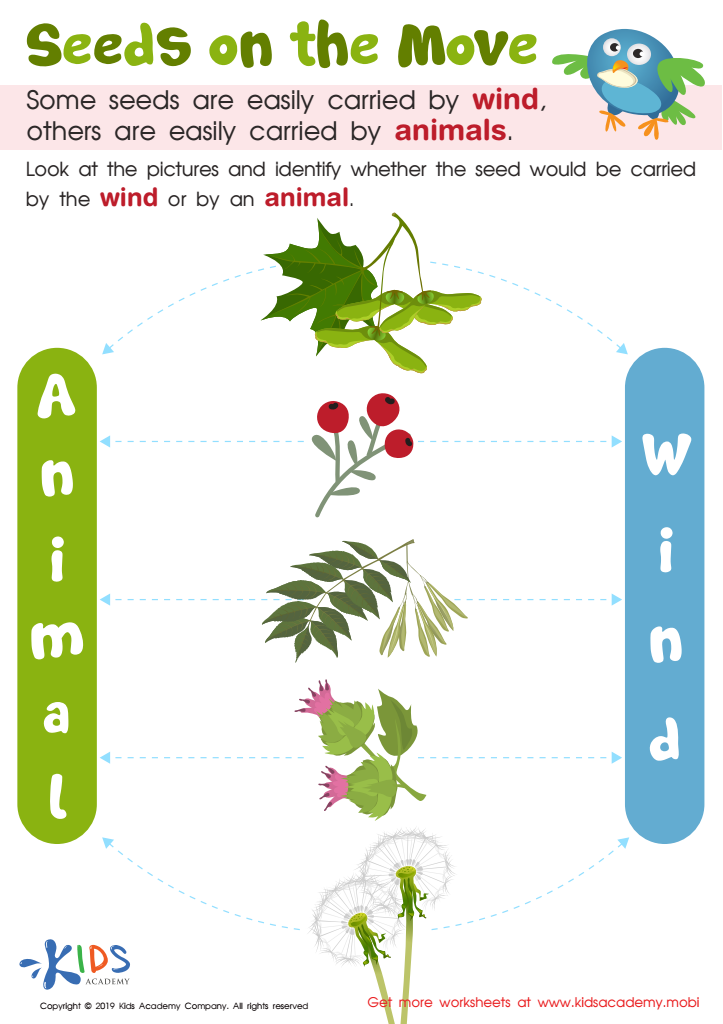
Seeds on the Move Worksheet
 Assign to My Students
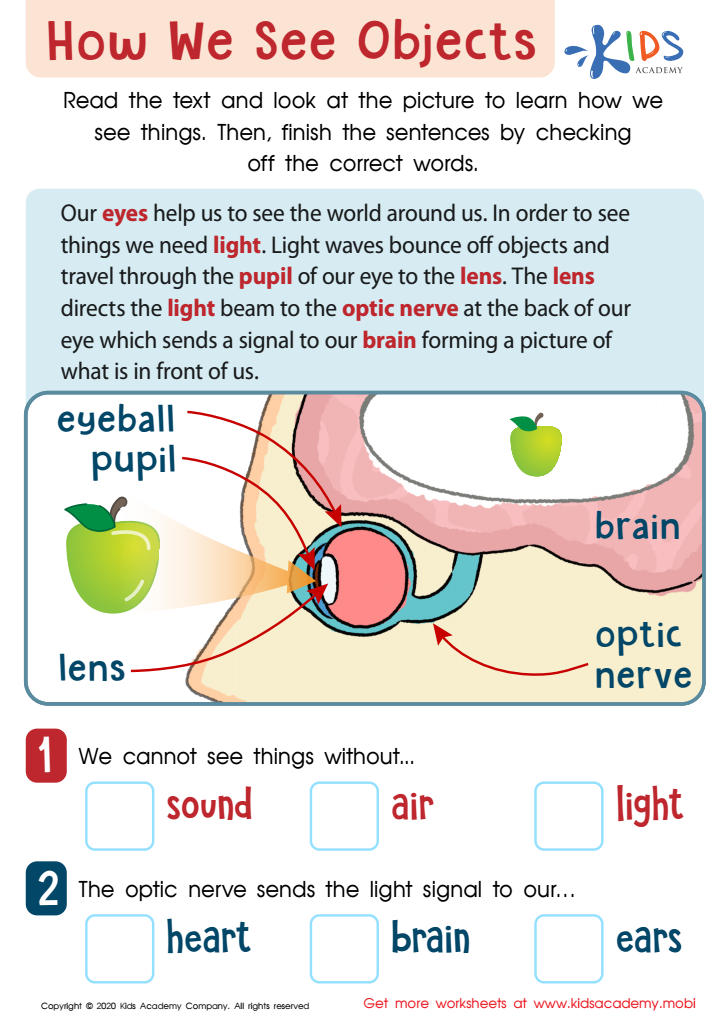
How We See Objects Worksheet
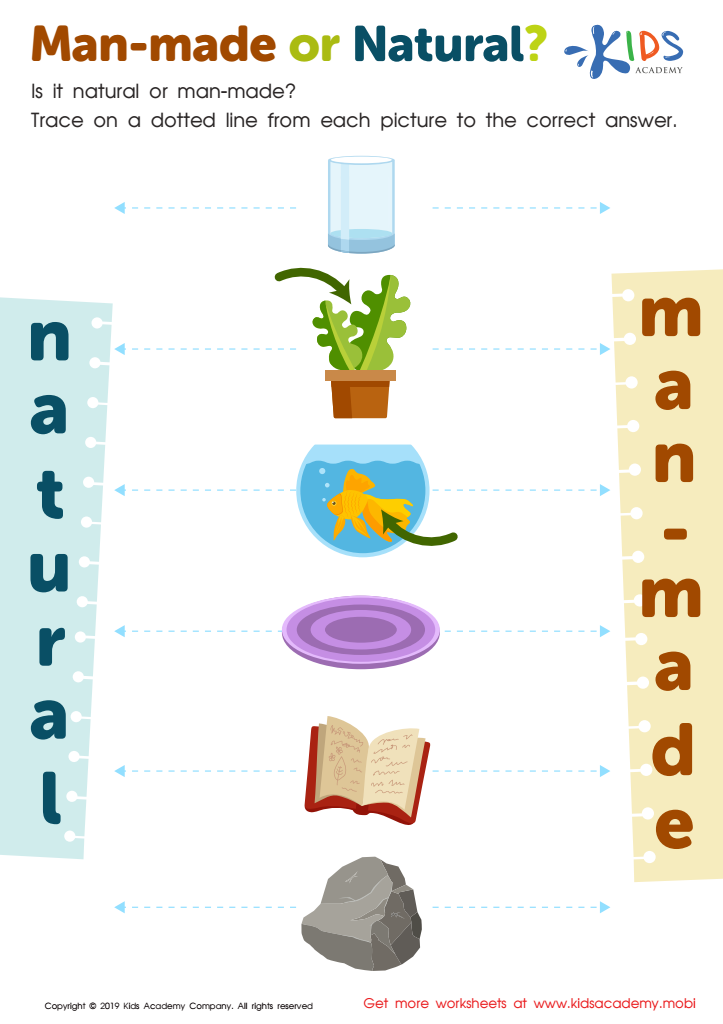
Man-Made or Natural? Worksheet








Developing critical thinking in science for ages 6-7 is essential as it lays the foundation for a child's cognitive growth and overall learning mindset. At this early stage, children are naturally curious and eager to explore the world around them. Nurturing their ability to think critically not only enhances their understanding of scientific concepts but also cultivates vital skills such as problem-solving, reasoning, and decision-making.
Parents and teachers play a crucial role in this development by creating an environment that encourages questioning, exploration, and experimentation. Engaging children in hands-on activities, encouraging them to ask “why” and “how,” and guiding them through process-based learning fosters an inquisitive nature. Moreover, the ability to analyze information, differentiate between facts and opinions, and evaluate evidence is increasingly important in an age saturated with information.
Incorporating critical thinking in science education also builds a child's confidence, enabling them to approach challenges with a solution-oriented mindset. As they learn to think for themselves, students develop independence and curiosity that drive lifelong learning. Thus, both parents and teachers should prioritize this aspect of education, as it shapes informed individuals who will navigate complex realities in the future.







