Understanding directions Science Worksheets for Ages 6-7
4 filtered results
-
From - To
Discover the engaging "Understanding Directions Science Worksheets" designed specifically for children aged 6-7. These worksheets help young learners develop crucial skills in following instructions and navigating directions effectively. With a focus on interactive activities, students will grow their comprehension in a fun and playful manner, fostering a love for science as they explore nature, simple experiments, and more. Perfect for home or classroom use, these worksheets encourage critical thinking and promote independence in learning. Empower your kids with the tools they need to understand directions and enrich their educational journey with delightful science activities! Explore now to enhance their growth and curiosity!
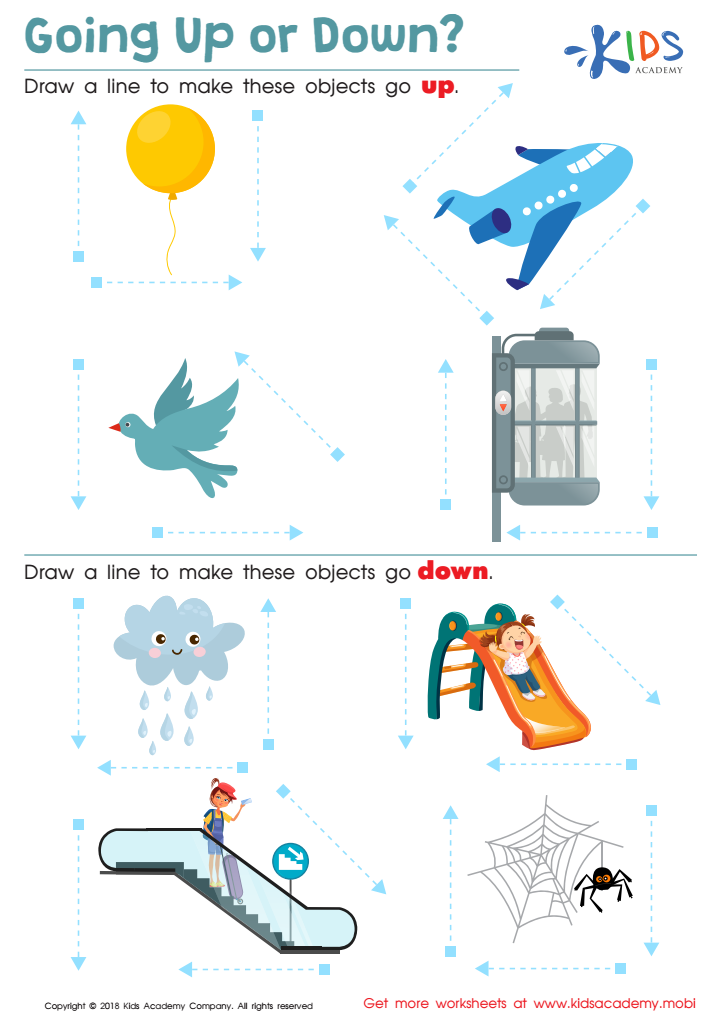
Going up or Down? Worksheet
 Assign to My Students
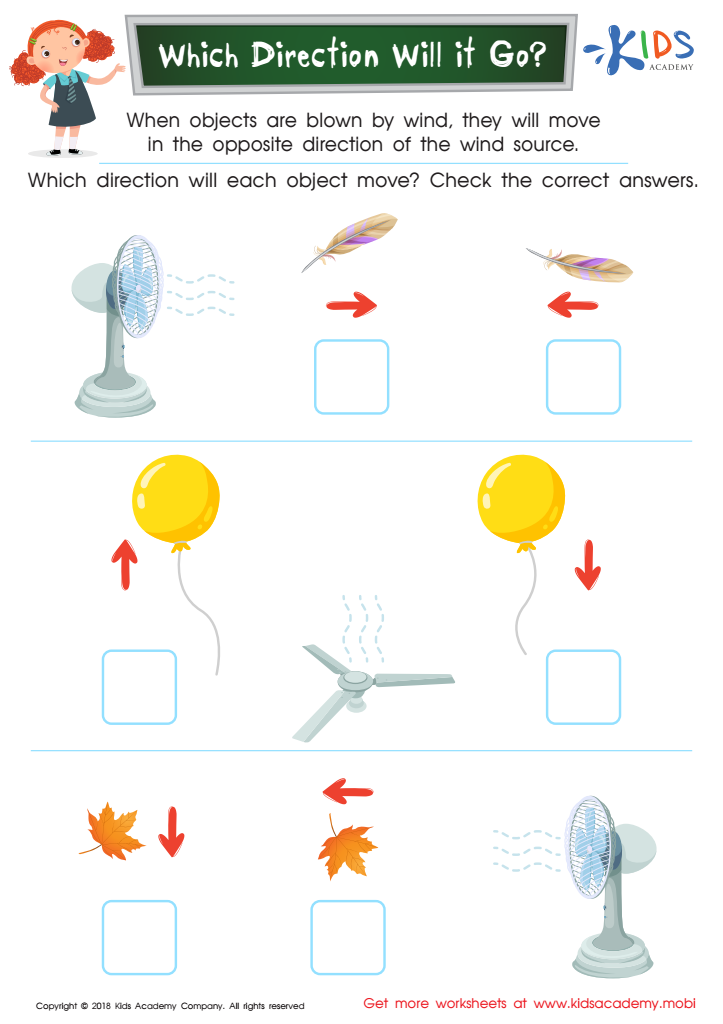
Which Direction Will it Go? Worksheet
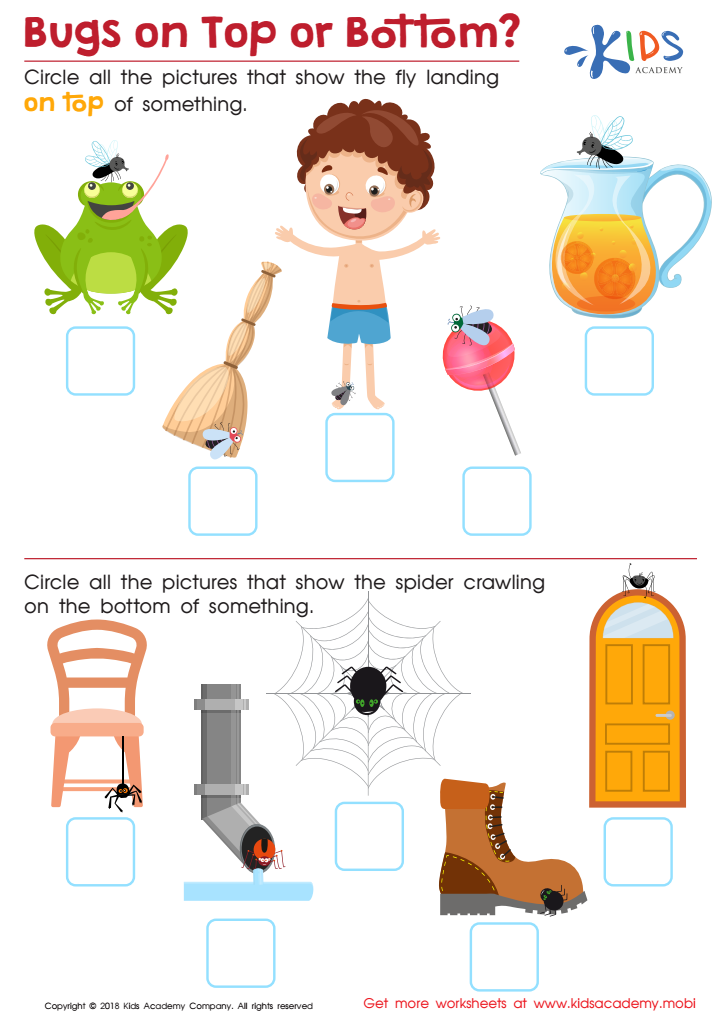
Bugs on Top or Bottom? Worksheet
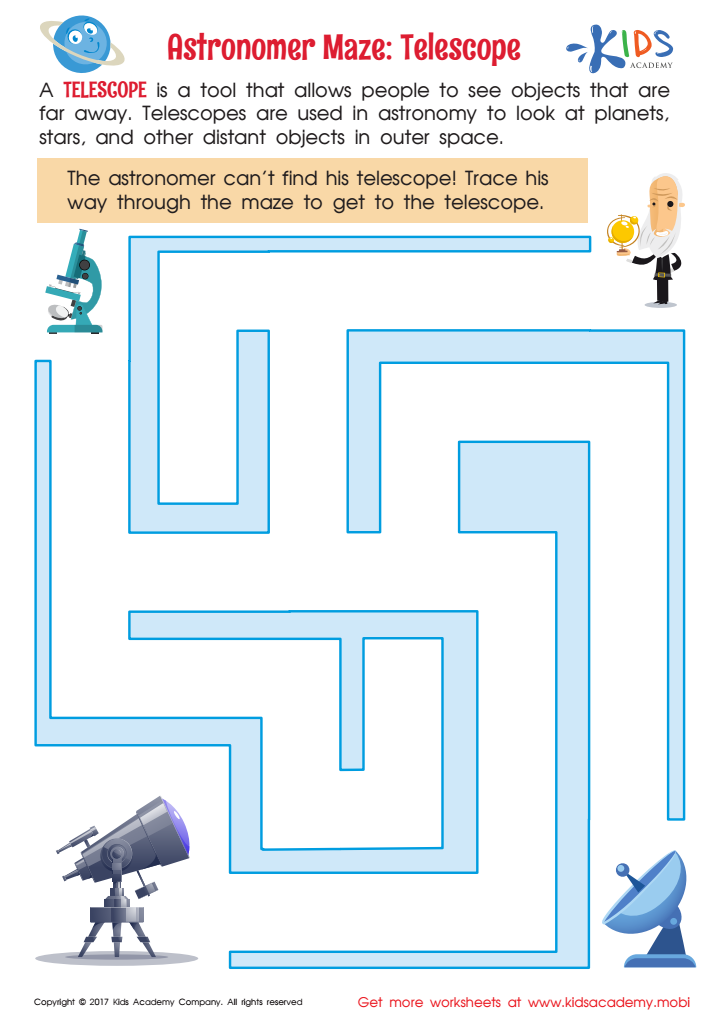
Astronomer Maze: Telescope Worksheet








Understanding directions in science is crucial for children ages 6-7 as it lays the foundation for their overall learning and critical thinking skills. At this age, children are naturally curious and begin engaging more deeply with the world around them. Teaching them how to understand and follow directions enhances their problem-solving abilities, encouraging them to experiment and explore scientific concepts safely.
Moreover, clear comprehension of directions fosters independence and confidence in young learners. When children can follow instructions accurately, they are more likely to participate in hands-on activities and experiments that strengthen their grasp of scientific principles, such as cause and effect. This stage of education is vital; it encourages inquisitiveness and helps them construct knowledge and science literacy.
Involving parents in this process further strengthens their children’s learning experience. By participating together in science projects, parents reinforce direction-following skills and promote a love for science at home. Ultimately, understanding directions not only aids in successful learning but also cultivates a nurturing environment where pain and mistakes are seen as opportunities for growth, ensuring children develop a resilient mindset towards their educational journey. Therefore, prioritizing direction-following in science for this age group is essential for effective teaching and parenting.







