
Spatial awareness Physical Science Worksheets for Ages 6-7
4 filtered results
Difficulty Level
Grade
Age
-
From - To
Subject
Activity
Standards
Unlock your child's potential with our engaging Spatial Awareness Physical Science Worksheets designed specifically for kids aged 6-7. These printable resources not only introduce fundamental scientific concepts but also enhance critical skills such as spatial reasoning and critical thinking. Through fun and interactive activities, children will explore concepts like shapes, measurement, and position, promoting a deeper understanding of their physical environment. Ideal for home or classroom settings, our worksheets cater to various learning styles, ensuring that every child can thrive. Boost your child's confidence and academic performance in science with these thoughtfully created materials that make learning enjoyable and effective!
Favorites
With answer key
Interactive
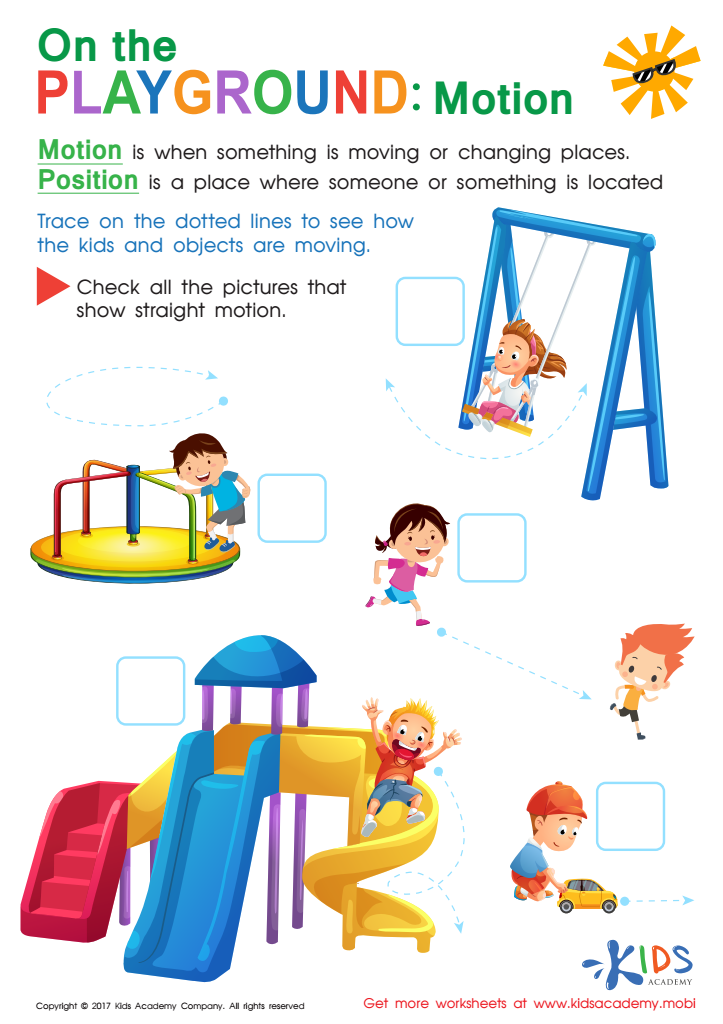
Position and Motion Worksheet
Take a trip to the park and explore motion and position with fun worksheets!
Take your child's science knowledge to a whole new level with Kids Academy's grade 2 position and motion worksheets! Explore motion and position with fun worksheets while taking a trip to the park. Strengthen their understanding of physics and how people and objects move through space.
 Assign to My Students
Position and Motion Worksheet
Worksheet
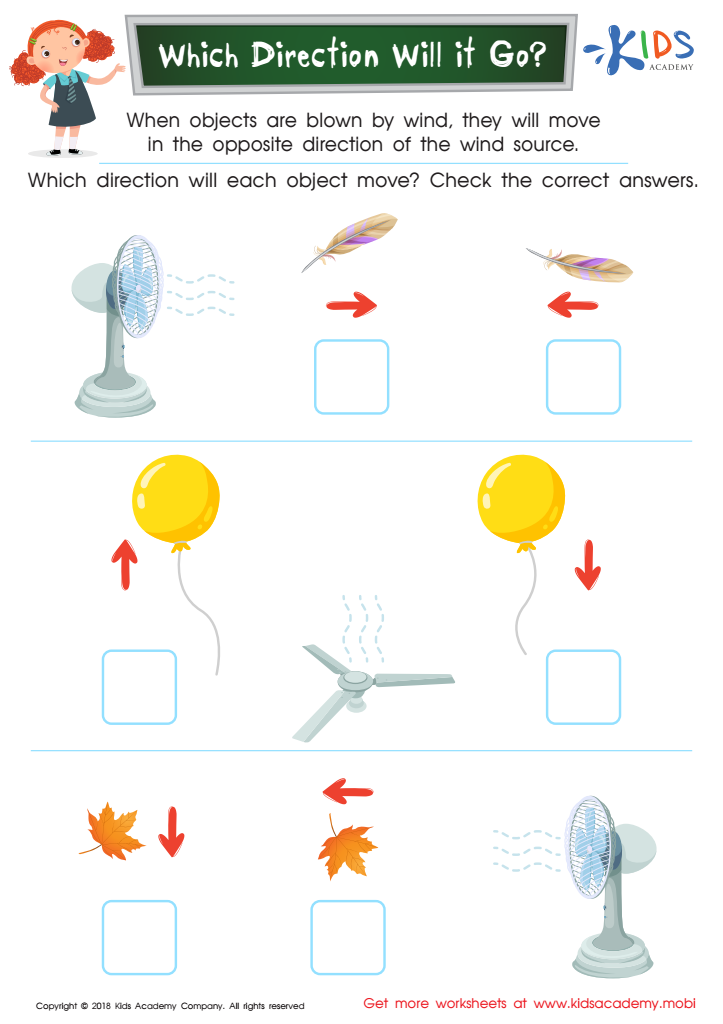
Which Direction Will it Go? Worksheet
Explain to your students: when objects are blown by wind, they will move in the opposite direction. In the worksheet, there are pictures of wind sources and objects being blown by the wind. Ask your child to identify and check the direction each object will move.
Which Direction Will it Go? Worksheet
Worksheet
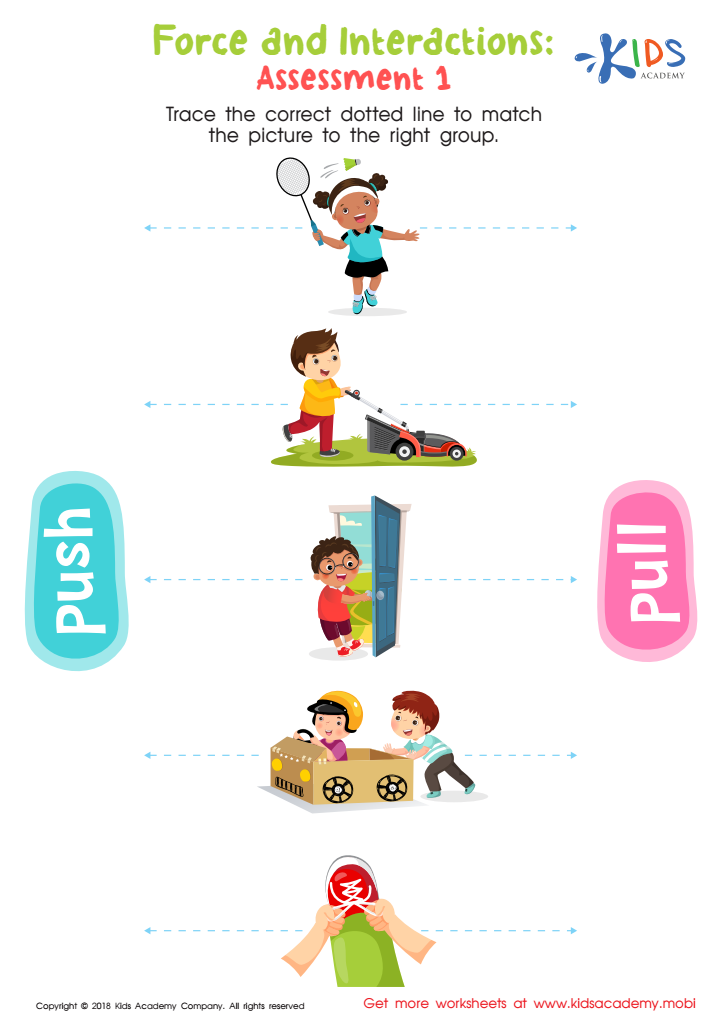
Force and Interactions: Assessment 2 Worksheet
Help your child see the difference between push and pull with this fun worksheet. Ask them to match each picture to the right group. The "push" is on the left and the "pull" is on the right. Assist them in tracing the activities and explain what it is the people are doing.
Force and Interactions: Assessment 2 Worksheet
Worksheet
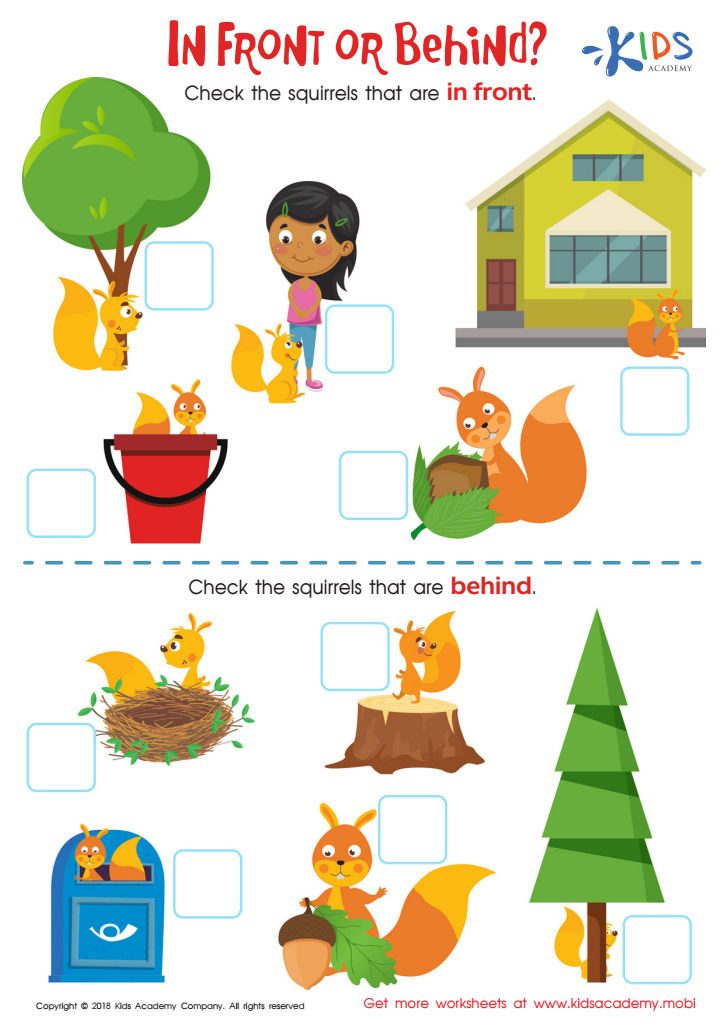
In Front or Behind: Part 2 Worksheet
Teach positional words "front" and "behind" with this fun worksheet! Students identify where the squirrel is in relation to the object - in front or behind. It's a great exercise to practice early geometry skills and understanding object movement.
In Front or Behind: Part 2 Worksheet
Worksheet
Join Kids Academy for Free
Who is primarily going to use this learning content?


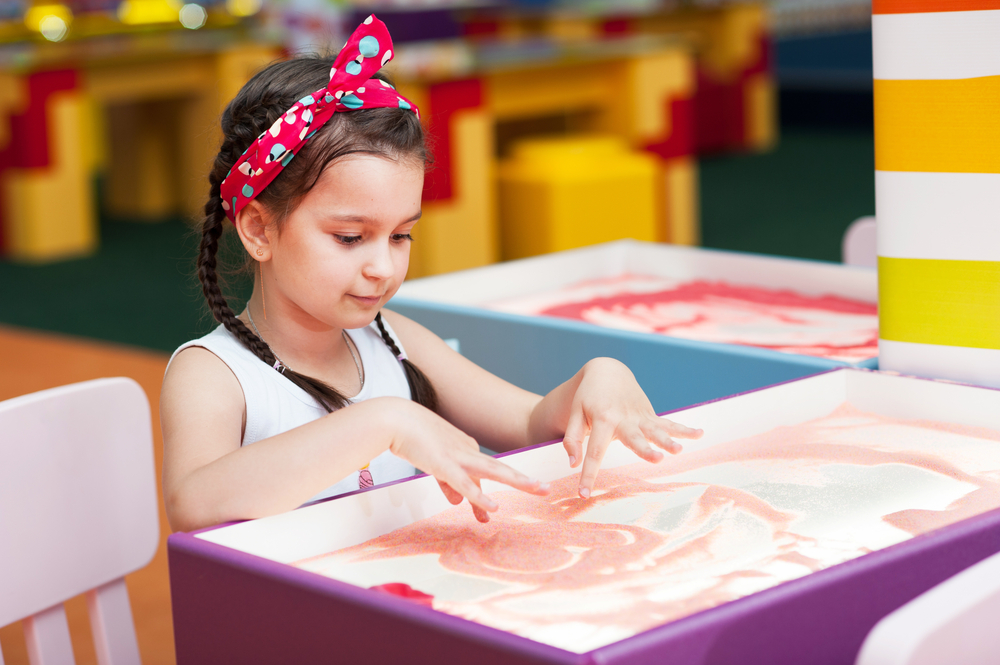




Spatial awareness is a crucial component of physical science for children ages 6-7, and it holds significant importance for both parents and teachers. At this developmental stage, children are beginning to understand how objects relate to one another and their surroundings. By fostering spatial awareness, we enhance their ability to visualize, manipulate, and analyze objects, which are foundational skills for many areas of learning, including math and science.
Parents and teachers should care because spatial awareness directly impacts a child's problem-solving skills. Engaging in activities that promote spatial reasoning—such as building with blocks, navigating obstacle courses, or playing with puzzles—encourages children to think critically about how objects move and fit together in space. This is not only fun but also essential for grasping key science concepts, such as the laws of motion and basic physics.
Moreover, strong spatial awareness boosts confidence and cognitive development. Children who excel in these areas are likely to perform better in STEM (science, technology, engineering, and mathematics) subjects as they grow. By supporting spatial learning, we lay the groundwork for lifelong skills that will benefit their academic journey and future careers. Ultimately, advocating for spatial awareness is investing in their holistic development and preparing them for a complex world.







