Understanding seasons Seasons Worksheets for Ages 6-7
4 filtered results
-
From - To
Explore the fascinating world of seasons with our engaging "Understanding Seasons Worksheets" tailored for children ages 6-7. These worksheets are designed to enhance your child's knowledge of the four distinct seasons—spring, summer, autumn, and winter—through fun activities and illustrations. Kids will enjoy learning about seasonal changes, the weather associated with each season, and the different holidays celebrated throughout the year. Each worksheet promotes critical thinking and creativity while reinforcing essential science skills. Perfect for parents and teachers, these resources aim to foster a love for learning and help young learners understand their environment. Start your seasonal adventure today!
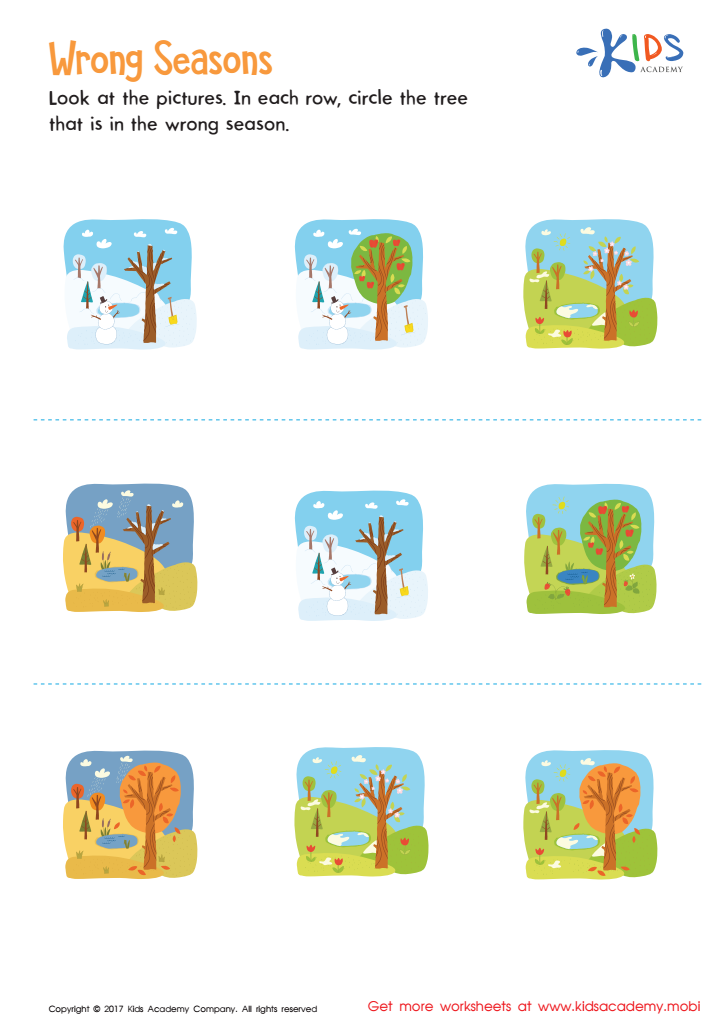
Wrong Seasons Worksheet
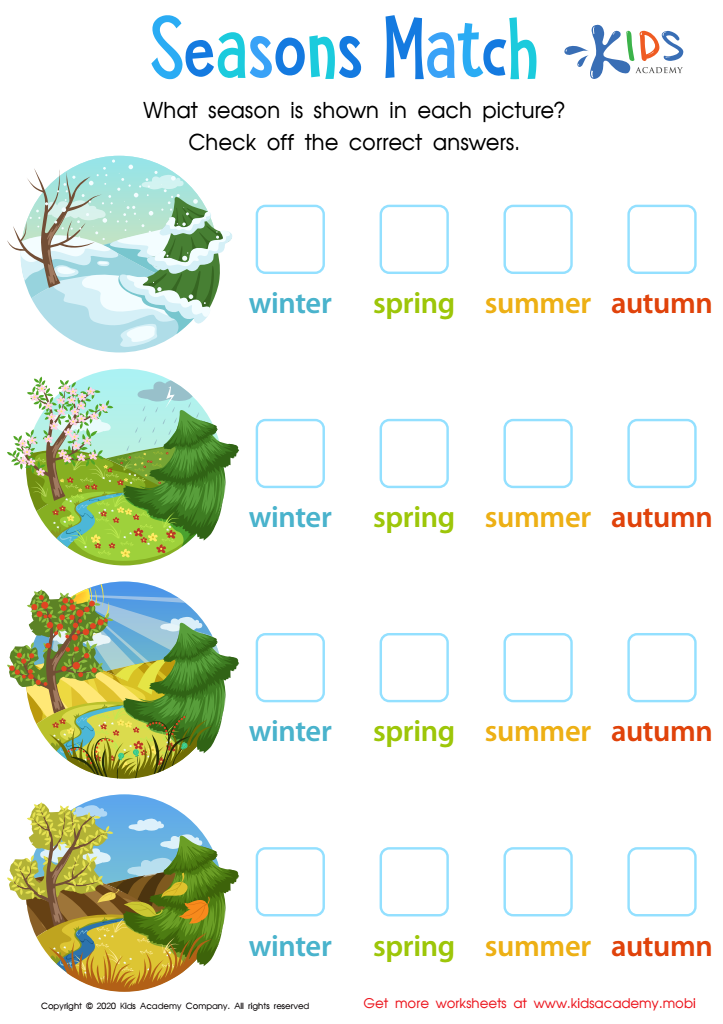
Seasons Match Worksheet
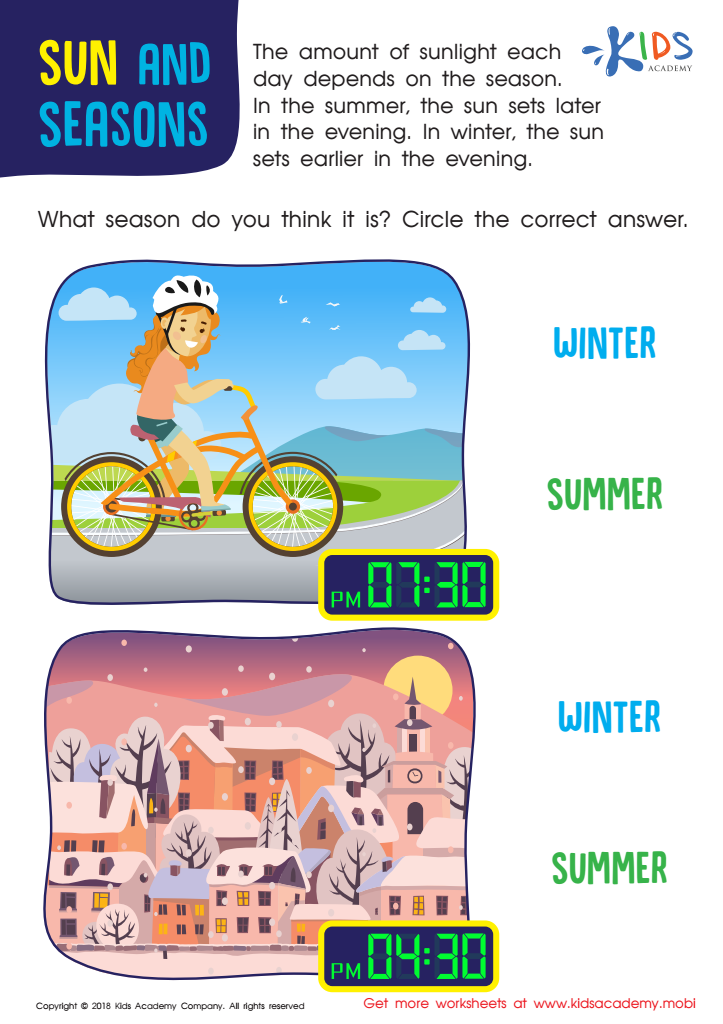
Sun and Seasons Worksheet
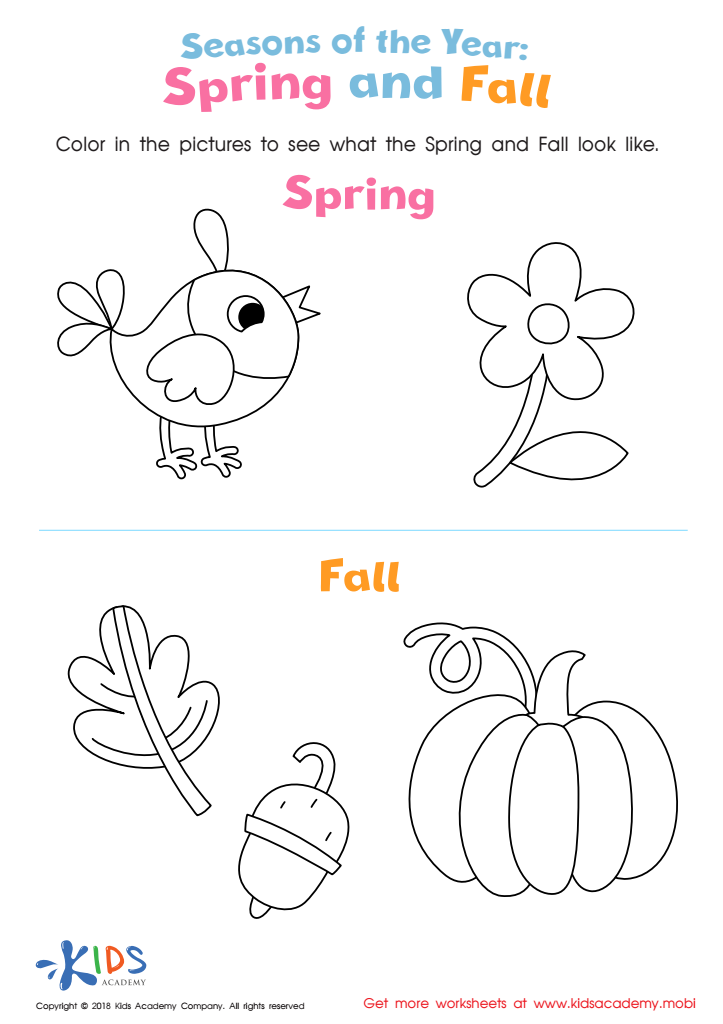
Spring and Fall Worksheet
 Assign to My Students


%20(1).jpg)


Understanding seasons is crucial for children aged 6-7 as it enriches their knowledge about the world and fosters curiosity. At this age, children are naturally observant and begin noticing changes in their environment. Teaching them about the four seasons—spring, summer, autumn, and winter—helps them make connections to what they see around them, such as changes in weather, daylight, and nature.
This knowledge not only sparks their interest in science and the environment but also supports their cognitive development. They learn to categorize and quantify changes, which strengthens their reasoning skills. Additionally, understanding seasons helps children grasp concepts of time, as they learn about cyclical patterns and weather variations throughout the year.
From a social-emotional perspective, discussing seasons creates opportunities for shared experiences—like seasonal activities and celebrations—strengthening family bonds and building community. For teachers, incorporating seasons into the curriculum can enhance creative arts, storytelling, and math lessons, making learning dynamic and engaging.
In essence, understanding seasons equips children with observational skills, promotes critical thinking, nurtures creativity and reinforces connections with their surroundings, making it a vital aspect of early childhood education that parents and educators should prioritize.







