Vocabulary Building Community Worksheets for Ages 6-7
4 filtered results
-
From - To
Discover our engaging Vocabulary Building Community Worksheets designed specifically for children aged 6-7! These fun, interactive activities help young learners enhance their vocabulary while exploring key concepts related to their community. With a variety of exercises—from reading comprehension to word matching—children can enjoy hands-on learning that stimulates their curiosity. Our worksheets focus on essential vocabulary, making connections to real-life situations and enhancing language skills. Perfect for teachers and parents, these resources support early education, fostering a love for words and understanding of the community. Start building a strong vocabulary foundation for your child today with our comprehensive worksheets!
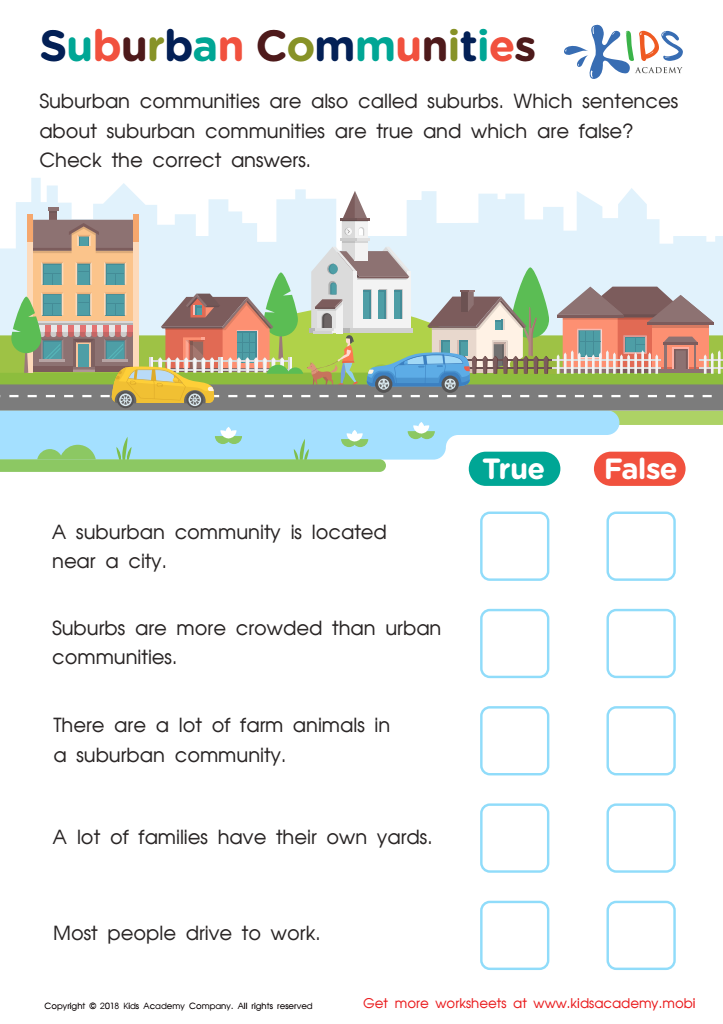
Suburban Communities Worksheet
 Assign to My Students
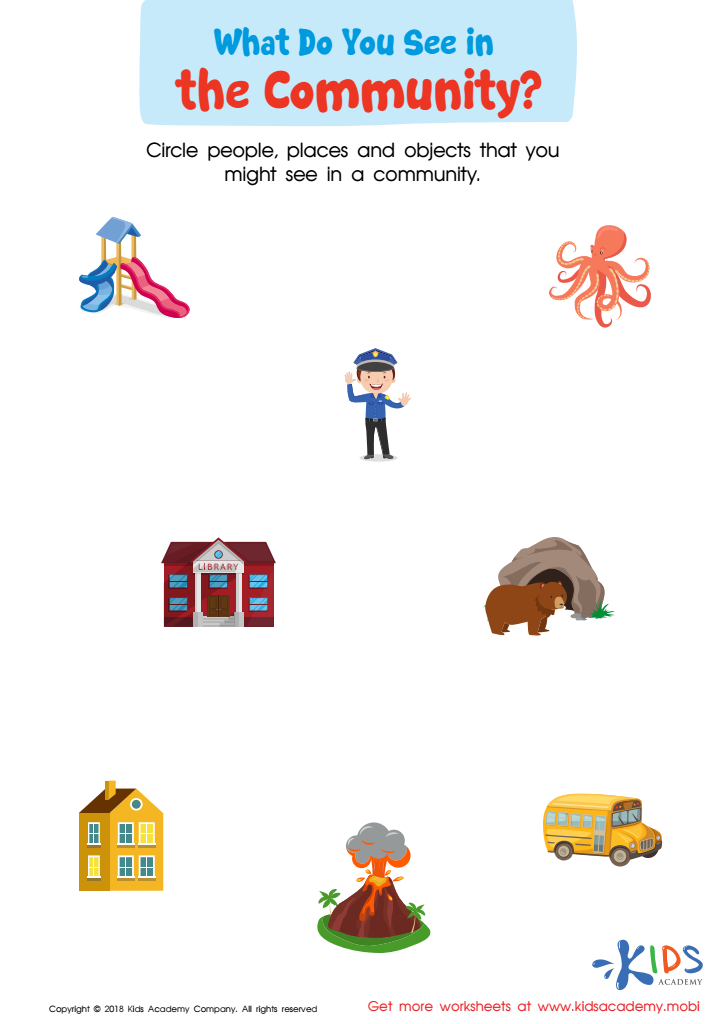
What Do You See in the Community Worksheet

What Do you See at the Library? Worksheet
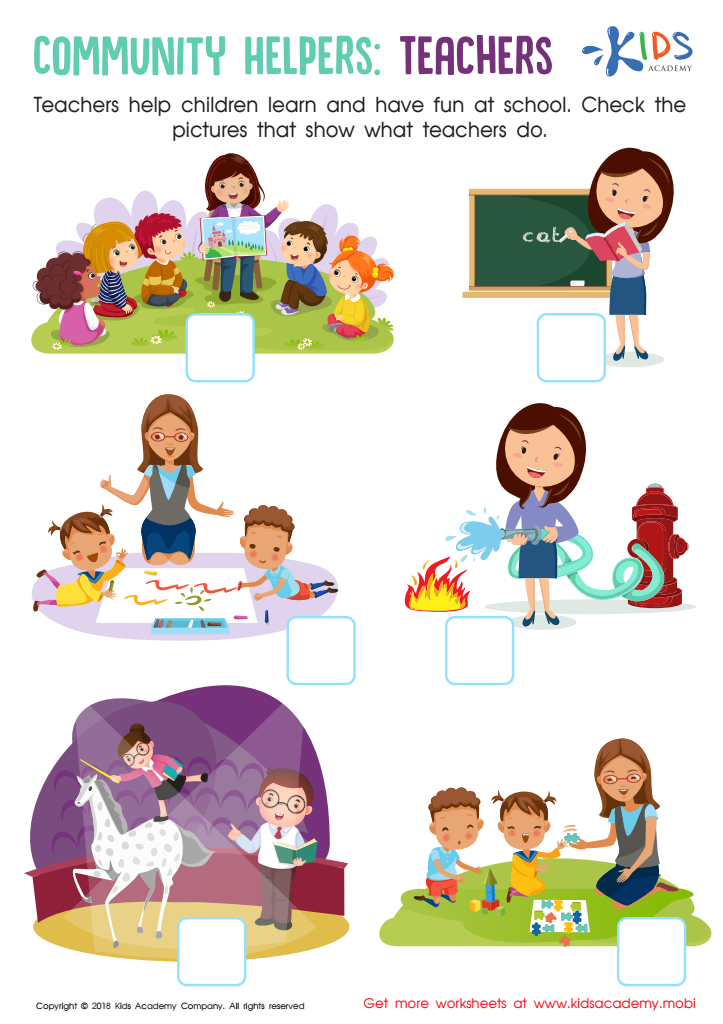
Teachers Community Helpers Worksheet








Parents and teachers should prioritize vocabulary building for children ages 6-7 as this age group is critical for language development and literacy skills. During these formative years, children rapidly expand their vocabulary, which is fundamental to their academic success and effective communication. A robust vocabulary enhances reading comprehension, allowing children to better understand and engage with stories and information, ultimately fostering a love for reading.
Moreover, vocabulary mastery lays the groundwork for writing skills, as children learn to express themselves clearly and creatively. Participating in a Vocabulary Building Community provides interactive opportunities for children to learn new words through engaging activities, games, and discussions. This collaborative learning environment encourages social connections, boosting their confidence and collaborative skills.
In addition, parents and teachers who are active in promoting vocabulary development can create a nurturing atmosphere that values language learning. This investment in vocabulary not only supports children’s immediate educational goals but also equips them with critical thinking skills and a broader understanding of the world. Ultimately, a strong vocabulary is a vital component that will benefit children throughout their educational journey and beyond, making it essential for caregivers to engage in or support vocabulary-building initiatives.








