Critical Thinking Governance and Civics Worksheets for Ages 6-7
3 filtered results
-
From - To
Introduce your young learners to the essential world of governance and civics with our engaging Critical Thinking Governance and Civics Worksheets designed for ages 6-7. Through interactive activities, children develop crucial critical thinking skills, understanding complex concepts like community roles, rules, and responsibilities in an age-appropriate manner. Our expertly crafted worksheets foster curiosity and support cognitive development, equipping kids with the foundational knowledge required for responsible citizenship. With visually appealing and child-friendly content, learning becomes a fun and enriching experience. Visit Kids Academy for a comprehensive collection of printable worksheets to enhance your child's social studies education.
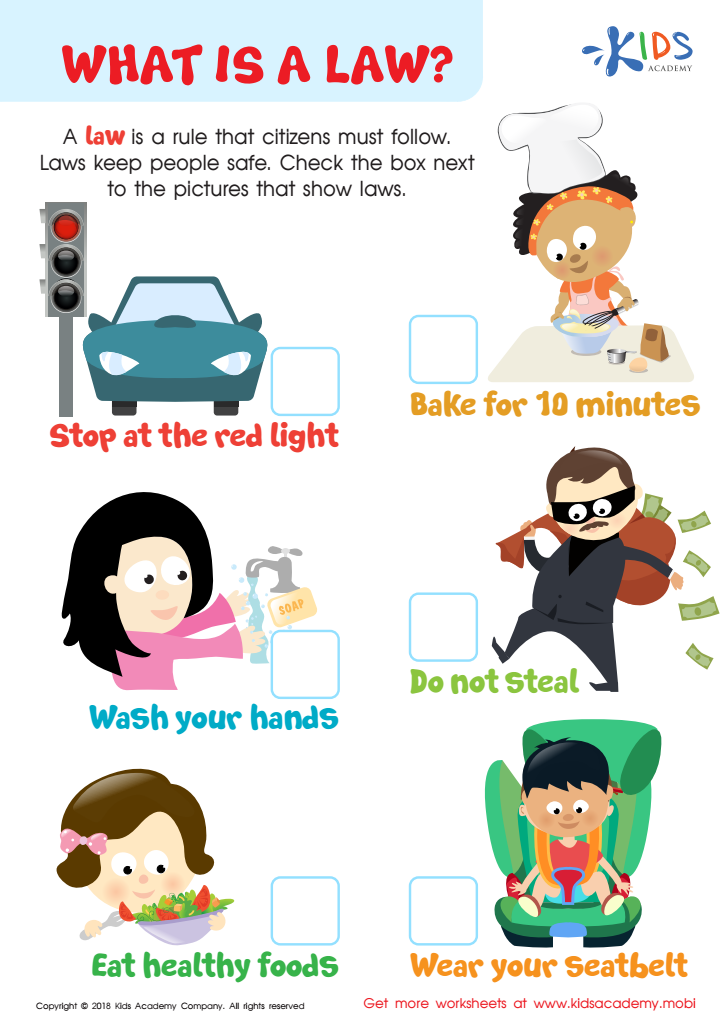
What is a Law? Worksheet
 Assign to My Students
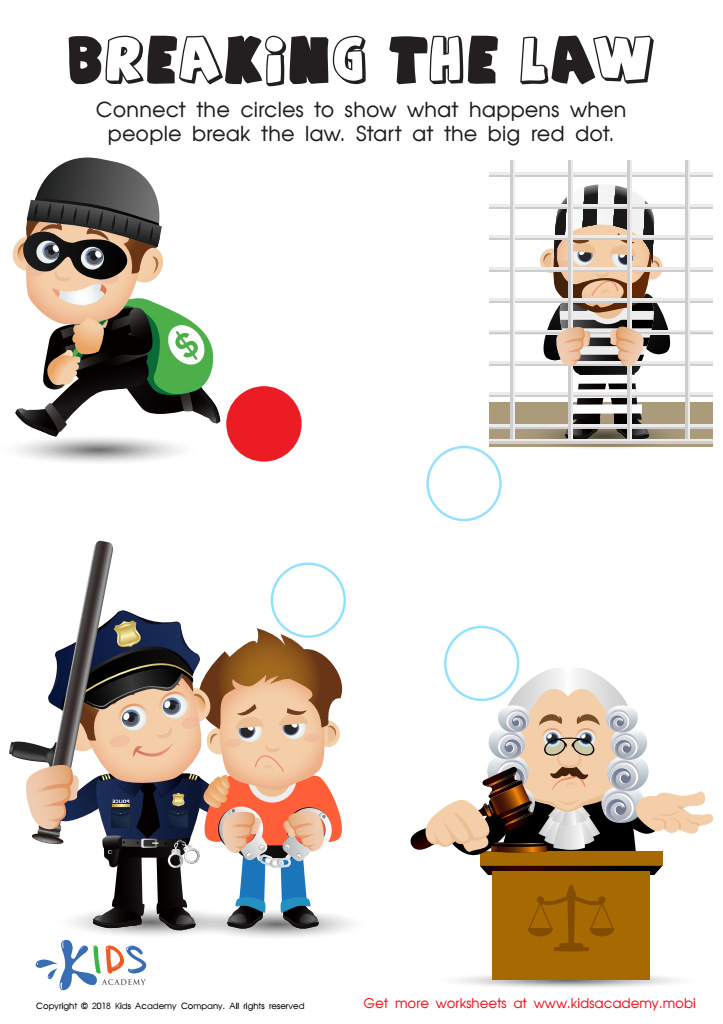
Breaking the Law Worksheet
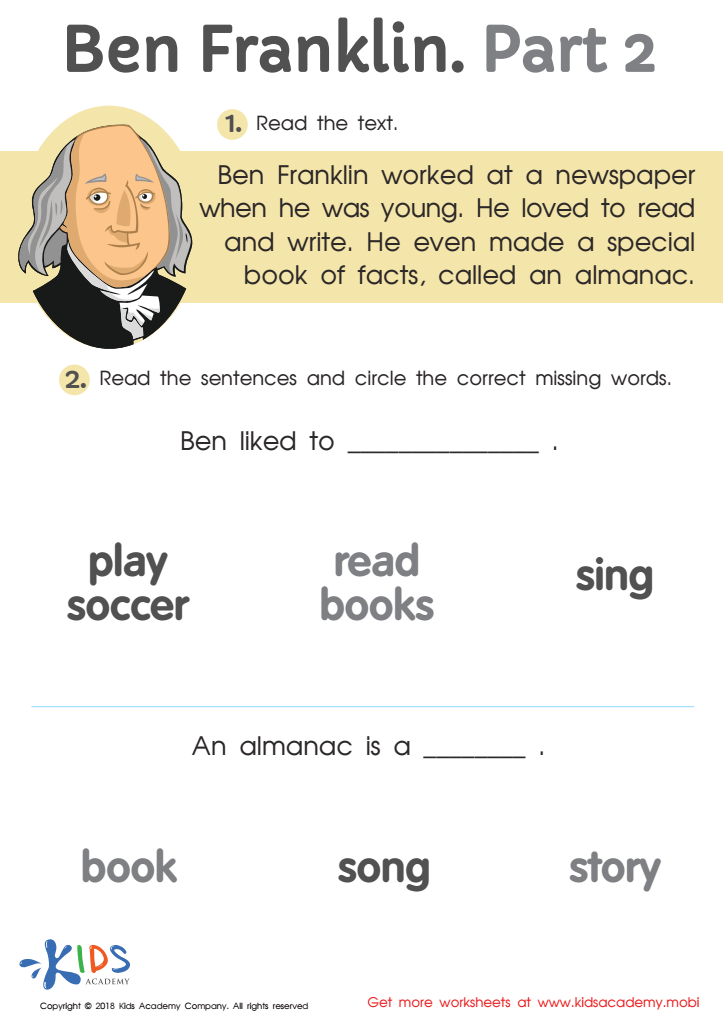
Ben Franklin Part 2 Worksheet


Parents and teachers should prioritize Critical Thinking, Governance, and Civics for children aged 6-7 because these foundational skills are crucial for their overall development and future societal engagement. At this age, children's cognitive abilities are expanding rapidly, and nurturing critical thinking enables them to make logical connections, solve problems creatively, and understand cause-and-effect relationships. This early development of critical thinking is vital for academic success and helps children navigate complex life situations effectively.
Introducing governance and civics at an early age instills a sense of responsibility, community involvement, and the importance of rules and fairness. It helps children understand how their actions and decisions impact others, fostering empathy and cooperative behaviors. Early exposure to civic concepts lays the groundwork for informed and active citizenship, which is essential for a functioning democracy.
Moreover, teaching these subjects supports character building and the development of a moral compass. Children learn about justice, equality, and respect for others' rights, which are essential values in a diverse society. By integrating critical thinking, governance, and civics into early education, parents and teachers equip children with the tools to become thoughtful, ethical, and proactive members of their communities, setting the stage for a more conscious and engaged generation.