Capitalization rules Capitalization Worksheets for Ages 6-7
6 filtered results
-
From - To
Introduce young learners to the exciting world of writing with our "Capitalization Rules Capitalization Worksheets for Ages 6-7" for ages 6-7. These expertly designed worksheets make mastering capitalization rules fun and accessible. Children will learn when to capitalize letters in sentences, names, days of the week, and more. Perfect for both classroom settings and home practice, each worksheet is filled with engaging activities and colorful illustrations to keep kids motivated. Watch as your child’s writing skills flourish and their confidence grows. Kickstart their journey to becoming skilled writers with these essential capitalization worksheets!
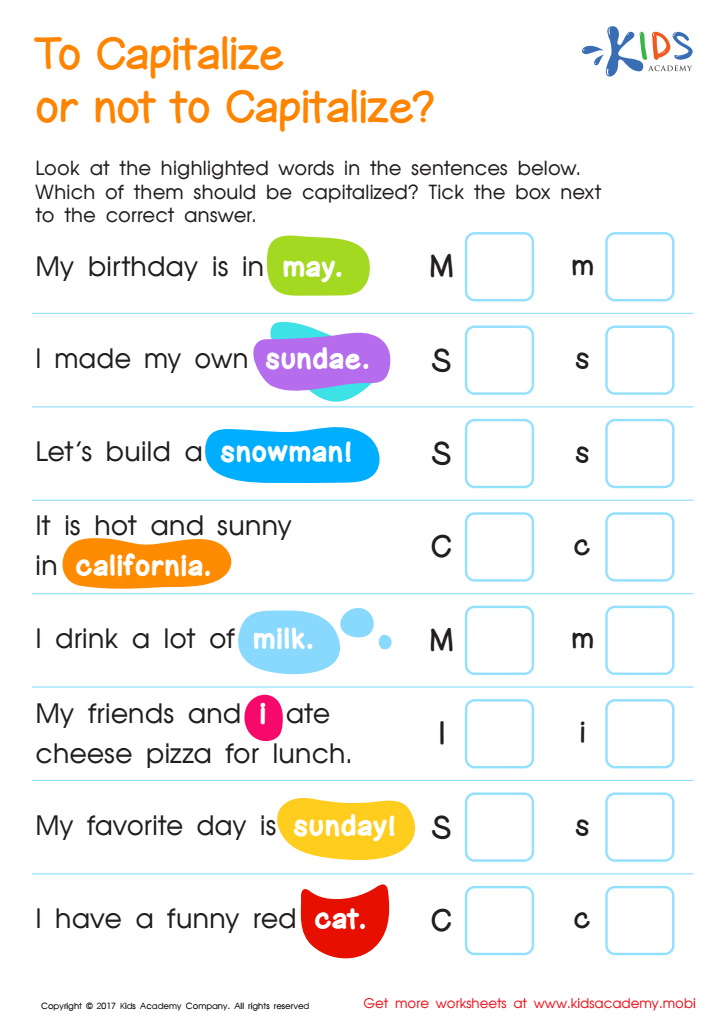
Capitalization: To Capitalize or Not? Printable
 Assign to My Students
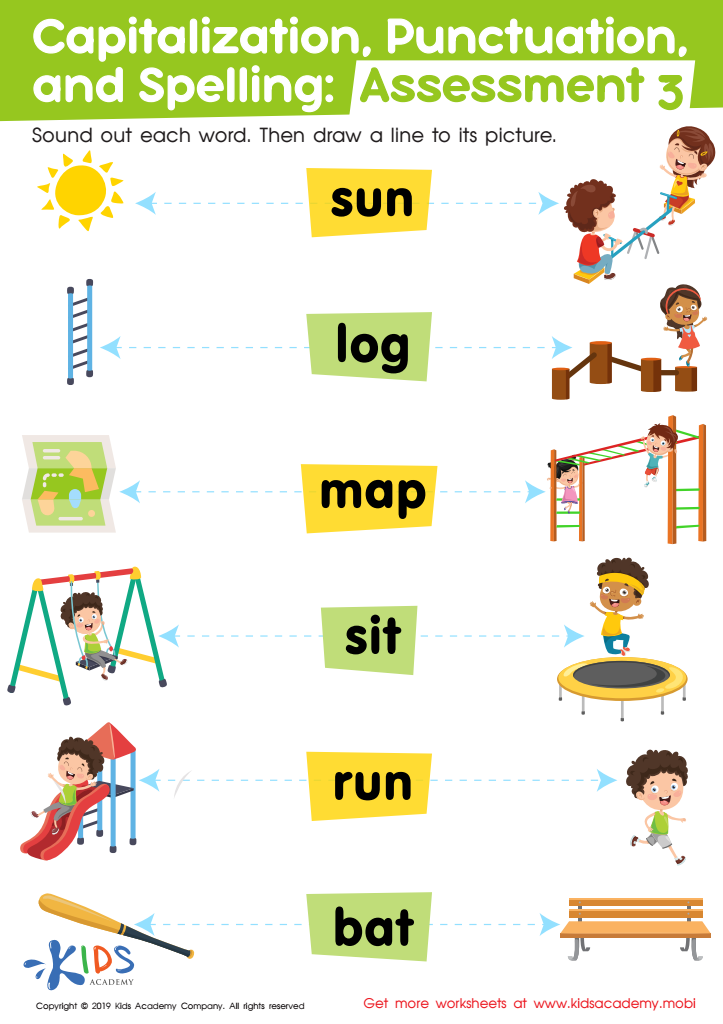
Capitalization. Punctuation. Spelling. Assessment 3 Worksheet
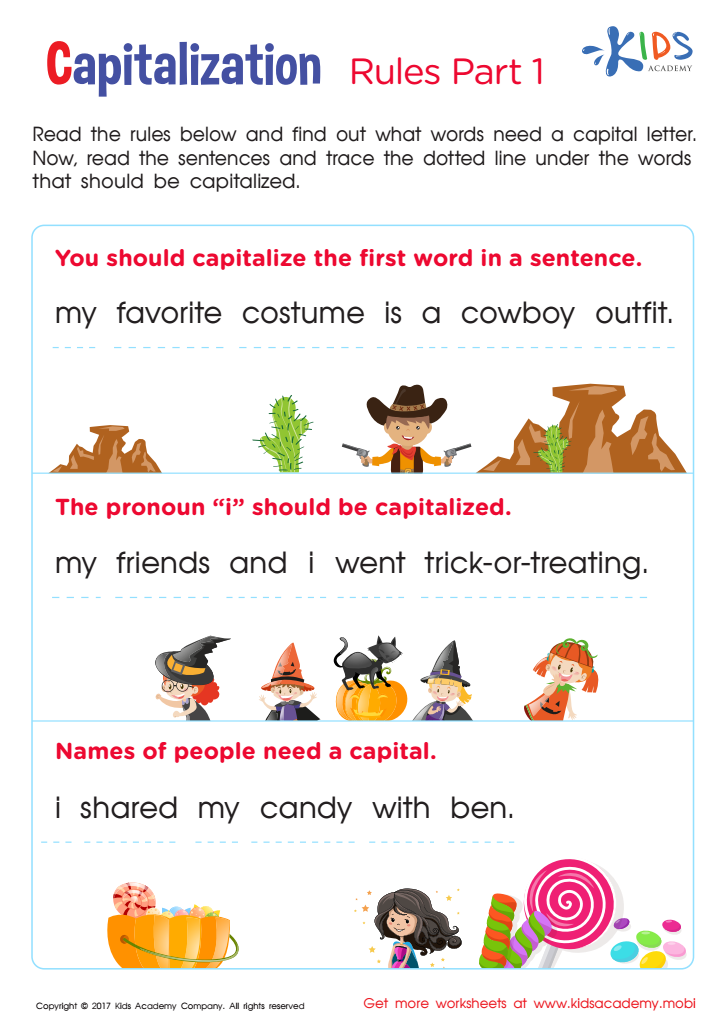
Capitalization Rules: Part 1 Worksheet
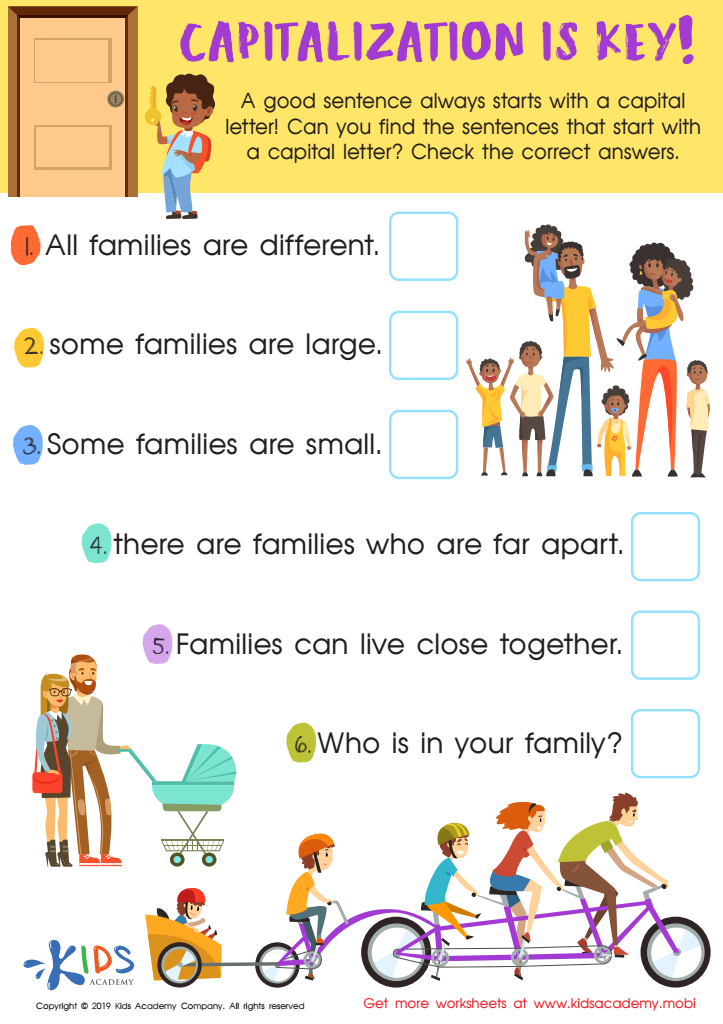
Capitalization Key Worksheet
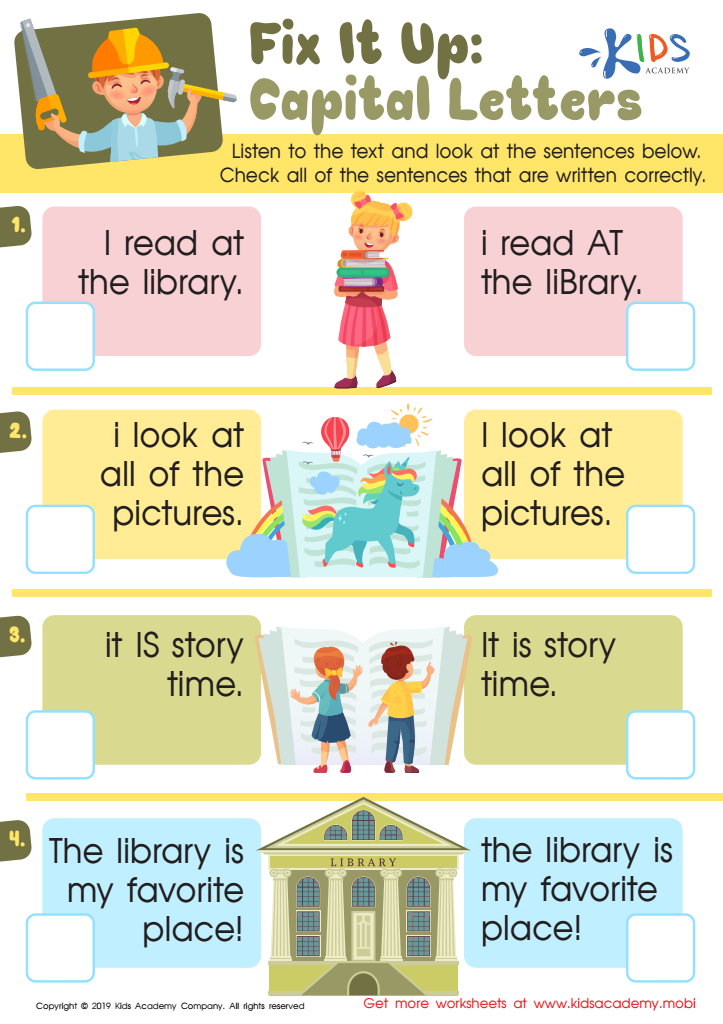
Fix Capital Letters Worksheet
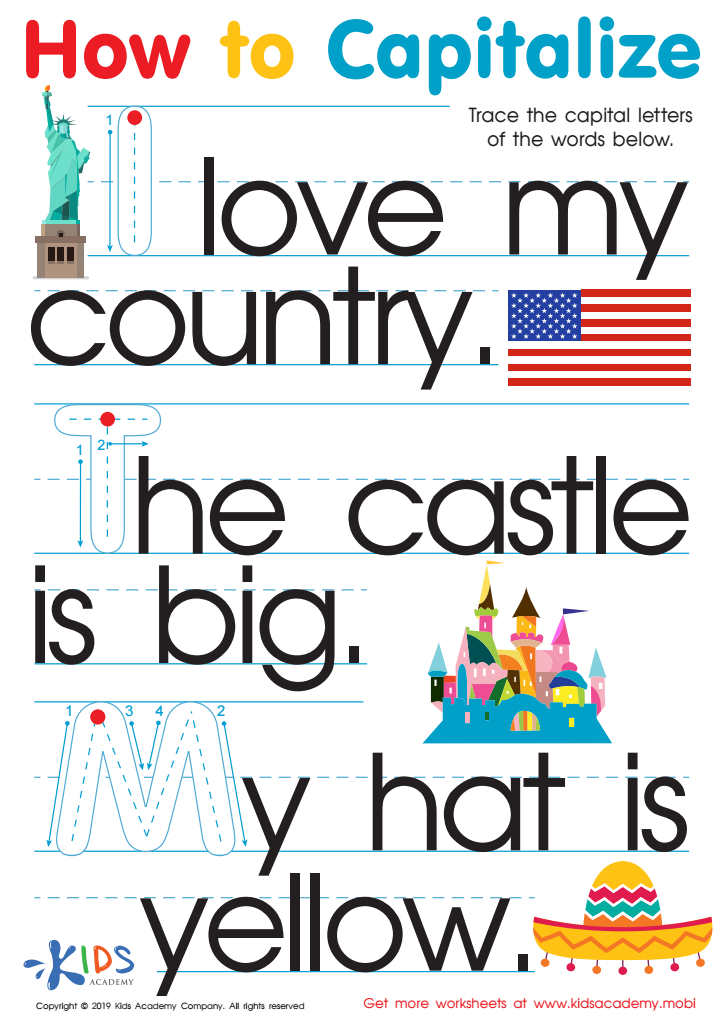
How to Capitalize Worksheet







Capitalization rules are fundamental for young learners, aged 6-7, as they significantly contribute to developing proper writing skills. Parents and teachers should care about these rules because they lay the groundwork for clear and effective communication. At this age, kids are just beginning to form complete sentences and express their thoughts in writing. Understanding when to use capital letters helps them write in a way that others can easily read and understand, which boosts their confidence as budding writers.
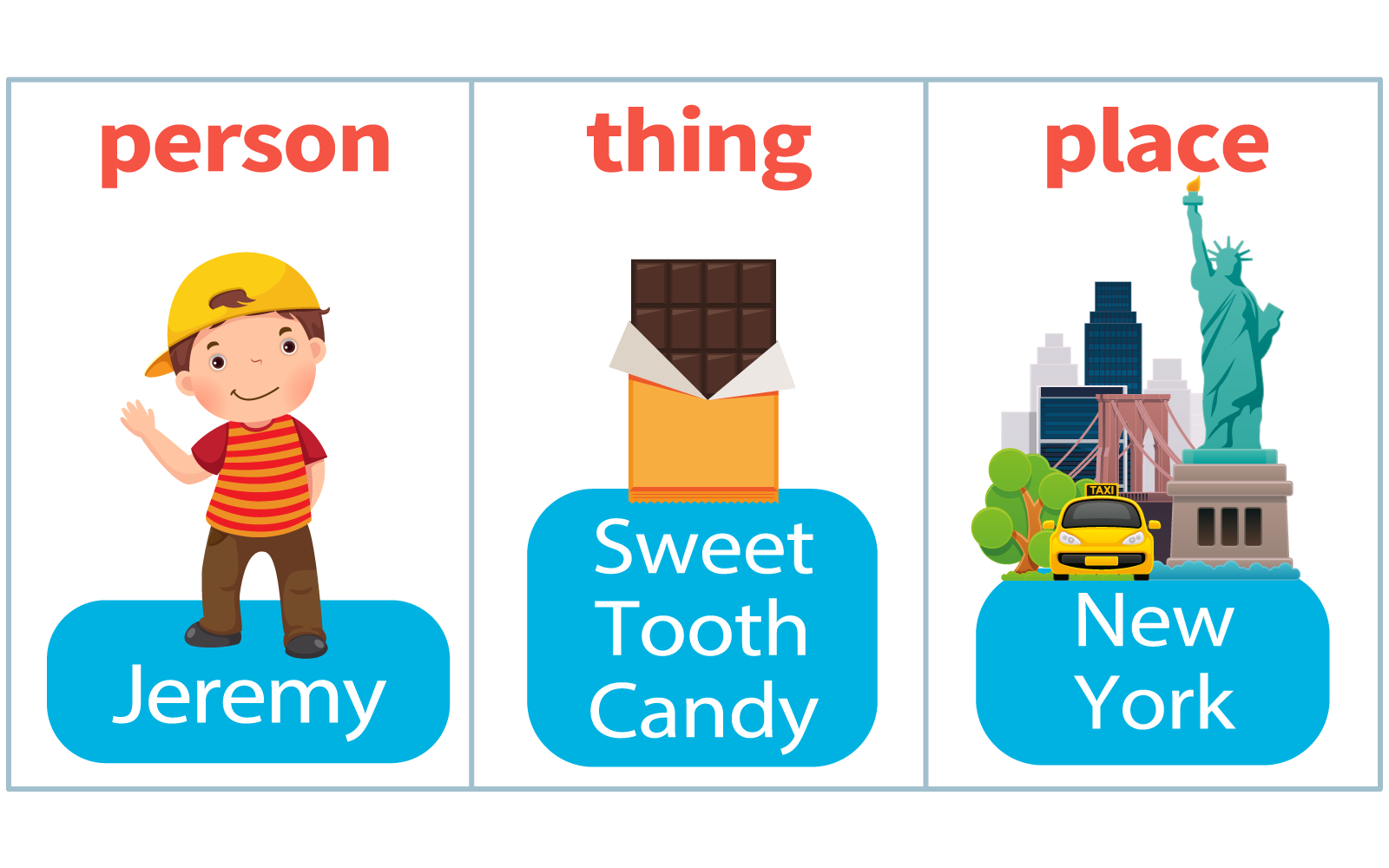
Correct capitalization, such as starting sentences with capital letters and using them for proper nouns—people's names, places, and titles—is essential for readability. It makes written work look polished and professional, even at an early stage. Furthermore, instilling these habits early sets a solid foundation for more complex writing tasks they'll encounter in higher grades.
This focus also supports reading skills. Recognizing capital letters at the beginning of sentences helps children understand the structure of written language, leading to better comprehension. Moreover, learning these rules helps students grasp that written language has norms and conventions that are important to follow, fostering a sense of discipline.
Ultimately, mastering capitalization rules equips young children with essential tools for effective written communication, bolsters their confidence, and sets them on a path to academic success.








