English grammar practice Grammar Worksheets for Ages 6-7
3 filtered results
-
From - To
Discover engaging English grammar practice worksheets designed specifically for children ages 6-7. Our comprehensive resources focus on essential language skills, allowing young learners to build a solid foundation in grammar. With a variety of fun activities, such as filling in the blanks, matching exercises, and sentence structure challenges, these worksheets make learning both interactive and enjoyable. Each activity aims to enhance students' understanding of nouns, verbs, adjectives, and punctuation. Perfect for classroom use or at-home reinforcement, our worksheets help educators and parents support their child's journey toward mastering English grammar. Start boosting your child's writing prowess today!
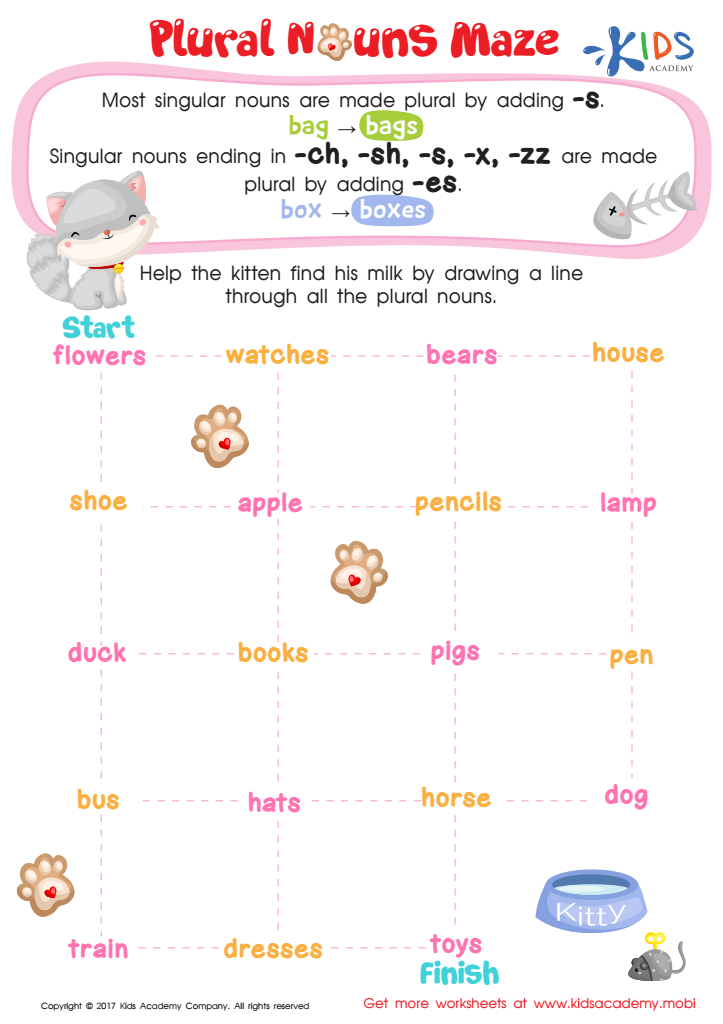
Plural Nouns Maze Worksheet
 Assign to My Students
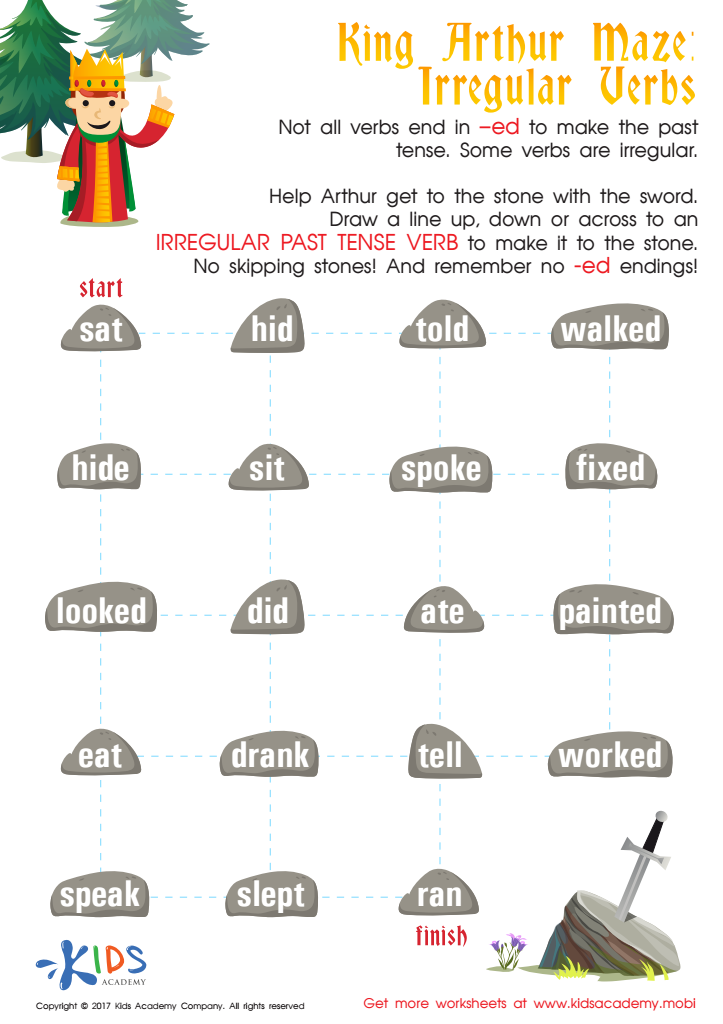
Irregular Verbs: Stones Worksheet
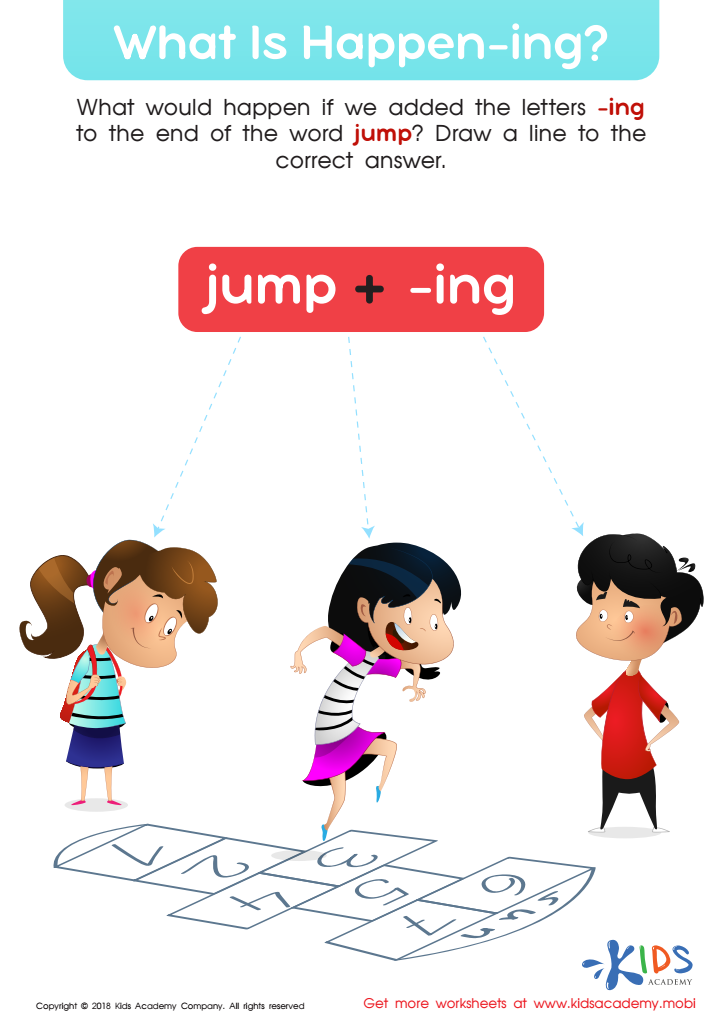
What Is Happen-Ing? Worksheet







Parents and teachers should care about English grammar practice for children aged 6-7 because it's foundational for effective communication. At this age, children are beginning to grasp the structure of language, which enhances their reading, writing, and speaking skills. Mastering grammar helps young learners construct clear and meaningful sentences, fostering their ability to express thoughts and ideas accurately.
Moreover, a solid understanding of grammar boosts confidence in academic writing and verbal communication. It enables children to understand and engage with stories and information, setting the stage for future learning across subjects. By instilling good grammar habits early on, adults can help mitigate later challenges in higher education where advanced writing becomes crucial.
Additionally, engaging in grammar practice encourages critical thinking. As children learn to identify parts of speech, sentence structure, and punctuation, they develop analytical skills that can be applied in numerous contexts. Finally, nurturing grammar skills promotes a love for language, enhancing vocabulary and curiosity about words.
In conclusion, prioritizing grammar practice for young learners equips them with essential tools for success in school and life, fostering effective communication and confidence in their language abilities.








