Contextual understanding Writing Worksheets for Ages 6-7
6 filtered results
-
From - To
Unlock your child's writing potential with our Contextual Understanding Writing Worksheets designed for ages 6-7. These engaging resources help young learners enhance their writing skills by providing context-rich scenarios and exercises. Children will practice understanding different situations, developing the ability to express their thoughts clearly and coherently. Each worksheet focuses on improving vocabulary, sentence structure, and comprehension through fun and interactive activities. Perfect for classroom use or at-home learning, our worksheets not only foster creativity but also boost critical thinking skills. Enrich your child's educational journey and watch them thrive as confident writers with our thoughtfully crafted materials!
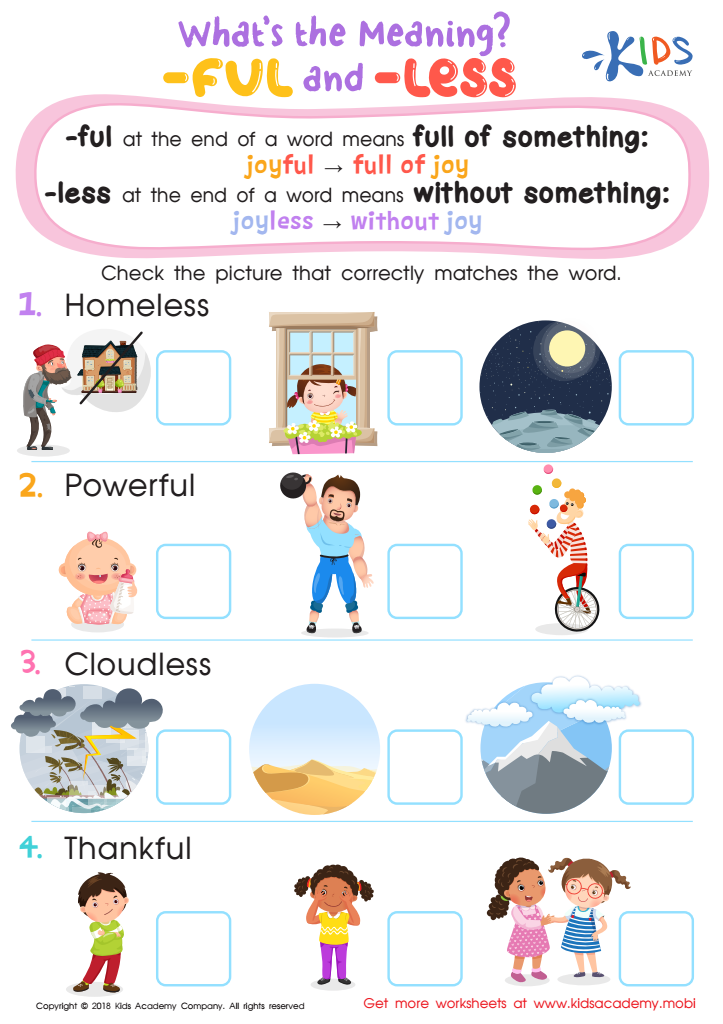
What's the Meaning? Worksheet
 Assign to My Students
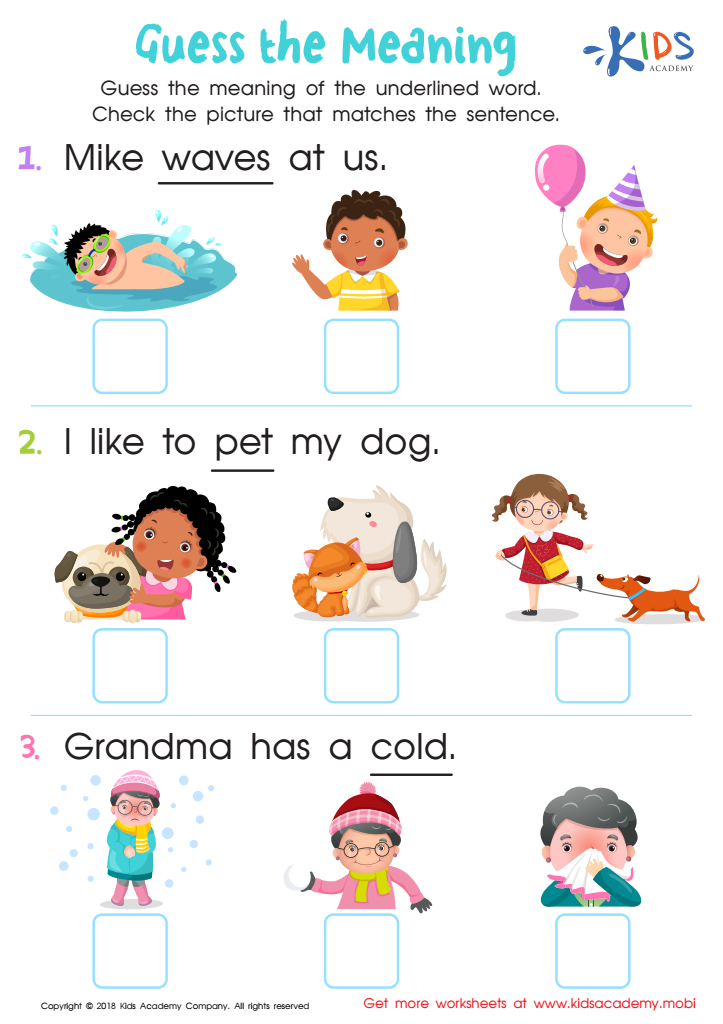
Guess the Meaning Worksheet
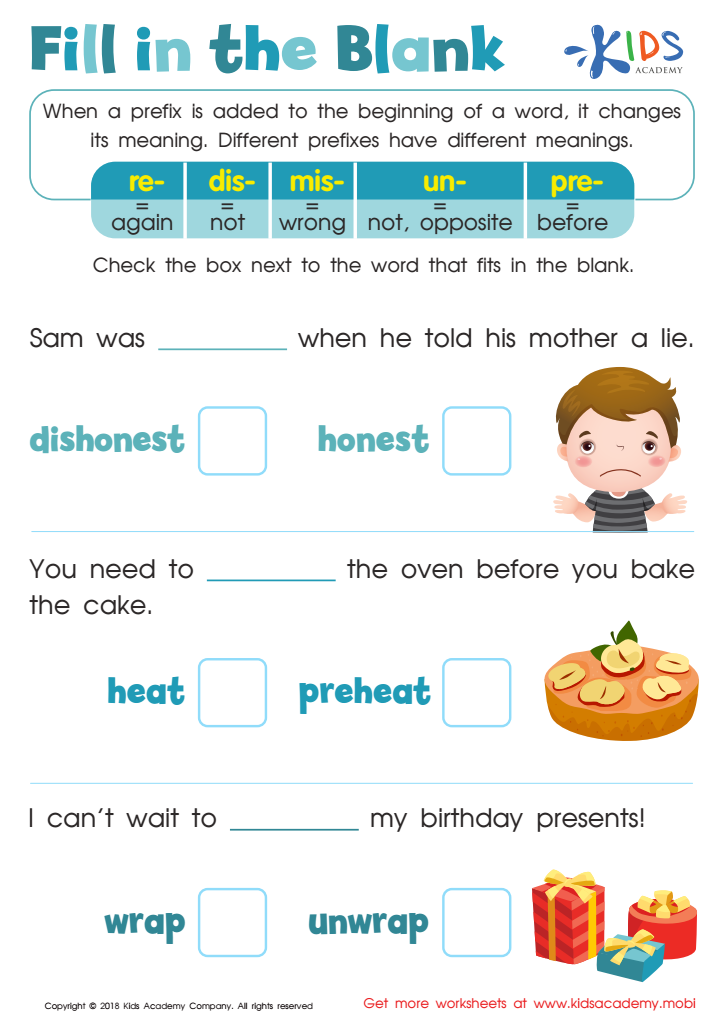
Reading: Fill in the Blank Worksheet
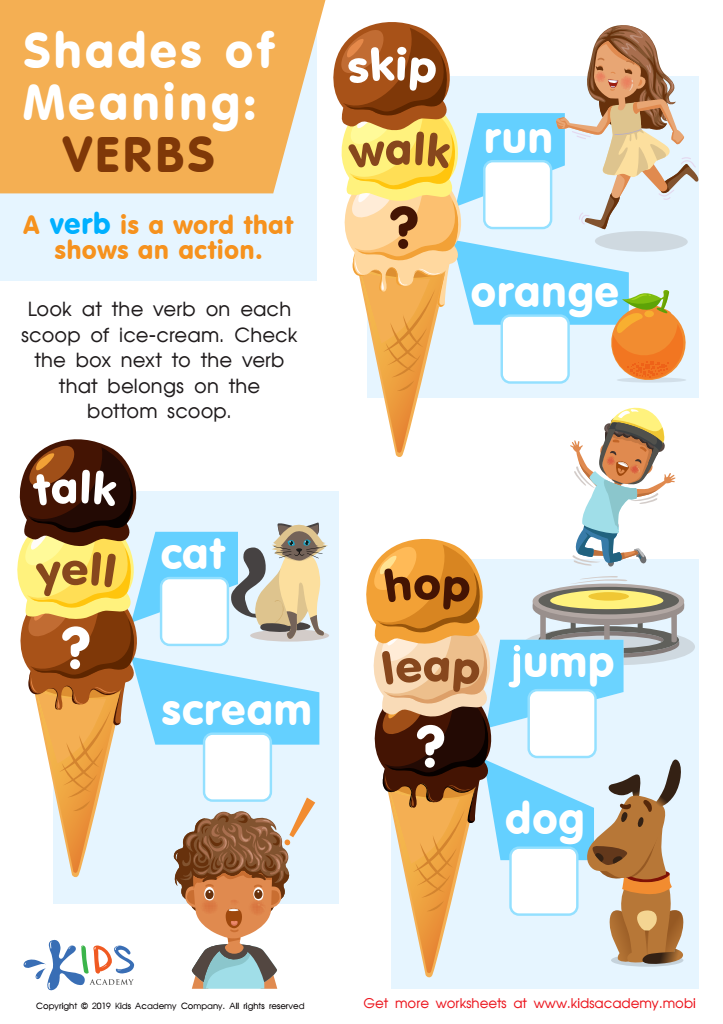
Shades of Meaning: Verbs Worksheet
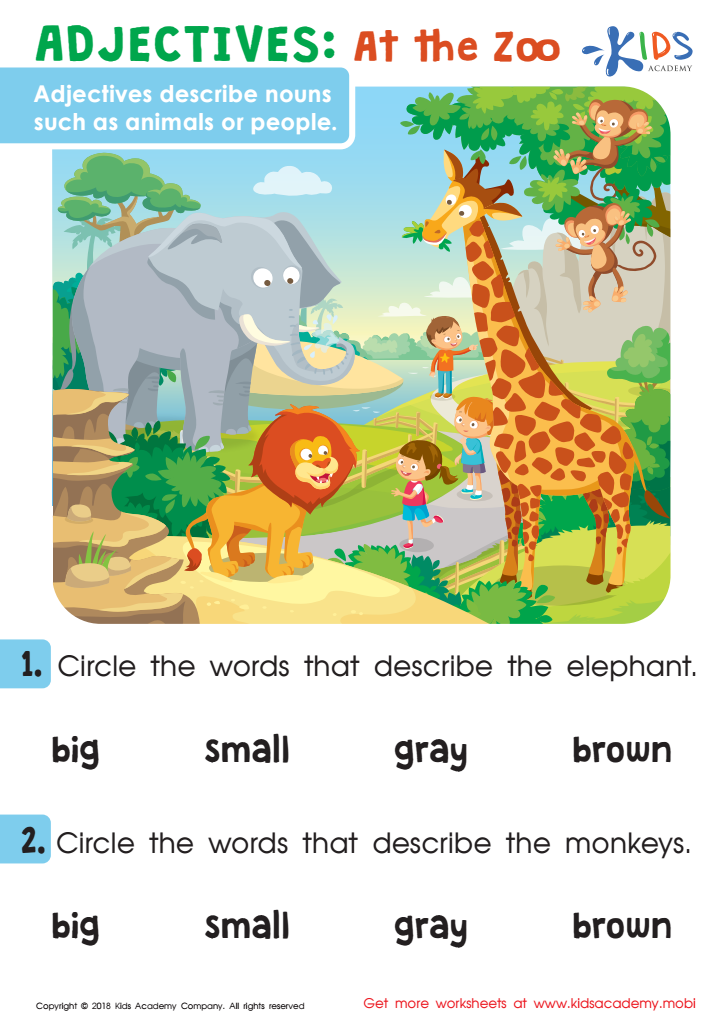
Adjectives: At The Zoo Worksheet
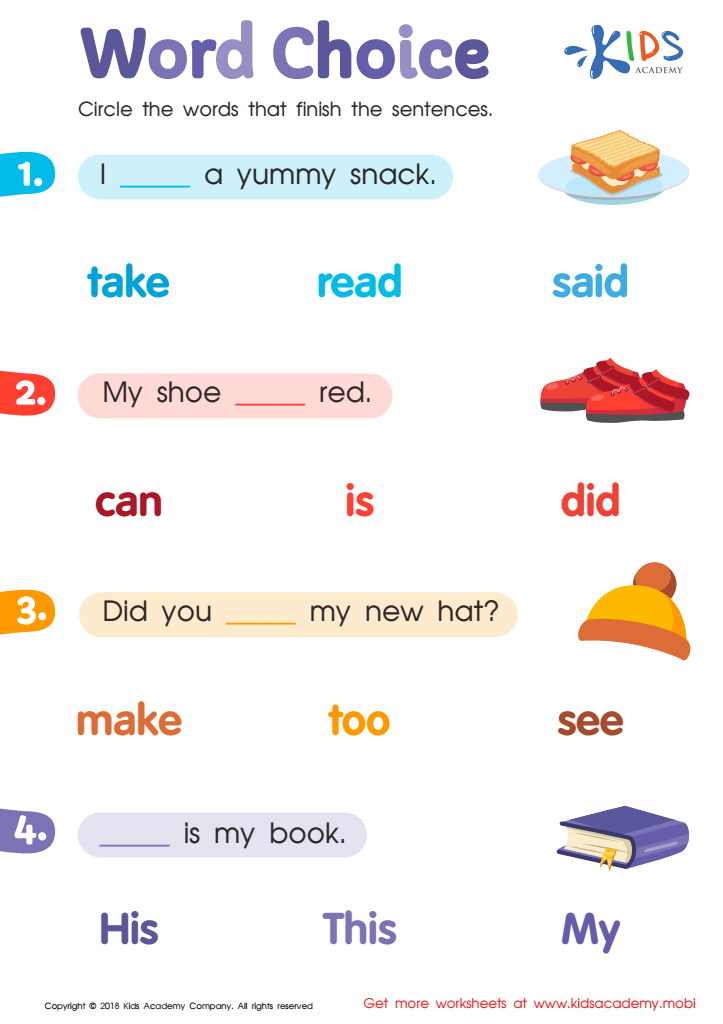
Word Choice Worksheet






.jpg)
Contextual understanding in writing is vital for children aged 6-7, as it fosters not only their literacy skills but also their ability to engage effectively with the world around them. When children learn to understand the context of their writing, they are better equipped to convey ideas meaningfully and recognize how different situations influence tone, vocabulary, and structure. This skill enhances critical thinking, enabling them to analyze various perspectives in a narrative. For parents and teachers, nurturing contextual understanding promotes communication skills essential for social interaction.
Moreover, contextual writing practices can boost empathy, as children learn to consider the feelings and viewpoints of others within their text. This understanding builds connections with classroom content and personal experiences, enhancing their overall learning engagement.
Supporting children in grasping the context helps them become more versatile writers, capable of adapting their style to meet diverse audience needs, ultimately preparing them for future academic challenges. By emphasizing contextual understanding, parents and teachers can help cultivate thoughtful, effective writers who can express themselves clearly and responsively, laying a solid foundation for lifelong learning.








