Improving vocabulary Writing Worksheets for Ages 6-7
5 filtered results
-
From - To
Enhance your child's vocabulary with our engaging "Improving Vocabulary Writing Worksheets" designed specifically for ages 6-7. These interactive worksheets feature fun activities that encourage young learners to explore and expand their word bank through creative writing and language exercises. Each worksheet focuses on enabling children to connect words with images and contexts, making learning enjoyable and effective. Our resources promote critical thinking, comprehension, and confidence in written expression. Perfect for homeschooling or classroom use, these worksheets provide a solid foundation in vocabulary development, setting your child on the path to successful communication skills. Start their vocabulary journey today!
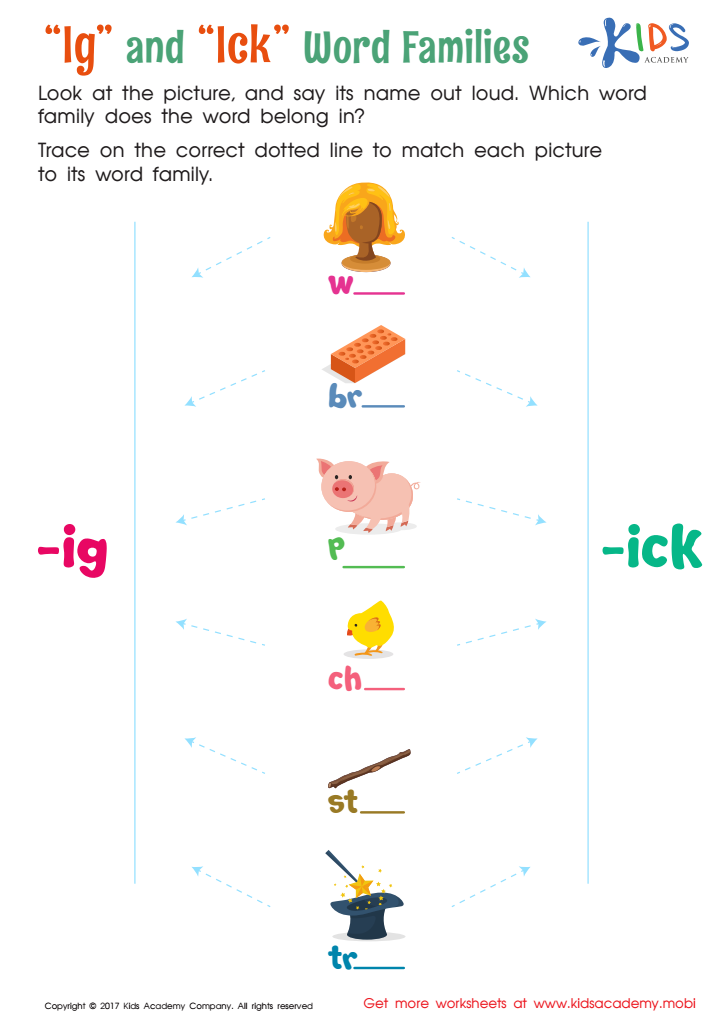
Words Families "ig" and "ick" Spelling Worksheet
 Assign to My Students
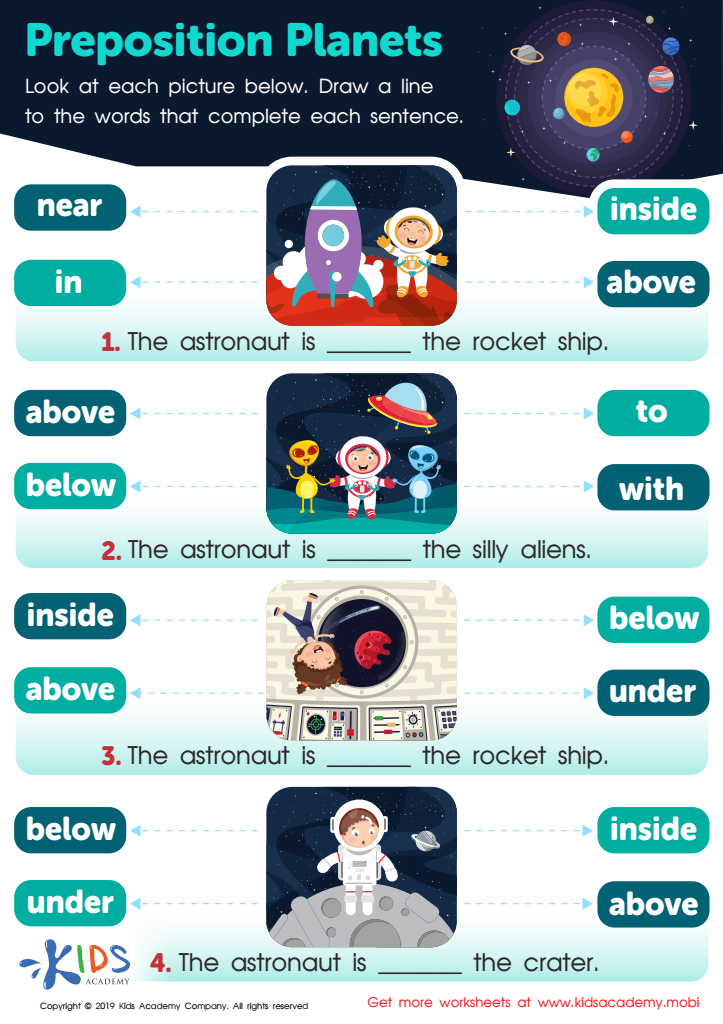
Preposition Planets Worksheet
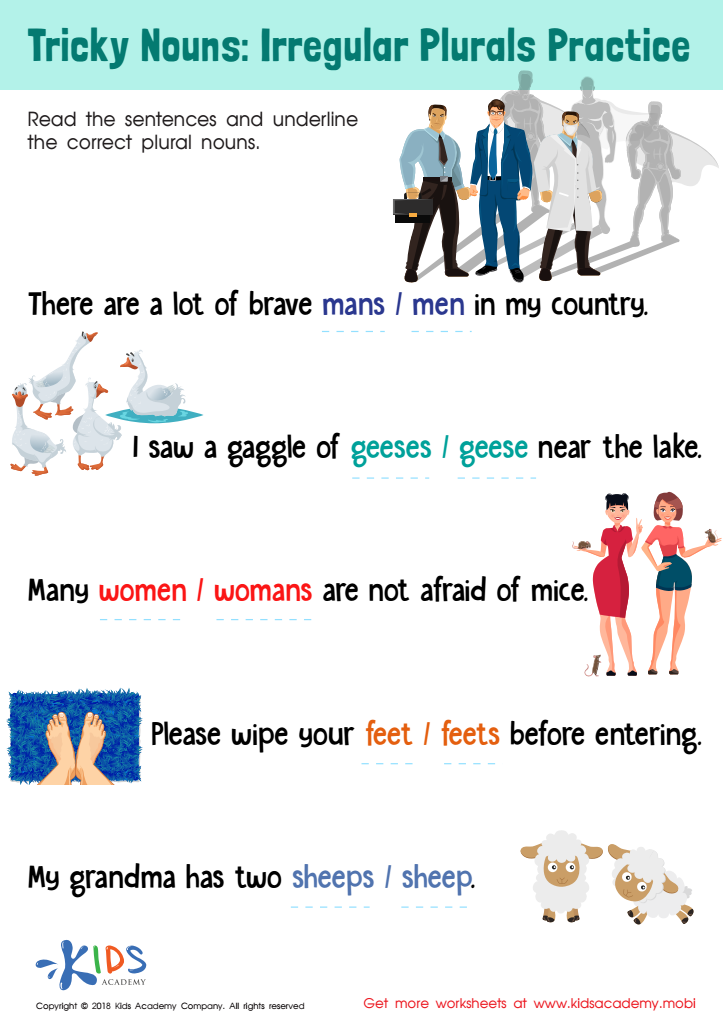
Tricky Nouns: Irregular Plurals Practice Worksheet
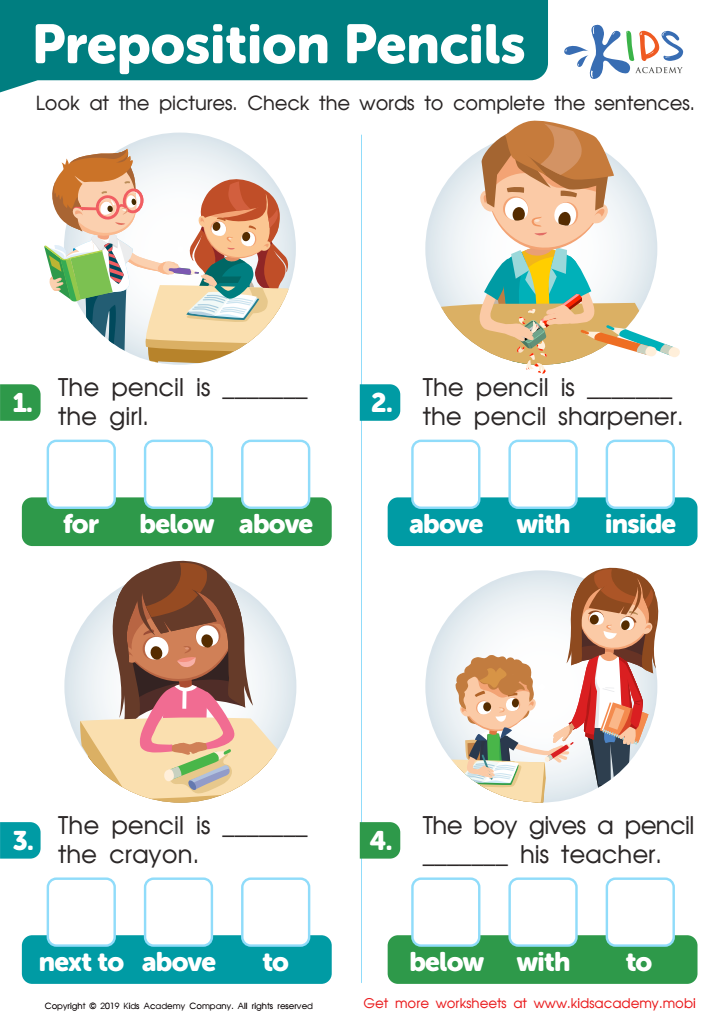
Preposition Pencils Worksheet
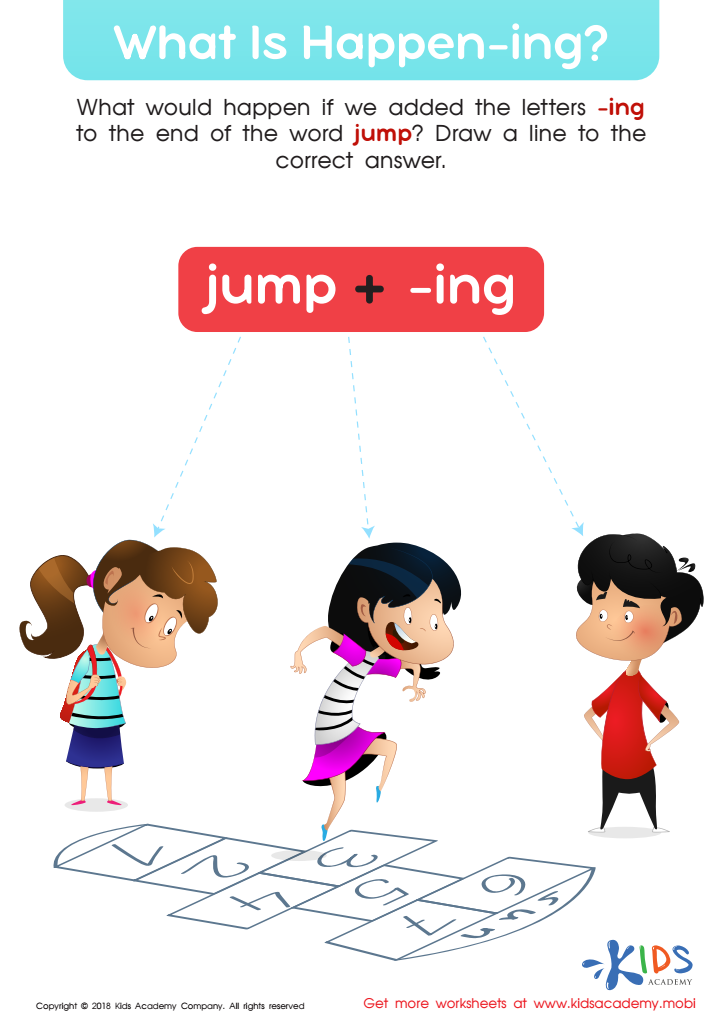
What Is Happen-Ing? Worksheet







Improving vocabulary writing skills in children aged 6-7 is crucial for their overall language development, academic success, and confidence. At this impressionable age, children are beginning to express themselves more clearly and creatively, making vocabulary a vital component of their communication skills. A rich vocabulary allows them to articulate ideas, describe feelings, and engage with others more effectively, which fosters social interactions and relationships.
Furthermore, robust vocabulary skills are essential for reading comprehension. As children advance in their education, they encounter increasingly complex texts, and a strong vocabulary will help them understand and engage with the material more deeply. By enhancing their writing vocabulary, we equip them with the tools to analyze, summarize, and respond to reading assignments, setting them up for academic success.
Additionally, a well-developed vocabulary boosts confidence. When children can express their thoughts and feelings eloquently, they are more likely to participate actively in class discussions and share their creative ideas, enhancing their self-esteem.
For these reasons, parents and teachers should prioritize vocabulary writing improvement. Engaging in targeted activities—such as word games, storytelling, and exploration of new words—can build a strong foundation that supports children's lifelong language skills.








