Noun identification Writing Worksheets for Ages 6-7
8 filtered results
-
From - To
Unlock your child's writing potential with our engaging Noun Identification Writing Worksheets designed for ages 6-7. These worksheets are perfect for developing essential literacy skills as young learners identify and categorize nouns in fun, interactive exercises. Each activity encourages creativity while reinforcing grammar knowledge through relatable themes and vibrant illustrations. With practice, children will master the art of noun identification, boosting their confidence in writing and communication. Perfect for use at home or in the classroom, these worksheets make learning enjoyable and effective. Start your child's journey to linguistic excellence today! Explore our collection and watch their skills blossom!
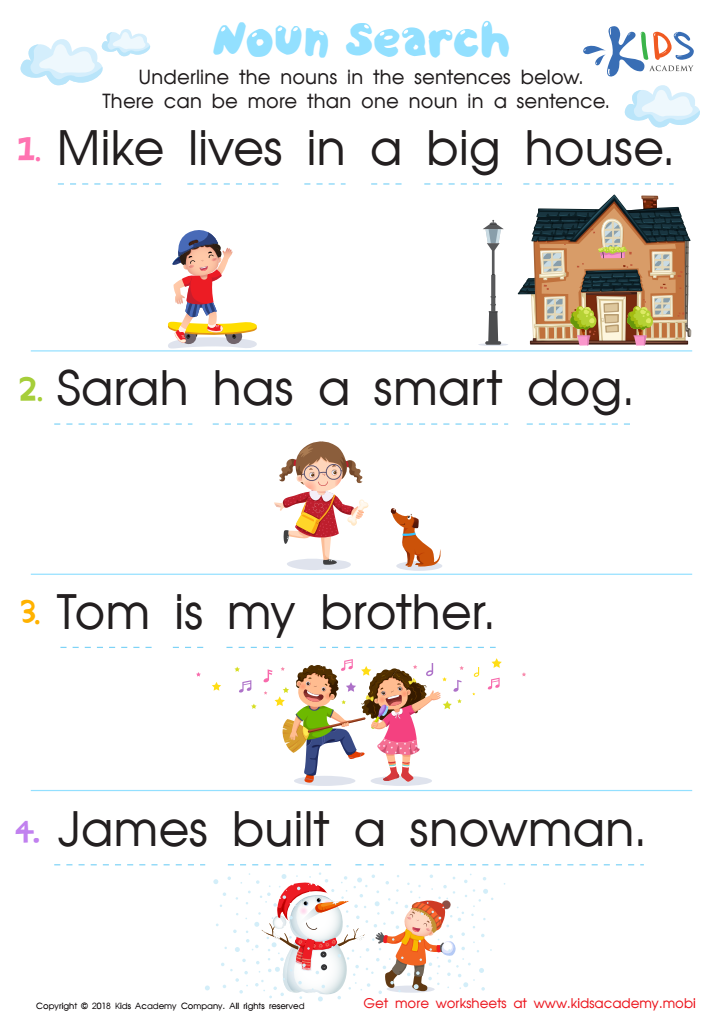
Noun Search Worksheet
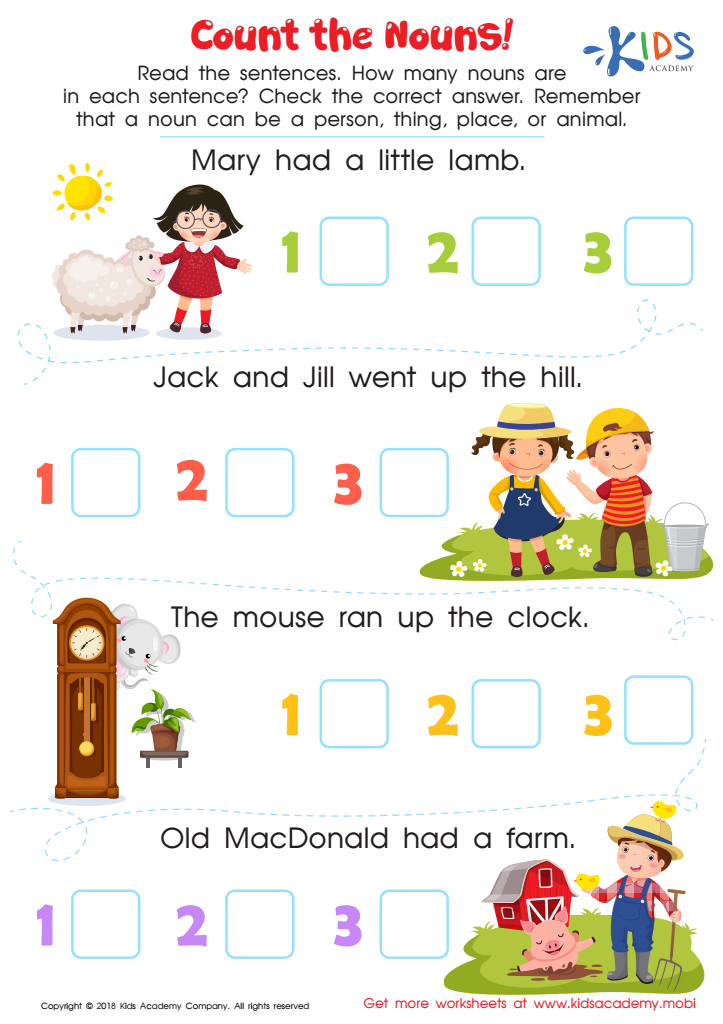
Count the Nouns Worksheet
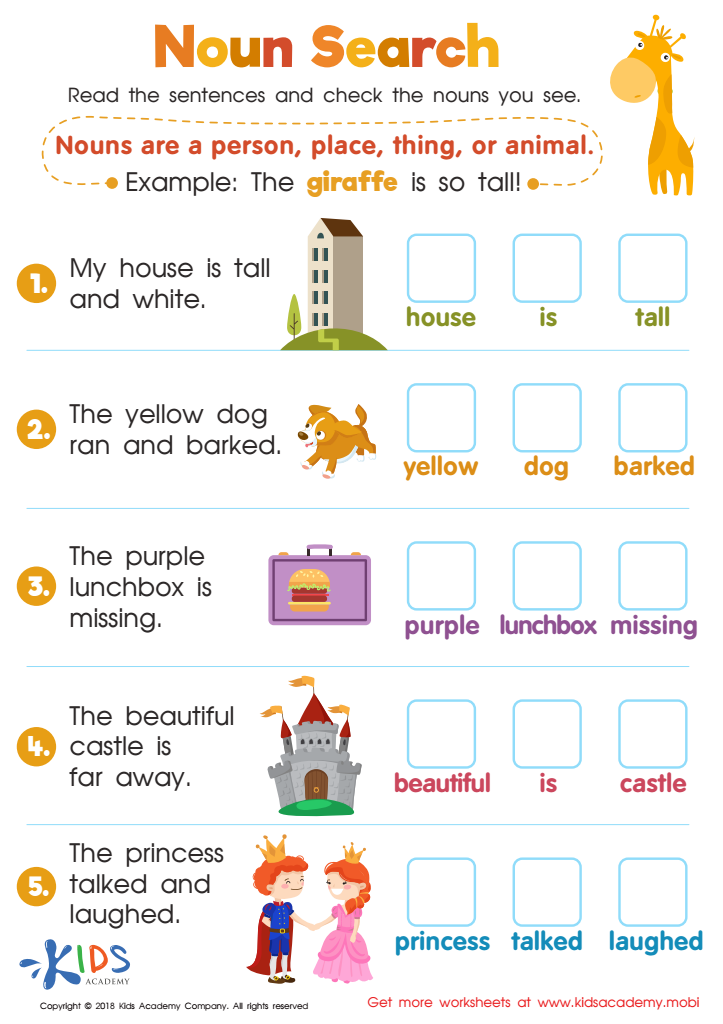
Noun Search Worksheet
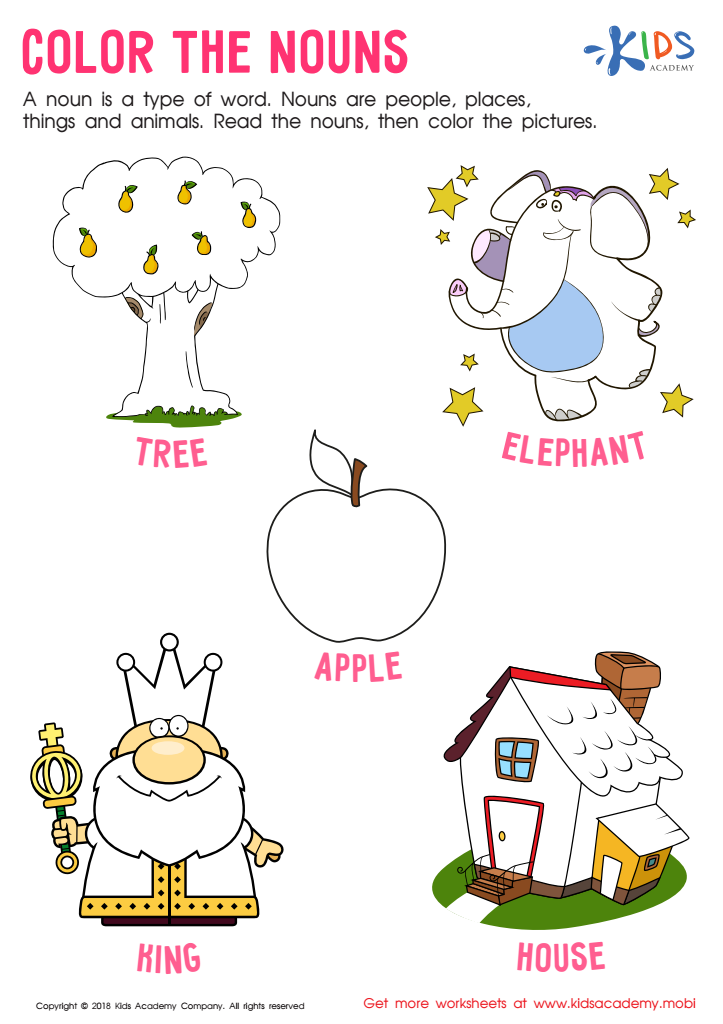
Color the Nouns Worksheet
 Assign to My Students
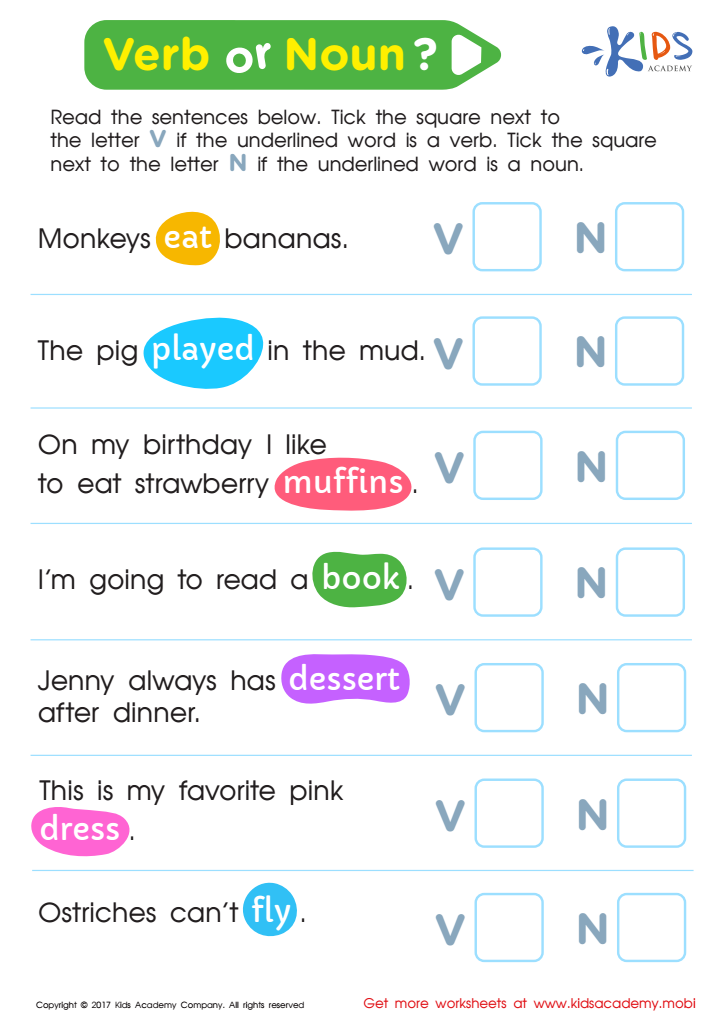
Verb or Noun Worksheet
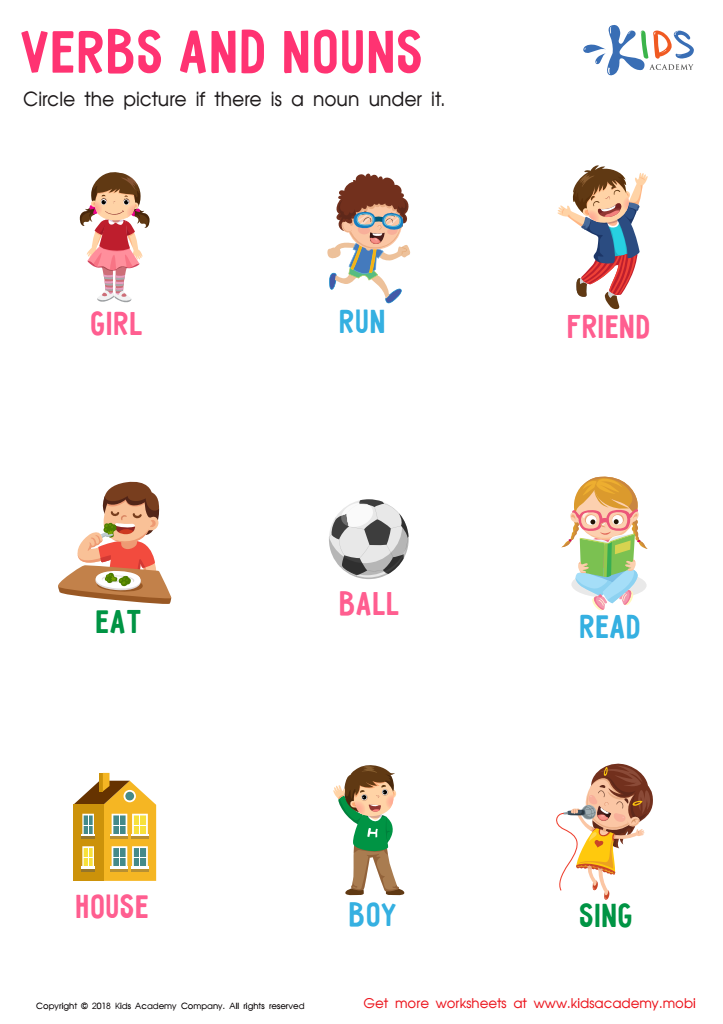
Verbs and Nouns Worksheet
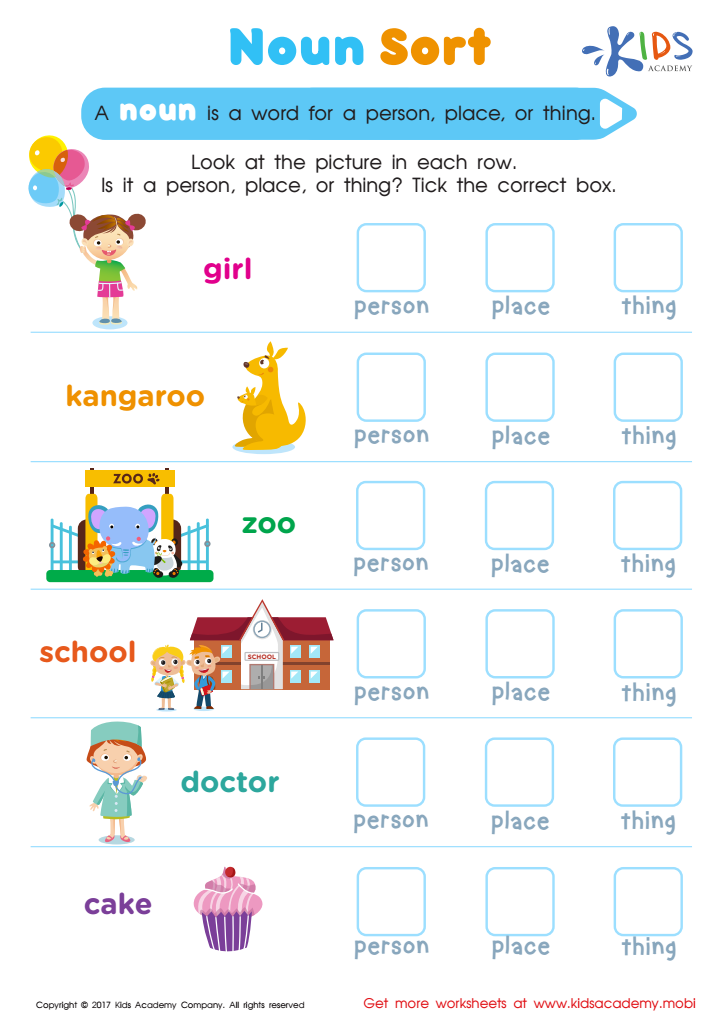
Noun Sort Printable
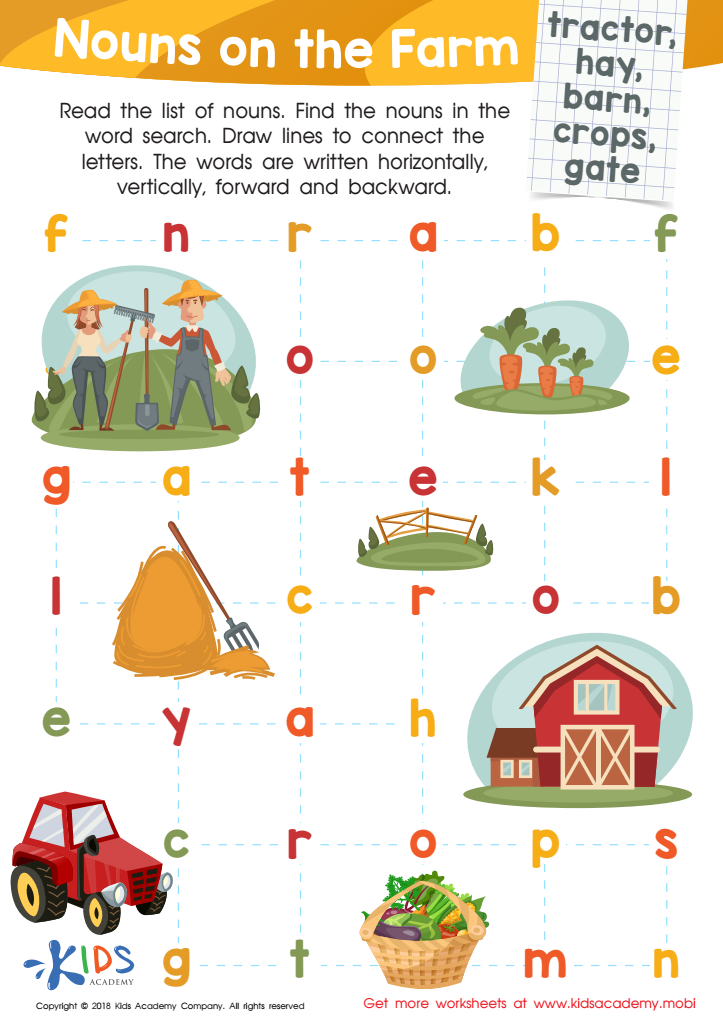
Nouns on the Farm Worksheet







Noun identification is a fundamental skill for children aged 6-7, laying the groundwork for effective communication and literacy development. At this age, children are beginning to form sentences and understand grammar, and nouns—words that represent people, places, things, or ideas—are essential components of language.
Parents and teachers should care about this skill because it directly influences a child's ability to express themselves clearly. Proficient noun identification helps children construct sentences with greater precision, paving the way for more complex writing as they progress through their education. Developing this skill enhances vocabulary, allowing children to articulate their thoughts and feelings more effectively.
Furthermore, recognizing nouns in writing encourages critical thinking and comprehension skills. As children identify and categorize nouns, they learn to make connections between words and their meanings, fostering a deeper understanding of language. This understanding not only supports their writing but also improves their reading skills, enabling them to analyze texts with greater insight.
Encouraging noun identification through engaging activities, such as games and storytelling, can make learning enjoyable and memorable. By prioritizing this skill, parents and teachers can give children a strong foundation in language arts, setting them up for continued success in literacy and beyond.








