Phonics recognition Writing Worksheets for Ages 6-7
3 filtered results
-
From - To
Boost your child's reading and writing skills with our Phonics Recognition Writing Worksheets for ages 6-7. These expertly-designed worksheets focus on developing phonemic awareness, helping young learners identify and blend sounds, recognize letter patterns, and build a strong foundation in reading fluency. Each worksheet features engaging activities and fun exercises that make learning phonics enjoyable. Ideal for both classroom and home practice, our worksheets support early literacy development and boost confidence in young readers and writers. Explore a range of interactive and educational tasks tailored to meet the needs of budding readers.
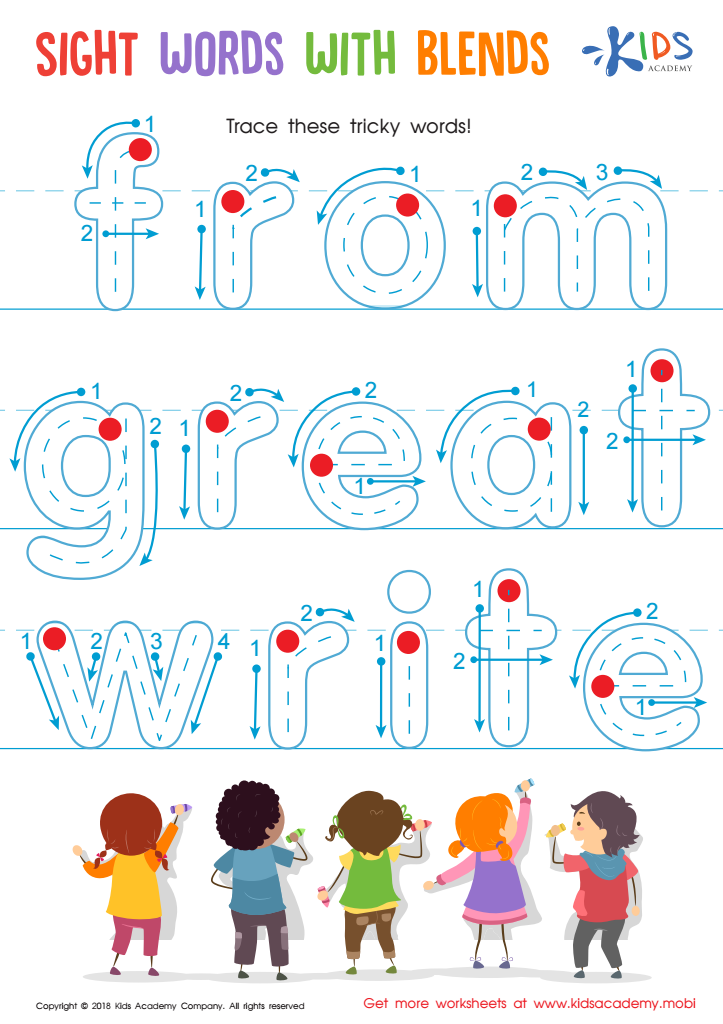
Sight Words with Blends Worksheet
 Assign to My Students
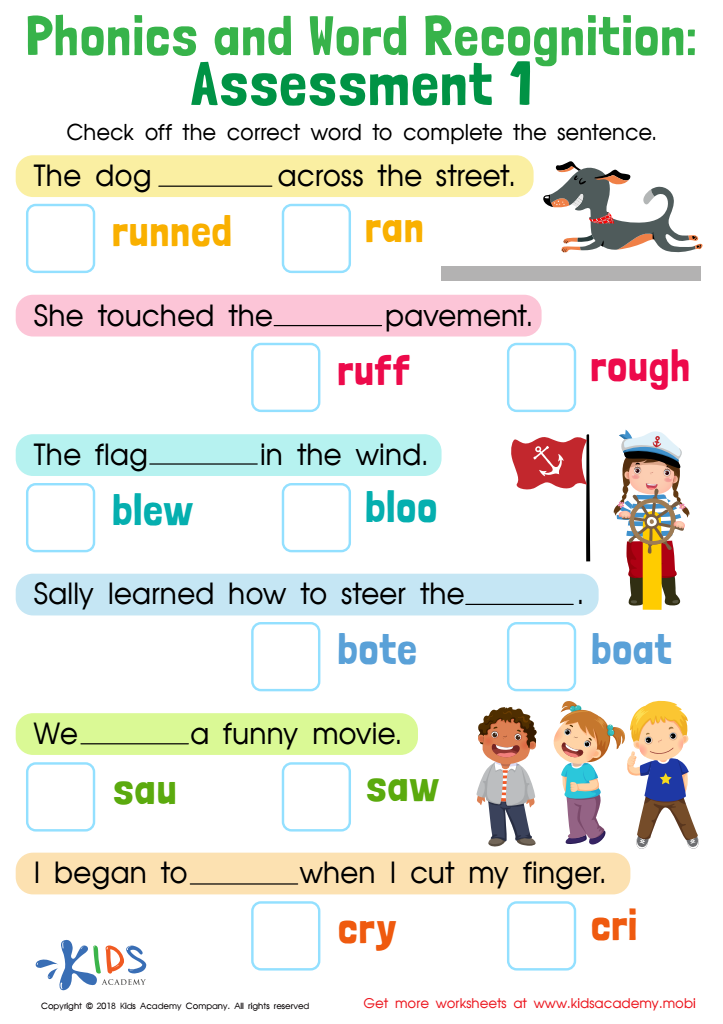
Phonics and Word Recognition: Assessment 1 Worksheet
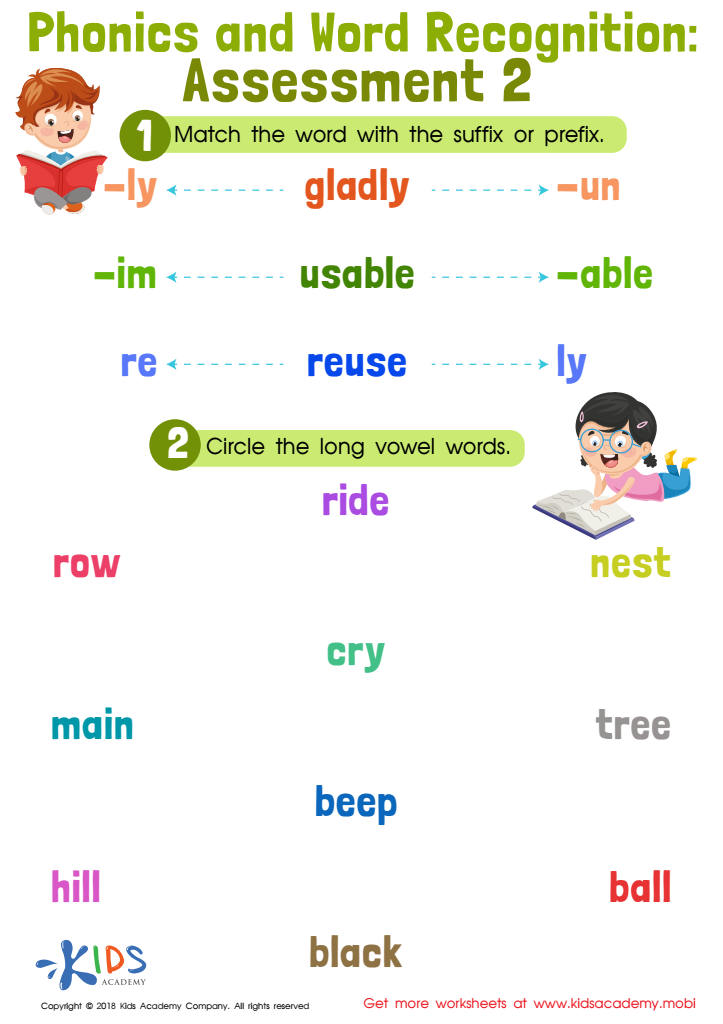
Phonics and Word Recognition: Assessment 2



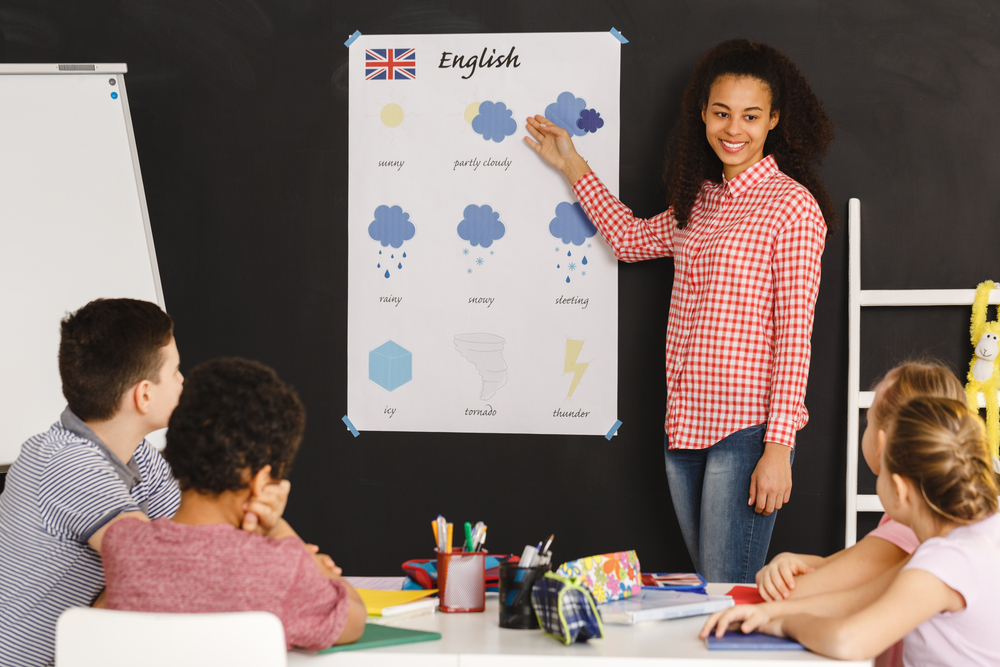



Phonics recognition and writing are pivotal for children aged 6-7 because they lay the foundation for literacy development. At this age, children's brains are highly receptive to learning the relationships between letters and sounds, which is crucial for decoding words and reading fluently. By understanding phonics, children can sound out unfamiliar words, improving their reading skills and boosting their confidence.
Teachers and parents can provide focused support by integrating phonics into daily activities, making learning engaging and relevant. For instance, recognizing that the letters "c-a-t" make the word "cat" empowers a child to read independently. Phonics also bridges the gap between reading and writing, as children use their understanding of sounds to spell words accurately, enhancing their writing abilities.
Effective phonics instruction promotes better comprehension, as children aren't bogged down by the mechanics of reading and can focus on understanding the content and context. Without proficiency in phonics, children may struggle with reading, leading to possible frustration and a dislike for reading, which affects their overall academic performance. Early mastery of phonics sets the stage for lifelong literacy and academic success, making it essential for both parents and teachers to prioritize phonics in early childhood education.








