Reading proficiency Writing Worksheets for Ages 6-7
3 filtered results
-
From - To
Boost your child's reading proficiency with our engaging Writing Worksheets, designed for ages 6-7. These worksheets focus on enhancing essential skills like comprehension and vocabulary through fun, interactive writing exercises. Each activity encourages young learners to express their thoughts while reinforcing their understanding of texts. Ideal for home or classroom use, our materials cater to various learning styles, ensuring every child can thrive. Whether crafting sentences, summarizing stories, or answering comprehension questions, kids will enjoy developing their reading and writing abilities. Download our worksheets today and watch your little ones become confident readers and writers!
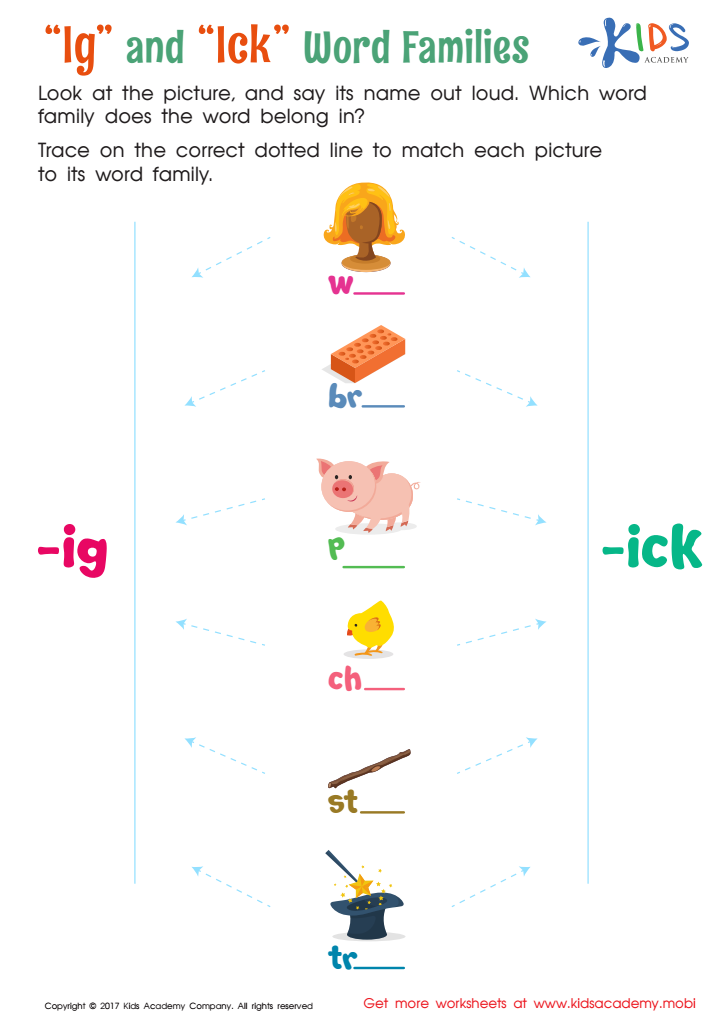
Words Families "ig" and "ick" Spelling Worksheet
 Assign to My Students
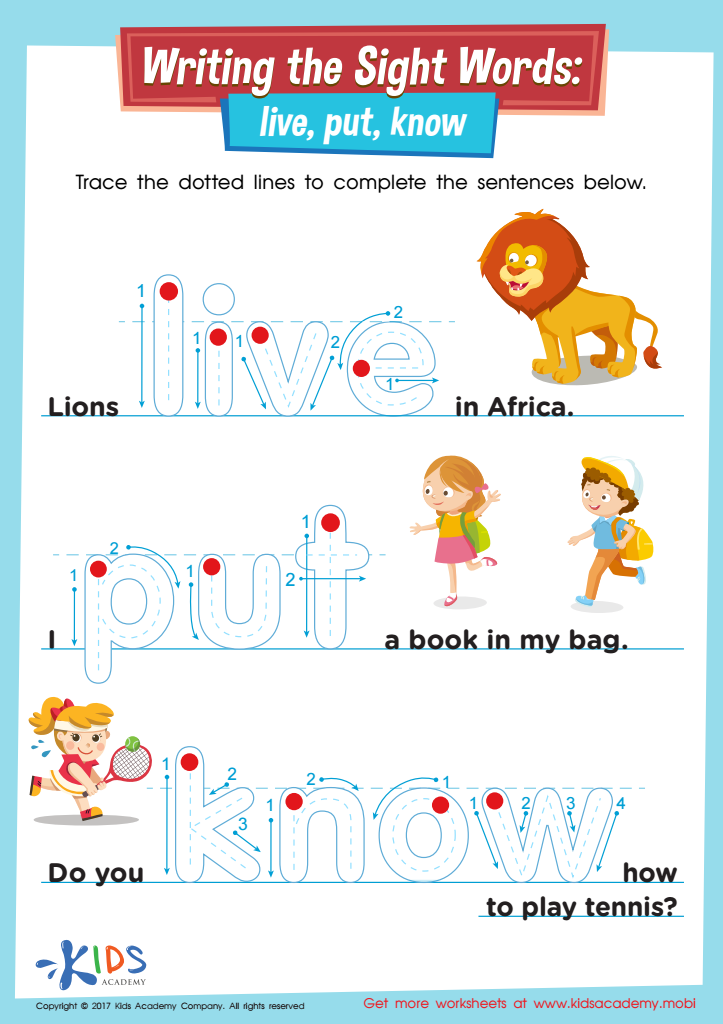
Live, Put, Know Printable Sight Words Worksheet





.jpg)


Reading and writing proficiency at ages 6-7 is crucial for several reasons. First, this age bracket marks a pivotal developmental stage where children transition from learning to read to reading to learn. Proficient reading skills enable students to access and understand a variety of subjects, setting a foundation for academic success across disciplines.
Moreover, strong writing skills bolster a child's ability to communicate effectively. Writing allows young learners to express their thoughts, emotions, and creativity, fostering self-expression and critical thinking. It also enhances their verbal skills, as the processes of reading and writing are interconnected.
Parents and teachers should prioritize these skills because early proficiency can impact self-esteem and motivation. Children who struggle may experience frustration, leading to a negative attitude toward learning. By fostering a supportive environment that encourages reading and writing, parents and teachers can cultivate lifelong learners who view education as valuable and enjoyable.
Investing time in reading proficiently and writing helps shape a child’s future. Improved literacy leads to enhanced academic performance, better job prospects later in life, and an informed, engaged citizenry. Cultivating these skills early is thus an essential responsibility of both caregivers and educators.








