Sentence formation Writing Worksheets for Ages 6-7
3 filtered results
-
From - To
Enhance your child's writing skills with our engaging Sentence Formation Writing Worksheets tailored for ages 6-7. These worksheets provide a fun and interactive way to help young learners understand the building blocks of sentences. Through colorful illustrations and simple prompts, children will practice combining words into coherent sentences, enriching their vocabulary and boosting their confidence. Ideal for at-home learning or classroom activities, these worksheets support early literacy development and encourage creativity. With varied exercises focusing on different aspects of sentence construction, your child will develop essential writing skills while enjoying the process. Start fostering a love for writing today!
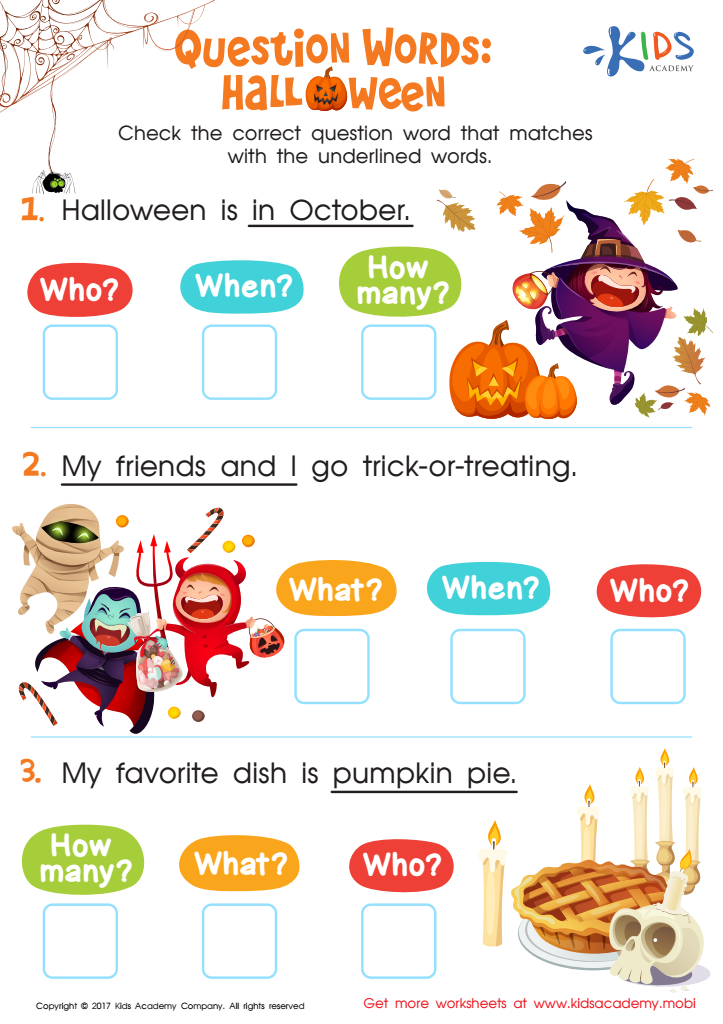
Question Words: Halloween Worksheet
 Assign to My Students
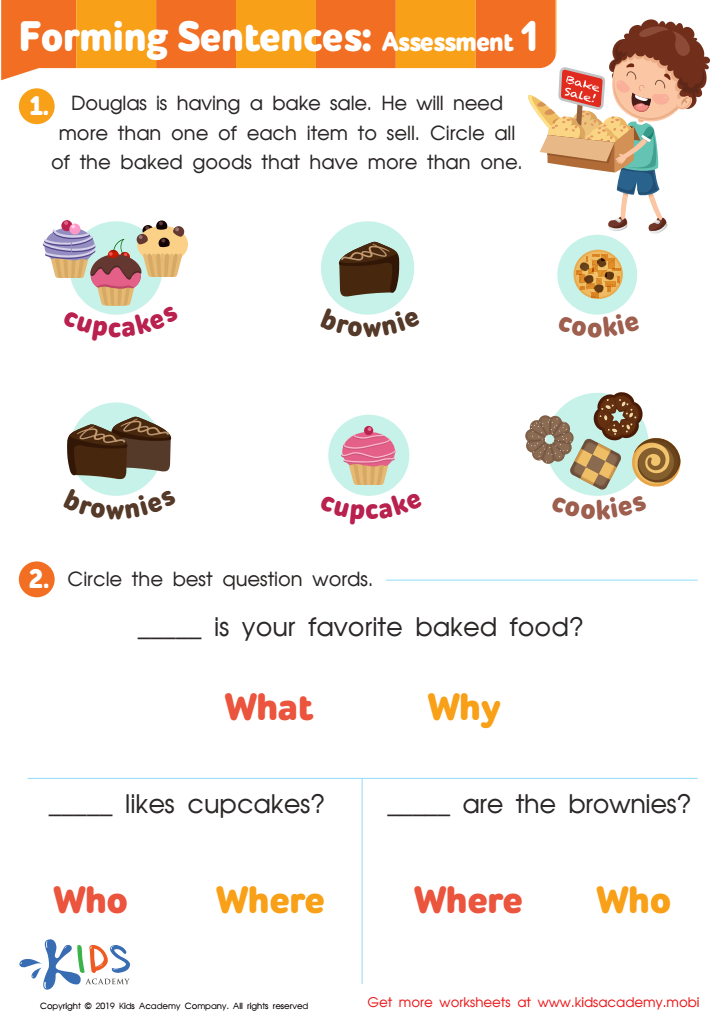
Forming Sentences: Assessment 1 Worksheet
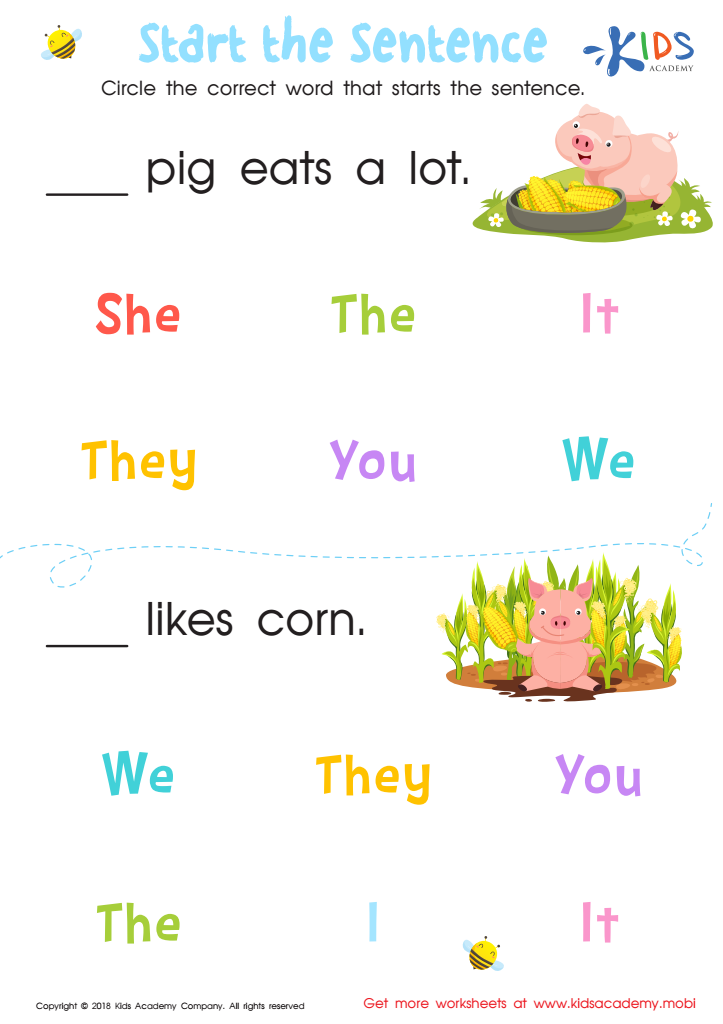
Start the Sentence Worksheet


.jpg)





Sentence formation is a foundational skill in language development for children aged 6-7. This skill plays a crucial role in enhancing communication abilities and fostering a deeper understanding of language structure. Parents and teachers should prioritize sentence formation for several reasons.
Firstly, mastering sentence construction helps children articulate their thoughts clearly. At this age, children are beginning to express their ideas and emotions more profoundly, and well-formed sentences empower them to do so effectively. This clarity boosts their confidence and encourages them to participate in conversations and storytelling.
Secondly, sentence formation lays the groundwork for reading proficiency. Understanding how sentences are structured aids children in decoding written text, enhancing their overall literacy. As they learn to construct sentences, they become more adept at recognizing patterns in writing.
Moreover, a foundation in sentence formation fosters critical thinking skills. When children learn to organize their thoughts into coherent sentences, they develop the ability to analyze and evaluate information, which is essential for academic success.
In summary, focusing on sentence formation during ages 6-7 not only boosts language skills but also builds confidence, supports literacy development, and enhances critical thinking, ultimately preparing children for future learning and communication challenges.








