Unlock your child's writing potential with our "Understanding Suffixes Writing Worksheets" designed specifically for ages 6-7! These engaging and colorful worksheets help young learners explore the world of suffixes, enhancing their vocabulary and spelling skills. Through fun activities and clear examples, children will grasp how adding suffixes changes word meanings and creates new terms. Building a strong foundation in language literacy has never been easier! Perfect for both classroom and home use, these worksheets ensure that learning suffixes becomes an enjoyable experience. Start your child's journey to confident writing today—download our worksheets and watch them thrive as they discover the magic of suffixes!

Check out this FREE Trial Lesson on Writing for age 6-7!

Identify Common Suffixes

Favorites
With answer key
Interactive
  • 6-7
  • Understanding suffixes
  • Writing
Reading: Follow the Suffixes Worksheet

Reading: Follow the Suffixes Worksheet

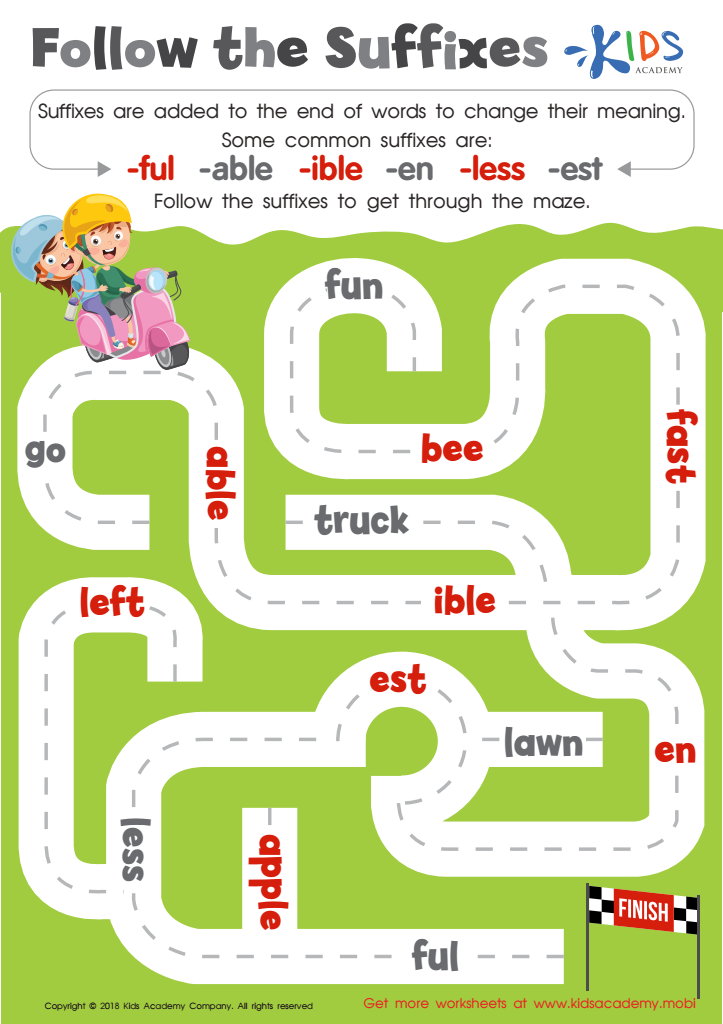
Students use suffixes to find the right way through a maze in this enjoyable activity! Understanding suffixes helps kids decode and comprehend more words, leading to better reading fluency. A great addition to your reading classes, keep this printable close!
Reading: Follow the Suffixes Worksheet
Worksheet
Reading: Words With Suffixes Worksheet

Reading: Words With Suffixes Worksheet

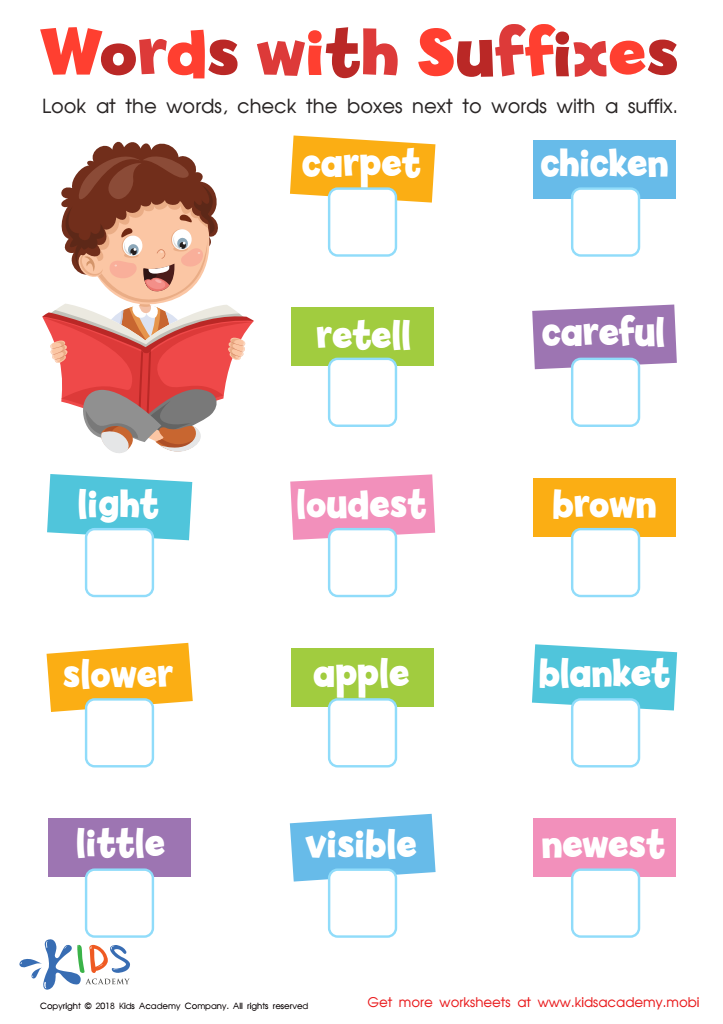
Help your students understand suffixes and build reading fluency with this worksheet. Have them read each word, then choose the ones with a suffix. Practicing this will lead to better comprehension and more confident reading. Save it for future use in language and reading classes.
Reading: Words With Suffixes Worksheet
Worksheet
Suffix-ed Worksheet
Suffix-ed Worksheet

Suffix-ed Worksheet

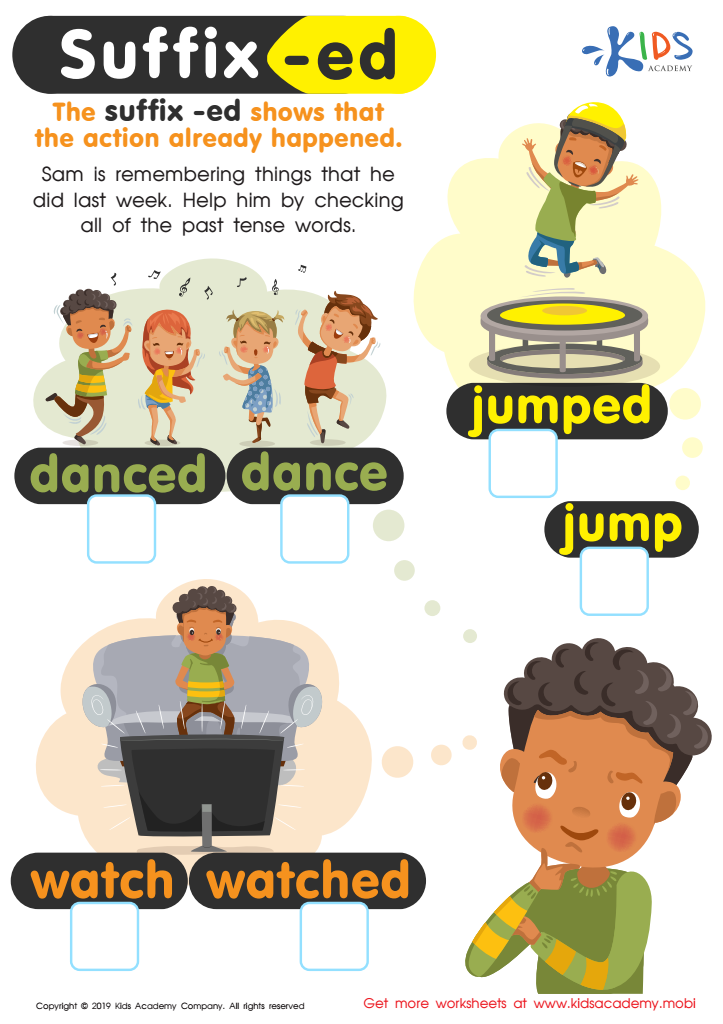
Ask your kids if they know what suffixes are, and explain they are words added to the end of another word which changes the meaning. This worksheet focuses on the suffix -ed which shows something already happened. Help the kid in the picture find the past tense words.
Suffix-ed Worksheet
Worksheet
Suffix -Able Worksheet

Suffix -Able Worksheet

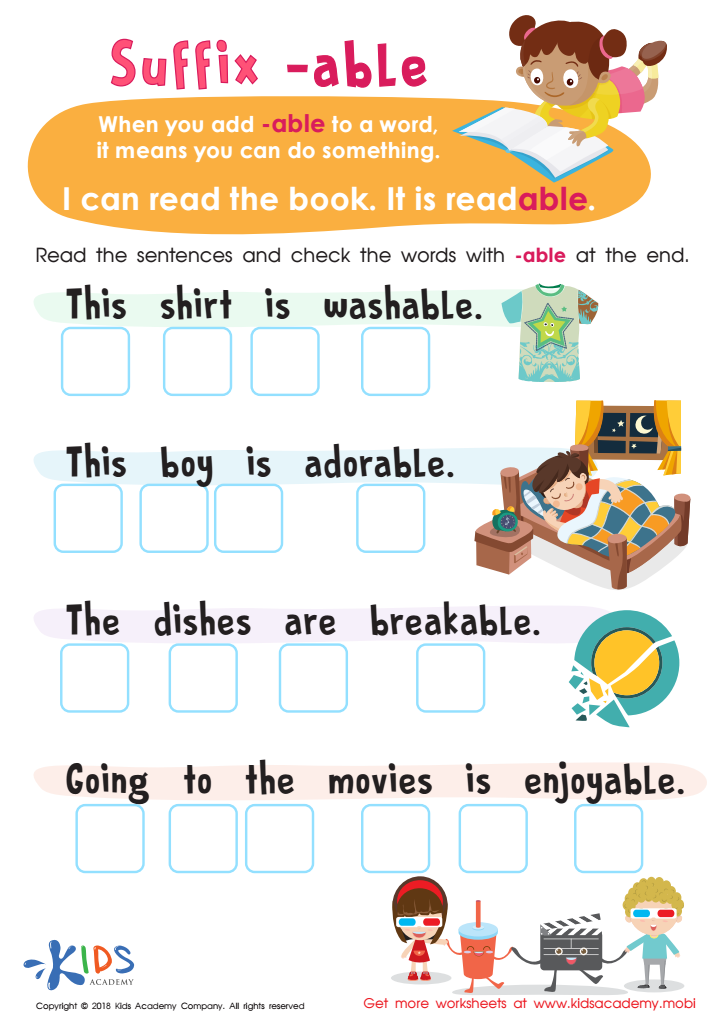
Suffix -able means you can do something. Example: readable - means you can read it. Give kids examples then check this worksheet. Read sentences with kids, looking for words with -able at the end.
Suffix -Able Worksheet
Worksheet
Suffixes –ful and –less Worksheet

Suffixes –ful and –less Worksheet

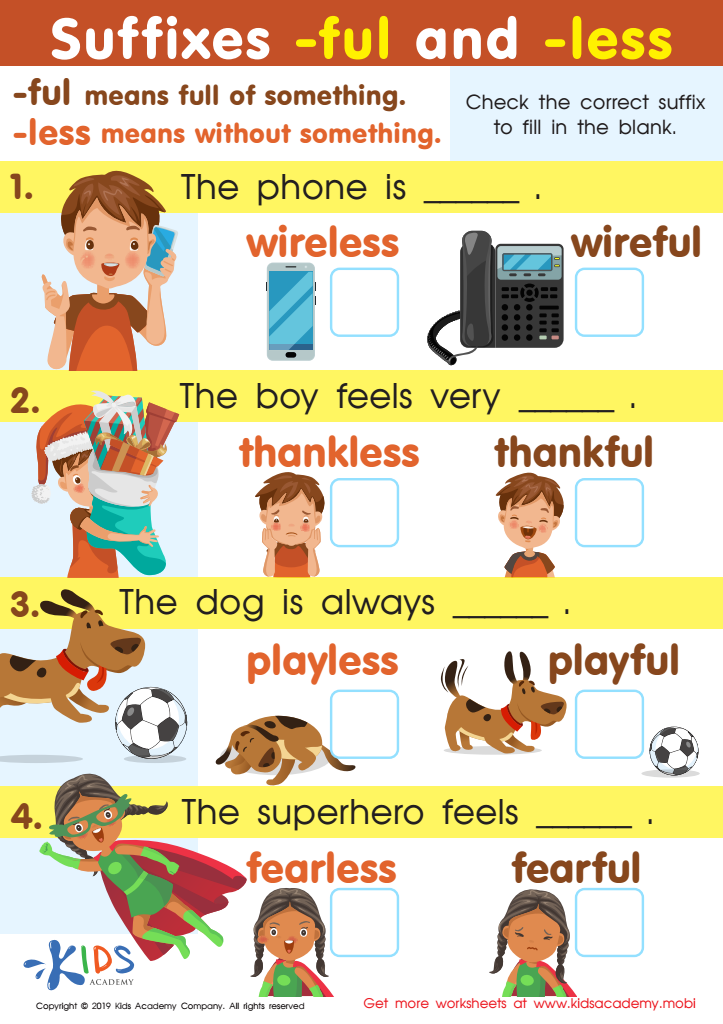
Before you start this worksheet, make sure your kids know about suffixes. Explain that they're added to the end of words to change their meaning. In the worksheet, kids will learn about the suffixes –ful and –less. Look at the sentences in the picture with them, and help them to choose the right one for each blank.
Suffixes –ful and –less Worksheet
Worksheet
Suffixes in the Forest Worksheet

Suffixes in the Forest Worksheet

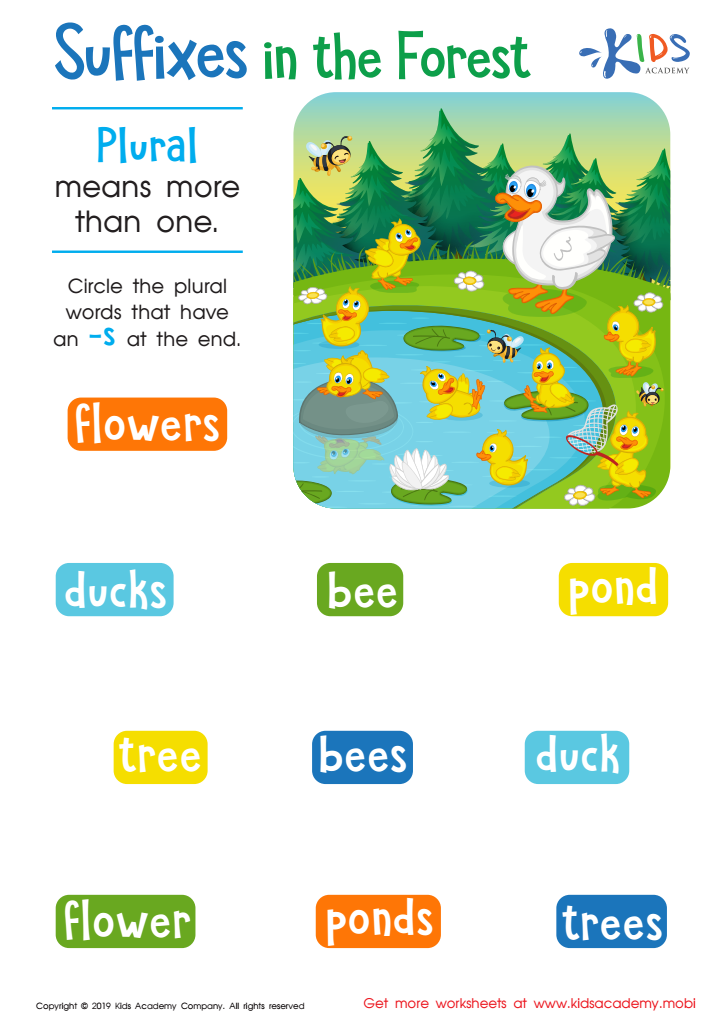
Suffixes are letters added to the end of words to form new words. These can be used to denote one who does something (e.g. reader) or more than one (e.g. adding -s). This worksheet helps kids practice pluralizing words they know by circling the plural words ending with -s.
Suffixes in the Forest Worksheet
Worksheet
The Suffix -Ly Worksheet

The Suffix -Ly Worksheet

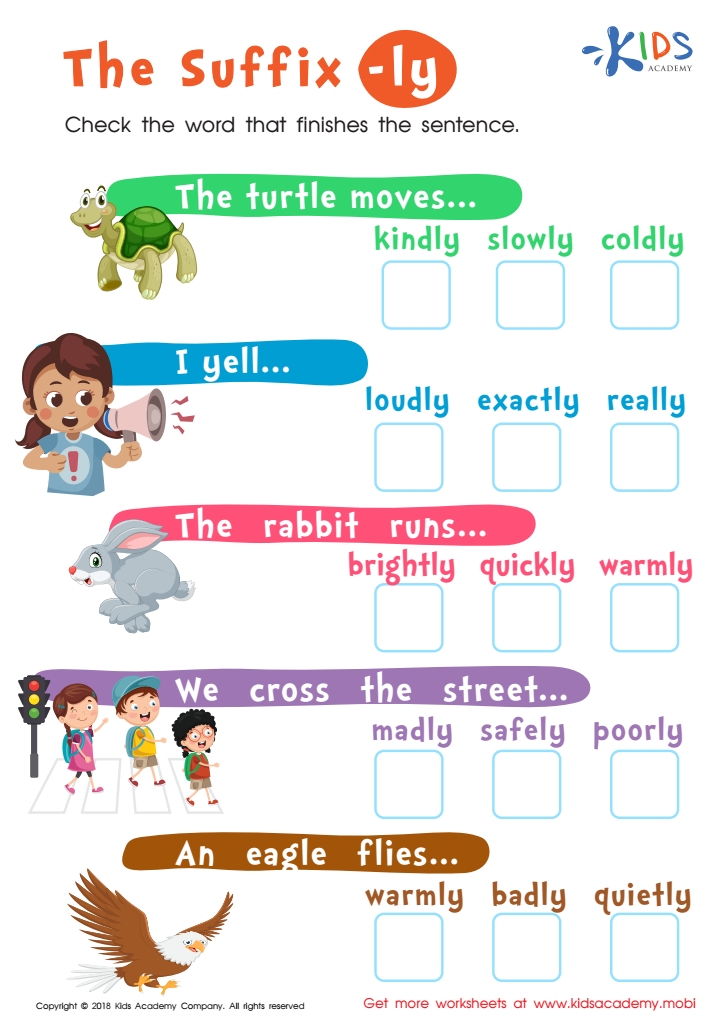
Suffixes change the meaning of words: the -ly suffix usually describes how an action is done (e.g. slowly, quickly, loudly). Help your child understand this and then check out the fun worksheet. Ask them to identify the animals and people in the pictures, then read the sentences out loud and have them check the ones that finish the sentence.
The Suffix -Ly Worksheet
Worksheet


Understanding suffixes is crucial for children aged 6-7, as it significantly enhances their reading, writing, and vocabulary skills. Suffixes are letter groups added to the end of words, transforming their meanings and grammatical function. By learning about them, children can better grasp how to form new words, enabling them to expand their vocabulary, which ultimately boosts their reading comprehension.

Teachers and parents should emphasize suffix learning because it encourages children to become more independent writers. When children understand suffixes, they can experiment with language, creatively constructing new words. This creative exploration helps build their confidence in writing and expression.

Moreover, familiarity with suffixes aids in decoding unfamiliar words, an essential skill for early readers. For instance, knowing that “-ing” indicates an action or that “-ed” relates to the past can empower children to decipher meanings in text independently.

Incorporating suffixes into everyday learning can make vocabulary building fun and engaging, fostering a love for words that will benefit children throughout their educational journey. By nurturing this foundational skill, parents and teachers lay the groundwork for improved literacy, communication, and critical thinking in young learners.