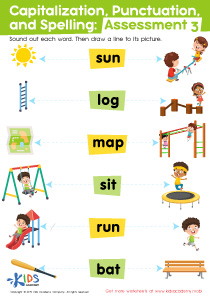
Word association Writing Worksheets for Ages 6-7
6 filtered results
-
From - To
Enhance your child's creativity and vocabulary skills with our Word Association Writing Worksheets designed for ages 6-7. These interactive worksheets encourage young learners to connect words and ideas, fostering critical thinking and language development. Each worksheet features engaging activities that help children associate words based on categories, meanings, and relationships. Perfect for both classroom and home use, our worksheets provide fun and educational exercises that keep young minds active and curious. Boost your child's writing skills and make learning an enjoyable experience with Kids Academy's expertly crafted word association resources for young writers.
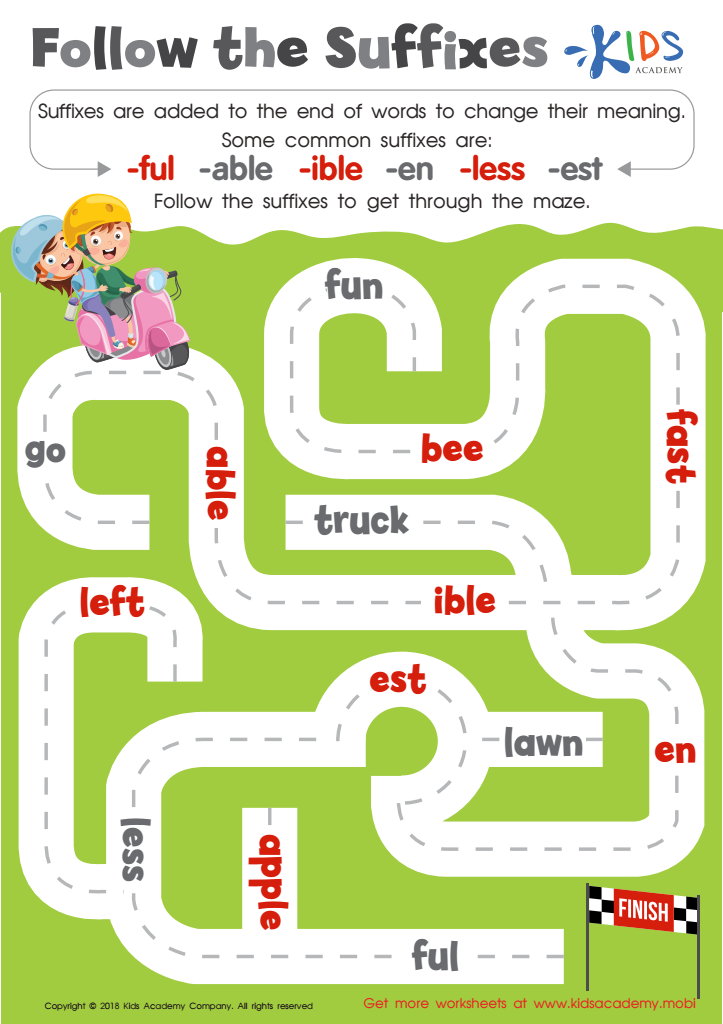
Reading: Follow the Suffixes Worksheet
 Assign to My Students
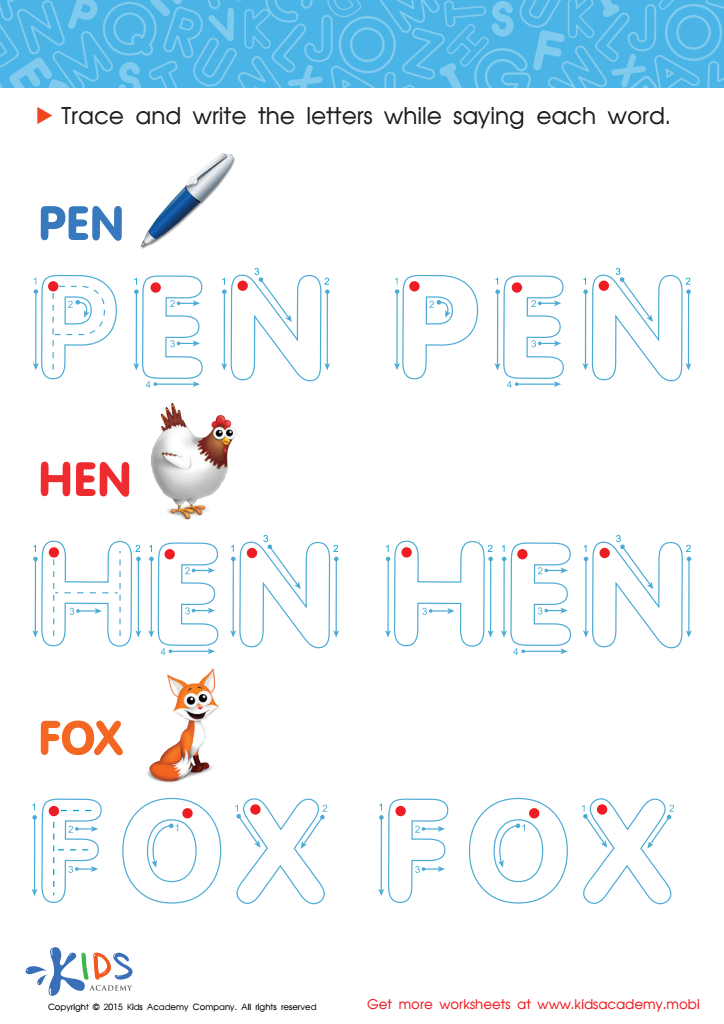
A Pen, a Hen and a Fox Spelling Worksheet

Short Vowels /e/, /i/, and /u/ Worksheet
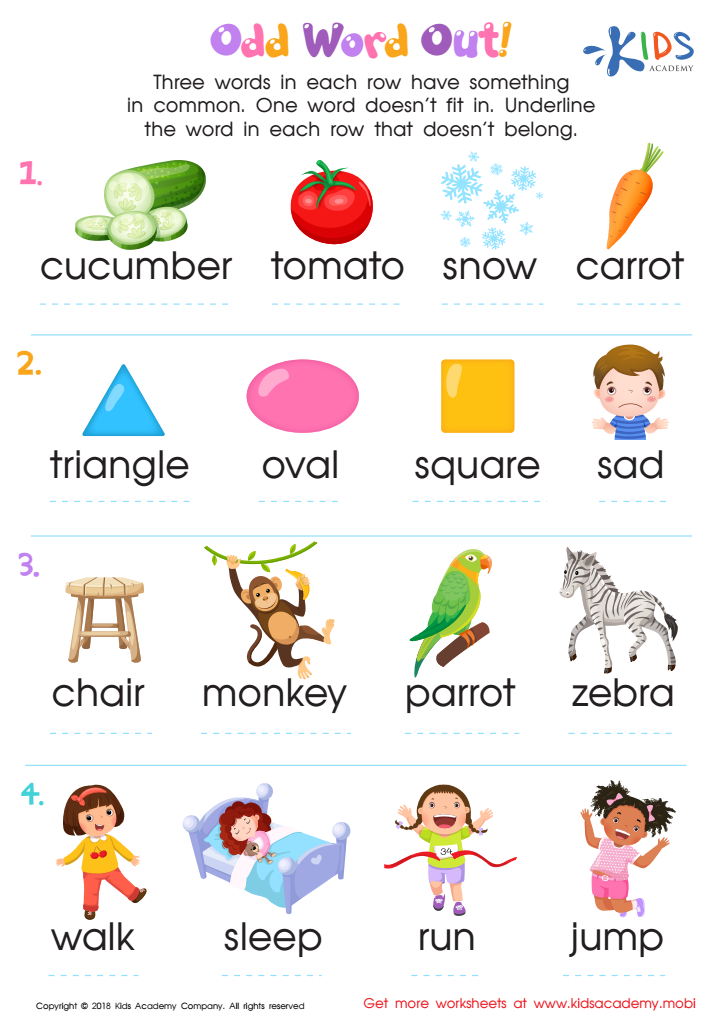
Odd Word Out Worksheet
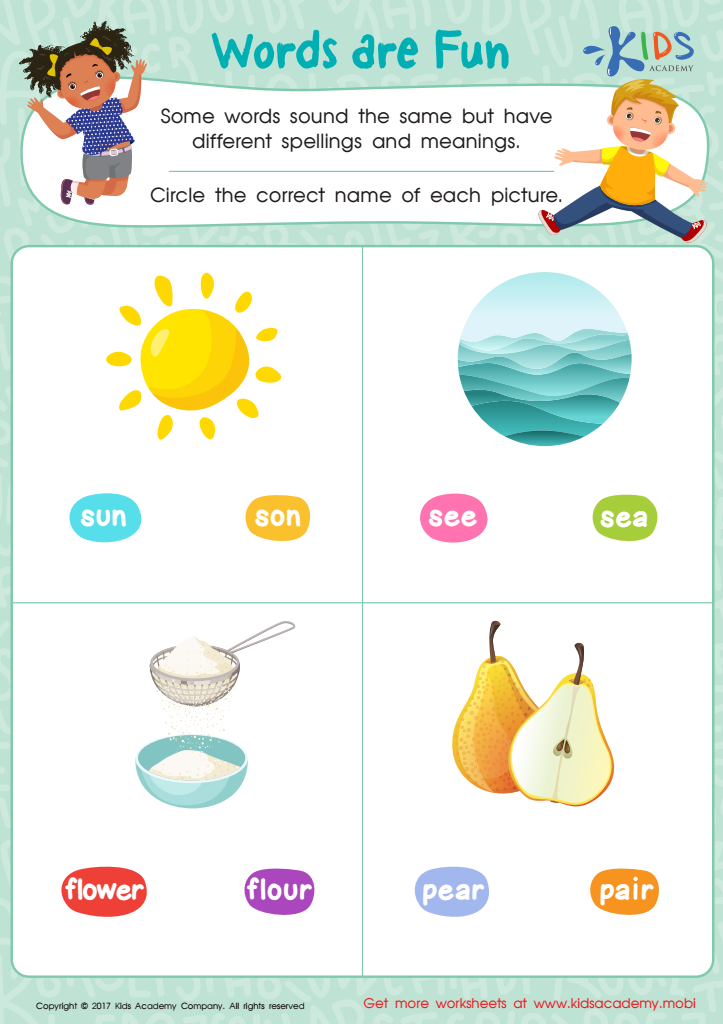
Words Are Fun Worksheet
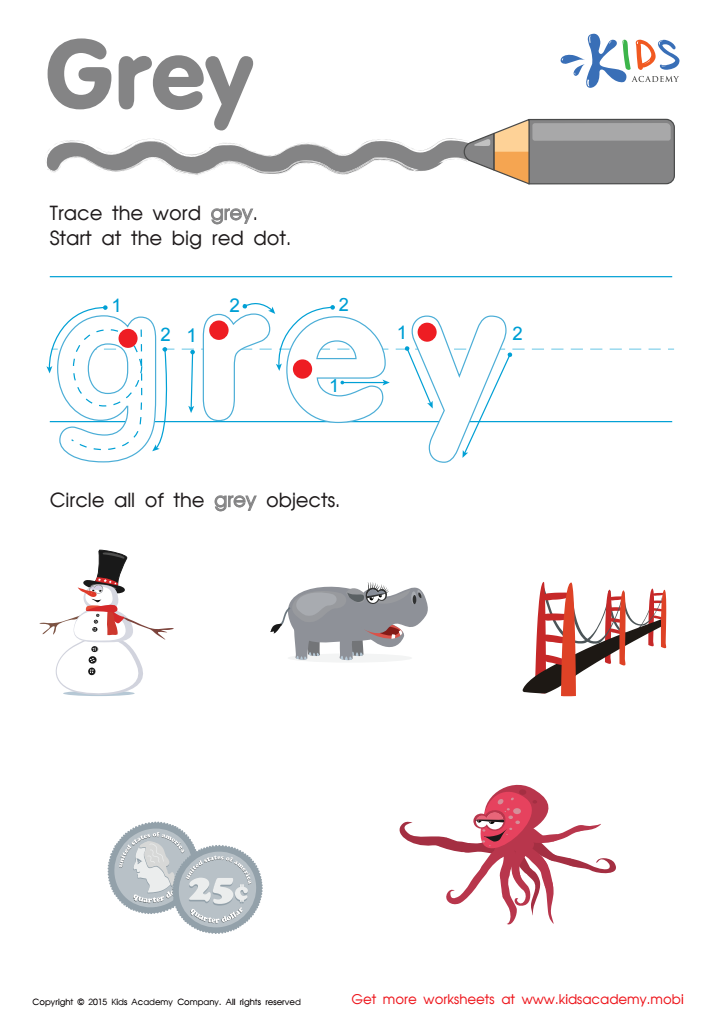
Grey Tracing Color Words Worksheet








Word association writing is a valuable educational activity for children aged 6-7, offering significant cognitive, linguistic, and social benefits. First and foremost, it strengthens vocabulary by encouraging kids to think of and use different words, fostering a more robust linguistic foundation. This is pivotal at an age where language development is at its peak.
Additionally, word association enhances memory and recall. The mental connections formed when generating word associations help create neural pathways that make it easier for children to remember words and concepts. This scaffolds learning in various subjects, as a strong vocabulary supports reading comprehension and problem-solving skills.
By participating in word association, children also improve their spelling and phonemic awareness. Upon repeatedly encountering and using words, they become more familiar with patterns and letters, aiding in their overall literacy.
Socially, word association activities can be playful and engaging, helping children learn to communicate more effectively and collaborate with peers. Feeling confident in their ability to express ideas can boost self-esteem and motivate further learning.
Furthermore, this type of writing supports critical thinking. Children need to decide which words relate closely, which fosters judgment, reasoning, and creativity—all essential life skills.
All these factors make word association writing a potent tool in fostering a well-rounded early education.