Cursive writing practice Cursive Alphabet Worksheets for Ages 6-8
11 filtered results
-
From - To
Enhance your child's cursive writing skills with our engaging Cursive Alphabet Worksheets, specially designed for ages 6-8. These printable worksheets provide a fun and interactive way for young learners to practice forming cursive letters. With step-by-step guides and visually appealing exercises, children will gain confidence in their writing while improving their fine motor skills. Our resources not only teach letter formation but also promote creativity as kids explore writing their names and simple words. Perfect for home or classroom use, these worksheets make learning cursive enjoyable and effective, setting the foundation for strong writing proficiency. Start your child’s cursive journey today!
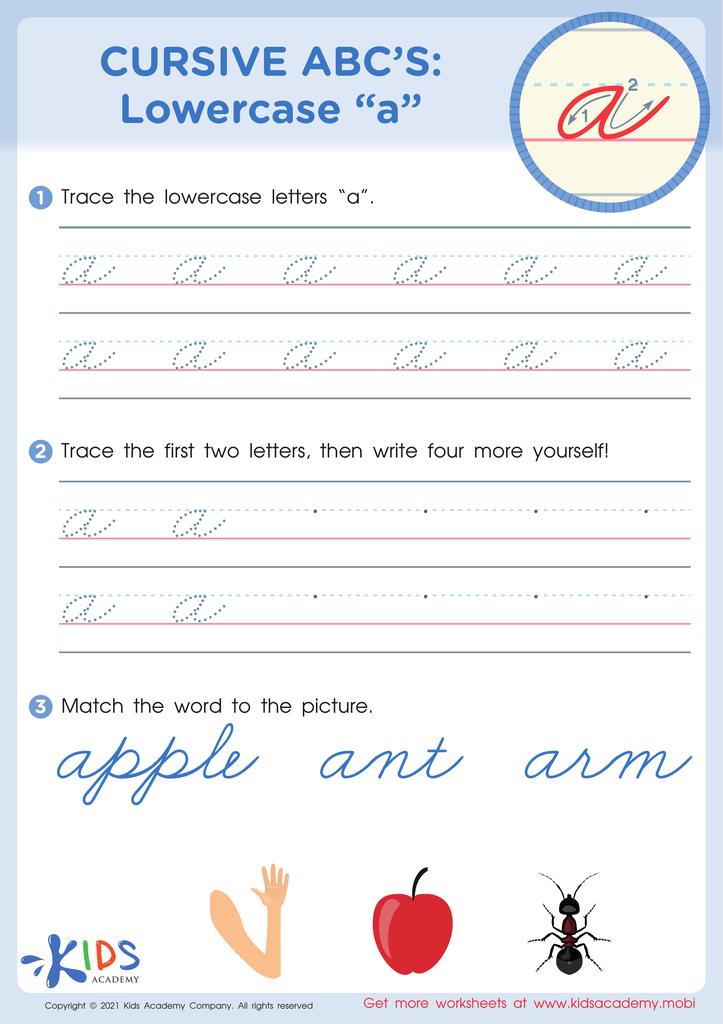
Cursive ABCs: Lowercase a
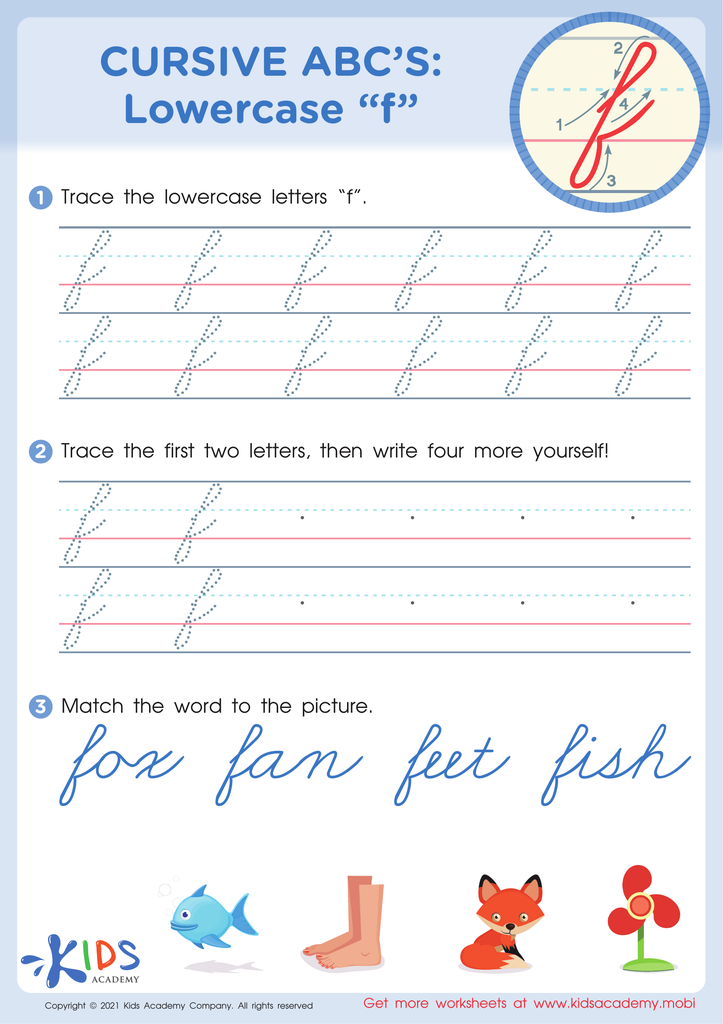
Cursive ABCs: Lowercase f
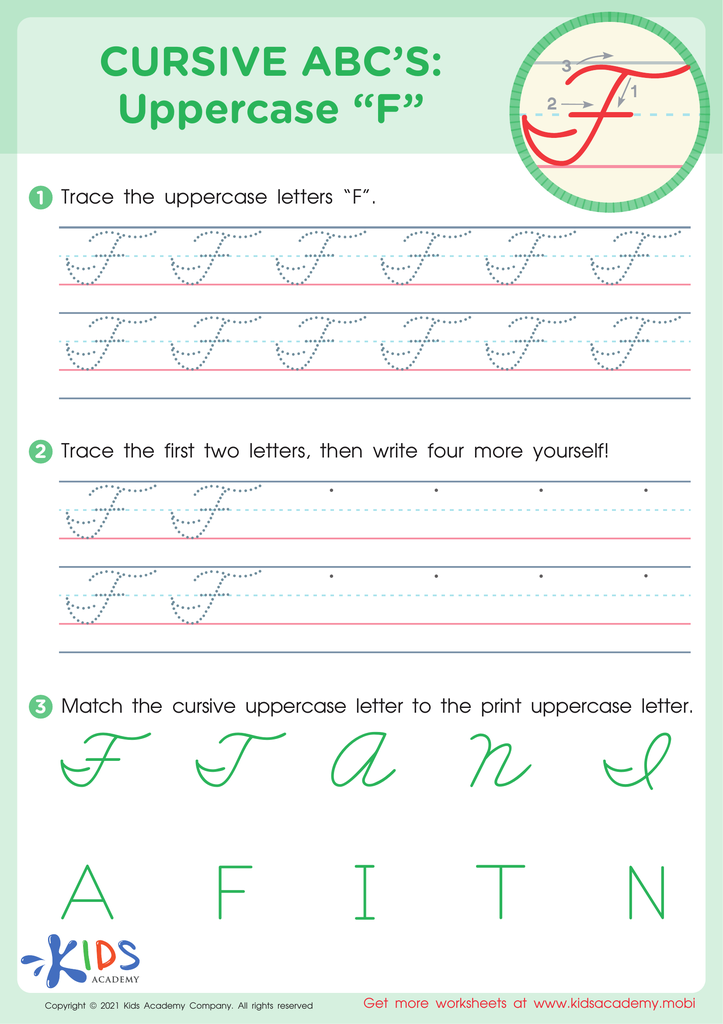
Cursive ABCs: Uppercase F
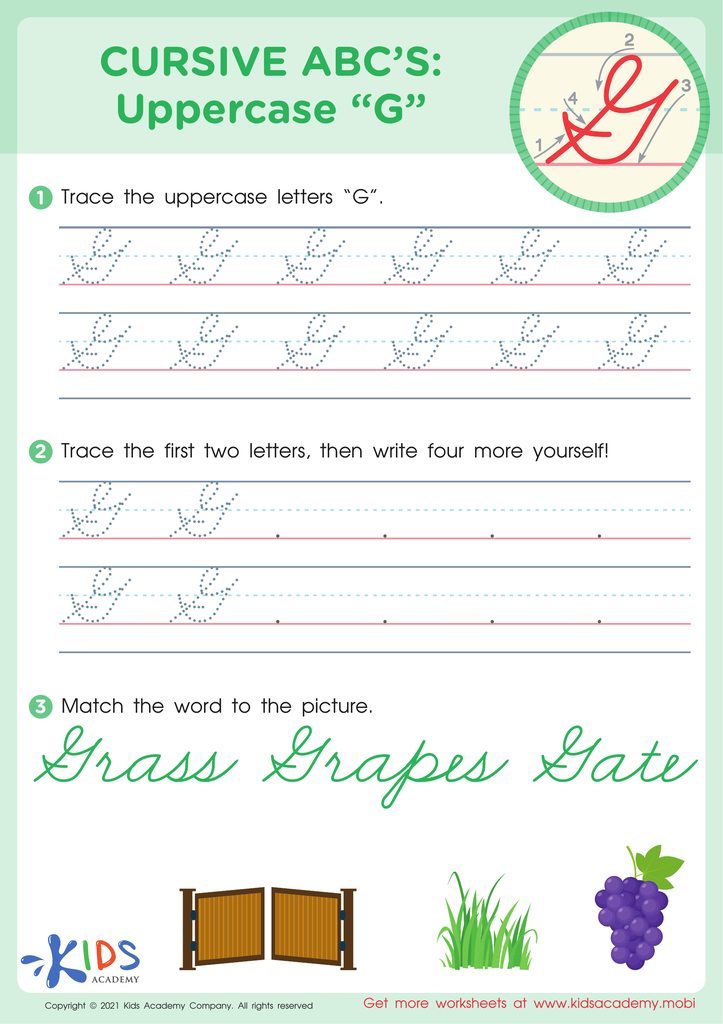
Cursive ABCs: Uppercase G
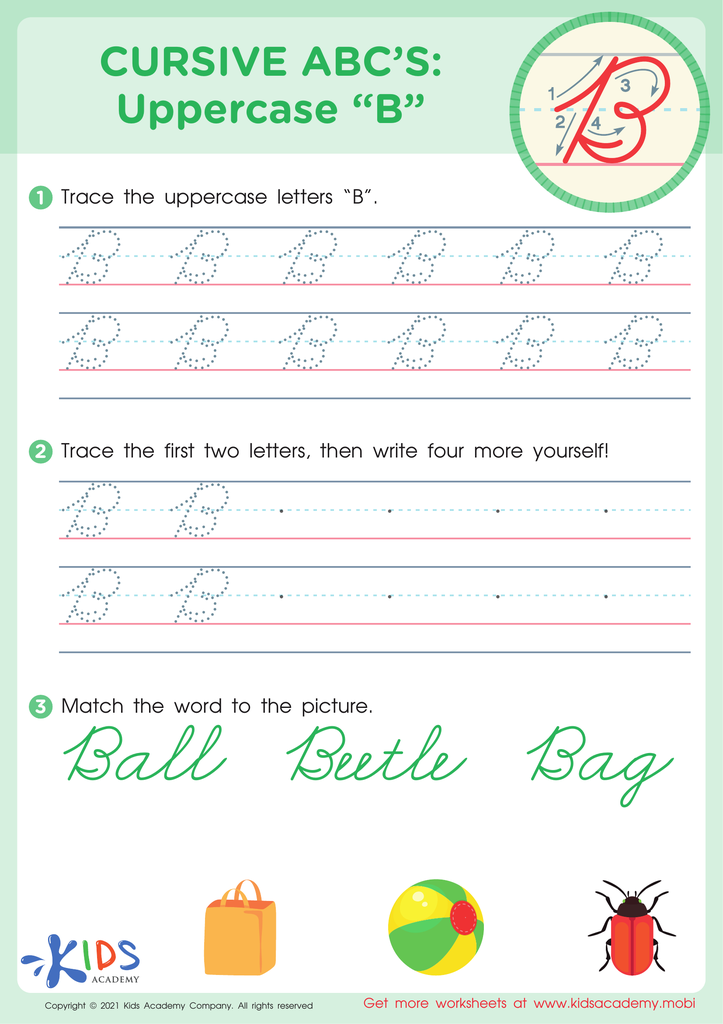
Cursive ABCs: Uppercase B
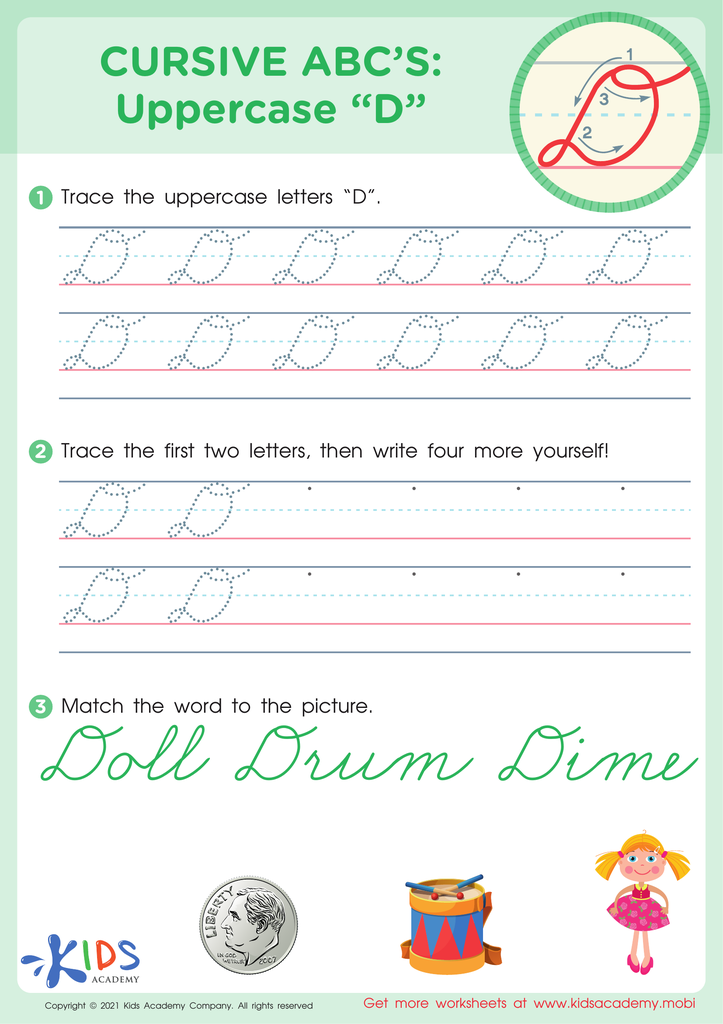
Cursive ABCs: Uppercase D
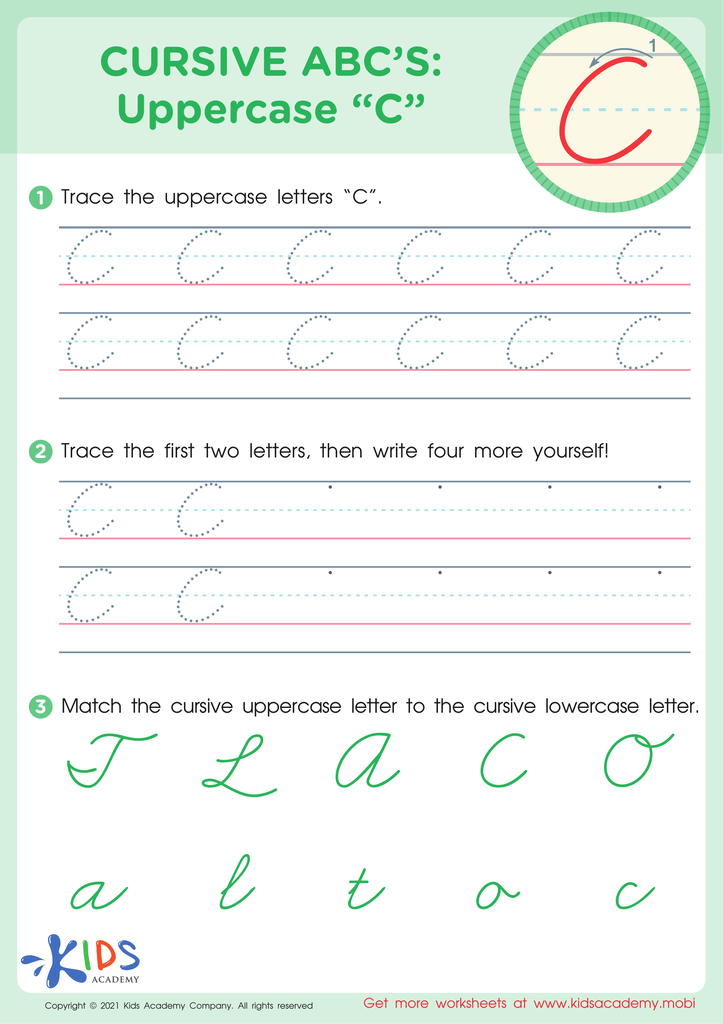
Cursive ABCs: Uppercase C
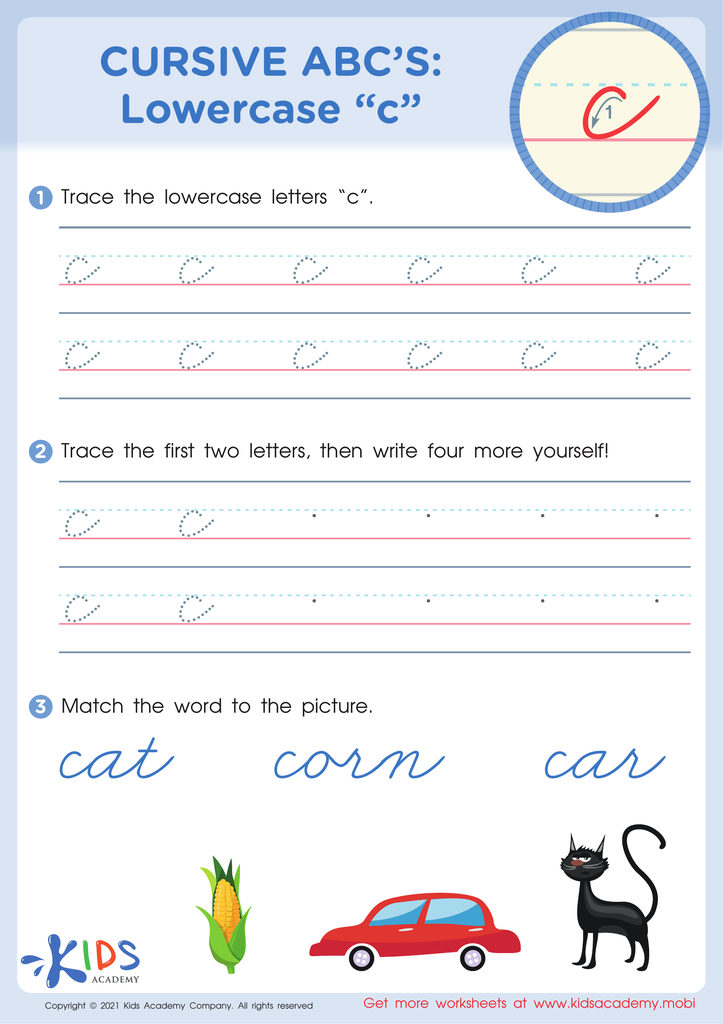
Cursive ABCs: Lowercase c
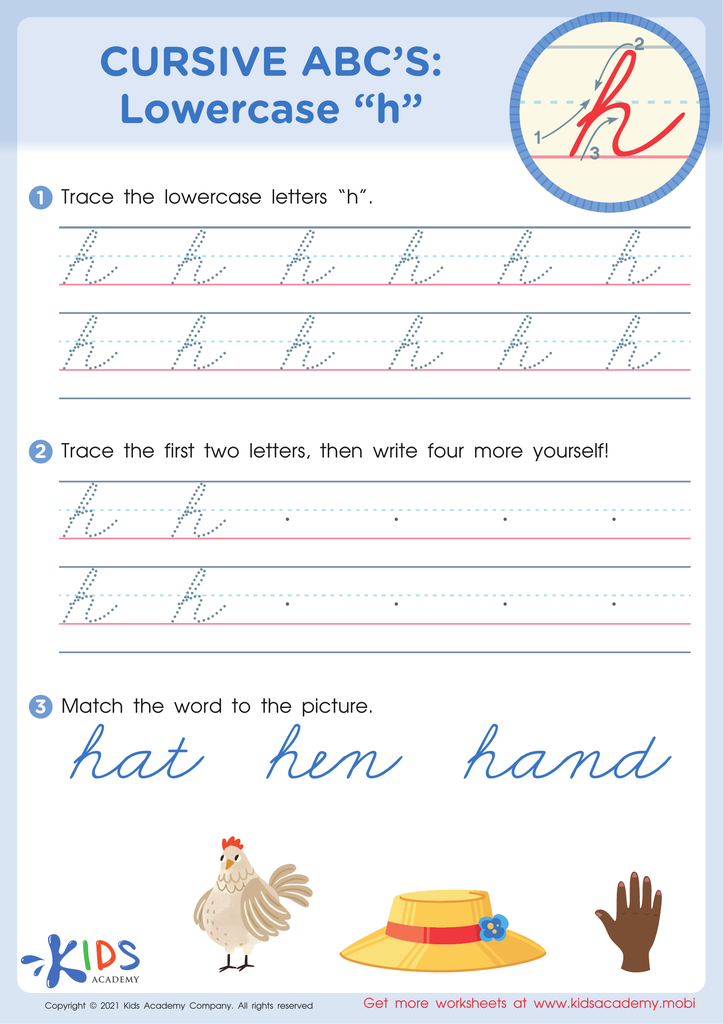
Cursive ABCs: Lowercase h
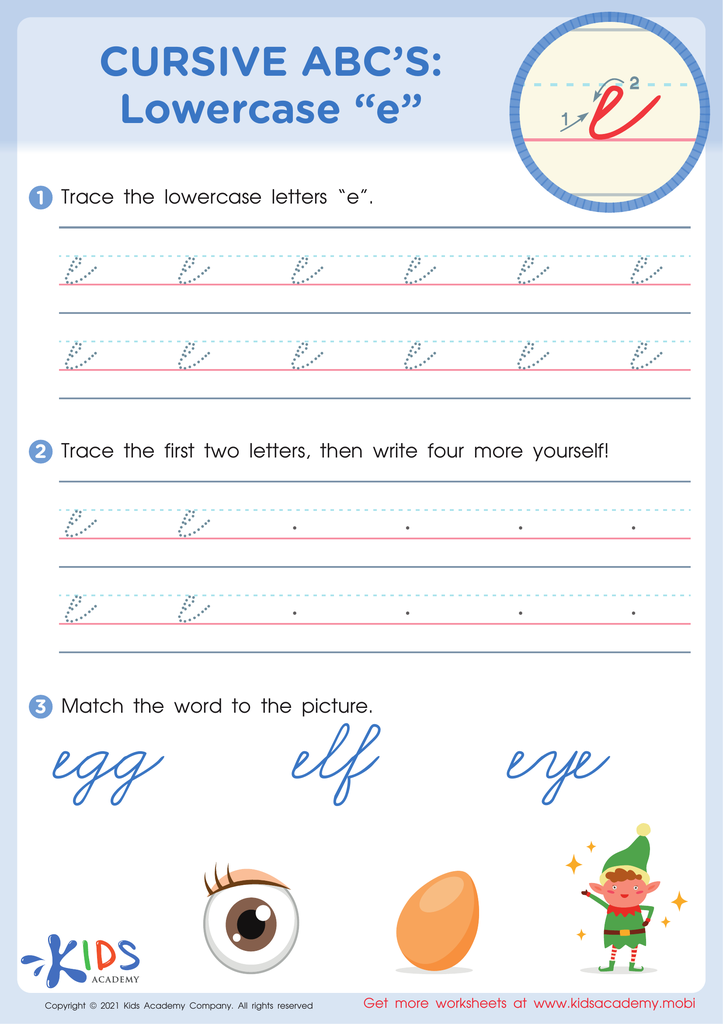
Cursive ABCs: Lowercase e
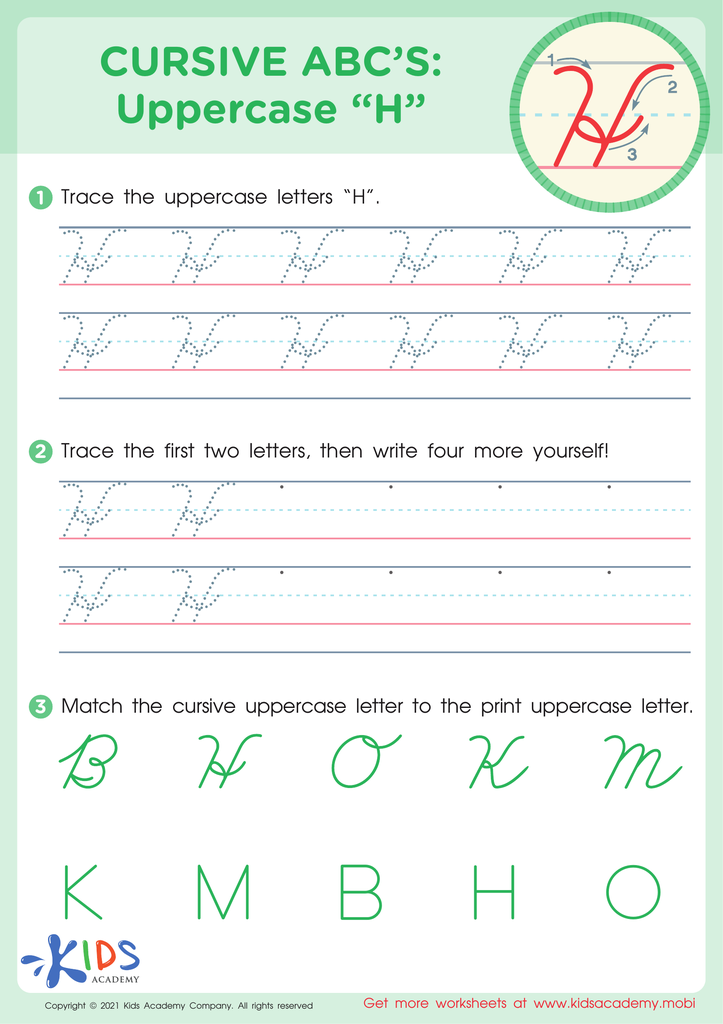
Cursive ABCs: Uppercase H





Cursive writing practice is crucial for children aged 6-8 as it enriches their cognitive and motor skills. First, it enhances fine motor skills and hand-eye coordination, allowing young learners to develop better control over their writing instruments. The fluid movement involved in cursive encourages muscle memory, promoting more efficient and legible handwriting.
Cursive also fosters creativity and expression. As children learn to connect letters, they engage with the artistry of writing, transforming it into a natural skill rather than a tedious task. This can increase their enthusiasm for writing, encouraging more frequent practice and, consequently, improved literacy.
Moreover, cursive writing has cognitive benefits; studies show that writing in cursive aids in memory retention and information recall. When children form letters in a connected flow, they better grasp the structure of words and sentences, enhancing overall literacy skills.
Finally, cursive writing is practical for daily life. Understanding cursive enables children to read historical documents, personal letters, and even some forms of digital communication, ensuring they don’t miss out on important cultural and historical connections. Therefore, parents and teachers should prioritize cursive practice to develop not only writing skills but also critical cognitive and social competencies.







