Fine motor development Alphabet Worksheets for Ages 6-8
3 filtered results
-
From - To
Encourage essential fine motor development with our Alphabet Worksheets for ages 6-8. These engaging worksheets are designed to enhance handwriting skills, improve dexterity, and build hand-eye coordination. Each activity combines alphabet learning with fun and interactive exercises, ensuring children develop muscle control while reinforcing letter recognition and writing. Perfect for home or classroom use, our worksheets provide an enjoyable way for children to advance their motor skills and literacy foundations. Transform learning into an exciting journey with our carefully crafted resources tailored to support your child's successful educational growth.
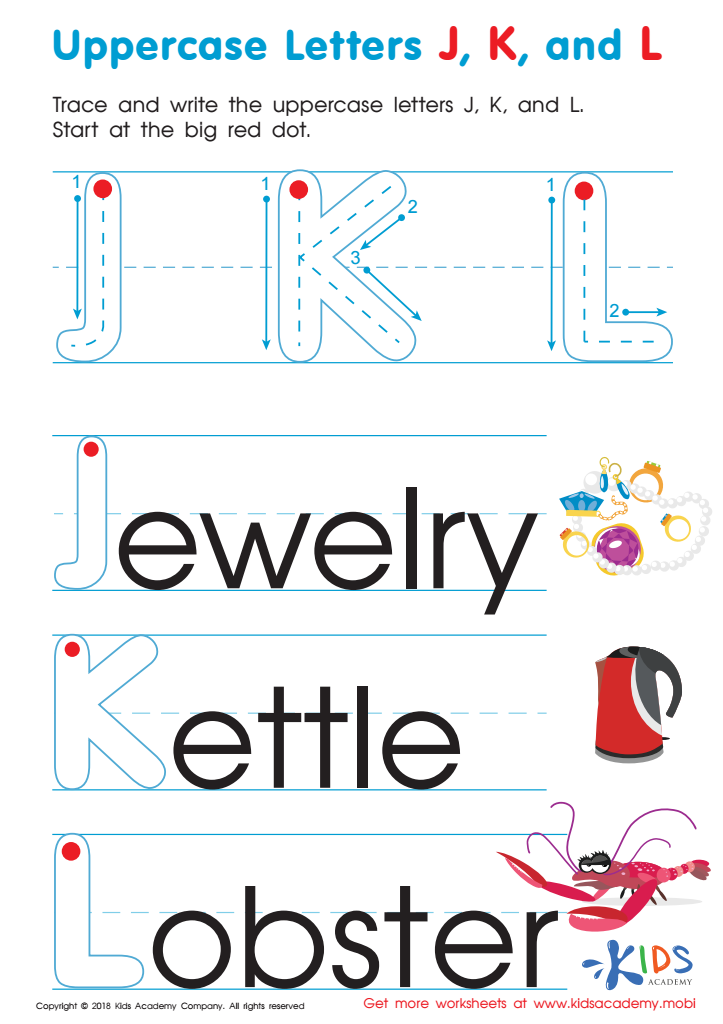
Uppercase Letters J, K, and L Worksheet
 Assign to My Students
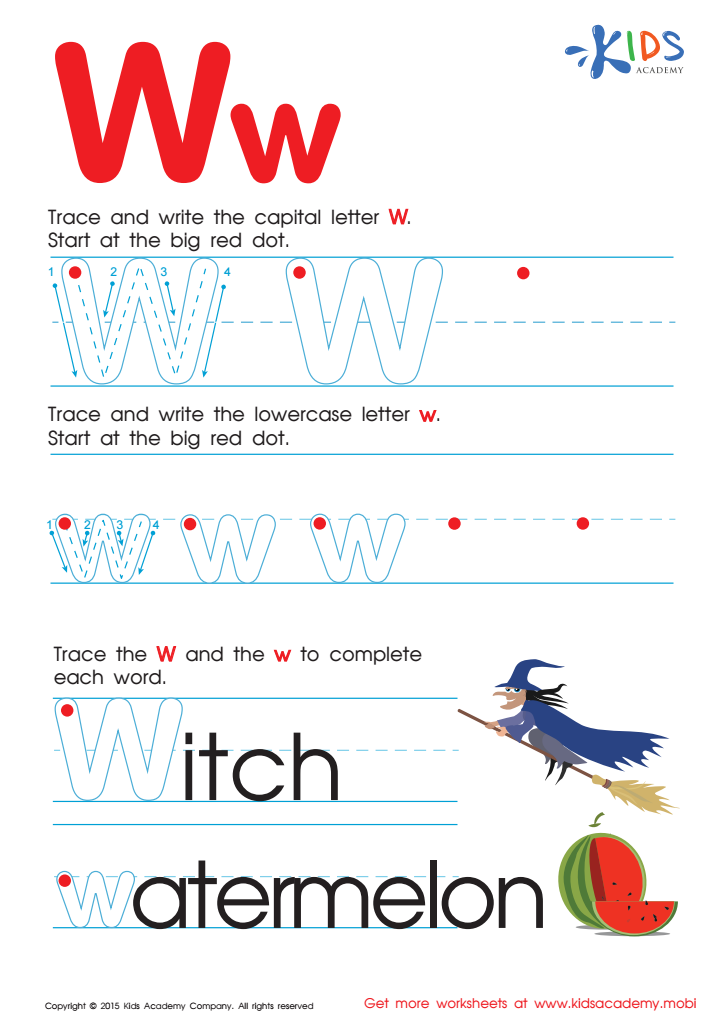
Letter W Tracing Page
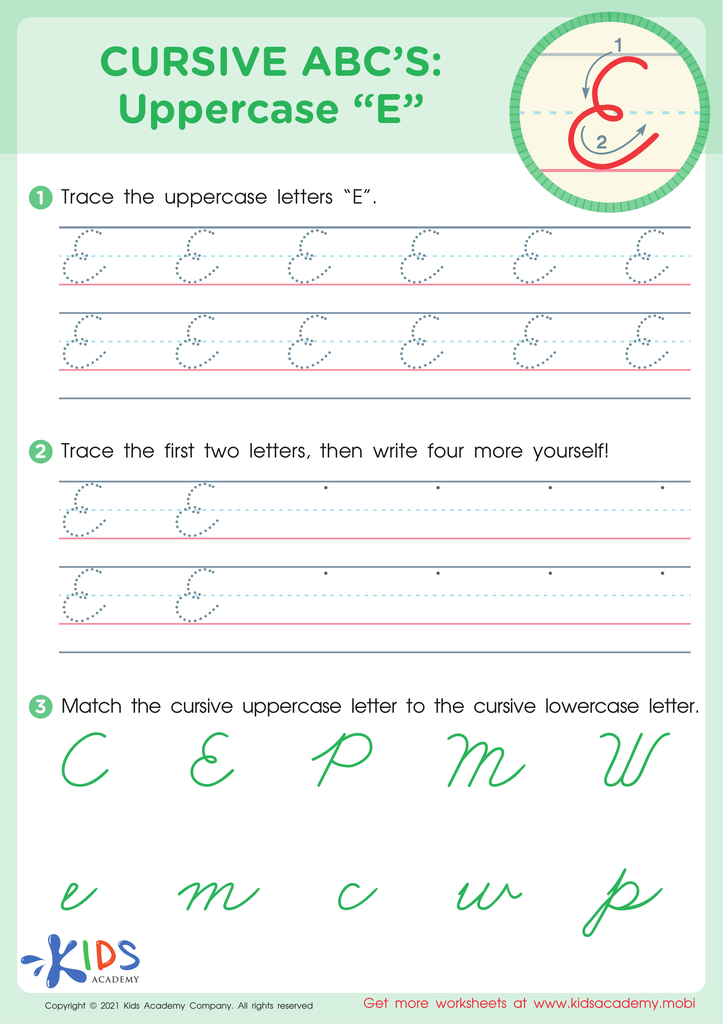
Cursive ABCs: Uppercase E







Parents and teachers should prioritize fine motor development when teaching the alphabet to children aged 6-8 because these skills are foundational for academic success and daily life functioning. Fine motor skills involve the coordination of small muscles, particularly in the hands and fingers, which are crucial for writing, coloring, and using scissors. At ages 6-8, children are transitioning from simple motor tasks to more complex ones, such as writing letters and numbers with proper form and spacing.
Developing fine motor skills through alphabet activities enables children to write more legibly and efficiently, fostering better communication skills. When children struggle with handwriting, they might become frustrated or discouraged, potentially affecting their overall learning experience. Hence, encouraging fine motor skills ensures that they can express their thoughts more effectively, contributing to better literacy.
Additionally, fine motor development fosters independence in daily tasks, such as buttoning clothes, tying shoelaces, and managing utensils. Activities like tracing letters, using playdough to form alphabet shapes, and engaging in precision crafting can make learning more enjoyable while bolstering these critical skills.
Thus, emphasizing fine motor development during alphabet learning not only enhances children's academic abilities but also promotes confidence, self-reliance, and a joy for learning, setting them up for lifelong success.







