
Letter formation Alphabet Worksheets for Ages 6-8
7 filtered results
Difficulty Level
Grade
Age
-
From - To
Subject
Activity
Standards
Discover our "Letter Formation Alphabet Worksheets" tailored for ages 6-8, designed to enhance your child’s writing skills in an engaging and effective way! These worksheets offer a fun approach to learning proper letter shapes, helping young learners from printing to fluency in handwriting. Incorporating activities that are both entertaining and educational, each worksheet focuses on consistent practice and encourages confidence in writing each letter. Perfect for home or classroom use, they support essential learning milestones, promoting dexterity and attention to detail. Set your child on the path to writing success with our expertly crafted letter formation resources!
Favorites
With answer key
Interactive
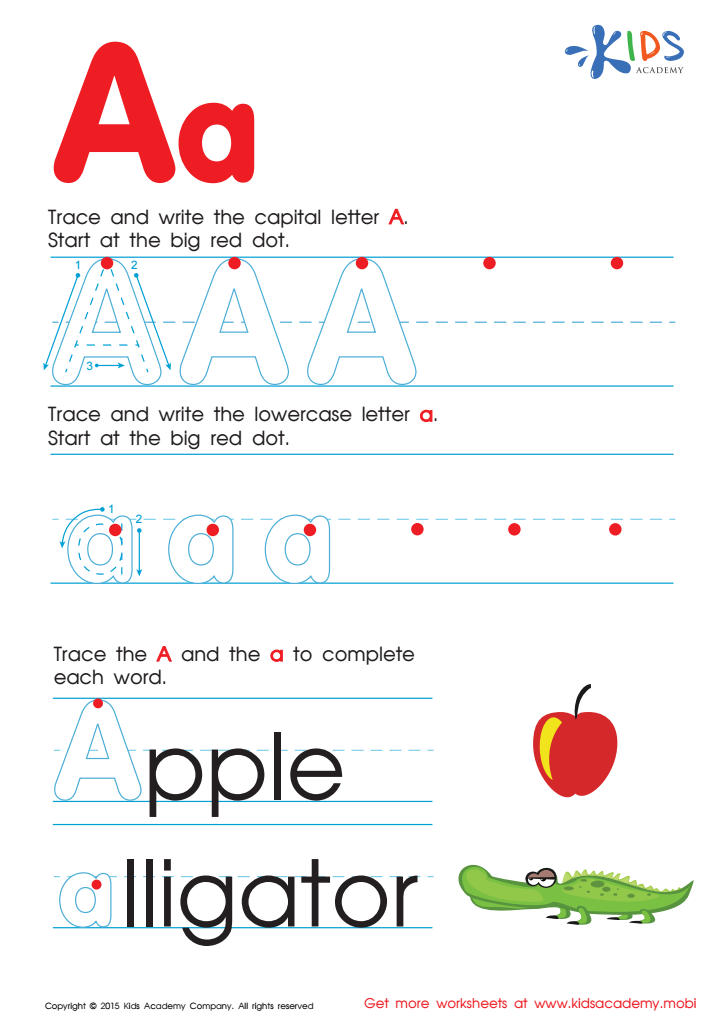
Letter A Tracing Page
Trace and write the letter "A"! Start with the big red dot, then do the capital and lowercase versions. Then write it again with two words - apple and alligator. Download more tracing worksheets at Kids Academy.
Letter A Tracing Page
Worksheet

Letter P Tracing Page
Trace the lines from the red dot to learn to write "P"! Then practice this letter with the fun activities: complete the word "Pig" and "Pumpkin". Check out Kids Academy to get more free ABC worksheets.
Letter P Tracing Page
Worksheet
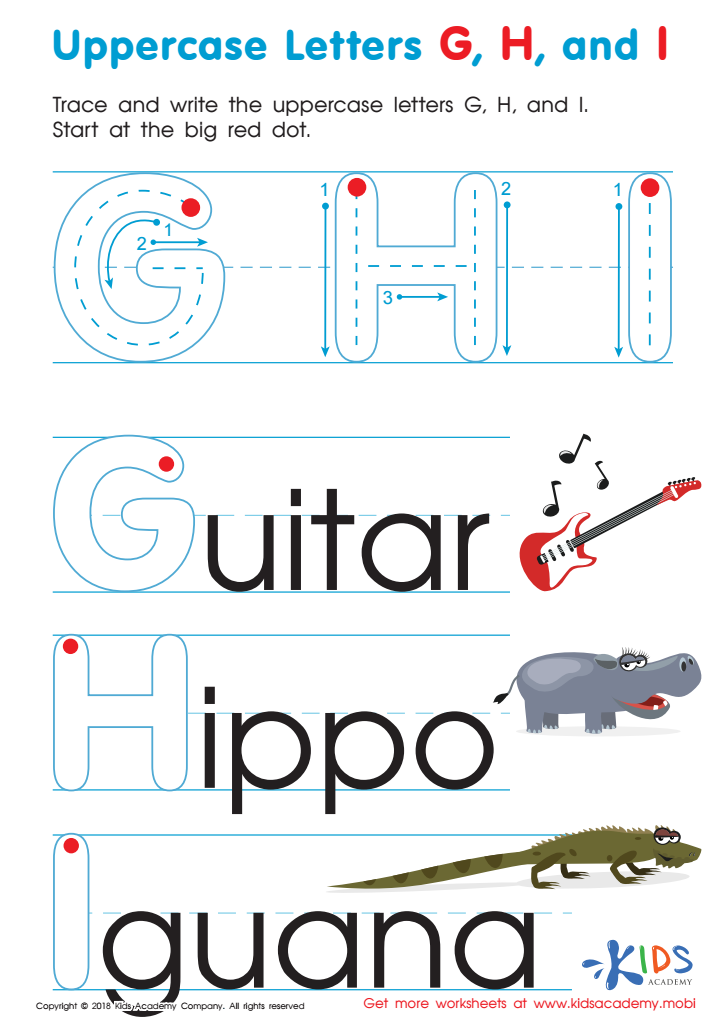
Uppercase Letters G, H, and I Worksheet
Trace each letter with the big red dot, connecting them to sounds as you go. Then write G to I. Congrats on a job well done! Rock on with a cute hippo and iguana while working on this delightful kindergarten worksheet!
Uppercase Letters G, H, and I Worksheet
Worksheet

Letter G Tracing Page
Get ready to trace the letter "G" – with a big red spot as the starting point, trace the lines and watch the letter appear. Uppercase and lowercase letters are both easy and fun to write. Give it a go and finish the word "go". Play the guitar and say "hello" to a funny ghost!
Letter G Tracing Page
Worksheet
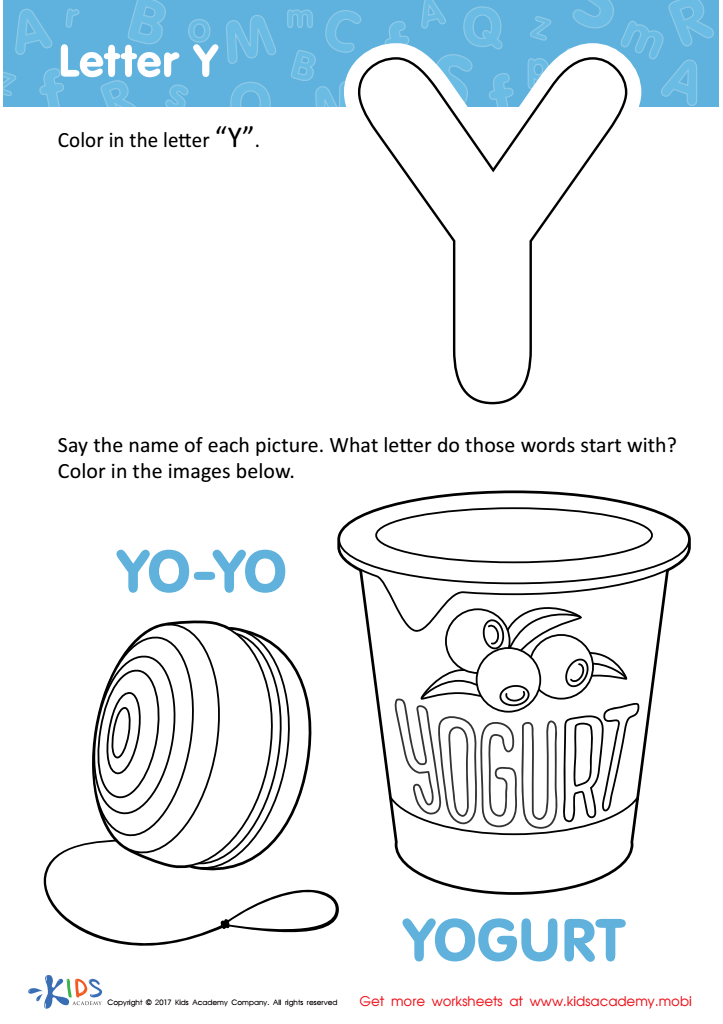
Letter Y Coloring Sheet
Let's celebrate letter "Y"! Here's a fun coloring page that'll help your child learn this end-of-the alphabet letter. It's packed with familiar objects that'll help build their art and literacy skills. So let's say "Yay"!
Download (PDF)
 Assign to My Students
Assign to My Students
Letter Y Coloring Sheet
Worksheet
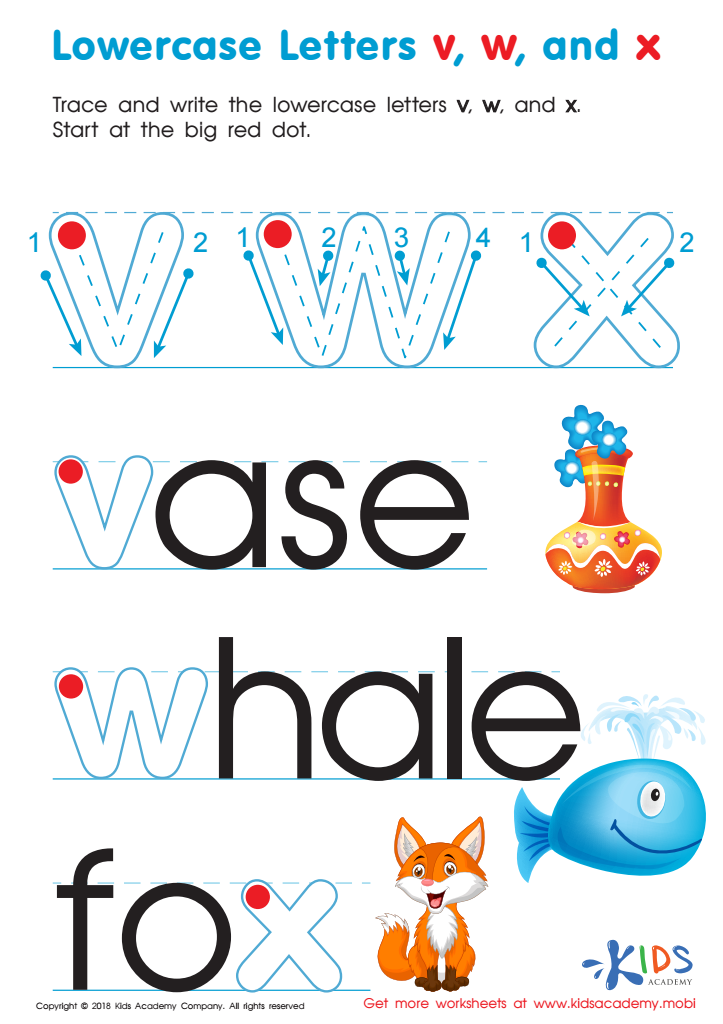
Lowercase Letters v w x Worksheet
Help your child learn to write lowercase letters v, w, and x, starting at the big red dot. This activity will help them develop writing skills and correctly identify the letters. Guide them as they trace the letters and enjoy watching them improve!
Lowercase Letters v w x Worksheet
Worksheet
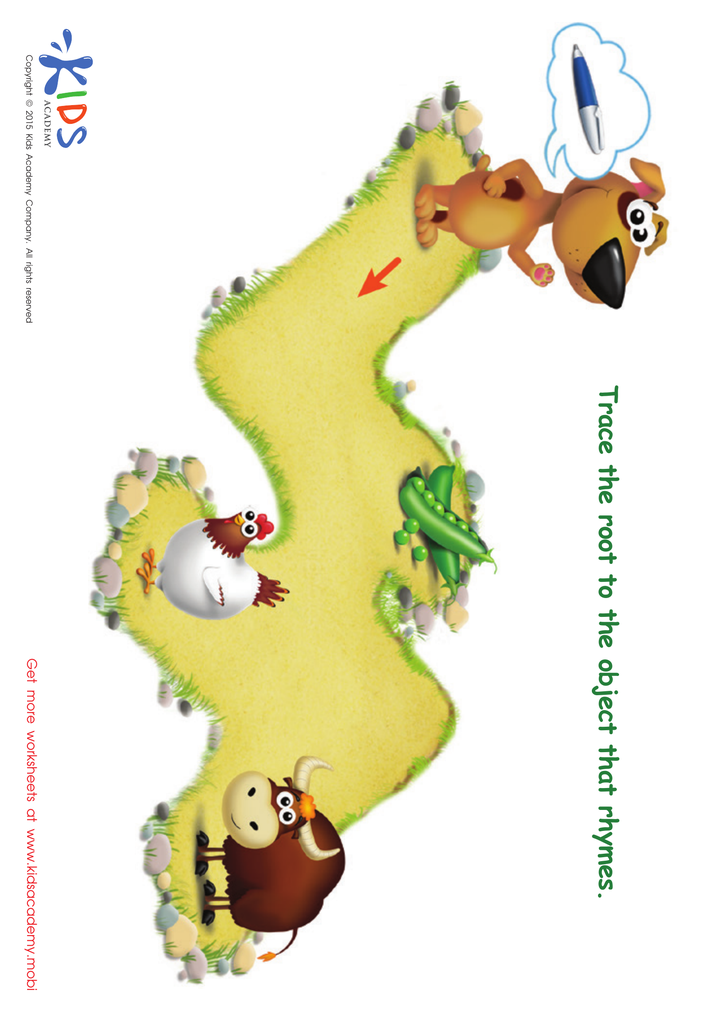
Pen Rhyming Words Worksheet
Check out the cute pup, pondering away. He's thinking of a root word - no suffix or prefix. Now check the hen, green beans, and the cow. Can you find the word that rhymes with pen? Draw a line from the root word to its rhyme for this simple yet beneficial worksheet. It helps young learners practice hearing and recognizing rhymes.
Pen Rhyming Words Worksheet
Worksheet
Join Kids Academy for Free
Who is primarily going to use this learning content?







Teaching proper letter formation to children aged 6-8 is essential for foundational literacy skills. At this critical developmental stage, children are transitioning from scribbling to writing recognizable letters and words. Proper letter formation ensures children develop legible handwriting, which directly impacts their ability to communicate effectively.
When children form letters correctly, they are more likely to write with consistency and speed, making writing a less laborious task. This builds their confidence and encourages more practice. Misformed letters can slow their writing, causing frustration, which may lead to an aversion to writing tasks and negatively affect their academic progress.
Additionally, good letter formation supports cognitive processes. When children learn to write letters properly, it reinforces their ability to recognize those letters in print, which is essential for reading proficiency. The physical act of writing also helps to cement memory retention and reinforces the relationship between letters and sounds, critical during early reading development.
For teachers and parents, investing time in teaching proper letter formation reduces future remedial work. Early intervention helps prevent bad habits, making it easier for children to meet academic benchmarks. Engaging in writing-focused activities and proper technique from the beginning promotes lifelong literacy skills, setting the foundation for academic success in future years.







