Long vowel recognition Alphabet Worksheets for Ages 6-8
3 filtered results
-
From - To
Our Long Vowel Recognition Alphabet Worksheets for Ages 6-8 are designed to enhance young learners' reading and phonics skills. These engaging worksheets aid children in identifying and distinguishing long vowel sounds in various words, boosting their reading fluency and comprehension. With fun, interactive activities that capture kids' attention, these worksheets make learning long vowel patterns enjoyable and effective. Perfect for home practice or classroom use, they support early literacy development and help build a strong foundation for future reading success. Elevate your child's phonics education with our expertly crafted long vowel recognition worksheets.
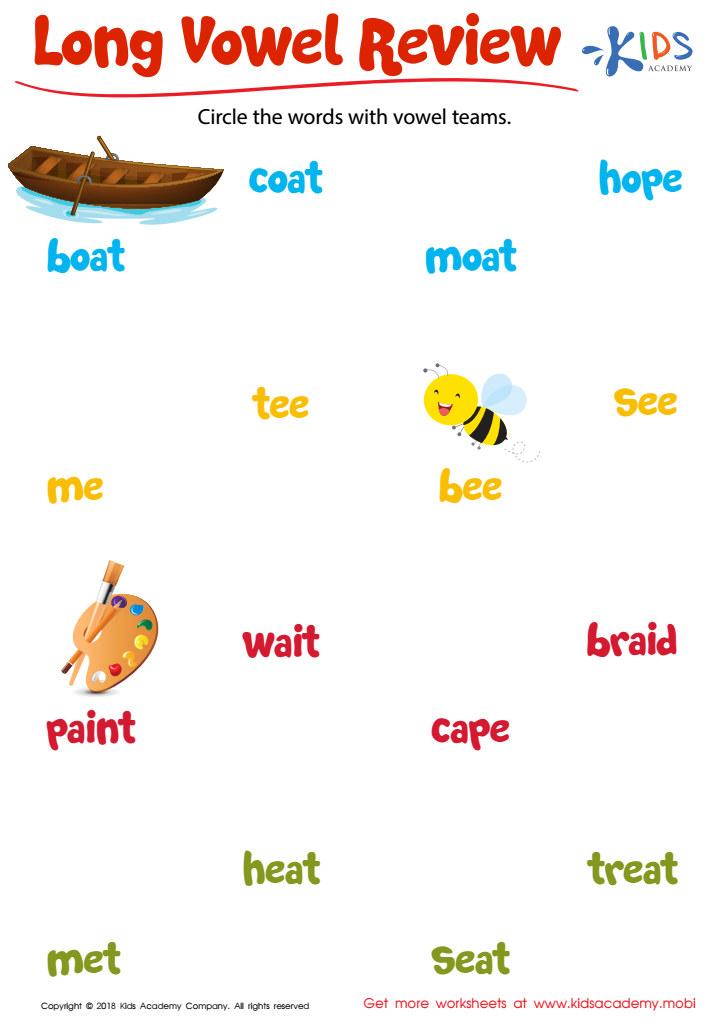
Long Vowel Review Worksheet
 Assign to My Students
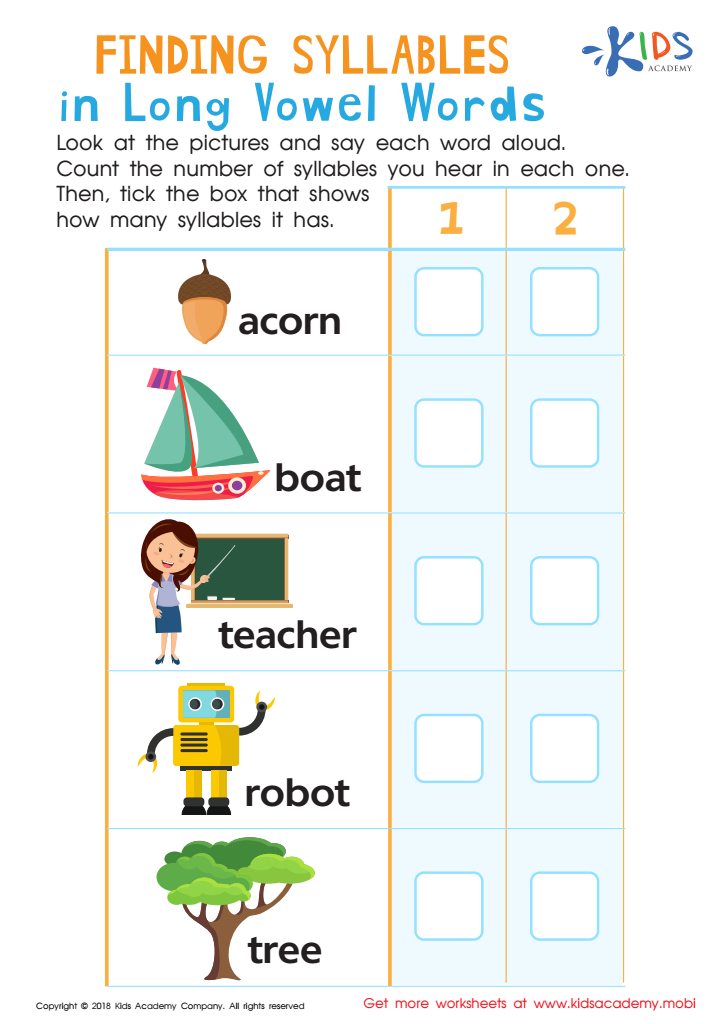
Finding Syllables in Long Vowel Words Worksheet
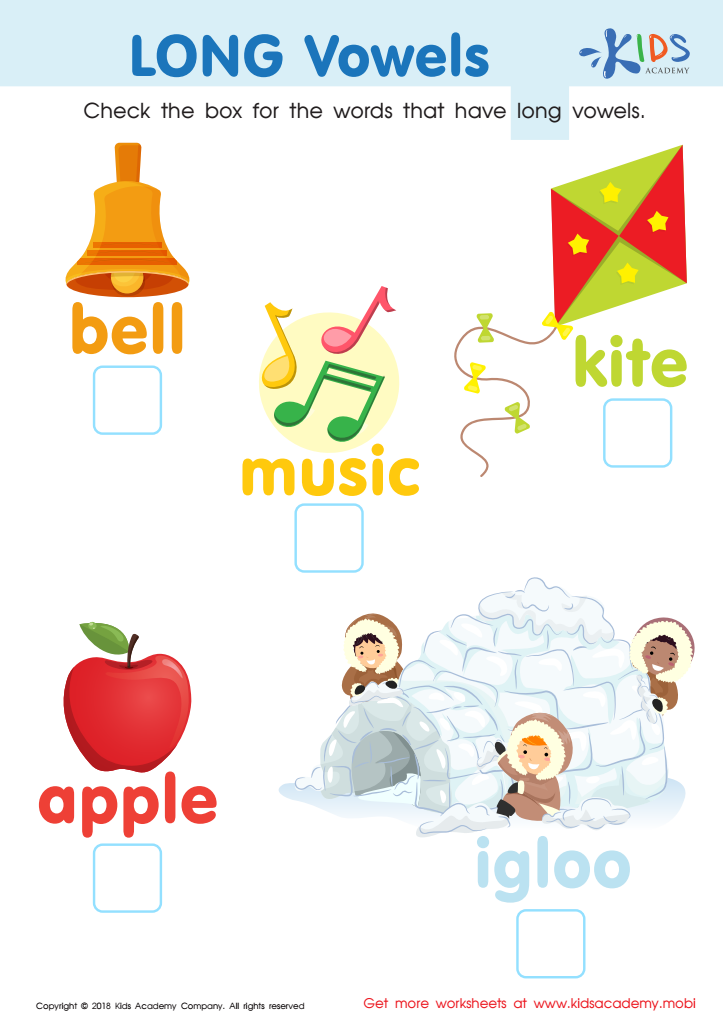
long vowels Worksheet








Long vowel recognition is crucial for children aged 6-8 because it profoundly impacts their foundational literacy skills. At this early stage, children are not just learning to read and write; they are also developing their understanding of how language works. Long vowels considerably improve word recognition and pronunciation, both vital for smooth and fluent reading. For instance, the difference between "hop" and "hope" lies in the recognition of the long vowel ‘o’. Understanding these distinctions helps children decode words more effectively and paves the way for improved spelling.
Moreover, long vowel awareness aids in comprehension. When children can accurately recognize and produce long vowel sounds, they better grasp meaning and context, allowing them to understand stories and informational texts more deeply. This ability to decode and comprehend builds their confidence and increases their motivation to read and learn.
For teachers and parents, it is essential to focus on long vowel recognition to ensure those children become proficient, autonomous readers. Structured phonics programs, engaging reading materials, and interactive activities that emphasize long vowel sounds can greatly support this learning process. Neglecting this aspect might result in reading difficulties later on, possibly impacting a child's academic performance and overall attitude towards learning. Therefore, long vowel recognition forms a cornerstone of effective early literacy education.







