Sound differentiation Alphabet Worksheets for Ages 6-8
3 filtered results
-
From - To
Unlock your child's potential with our engaging Sound Differentiation Alphabet Worksheets for Ages 6-8! Tailored for young learners, these worksheets focus on helping children distinguish between similar sounds while enhancing their letter recognition skills. Fun and interactive activities combine auditory and visual elements, making learning enjoyable and effective. Your child will gain confidence in phonics and improve their spelling abilities through relatable exercises designed to stimulate their critical thinking. Perfect for homeschooling or classroom settings, these worksheets provide the ideal foundation for literacy development. Dive into a world of sound and letter fun, and watch your child thrive in their language journey!
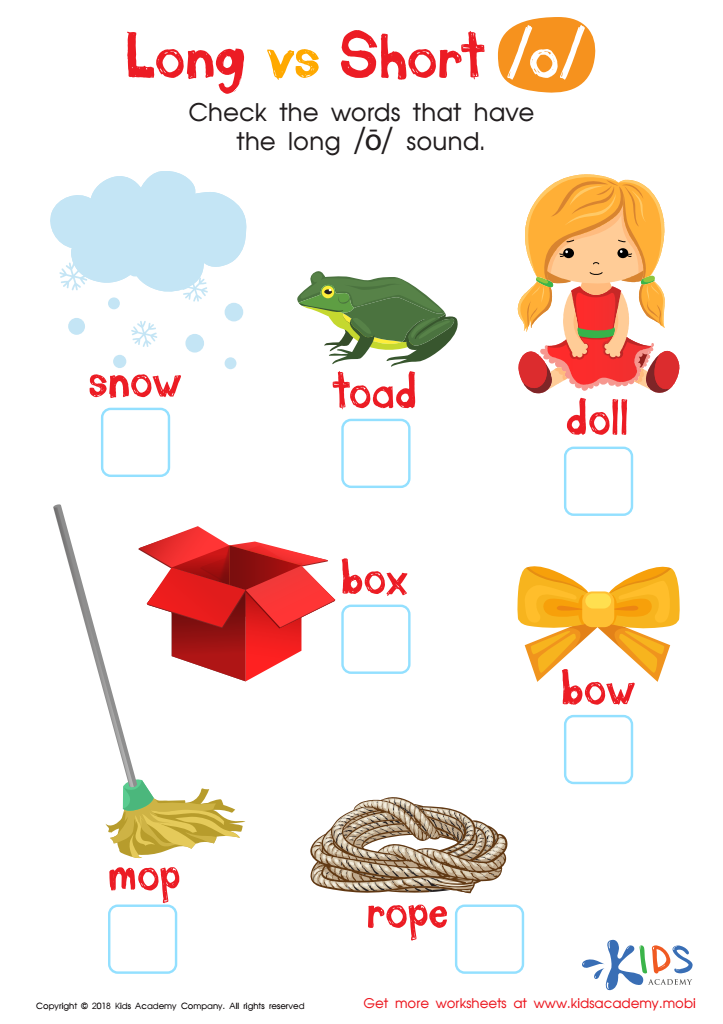
Long vs Short O Reading Worksheet
 Assign to My Students
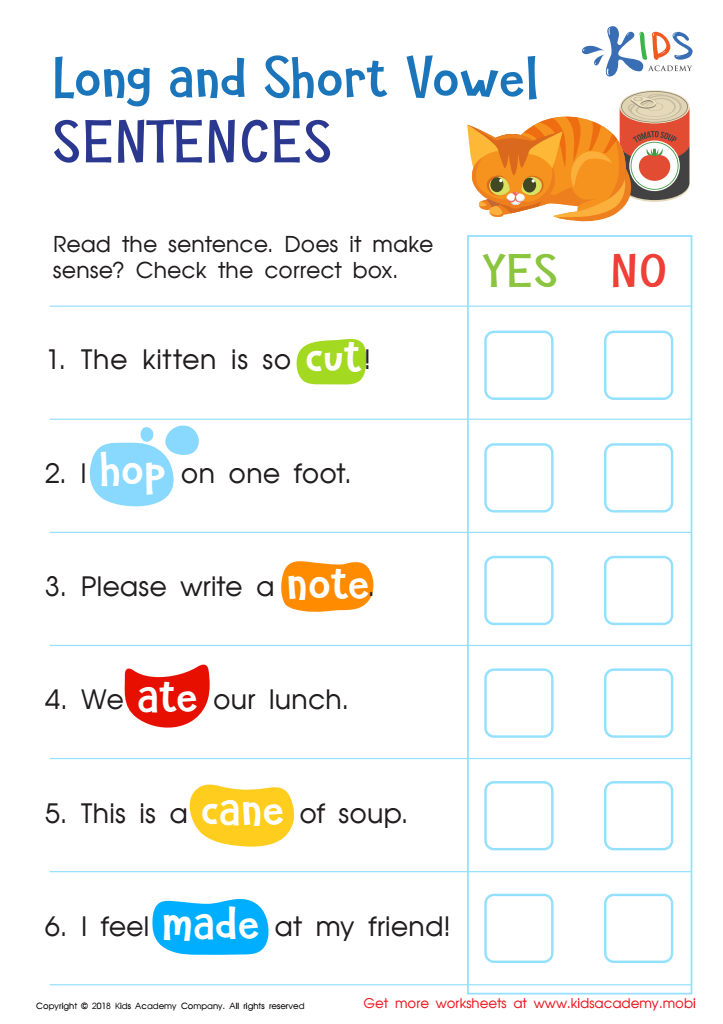
Long and Short Vowel Sentences: Assessment Worksheet
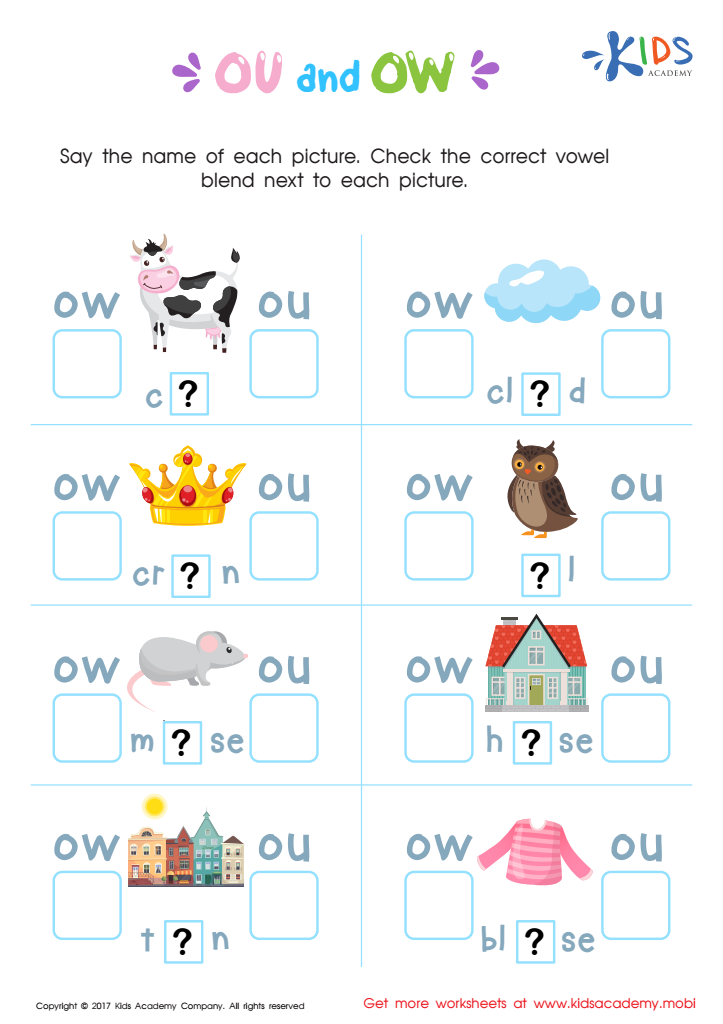
OU and OW Words Worksheet







Sound differentiation in literacy for children ages 6-8 is pivotal for developing strong reading and writing skills. At this age, children are transitioning from learning to read to reading to learn. Sound differentiation—the ability to distinguish and manipulate sounds in words—forms the foundation for phonemic awareness, which is essential for phonics instruction.
When parents and teachers prioritize sound differentiation, they help children decode words, spell accurately, and ultimately become fluent readers. Recognizing individual sounds within words enhances vocabulary development and supports comprehension skills. Moreover, children who struggle with sound differentiation often face challenges with reading comprehension, leading to frustration and disengagement.
Incorporating activities that promote sound differentiation, such as rhyming games and phonological exercises, can make learning enjoyable. Furthermore, offering targeted support to those struggling ensures that all children develop the abilities needed for academic success.
By fostering sound differentiation, parents and teachers build confident learners eager to tackle new texts and ideas, laying a solid groundwork for future learning. In a world rich with information, strong literacy skills empowered by sound differentiation allow children to thrive both in school and beyond.







