Sound-letter association Alphabet Worksheets for Ages 6-8
3 filtered results
-
From - To
Discover our engaging Sound-Letter Association Alphabet Worksheets designed specifically for children aged 6-8! These interactive and colorful worksheets help kids connect sounds to corresponding letters, laying a strong foundation for literacy development. Through fun activities, your young learners will practice identifying letters, matching them with sounds, and enhancing their phonemic awareness. Each worksheet is crafted to spark curiosity and make learning enjoyable. Perfect for classroom use or at-home learning, these resources aim to develop essential reading skills while keeping students motivated and enthusiastic about discovering the world of letters and sounds. Enhance your child's reading journey today!
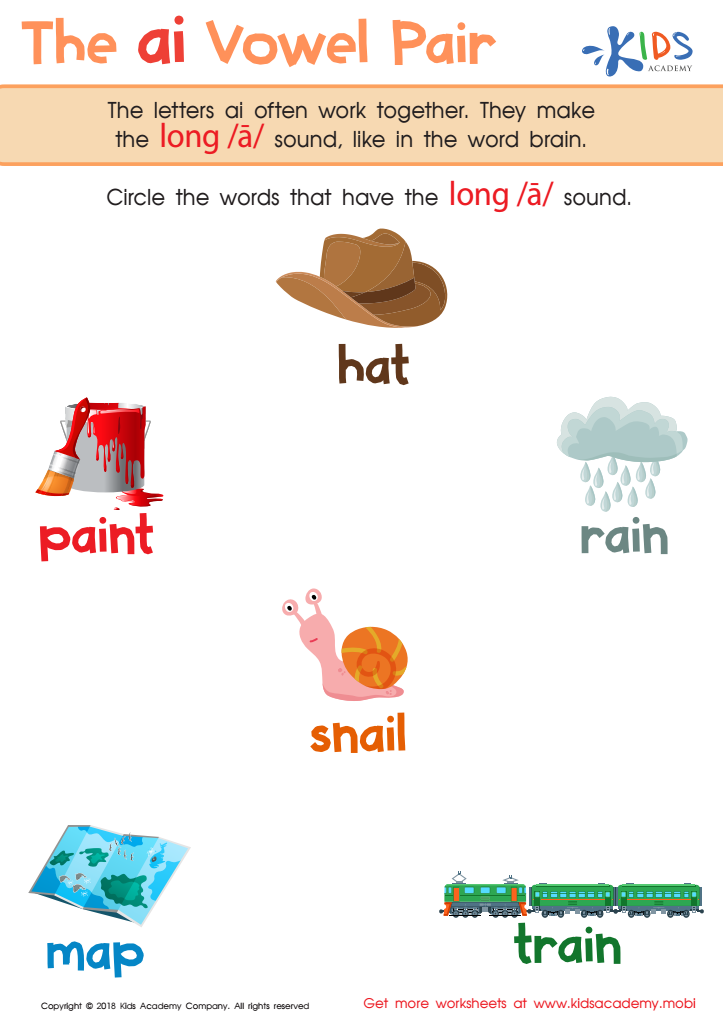
The AI Vowel Pair Worksheet
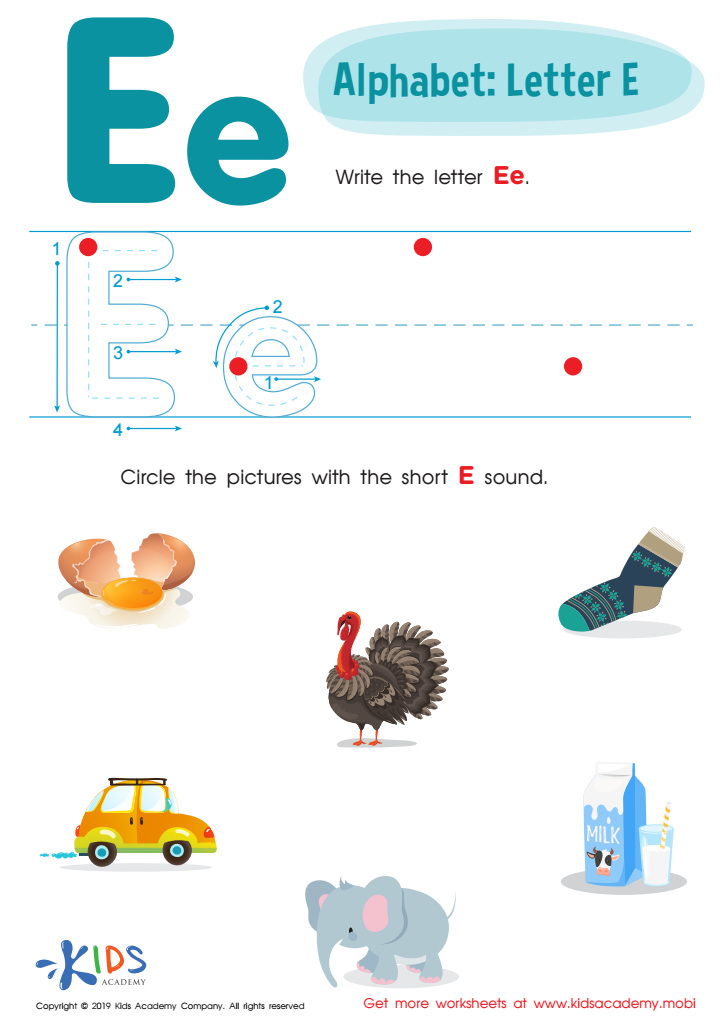
Letter E Tracing Worksheet
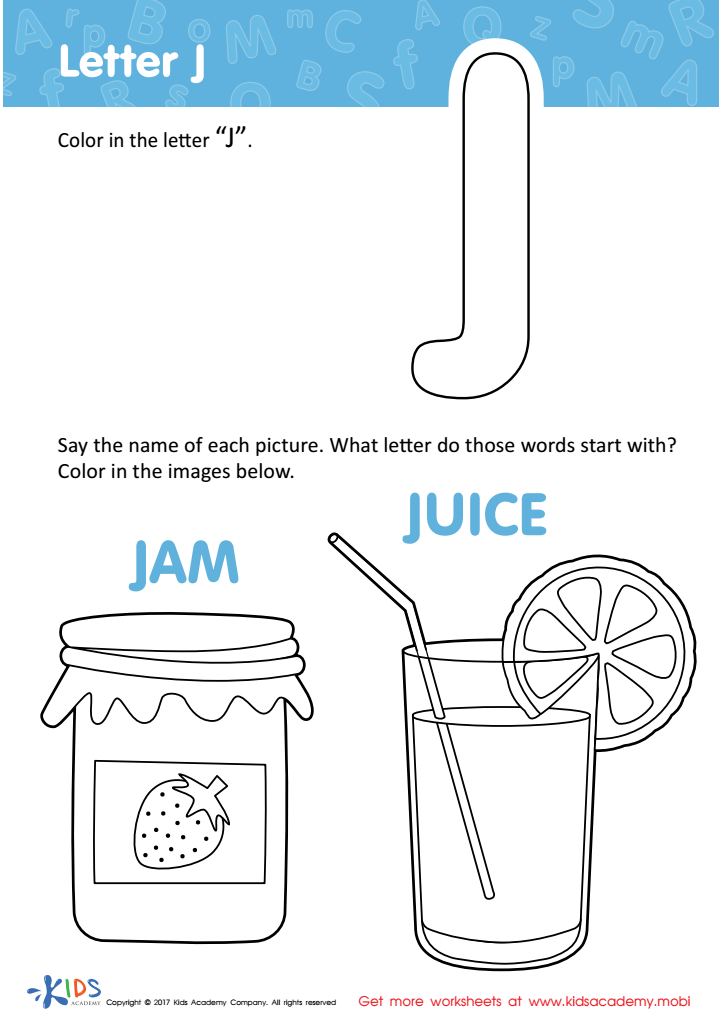
Letter J Coloring Sheet
 Assign to My Students








Sound-letter association, often referred to as phonemic awareness, is crucial for children aged 6-8 as they begin to develop their reading and writing skills. This foundational skill enables children to understand the relationship between sounds and their corresponding letters, forming the core of written language. Parents and teachers should care about this phenomenon for several reasons.
Firstly, strong sound-letter association equips children with the skills needed to decode words. As children learn to match sounds to letters, they gain the confidence to read aloud, which fosters a love for reading. Secondly, it enhances spelling abilities. Children who grasp these associations can better sound out words before writing, reducing frustration and improving their overall academic performance.
Moreover, sound-letter association supports overall language development. It aids in vocabulary building and comprehension, both of which are essential for effective communication. Additionally, a solid foundation in phonics at this age can lead to improved literacy skills later on, setting children up for academic success.
Ultimately, emphasizing sound-letter associations in early education cultivates independent readers and writers, fosters a positive attitude towards learning, and prepares children for future literacy challenges. Parents and teachers play a crucial role in facilitating this important developmental process.







