
Handwriting Skills Letter Recognition Worksheets for Ages 6-8
10 filtered results
Difficulty Level
Grade
Age
-
From - To
Subject
Activity
Standards
Enhance your child's handwriting and letter recognition with our engaging worksheets designed specifically for ages 6-8. These printable activities combine fun and learning, helping young learners identify letters while improving their penmanship. Each worksheet features colorful illustrations and interactive exercises that encourage creativity and critical thinking. As children trace and write letters, they build essential handwriting skills, fostering confidence and fluency in their writing. Ideal for teachers and parents looking to support early literacy development, these resources are perfect for at-home practice or classroom settings. Download our Handwriting Skills Letter Recognition Worksheets today and lay the foundation for strong writing abilities!
Favorites
With answer key
Interactive
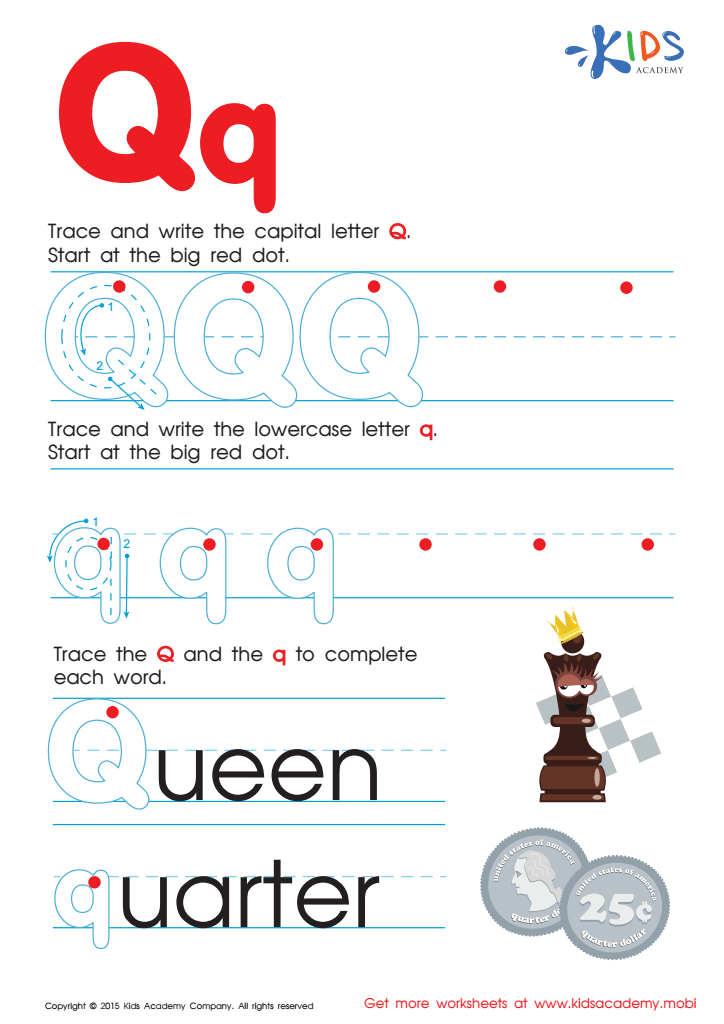
Letter Q Tracing Page
Learn the letter "Q"! Trace and write it a few times in upper and lowercase. Then help the Queen by writing her initial letter. Finally, write "quarters" and practice with more alphabet worksheets.
Letter Q Tracing Page
Worksheet
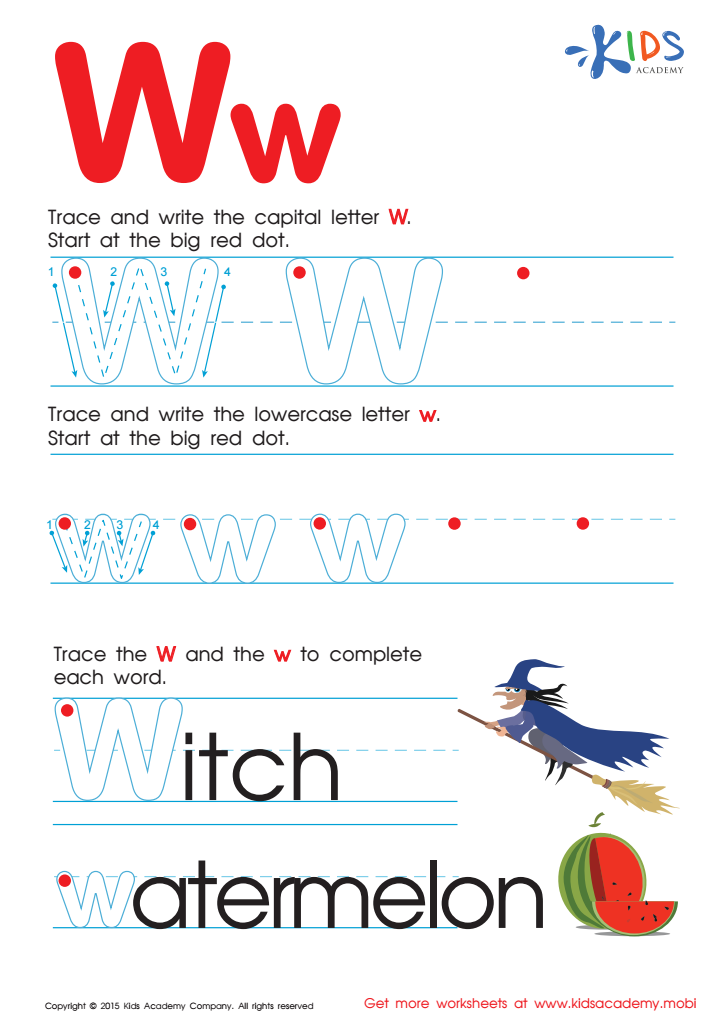
Letter W Tracing Page
Trace and write the capital and lowercase letter W with this free letter tracing worksheet by Kids Academy. Complete the words "Witch" (capital) and "watermelon" (lowercase). Check out our other kindergarten alphabet worksheets!
Letter W Tracing Page
Worksheet
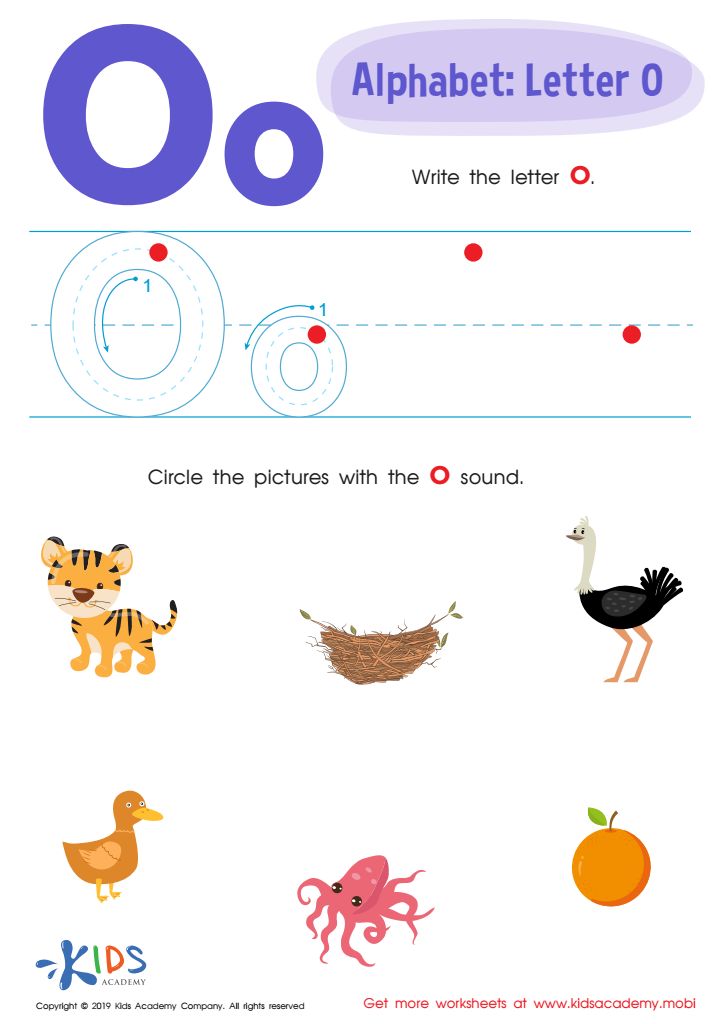
Letter O Tracing Worksheet
This worksheet gives kids the chance to trace the letter "O" while also circling pictures that have the "O" sound. Visual and hands-on learners will benefit from the visuals and tracing, helping them learn the letter "O" with ease. It's the perfect way to learn what "octopus" and "ostrich" start with!
Letter O Tracing Worksheet
Worksheet
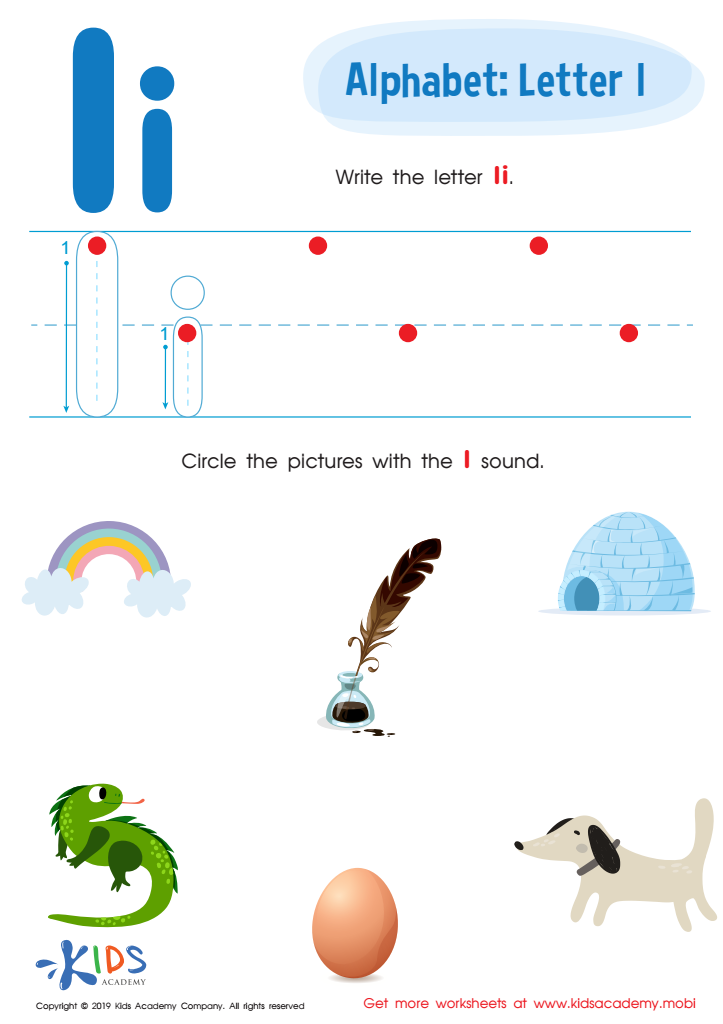
Letter I Tracing Worksheet
Kids can hone tracing, writing and identifying skills for the letter 'I' with this worksheet. Whether visual or reading/writing learners, every child can benefit from the tasks - tracing, writing and circling objects beginning with 'I'. This free sheet will soon get preschoolers confident with the 'I' letter!
Letter I Tracing Worksheet
Worksheet
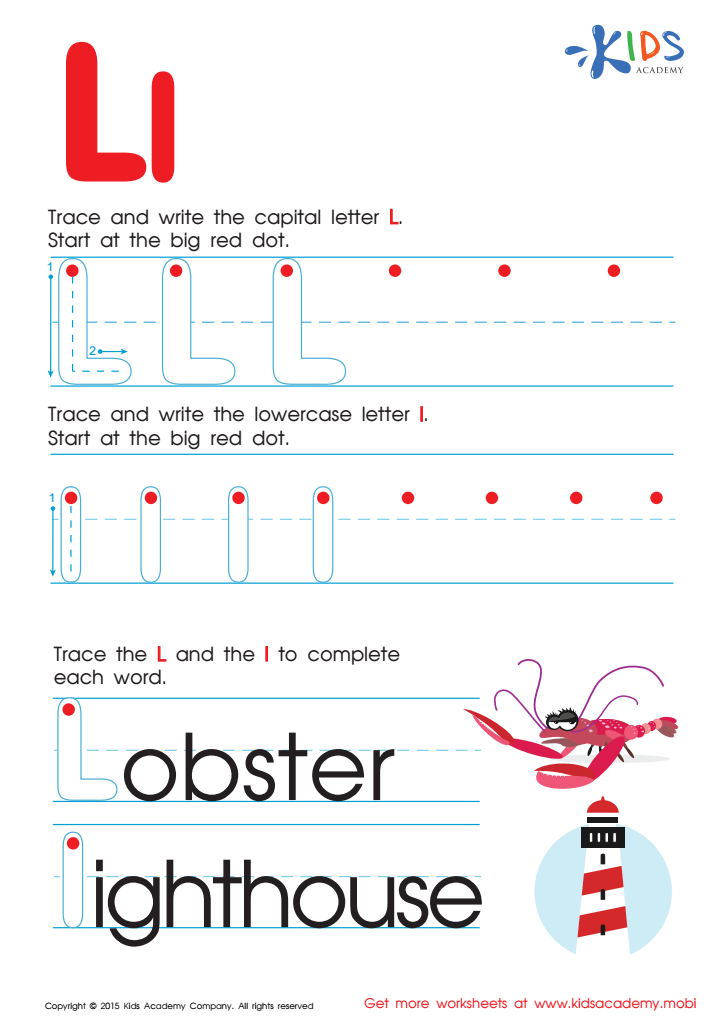
Letter L Tracing Page
Trace uppercase and lowercase letters to practice writing. Pay attention to the lowercase letters, like the "L", that are not as tall as an uppercase "I" or as short as a lowercase "i". Words like "lobster" and "lighthouse" are waiting to be completed. Enjoy!
Letter L Tracing Page
Worksheet
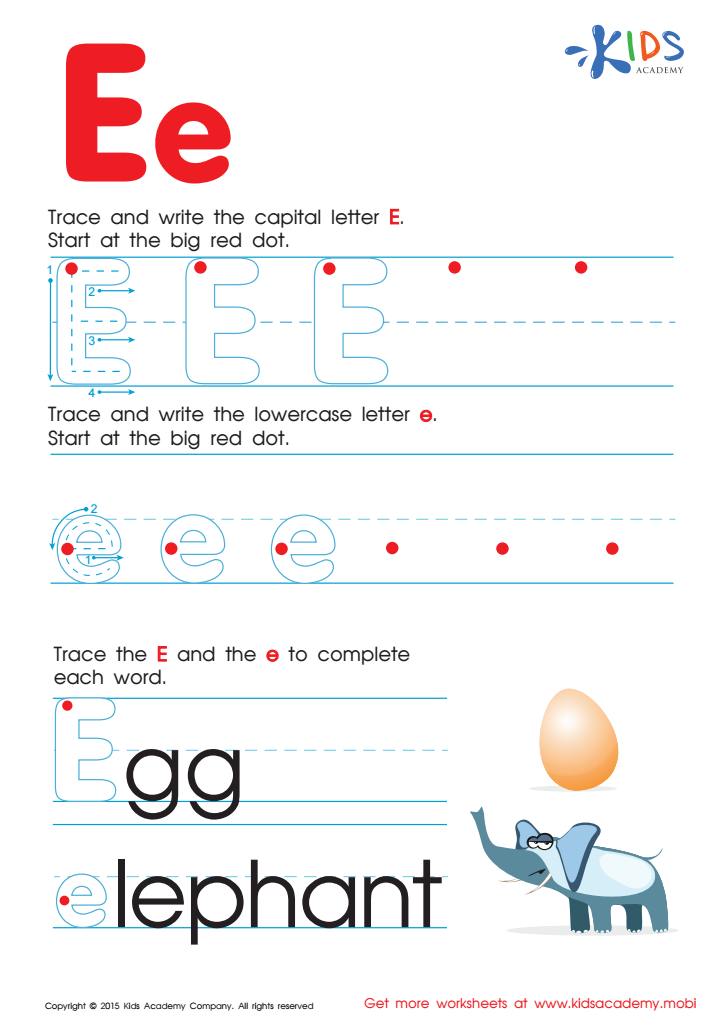
Letter E Tracing Page
Trace and write the uppercase and lowercase "E" starting at the big red dot. Complete words to perfect letter writing. Egg and Elephant must be written carefully. More alphabet worksheets for kindergarten are available for download to spend more time with your children learning.
Letter E Tracing Page
Worksheet
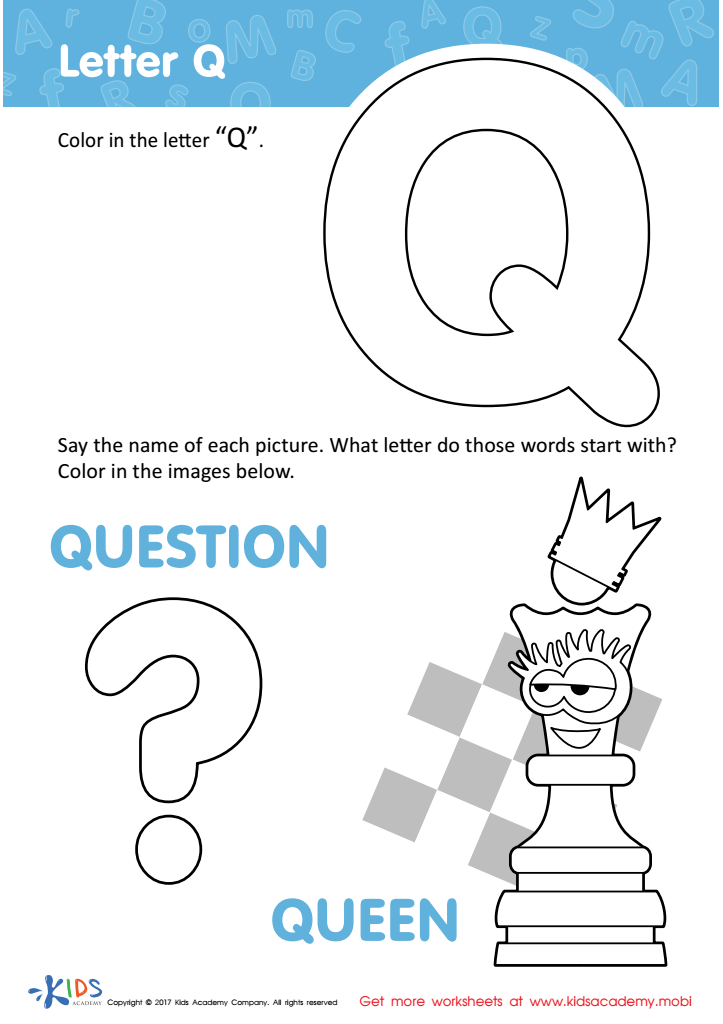
Letter Q Coloring Sheet
Kids need practice with letters not seen often. Give your child a boost with this letter "Q" coloring page! Have them color in the queen and question mark, while learning the sound "Q" makes. Fun and educational!
Download (PDF)
 Assign to My Students
Assign to My Students
Letter Q Coloring Sheet
Worksheet
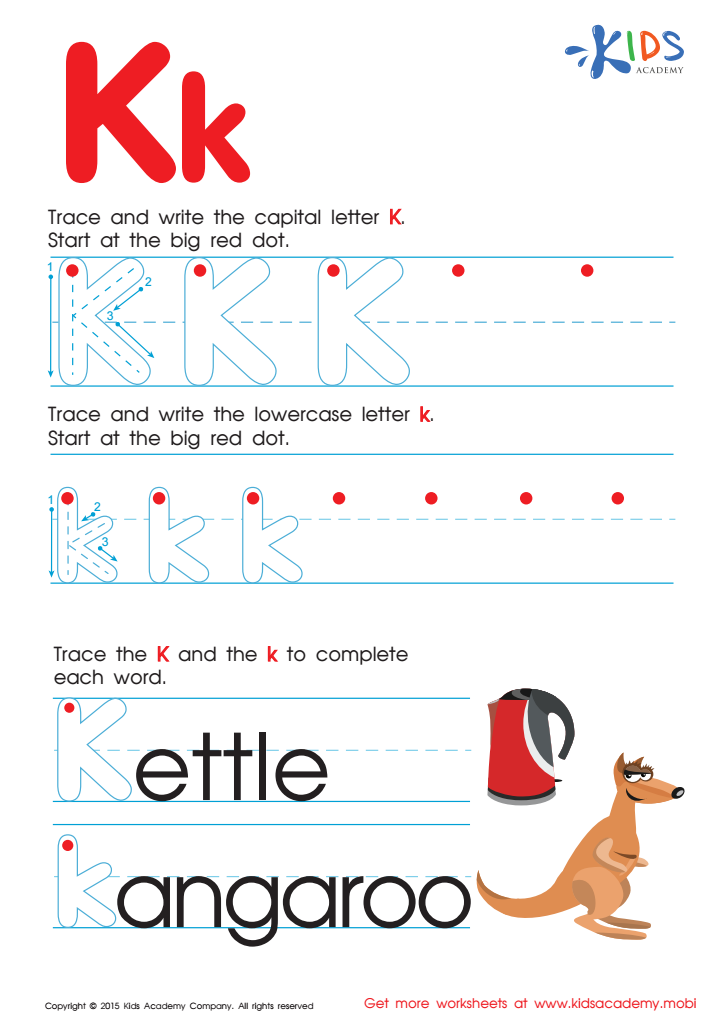
Letter K Tracing Page
Trace and write the letter K; start at the big red dot. Use it to complete words like "Kettle" and "Kangaroo". Visit Kids Academy for more free alphabet worksheets for kindergarten.
Letter K Tracing Page
Worksheet
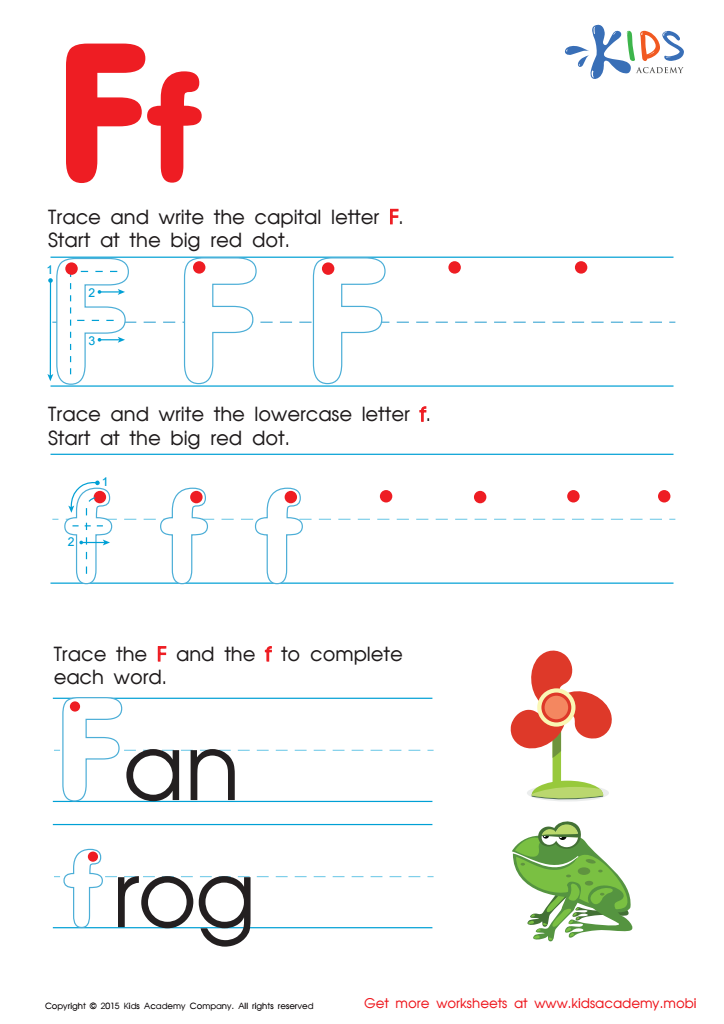
Letter F Tracing Page
Trace "F" with your pencil! Start at the red dot and draw lines — it's fun! Check it out — it looks great! Keep practicing to make it even better. Then, try completing words. Help out the broken fan and funny frog! Get free alphabet worksheets and activities for your kids. Come see our new tracing pages!
Letter F Tracing Page
Worksheet
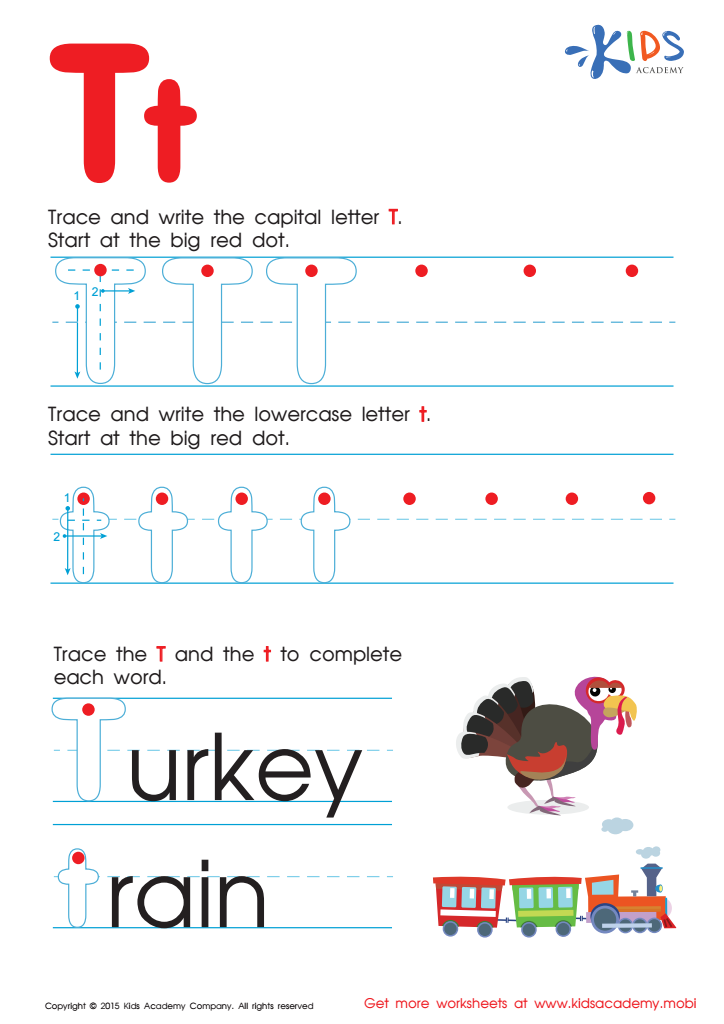
Letter T Tracing Page
Trace letters, complete words, draw pictures and see your kids having fun!
Kids Academy offers alphabet tracing worksheets to learn to write letters. Start with the big red dot, trace the letter, then write it. Practice uppercase and lowercase. Have fun completing words with a Turkey or a rain-train and draw pictures. Get more printable worksheets to make learning enjoyable.
Letter T Tracing Page
Worksheet
Join Kids Academy for Free
Who is primarily going to use this learning content?








Handwriting skills and letter recognition are foundational for children aged 6-8, playing a crucial role in their overall academic development. At this age, children transition from learning letters to using them to read and write. Proficient handwriting enhances their ability to express thoughts clearly, fostering communication skills essential for social interaction and academic success.
Effective letter recognition facilitates reading fluency; as children identify letters and their corresponding sounds, they become more confident readers. When parents or teachers prioritize handwriting practice, they ignite a child's enthusiasm for learning. By mastering handwriting, children are also encouraged to take pride in their work, ultimately influencing their self-esteem and motivation.
Moreover, developing fine motor skills through handwriting exercises aids in physical coordination, benefiting other areas such as art and sports. Children who struggle with handwriting may find themselves frustrated, impacting their love for learning. Thus, consistent practices that support good handwriting not only enhance literacy but also build a child's confidence and zest for education.
In encouraging handwriting skills and letter recognition, parents and teachers lay the groundwork for lifelong learners who feel capable and excited about writing and reading. This investment is essential for children's future academic achievement and overall personal growth.







