Rhyming skills development Phonics Worksheets for Ages 6-8
4 filtered results
-
From - To
Enhance your child's reading journey with our "Rhyming Skills Development Phonics Worksheets for Ages 6-8." These engaging, fun-filled worksheets make learning to rhyme a delightful experience, essential for early literacy. Each worksheet is designed to boost phonemic awareness, helping kids recognize and generate rhyming words through entertaining activities and colorful illustrations. Perfectly suited for home or classroom use, our carefully crafted exercises bolster confidence and build a strong foundation for reading and writing. Watch as your young learner masters rhyming patterns while having a blast. Start their rhyming adventure today with our expertly designed worksheets!
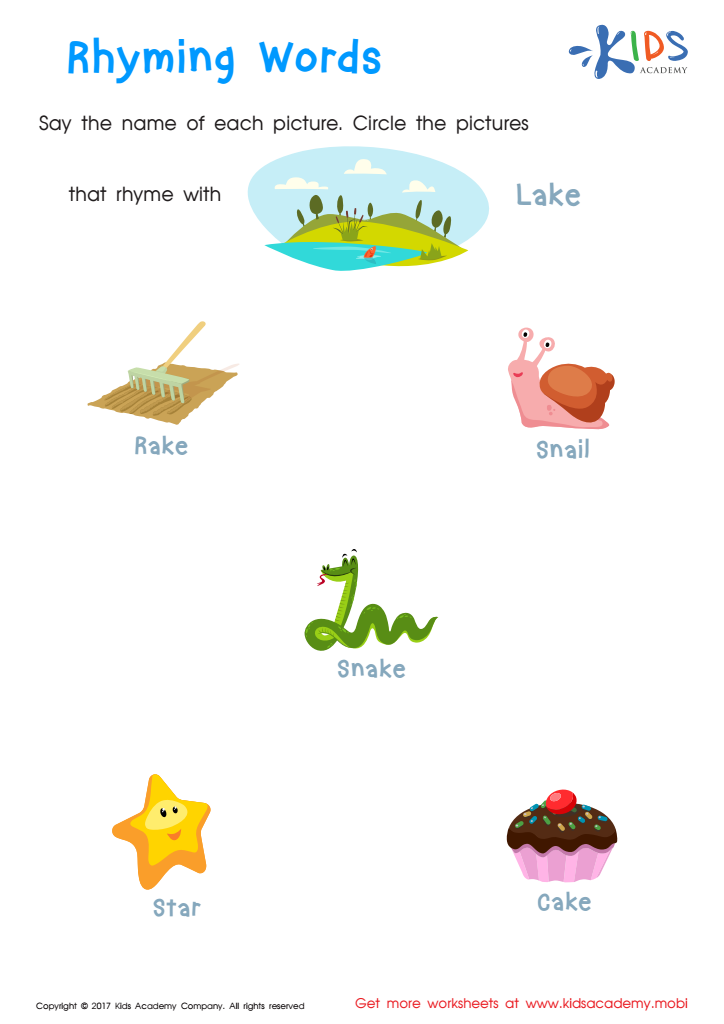
Rhyming Words Rhyming Worksheet
 Assign to My Students
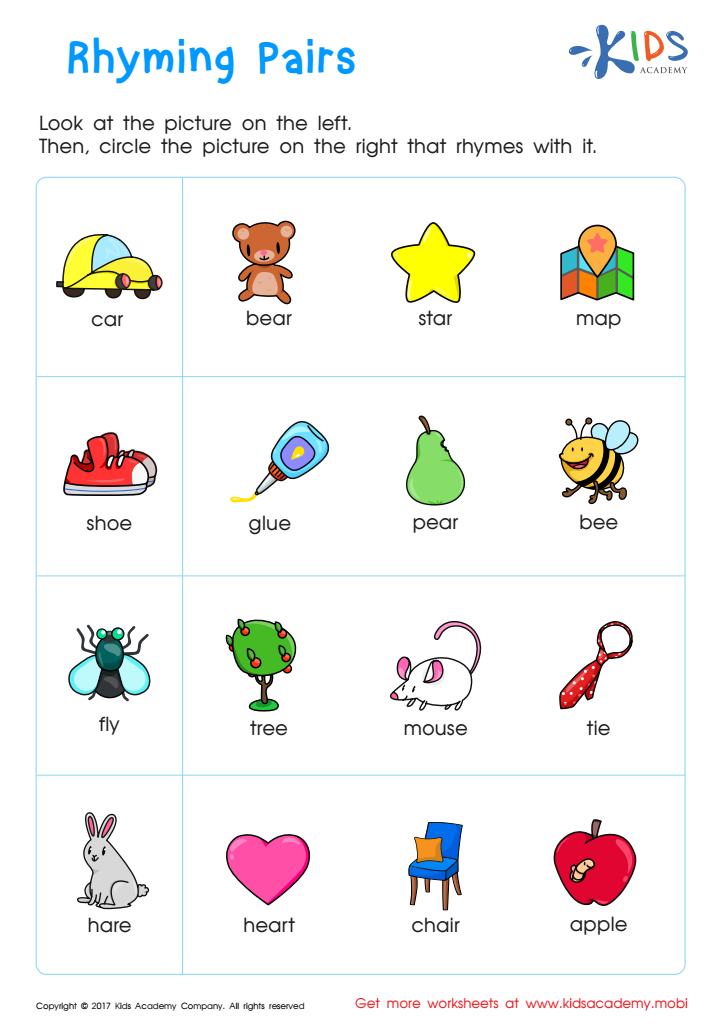
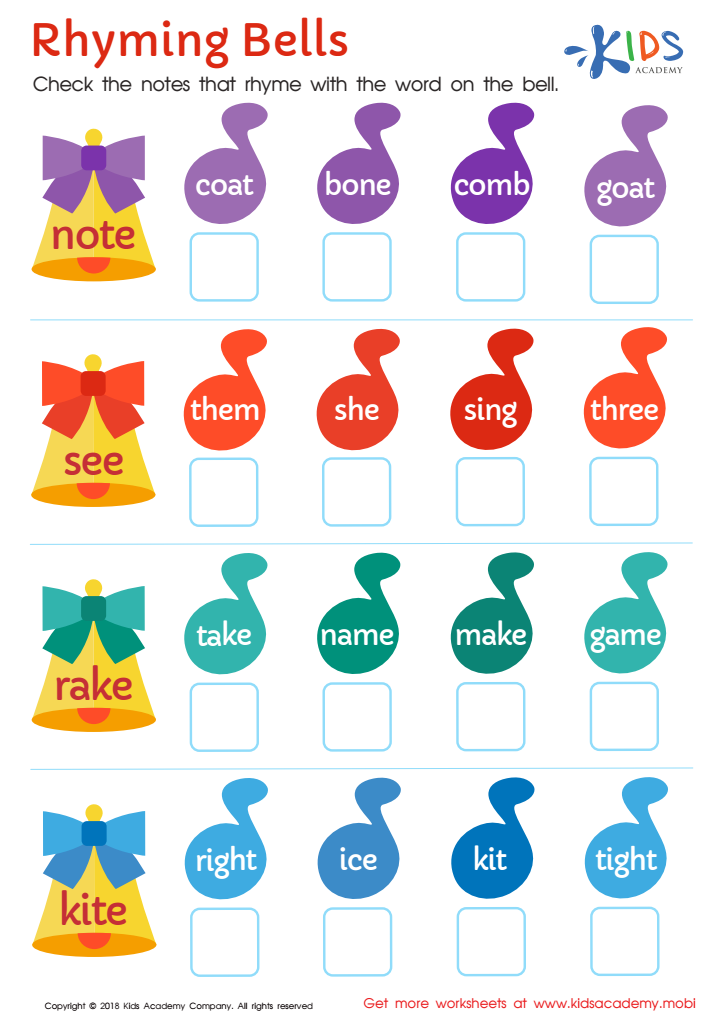
Rhyming Bells Worksheet
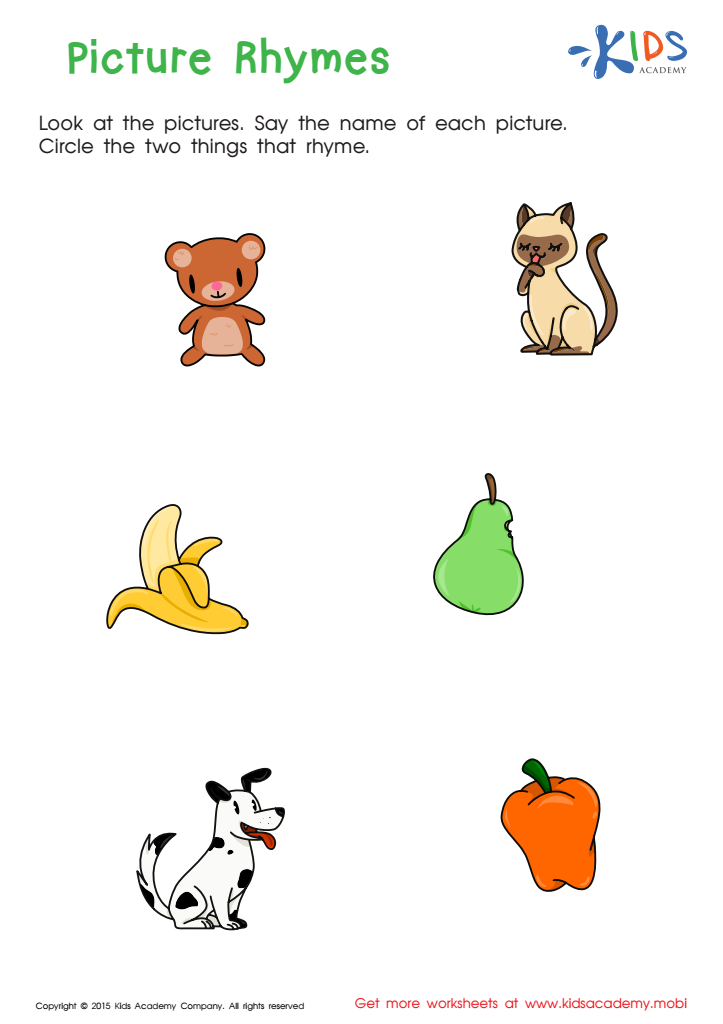
First Words: Picture Rhymes Worksheet








Rhyming and phonics are crucial foundational skills for children aged 6-8 as they embark on their literacy journey. Rhyming hones phonemic awareness, making children attuned to sound patterns and enabling them to manipulate speech sounds effectively. This awareness is critical for reading and writing development because it underpins their ability to decode words, a vital skill for fluent reading. When children recognize rhyming patterns, it boosts their predictive reading abilities, enabling them to anticipate what’s coming next in texts, hence enhancing comprehension and fluency.
Phonics instruction complements this skill by linking sounds to their corresponding letters or letter combinations. Understanding this relationship is vital for decoding new words, reading with accuracy, and spelling correctly. For parents and teachers, investing time in developing these skills during the 6-8 age range prepares children for more advanced literacy tasks. Activities such as rhyming games, songs, and phonics-focused storybooks make learning fun and engaging, fostering a love for reading.
Moreover, these skills build children’s confidence in their reading abilities, crucial for their academic success across all subjects. They also support language development, vocabulary enrichment, and communication skills. By focusing on rhyming and phonics, parents and teachers lay a solid foundation for lifelong literacy and learning.







