Sound differentiation Phonics Worksheets for Ages 6-8
3 filtered results
-
From - To
Unlock your child's reading potential with our engaging Sound Differentiation Phonics Worksheets tailored for ages 6-8! Designed to enhance early literacy skills, these worksheets focus on helping young learners distinguish between similar sounds and understand phonetic patterns. Each activity is interactive and promotes critical thinking, making learning fun and effective. From letter recognition to sound matching exercises, our printable resources cater to diverse learning styles. Perfect for home or school settings, these worksheets encourage confidence in reading and proficiency in phonics. Give your child a solid foundation in language arts and watch them thrive in their reading journey!
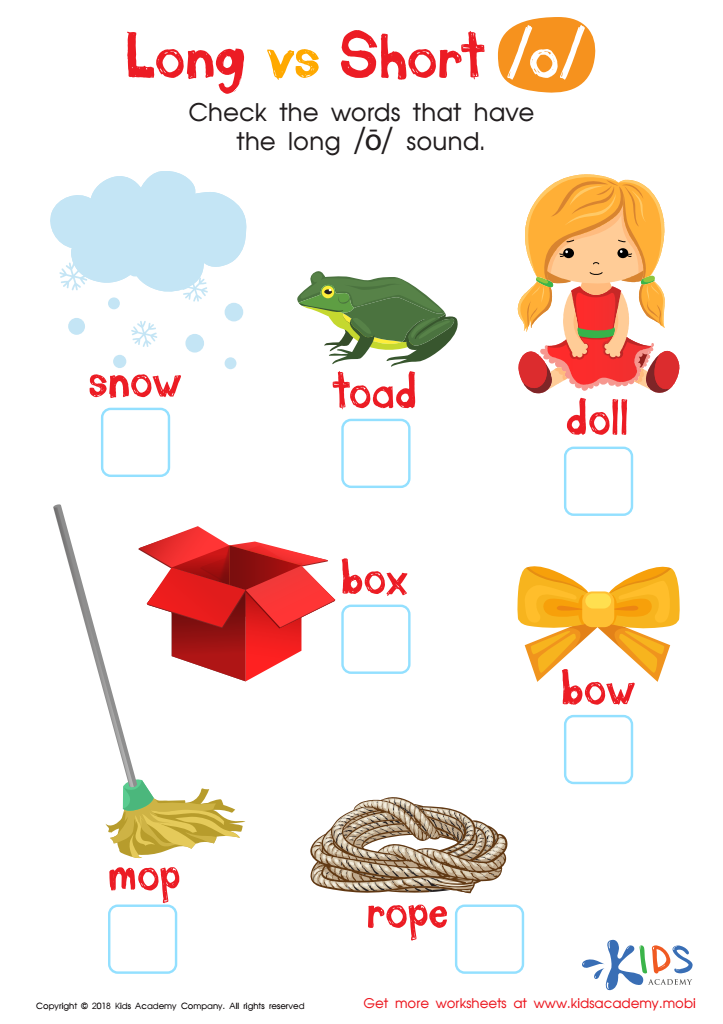
Long vs Short O Reading Worksheet
 Assign to My Students
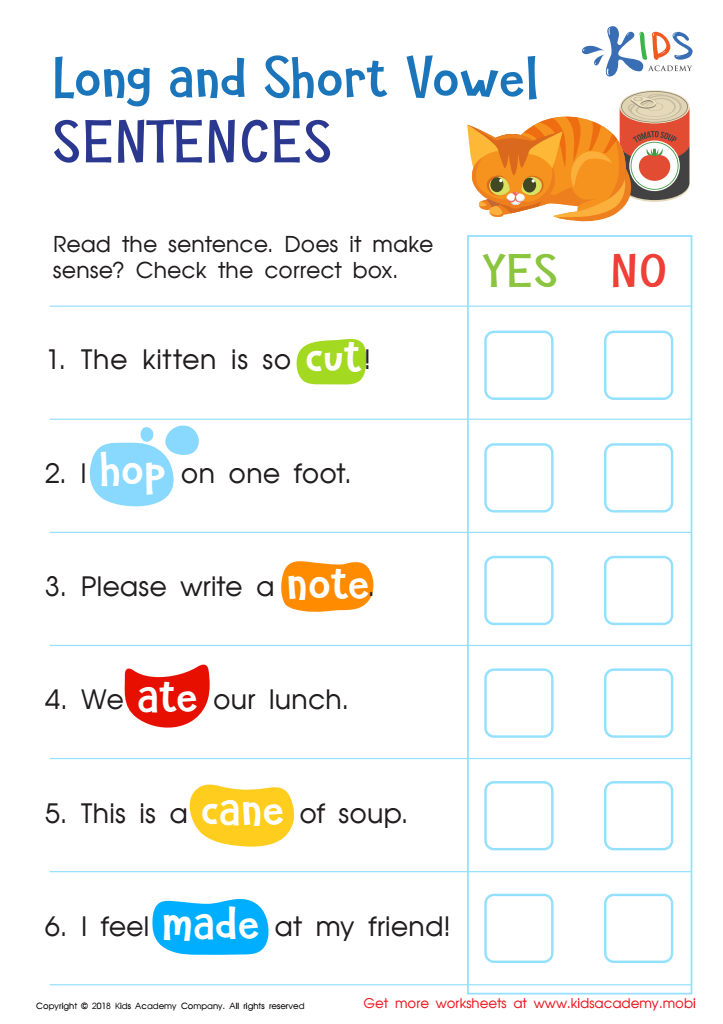
Long and Short Vowel Sentences: Assessment Worksheet
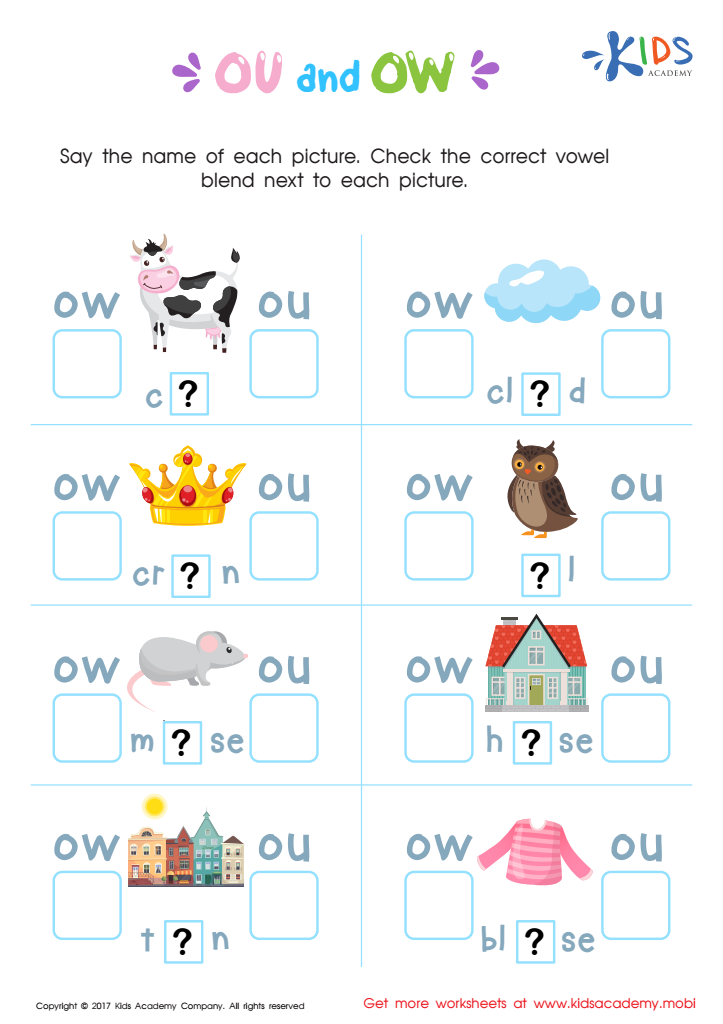
OU and OW Words Worksheet








Sound differentiation in phonics is essential for children aged 6-8 as it lays the foundation for reading and writing proficiency. During these formative years, children encounter various sounds and letters that form words. Mastering phonetics allows them to decode unfamiliar words, thereby enhancing their reading skills and vocabulary.
Teachers and parents should prioritize sound differentiation as it equips children with the tools to distinguish between similar sounds and letters, such as “b” and “d” or “cat” and “cap,” reducing confusion and promoting confidence in literacy. This skill also fosters better listening abilities, critical for understanding spoken language overall.
Additionally, solid phonics understanding can lead to heightened academic success as children advance through school. When they become proficient readers and spellers, they open doors to a world of information, creativity, and comprehension. Furthermore, early phonics intervention can prevent future reading difficulties, ensuring children stay engaged and motivated in their educational journey.
In conclusion, by emphasizing phonics and sound differentiation, parents and teachers contribute to a child’s long-term literacy skills, academic achievements, and a love for reading that can last a lifetime.







