Letter recognition Tracing Letters Worksheets for Ages 6-8 - Page 2
26 filtered results
-
From - To
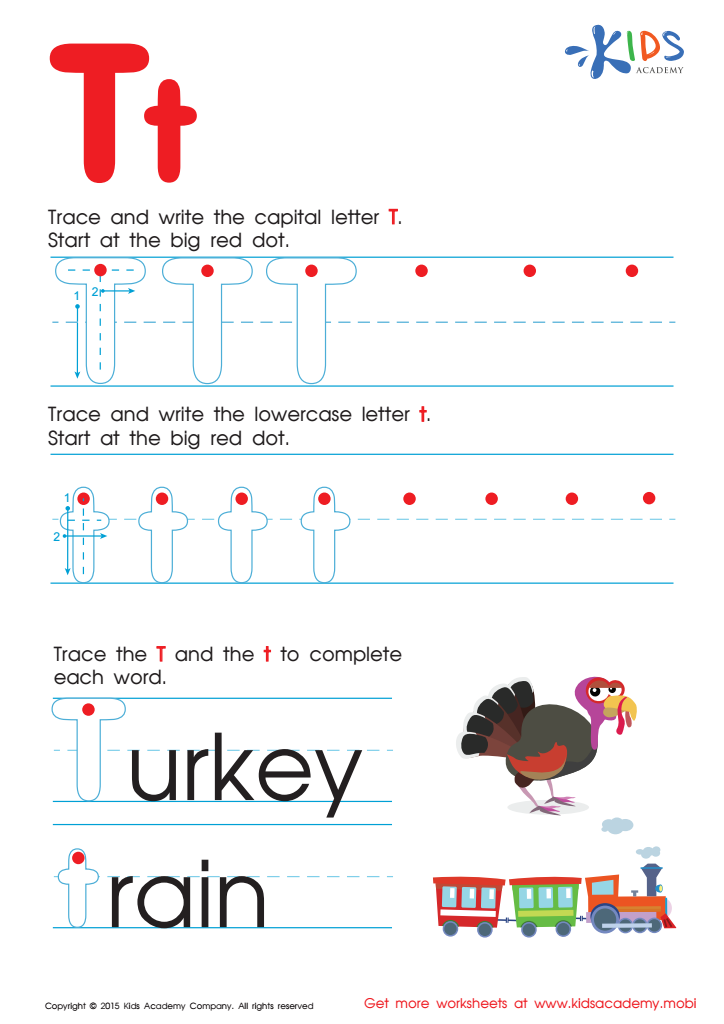
Letter T Tracing Page
 Assign to My Students

Letter D Tracing Page








Letter recognition and tracing are crucial skills for children aged 6-8, as they form the foundation for literacy and overall academic success. At this stage, students begin to connect letters with their sounds, enhancing their phonemic awareness, which is vital for reading and writing proficiency. While letter recognition helps children identify and recall letters, tracing reinforces their understanding of letter shapes and forms.
Parents and teachers should recognize the importance of these skills, as mastery can improve children’s confidence in literacy tasks. Tracing allows children to develop fine motor skills, resulting in better handwriting and coordination. Engaged students are more likely to enjoy reading activities, which fosters a lifelong love for learning.
Additionally, letter recognition and tracing can be integrated into playful activities, making learning enjoyable. As these children prepare to read larger texts, fluency in recognizing and forming letters will significantly reduce frustration and build resilience. By investing time in these foundational skills, parents and teachers equip children with the tools to navigate not just their academic journey but also the world around them, setting the stage for successful communication throughout their lives. Emphasizing this early learning can make a lasting impact on their educational experiences.








