
Spelling practice Two Vowels Together Worksheets for Ages 6-8
4 filtered results
Difficulty Level
Grade
Age
-
From - To
Subject
Activity
Standards
Enhance your child's reading and spelling skills with our "Spelling Practice Two Vowels Together worksheets" for ages 6-8. Specially designed to make learning fun and interactive, these worksheets focus on familiarizing children with vowel pairs and their unique sounds. Through engaging activities, kids will practice spelling words that feature two vowels together, helping to solidify their understanding of common vowel combinations. These exercises support mastery of key literacy skills crucial for early readers while making spelling practice enjoyable. Perfect for use at home or in the classroom, these worksheets will boost your child’s confidence and proficiency in spelling and reading.
Favorites
With answer key
Interactive
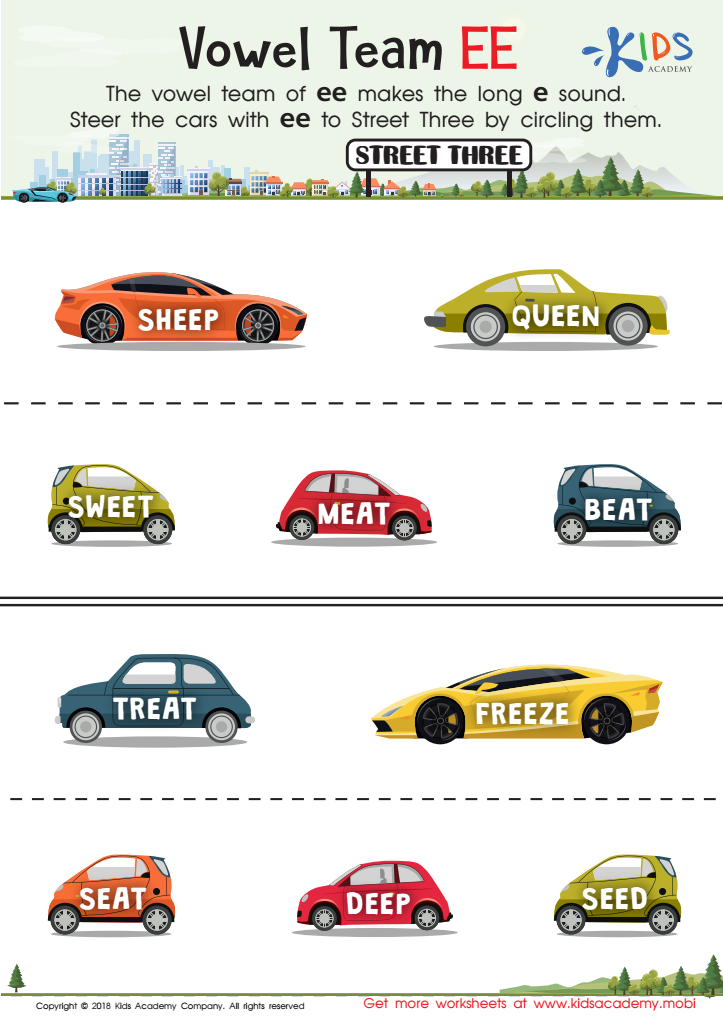
Vowel team ee Worksheet
Revised:
Kids will have a blast steering cars with the -ee digraph towards Street Three! This fast-paced worksheet reinforces that -ee makes the long -e sound while boosting fine motor skills. Kids will love the bright colors and stay engaged with this fun printable. Get ready for hours of off-road excitement!
 Assign to My Students
Vowel team ee Worksheet
Worksheet
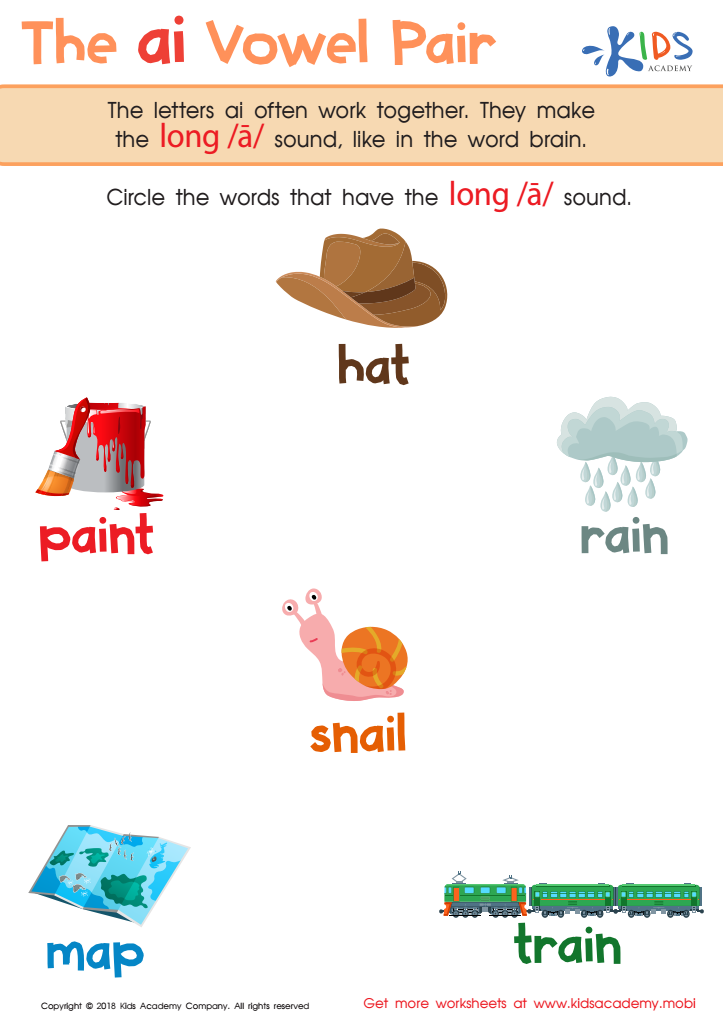
The AI Vowel Pair Worksheet
Vowel pairs make different sounds than individual letters. The 'ai' combination often forms the long /a/ sound, like in 'brain' and 'strain'. Get your kids to look at the pictures in the worksheet, identify each and say the name aloud. Help them circle the words with the long /a/ sound.
The AI Vowel Pair Worksheet
Worksheet
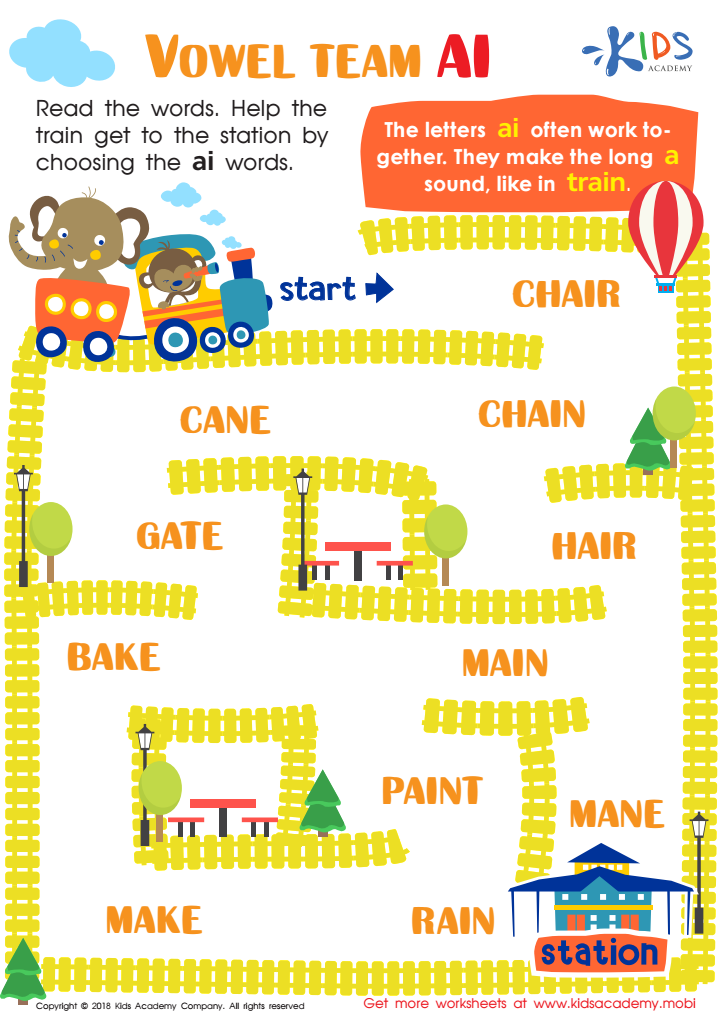
Vowel team ai Worksheet
Kids will have a blast learning about the -ai digraph with this fun worksheet. They'll read words with it and practice their motor skills as they help the animal duo get back to the train station. With success, they'll smile and enjoy the activity!
Vowel team ai Worksheet
Worksheet
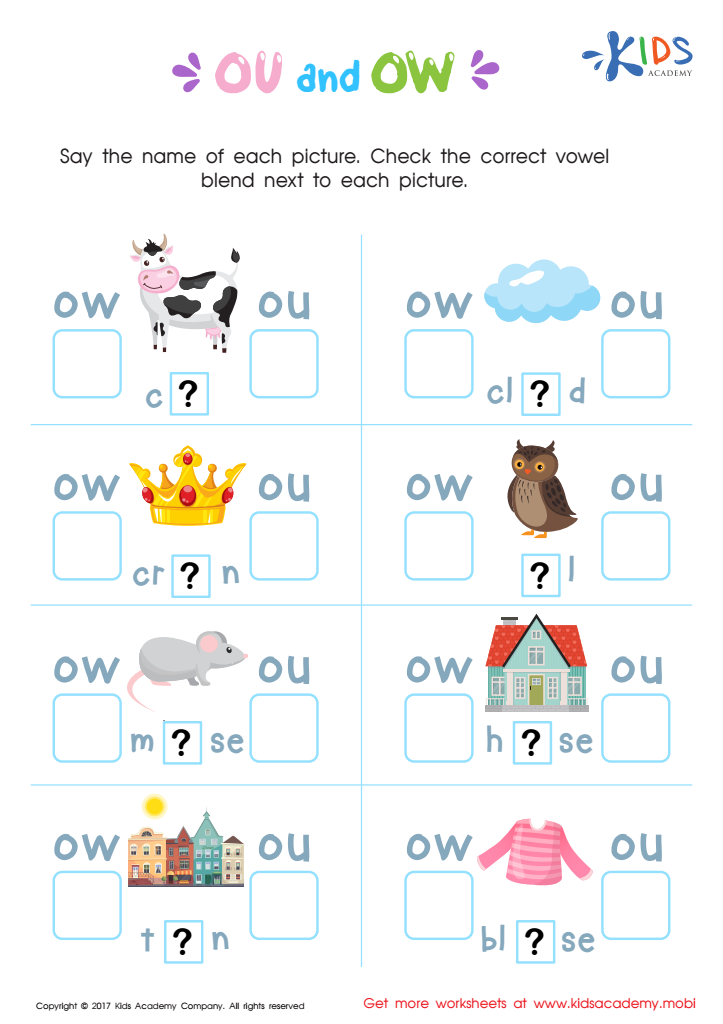
OU and OW Words Worksheet
Enhance your child's reading and spelling with this ou and ow words worksheet! Fun pictures and common words make mastering the diphthongs ou and ow easy and enjoyable.
OU and OW Words Worksheet
Worksheet
Join Kids Academy for Free
Who is primarily going to use this learning content?


Spelling practice that focuses on two vowels together is crucial for children aged 6-8 as it lays a foundation for strong literacy skills. During this developmental stage, young learners are beginning to recognize more complex phonetic patterns beyond simple consonant-vowel combinations. Understanding how vowel pairs, or "vowel teams," work can significantly enhance both their reading and spelling abilities.
Vowel teams include combinations like "ea" in "read" or "ai" in "rain." These pairings can make different sounds and can sometimes be irregular, which might be confusing to young learners. Mastering these can improve a child’s phonological awareness, helping them decode new words more easily. Increased competence in reading spills over into all areas of learning, as it's fundamental for understanding instructions, grasping math problems stated in words, and comprehending scientific concepts.
For teachers, focusing on these crucial elements in lessons can lead to more productive classroom time. For parents, it means supporting their child in independence and confidence in their academic endeavors. Ultimately, giving attention to spelling practices with vowel teams ensures a holistic literacy education, paving the way for lifelong learning and academic achievement. Riding this wave of support and instruction significantly minimizes the risk of reading difficulties or dyslexia later on.








