Lowercase identification Upper & Lowercase Letters Worksheets for Ages 6-8
5 filtered results
-
From - To
Discover our engaging Lowercase Identification Worksheets designed specifically for children aged 6-8! These interactive worksheets help young learners master the recognition and differentiation between uppercase and lowercase letters. With fun activities, colorful illustrations, and clear instructions, children will develop their literacy skills while enjoying the learning process. Each worksheet is tailored to enhance fine motor skills and reinforce letter knowledge through practice and repetition. Perfect for homeschooling or classroom use, our resources are ideal for fostering a love of letters in early learners. Start your child's journey to literacy today with our captivating and educational worksheets!
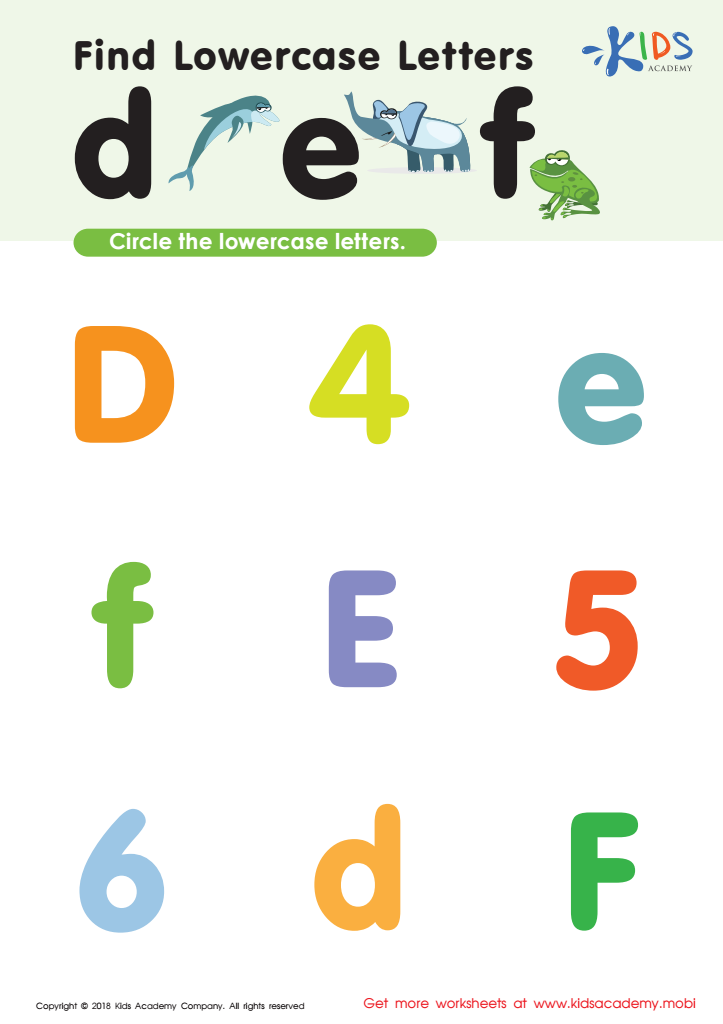
Find Lowercase Letters d e f Worksheet
 Assign to My Students


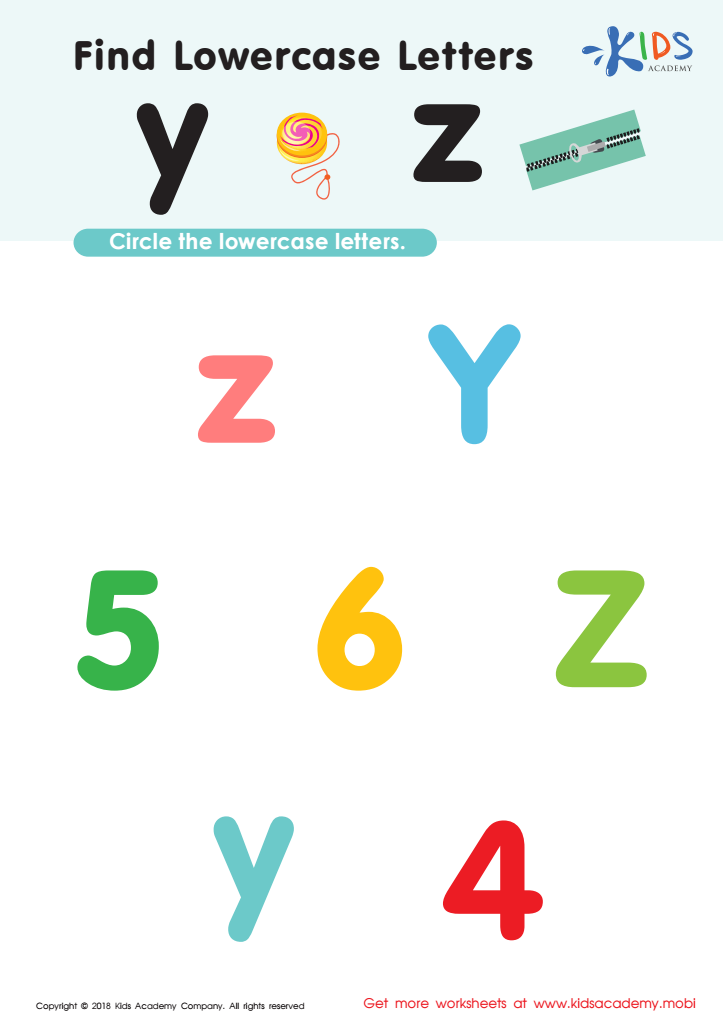
Find Lowercase Letters y z Worksheet

Find lowercase letters a b c Worksheet
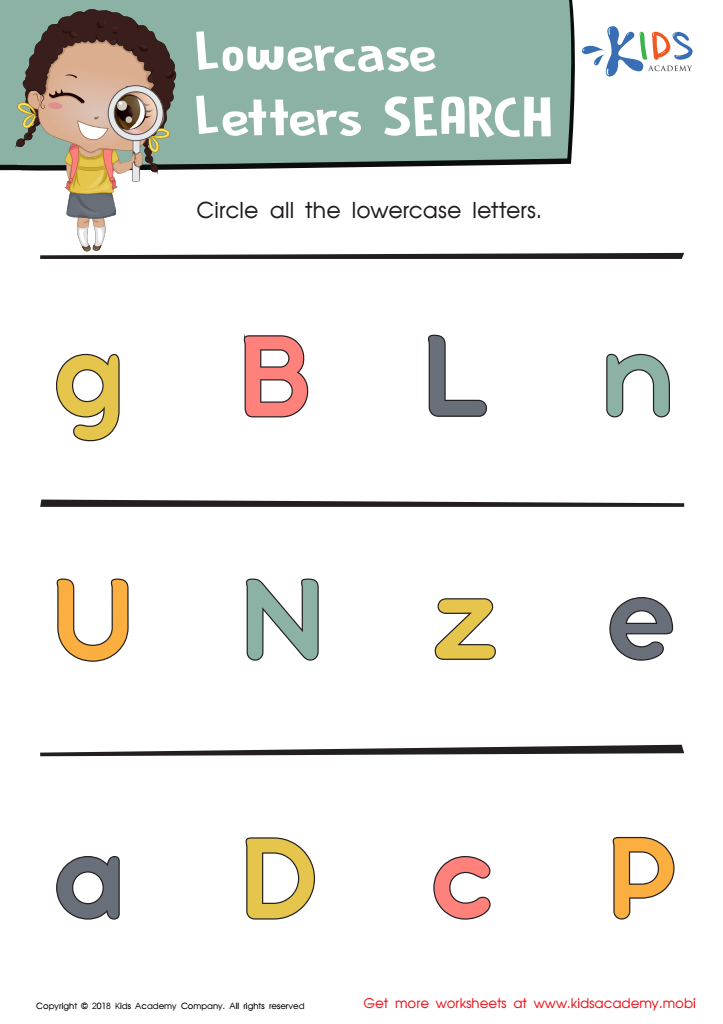
Lowercase Letters Search: Assessment Worksheet
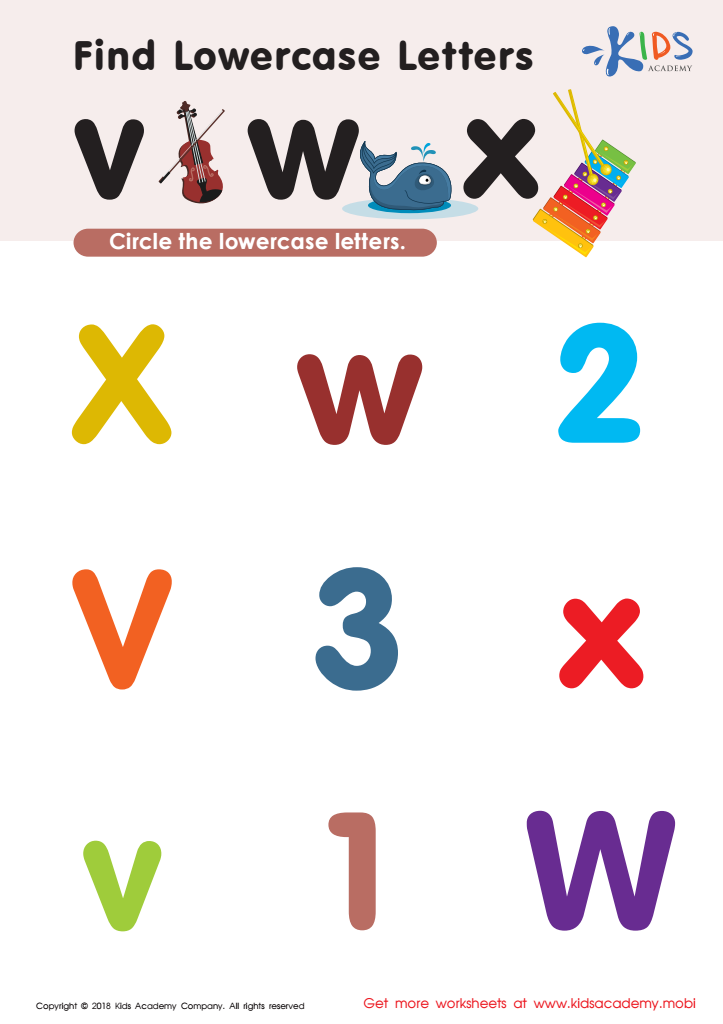
Find Lowercase Letters v w x Worksheet






Parents and teachers should prioritize lowercase and uppercase letter identification for children aged 6-8 because it is fundamental to their literacy skills and overall academic success. At this developmental stage, children are beginning to read and write more independently, making it crucial for them to recognize both forms of letters. Differentiating between uppercase and lowercase letters is essential as they appear in various contexts—in titles, sentences, and everyday writing.
Understanding the functions of uppercase letters (used for proper nouns and sentence beginnings) and lowercase letters (which make up the majority of text) helps children grasp the mechanics of writing. It aids in their ability to decode words while reading, allowing for better comprehension and fluency. Mastery of letter identification also enhances their writing skills, fostering confidence and creativity in expressing their thoughts.
Moreover, proficiency in letter identification sets the foundation for more advanced literacy skills, including spelling and grammar, which are critical as children progress in their education. Engaging in activities that promote lowercase and uppercase letter recognition can also create a positive learning environment, sparking children's interest in reading and writing, thereby fostering a lifelong love for learning.







