Cognitive Development Chess Worksheets for Ages 6-8
5 filtered results
-
From - To
Explore our Cognitive Development Chess Worksheets designed specifically for children aged 6 to 8! These engaging worksheets combine the fun of chess with essential cognitive skills, helping young learners enhance their critical thinking, problem-solving, and decision-making abilities. Each worksheet offers a variety of activities, such as puzzles and challenges, that encourage strategic thinking while fostering a love for the game. Ideal for classroom use or home learning, our resources create a rich educational experience that supports cognitive growth. Download now to inspire your child’s imagination and set the foundation for lifelong learning through the fascinating world of chess!
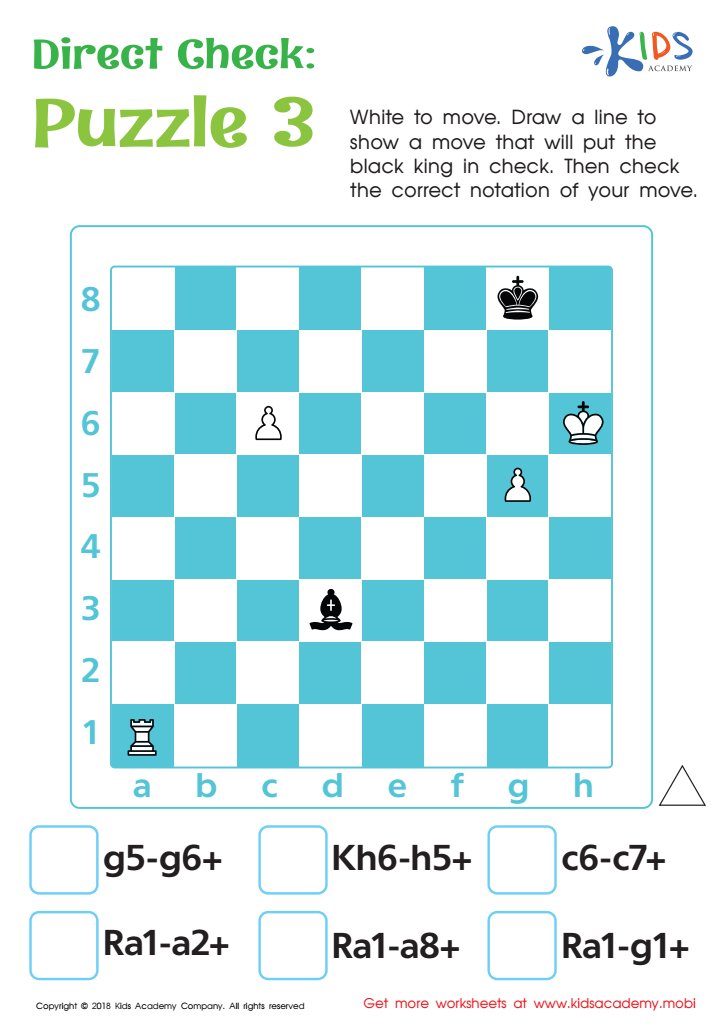
Direct Check: Puzzle 3 Worksheet
 Assign to My Students
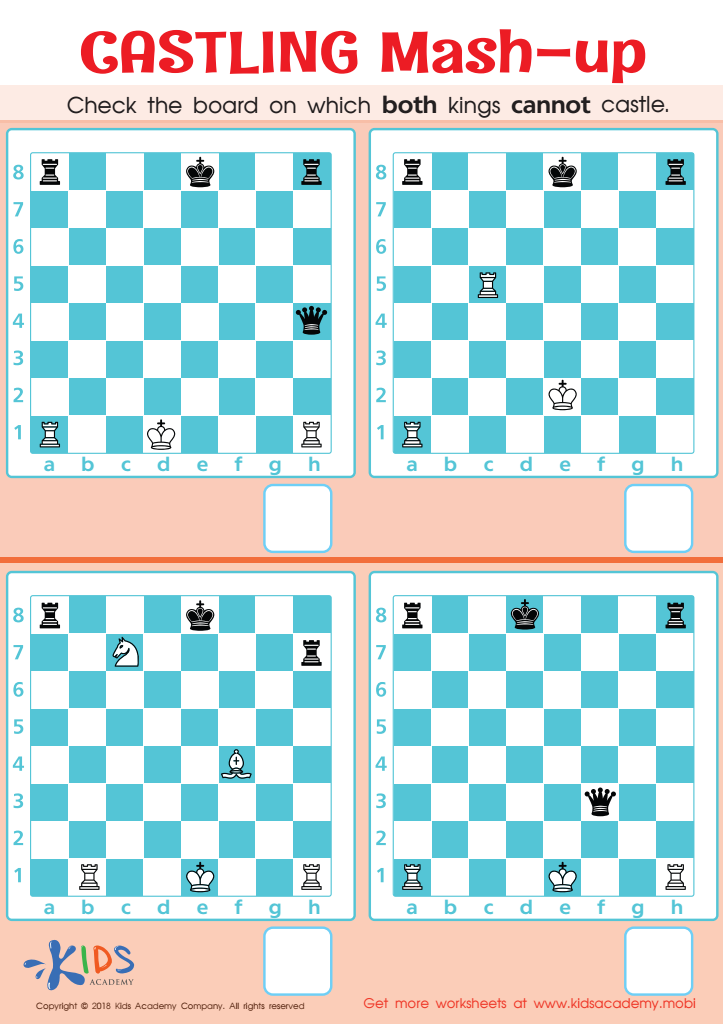
Castling Mash–up Worksheet
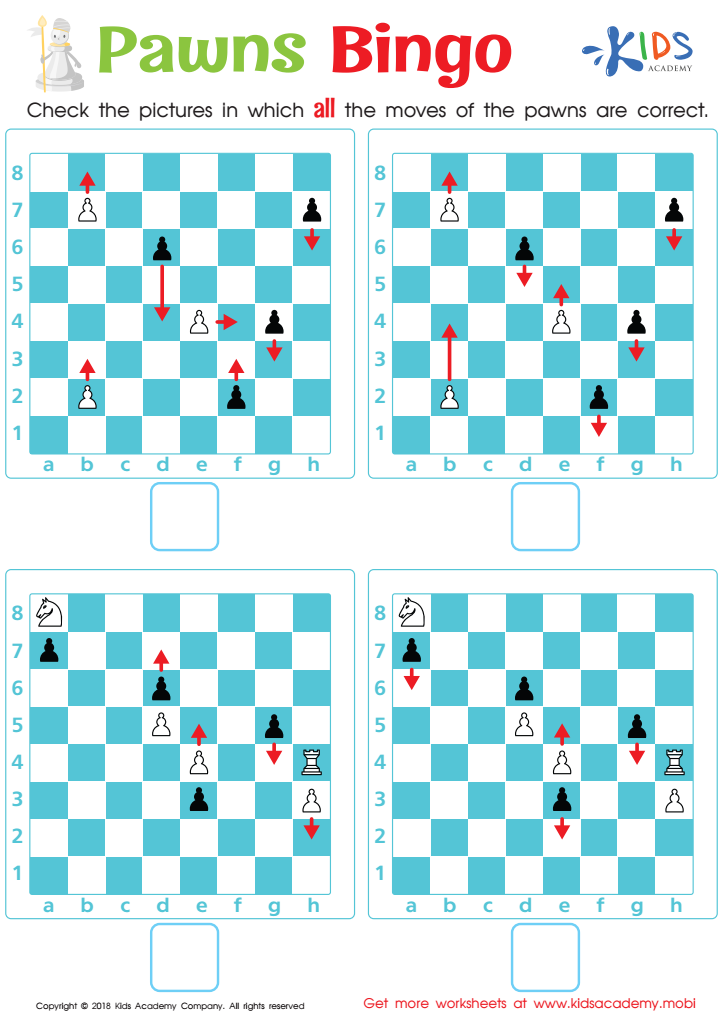
Pawns Bingo Worksheet
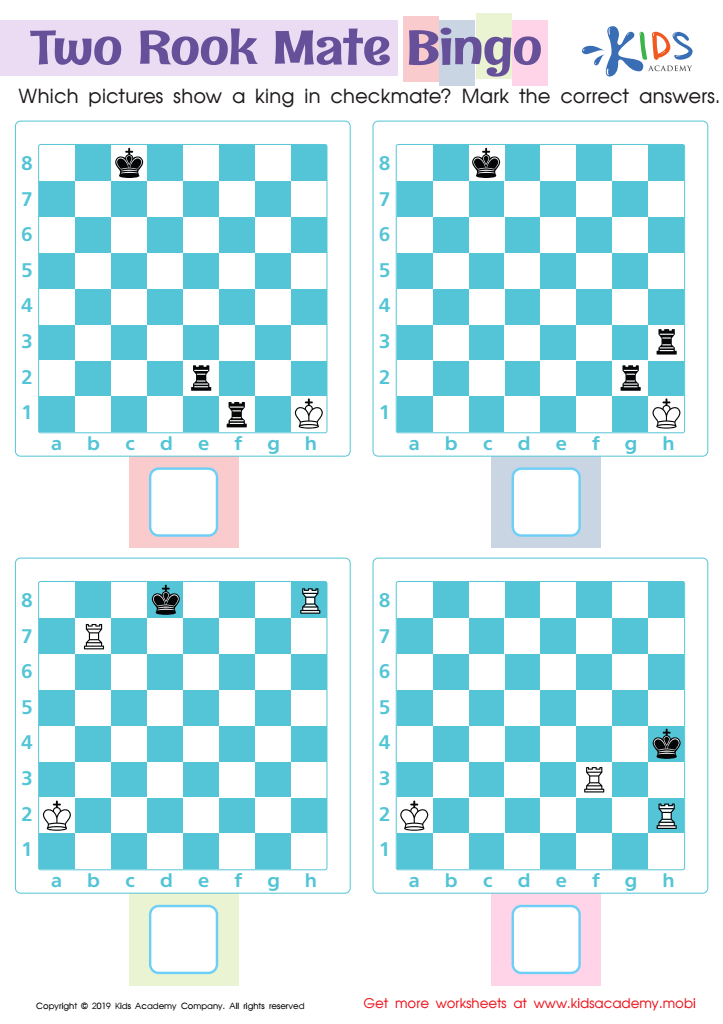
Two Rook Bingo Worksheet
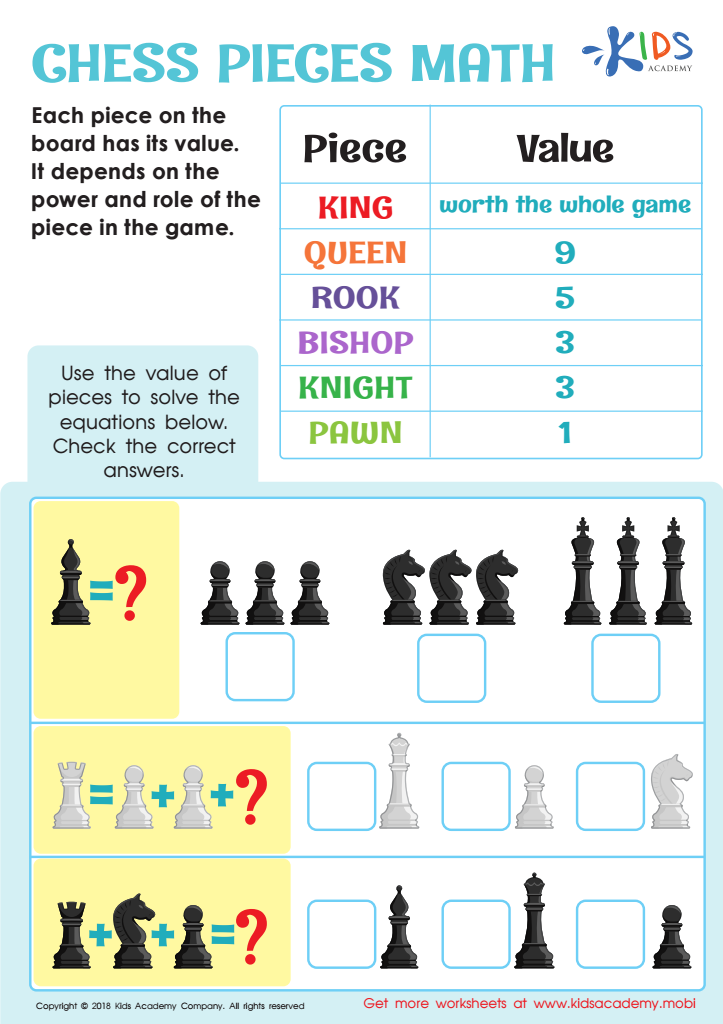
Chess Pieces Math Worksheet





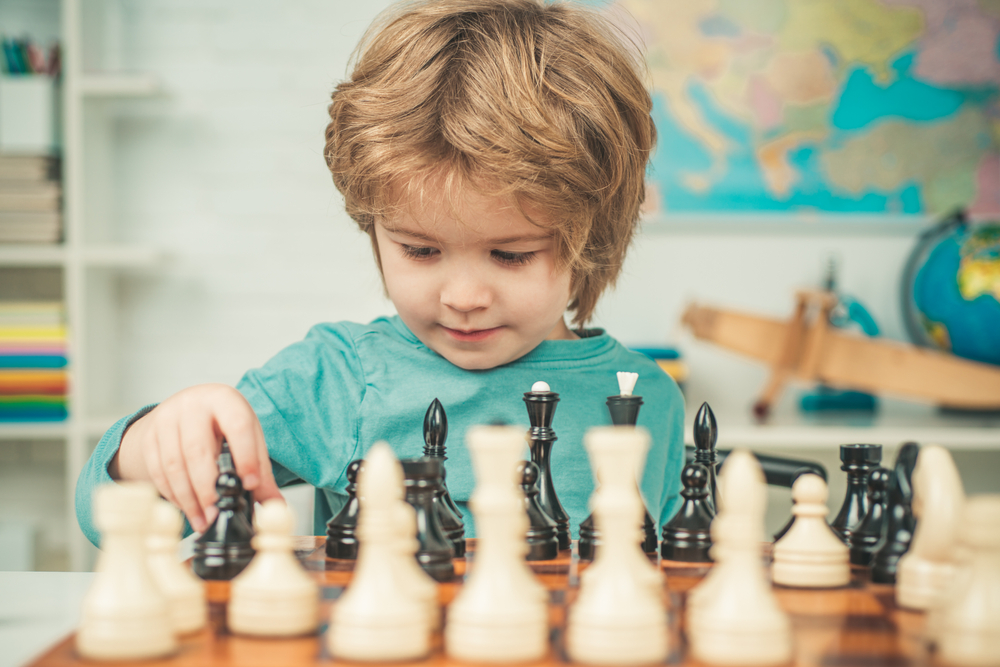

Cognitive development during early childhood is crucial, and chess offers a unique platform to enhance this process for children ages 6-8. At this stage, kids exhibit rapid brain growth, and engaging them in chess helps develop critical cognitive skills. Playing chess requires strategic thinking, problem-solving, and decision-making—skills that are transferable to other academic subjects and real-life situations.
Additionally, chess encourages concentration and focus, as children learn to anticipate their opponent’s moves while formulating their strategies. This heightened attention can improve performance in subjects like mathematics and reading, as children practice patience and foresight.
Moreover, chess promotes social skills such as sportsmanship and communication. Players learn to respect their opponents and collaborate both during and after games. These interpersonal skills are essential for personal development and interaction in diverse environments.
Finally, chess instills confidence. As children navigate challenges on the board, they experience achievement and failure, fostering resilience and self-awareness. For both parents and teachers, integrating chess into activities not only enriches cognitive growth but also aids in developing well-rounded, thoughtful individuals prepared for future challenges. Encouraging chess among children can provide significant benefits that pave the way for lifelong learning.