Addition skills Worksheets for Ages 6-8 - Page 3
61 filtered results
-
From - To
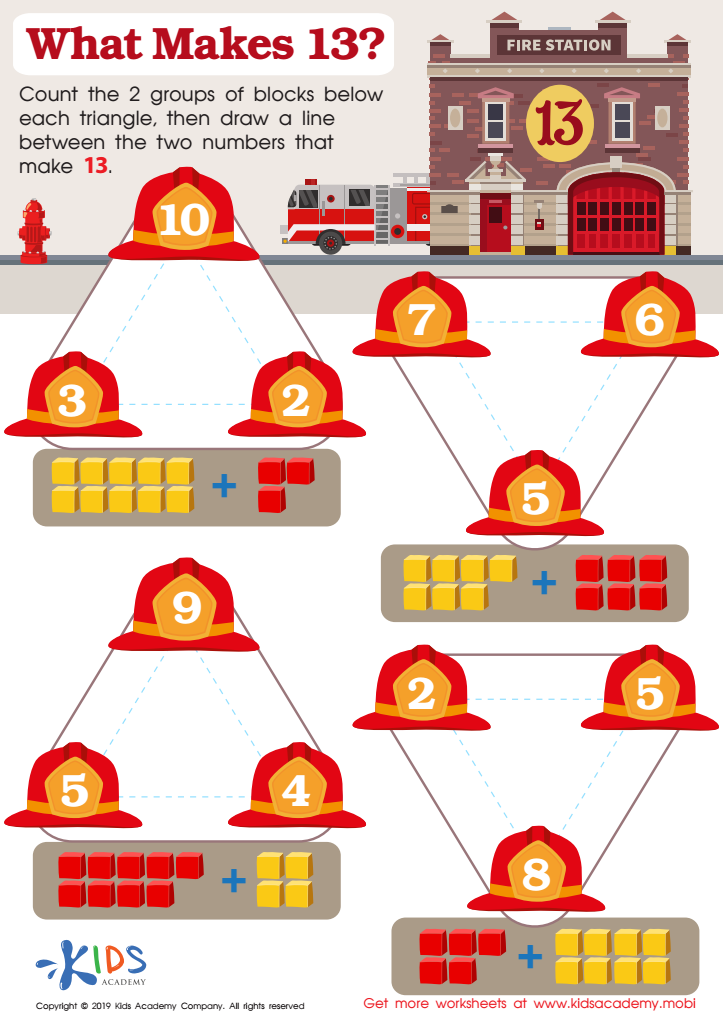
What Makes 13 Worksheet
 Assign to My Students
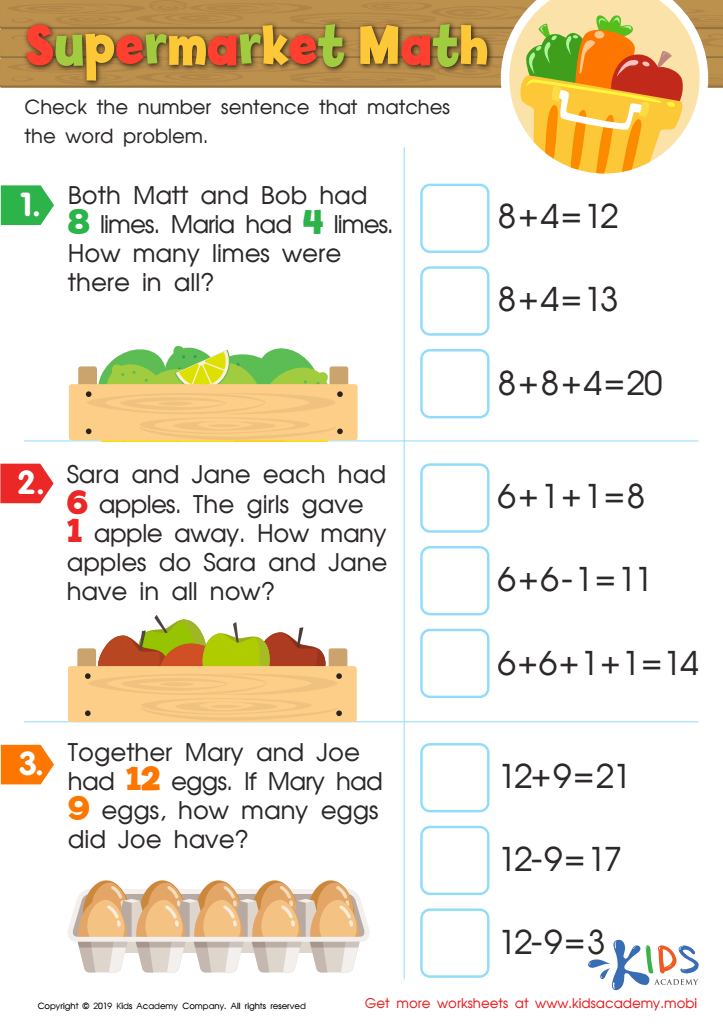
Supermarket Math Worksheet

Make 6 Worksheet
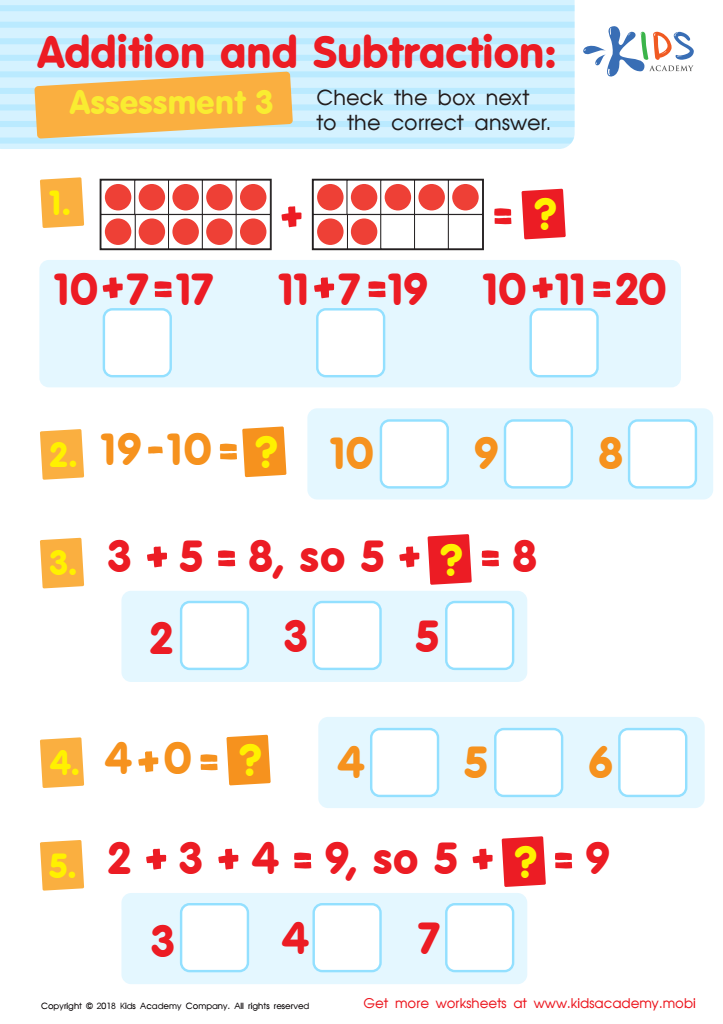
Addition and Subtraction Assessment 3 Worksheet
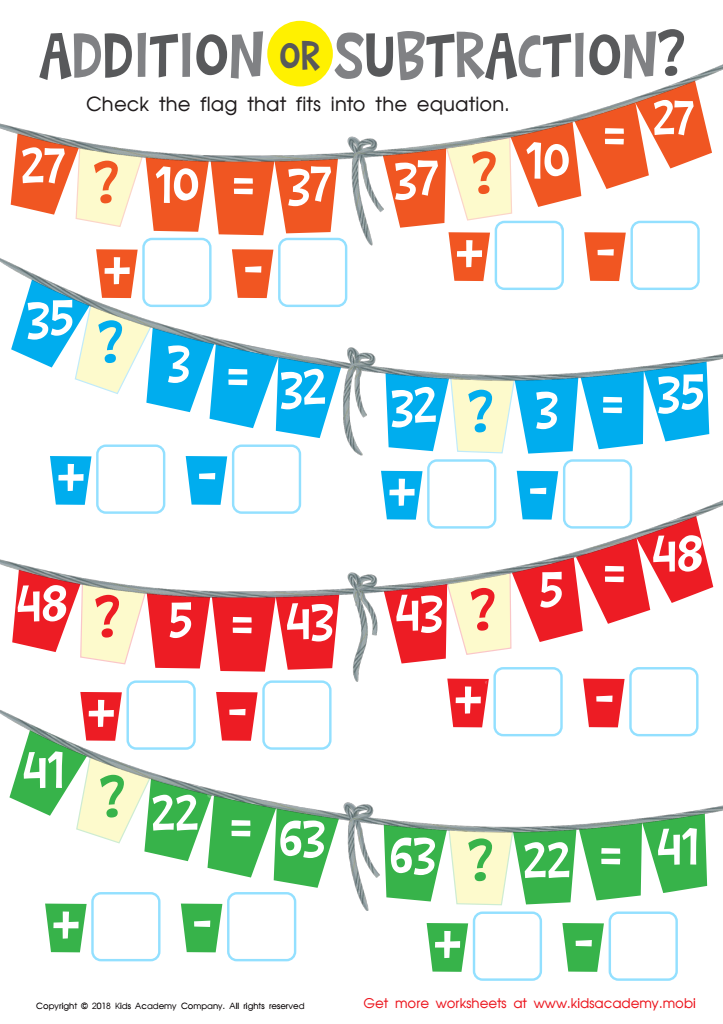
Addition or Subtraction? Worksheet
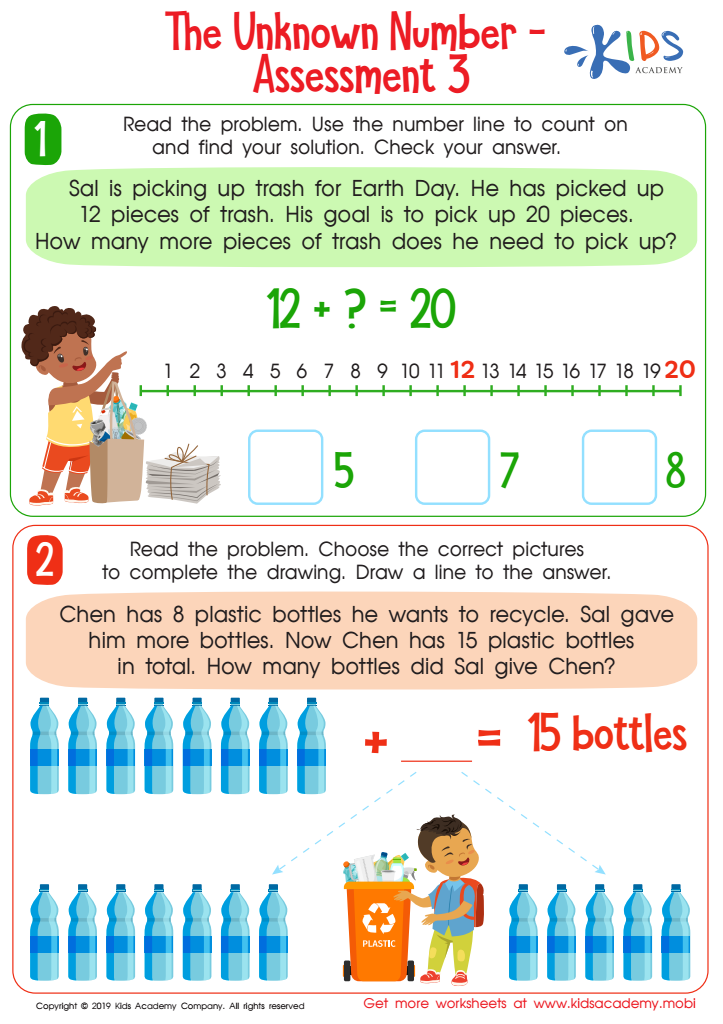
The Unknown Number - Assessment 3 Worksheet
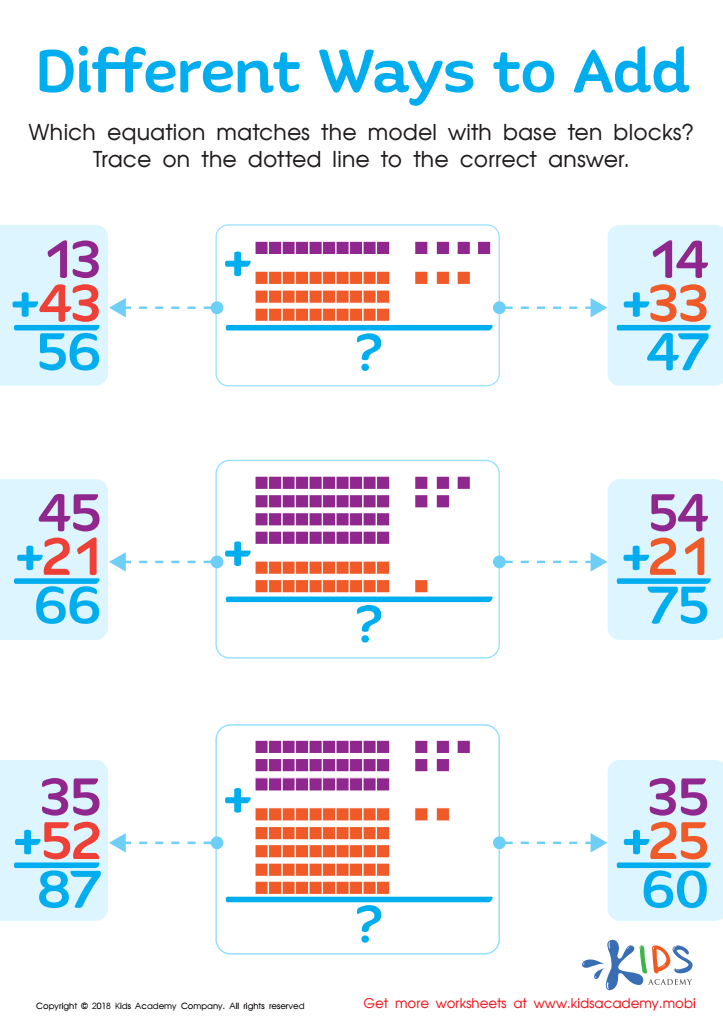
Different Ways to Add Worksheet
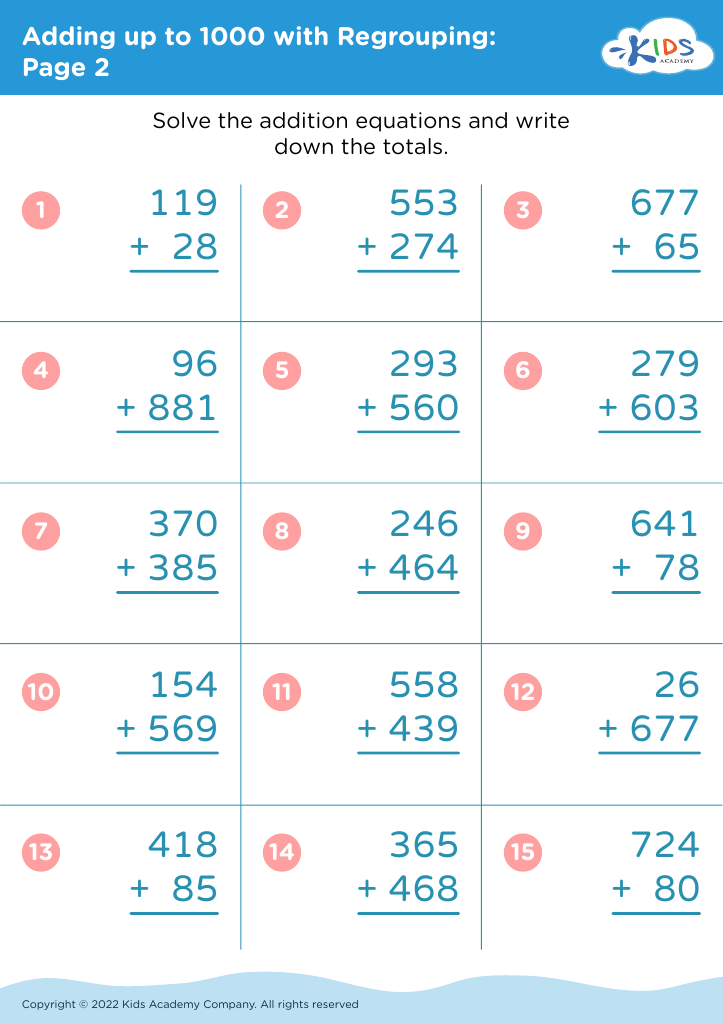
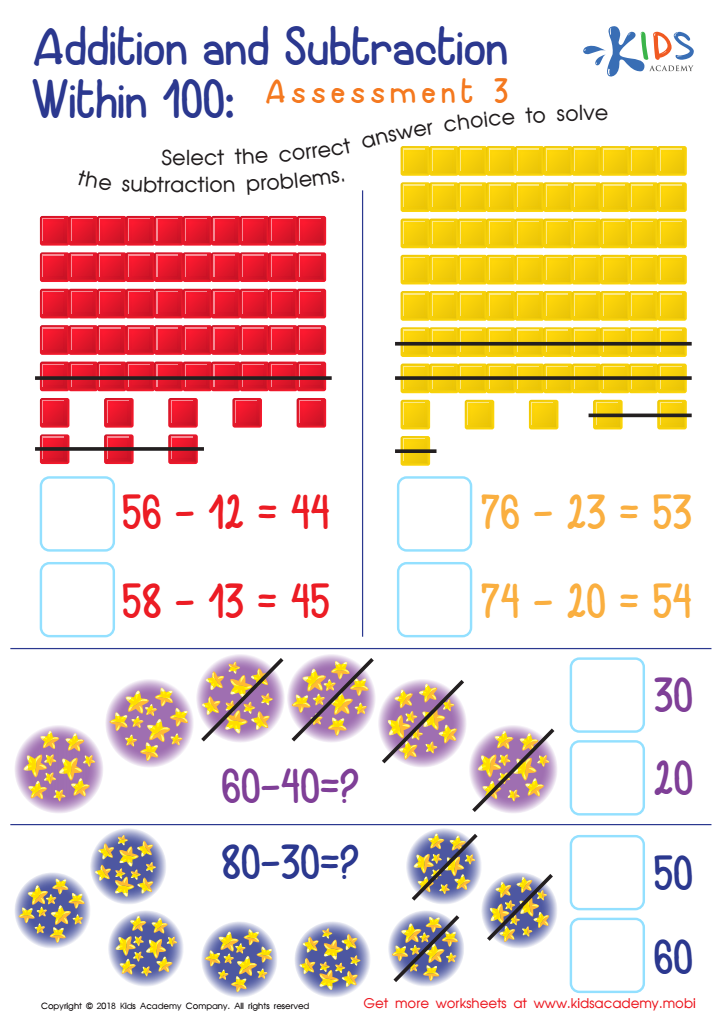
Addition and Subtraction Within 1: Assessment 3 Worksheet
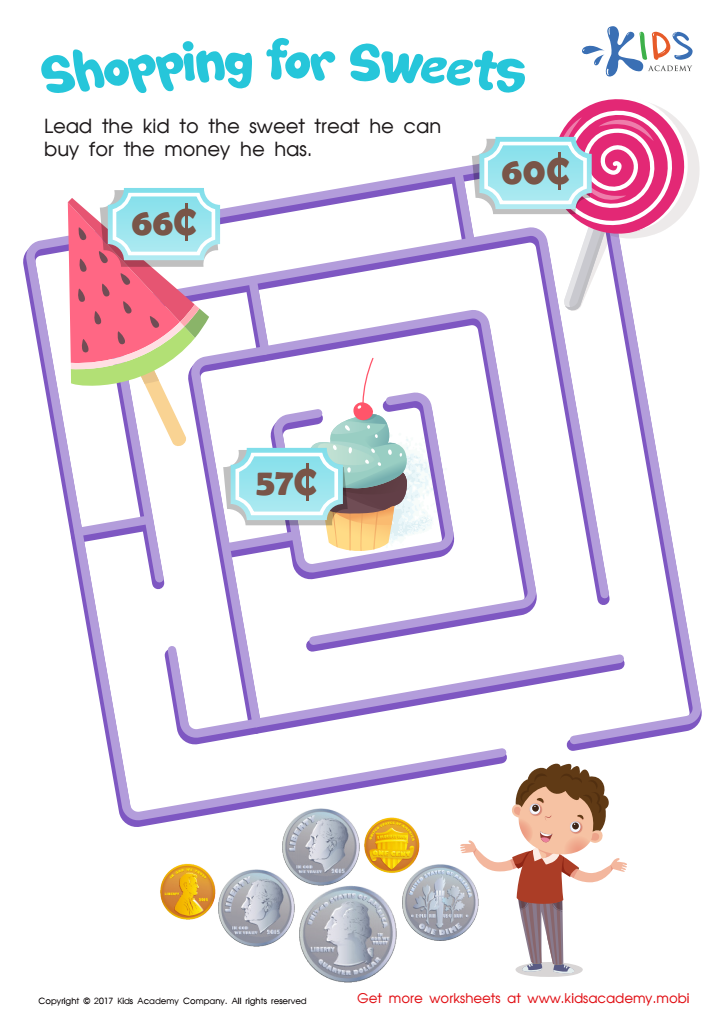
Shopping for Sweets Worksheet
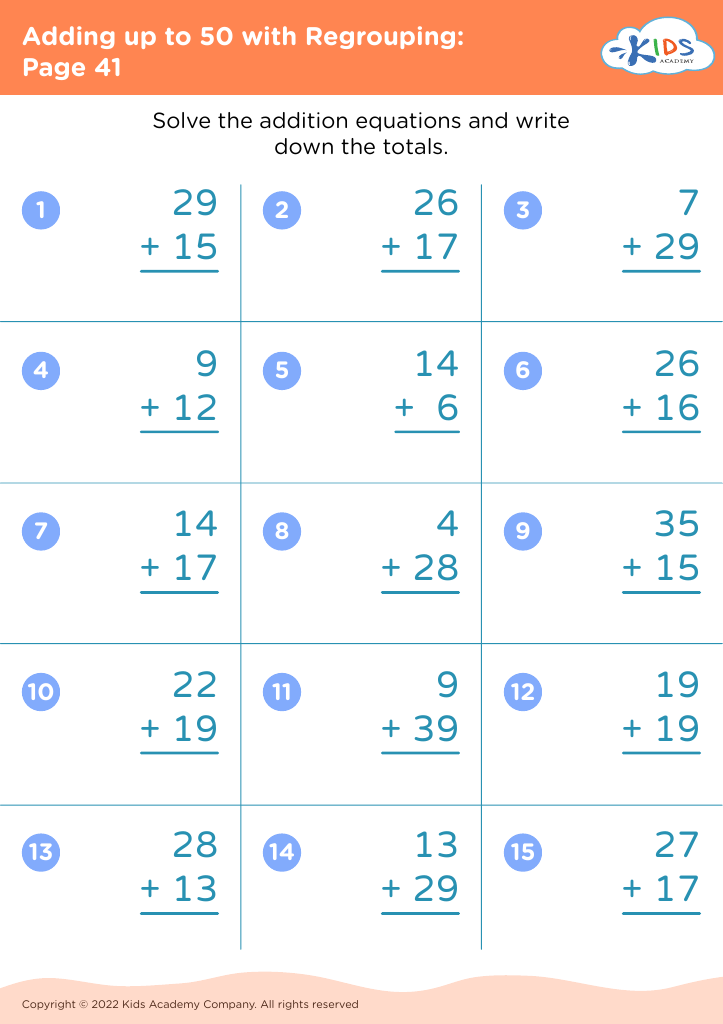







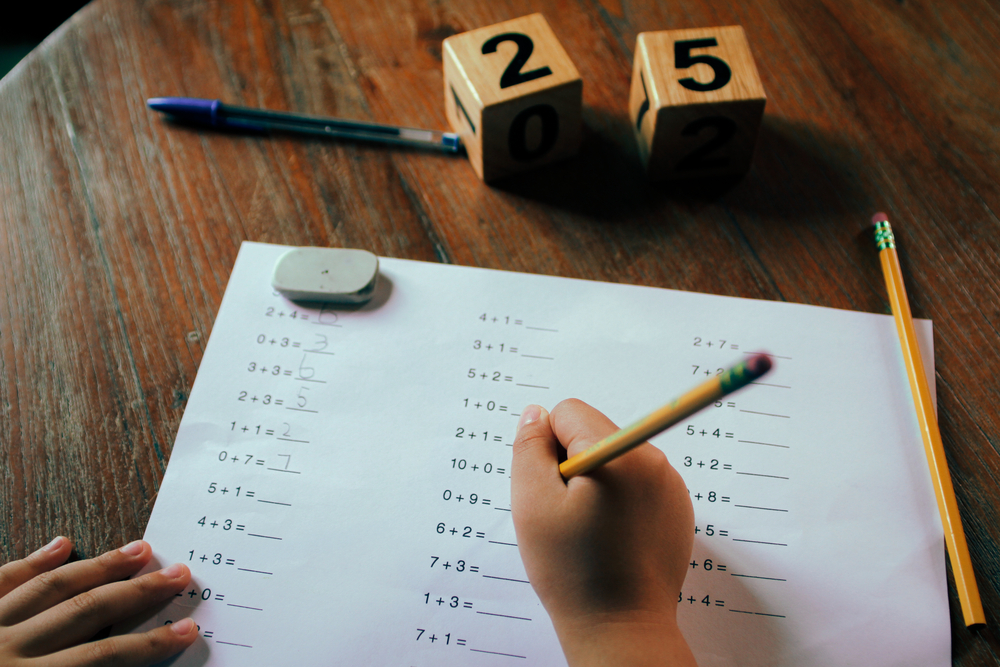
Parents and teachers should prioritize addition skills for children aged 6-8 because these foundational math abilities are crucial for overall academic success and cognitive development. At this age, children are typically first introduced to formal mathematics, and mastering addition lays the groundwork for more complex operations such as subtraction, multiplication, and division. Early proficiency in addition not only enhances problem-solving skills but also boosts confidence in tackling mathematical concepts.
Additionally, strong addition skills contribute to real-life situations, fostering practical life skills like budgeting, cooking, and telling time. Encouraging a positive relationship with math at a young age helps to counteract anxiety surrounding the subject and cultivates a growth mindset among students.
Moreover, developing addition skills promotes critical thinking and logical reasoning, as children learn to analyze problems and apply different strategies for solutions. With technology and an increasingly data-driven society, basic math fluency is more relevant than ever for future academic and career opportunities.
By investing time in developing these skills, parents and teachers equip children with the tools they need not only for immediate educational success but also for lifelong learning and adaptation in a rapidly changing world.








