
Alphabetical order understanding Worksheets for Ages 6-8
6 filtered results
Difficulty Level
Grade
Age
-
From - To
Subject
Activity
Standards
Introducing our engaging "Alphabetical Order Understanding Worksheets" designed specifically for ages 6-8! These fun and interactive activities help young learners master the concept of alphabetical order through colorful exercises and practical examples. As children sort and arrange words, they develop essential language skills, enhance their vocabulary, and boost their reading proficiency. With a variety of worksheets available, students can practice identifying letters, organizing words, and even creating their own alphabetical lists. Perfect for home or classroom use, these worksheets are a delightful way to foster a love for learning and ensure a strong foundation in literacy. Get started on your alphabetical adventure today!
Favorites
With answer key
Interactive
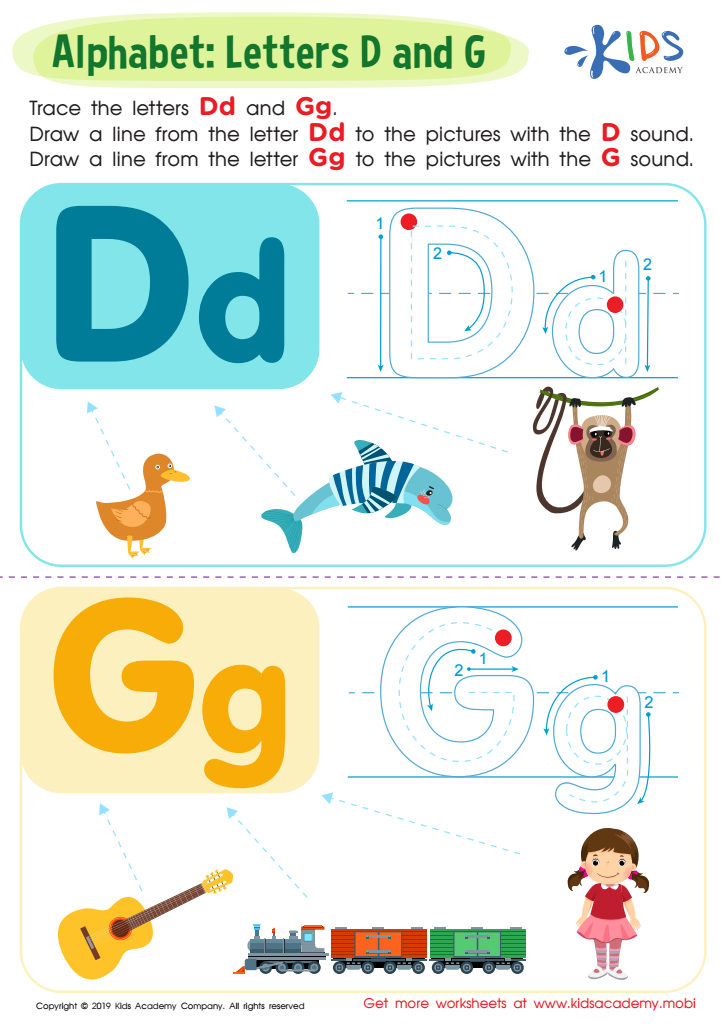
Letter D and G Tracing Worksheet
Kids can explore their imagination with the 'Alphabet: Letters D and G' worksheet! They'll trace capital and lowercase "D" and "G" and trace a line from the words. Colorful animals and objects make the task more fun and entertaining!
Letter D and G Tracing Worksheet
Worksheet
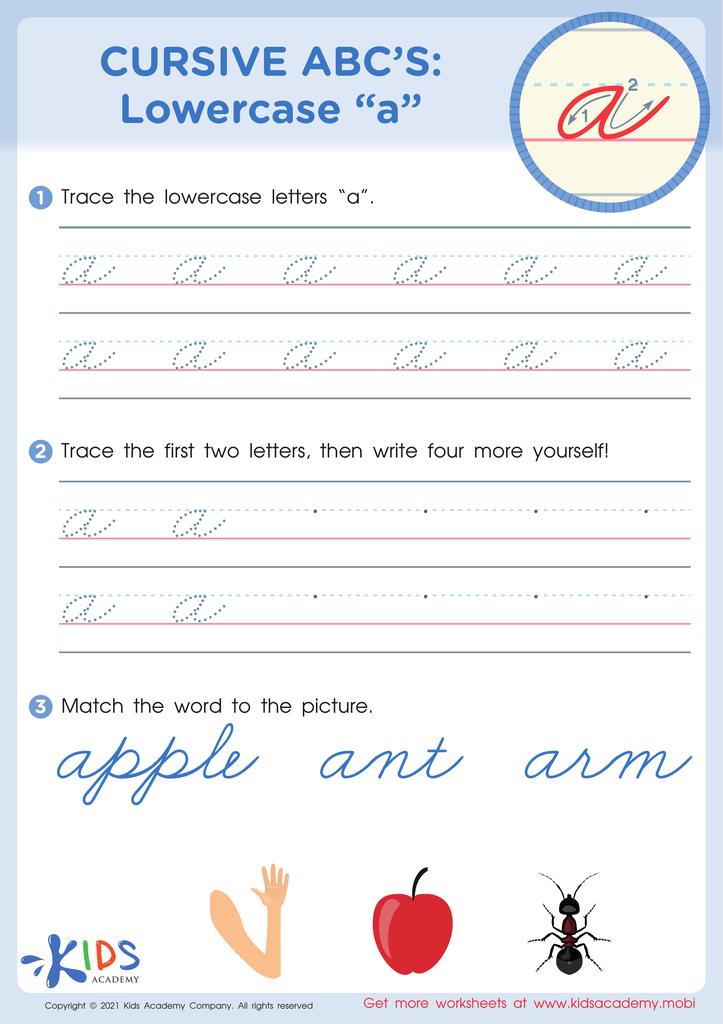
Cursive ABCs: Lowercase a
Help your children learn to write cursive letters with these free tracing sheets. They'll practice their handwriting, develop printing skills and build vocabulary. By tracing the lowercase letter “a” multiple times, they'll learn how it's formed and be ready to write it on their own. The colorful pictures at the bottom of each page also offer new words beginning with the letter 'a'.
Cursive ABCs: Lowercase a
Worksheet
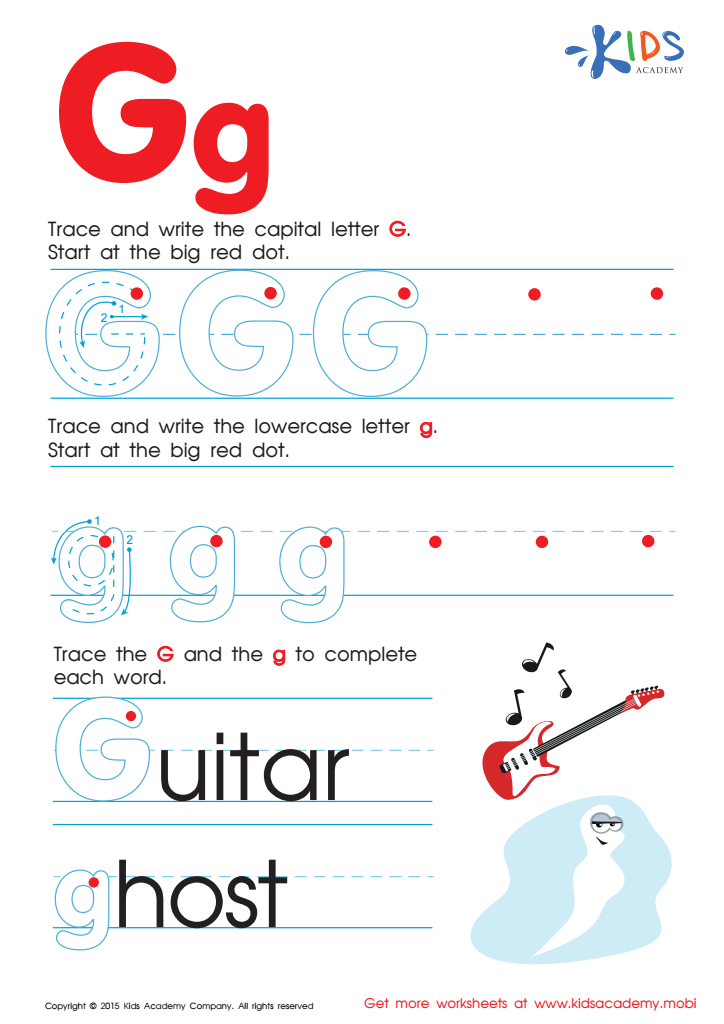
Letter G Tracing Page
Get ready to trace the letter "G" – with a big red spot as the starting point, trace the lines and watch the letter appear. Uppercase and lowercase letters are both easy and fun to write. Give it a go and finish the word "go". Play the guitar and say "hello" to a funny ghost!
Letter G Tracing Page
Worksheet
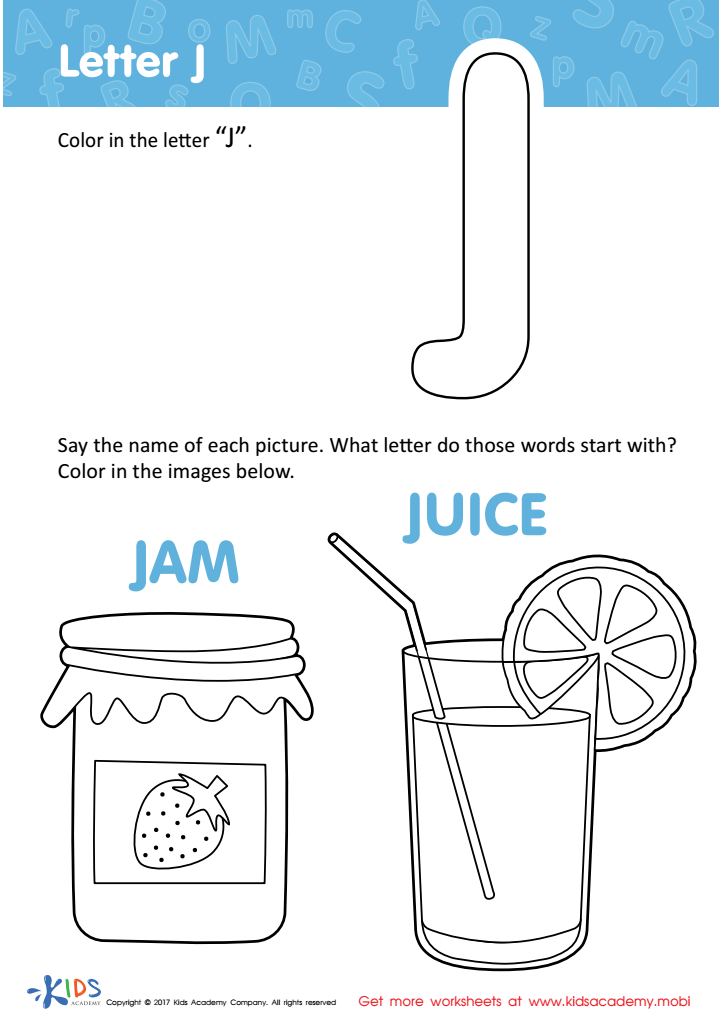
Letter J Coloring Sheet
Practice the letter 'J' with your little one with this fun coloring page! Pictures of jar, juice, jam and jelly make it an enjoyable experience for kids. Learning the letter and coloring is fun for even the youngest learners.
Download (PDF)
 Assign to My Students
Assign to My Students
Letter J Coloring Sheet
Worksheet
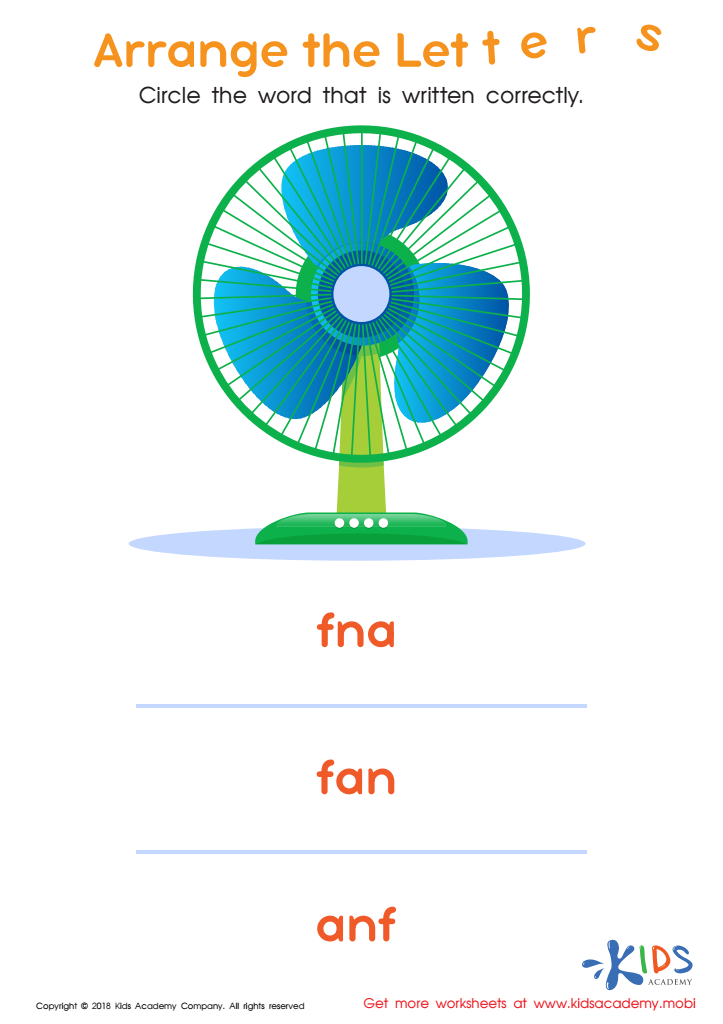
Arrange the Letters Worksheet
Test your kids' spelling skills with this worksheet! Show them the picture and ask what it stands for. Then, have them choose the correct spelling from the options given. Check their answer by circling the right one.
Arrange the Letters Worksheet
Worksheet
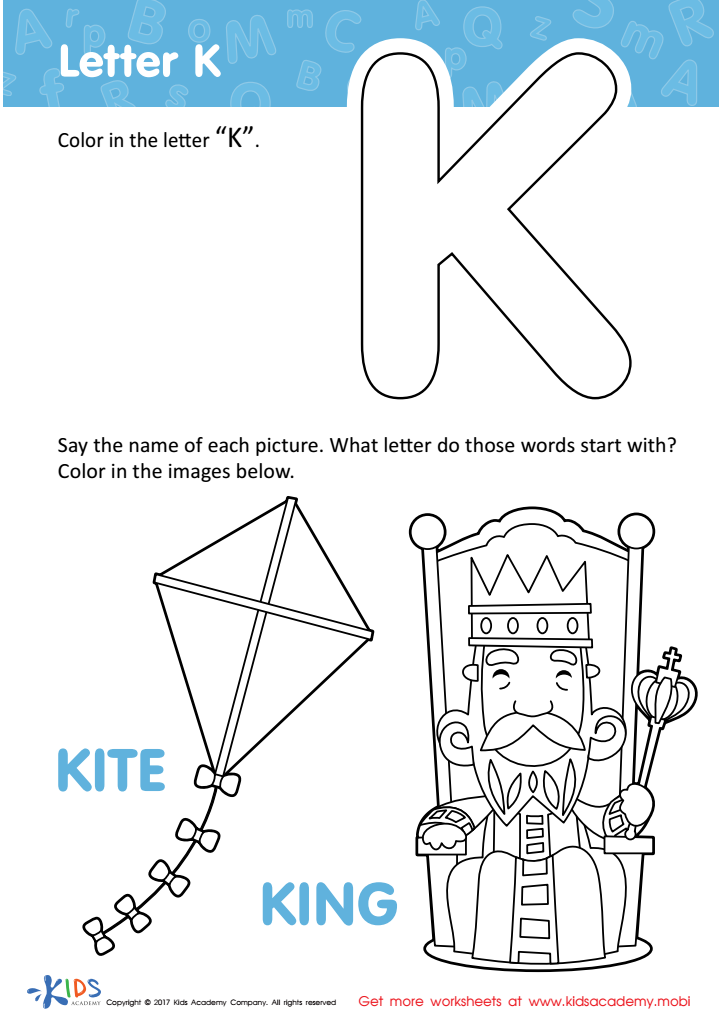
Letter K Coloring Sheet
This letter K coloring page captivates your child's creativity while learning the letter! Showcasing a king and kite, common words for their age group, it's sure to spark their imagination.
Download (PDF)
Assign to My Students
Assign to My Students
Letter K Coloring Sheet
Worksheet
Join Kids Academy for Free
Who is primarily going to use this learning content?








Understanding alphabetical order is crucial for children ages 6-8 as it lays the foundation for various literacy skills and organizational abilities. At this stage, students begin developing their reading and writing skills, making alphabetical order an essential tool for accessing a wider range of readings, such as dictionaries, encyclopedias, and reference materials.
Learning to organize words alphabetically enhances critical thinking skills, enabling children to sort and categorize information effectively. This skill fosters a sense of structure and order, empowering students to find words or topics swiftly—a competence that extends beyond language arts into subjects like science and social studies, where research is often required.
Additionally, recognizing alphabetical order supports vocabulary development. Children become familiar with letters, sounds, and spelling patterns as they practice organizing words, contributing to improved reading fluency.
From a practical standpoint, understanding alphabetical order promotes skills in everyday tasks, such as organizing personal items or interacting with the digital world, where search functionalities frequently rely on alphabetical indexing.
Through nurturing this understanding, parents and teachers can build confident learners who are better equipped for academic success and lifelong learning, ensuring their preparedness for greater challenges ahead.








