Analog clock reading Worksheets for Ages 6-8
4 filtered results
-
From - To
Discover the fun and engaging world of analog clock reading worksheets designed specifically for children ages 6-8! Our interactive worksheets help young learners master the art of telling time with confidence and ease. From identifying clock hands and recognizing hour and minute increments to solving practical time-related problems, these resources cater to various learning styles. With vibrant designs and age-appropriate activities, kids will enjoy exploring time concepts while developing essential math skills. Perfect for classroom use or at-home learning, these worksheets are an excellent way to make learning about time a delightful experience. Dive into the rhythm of time with our engaging materials today!
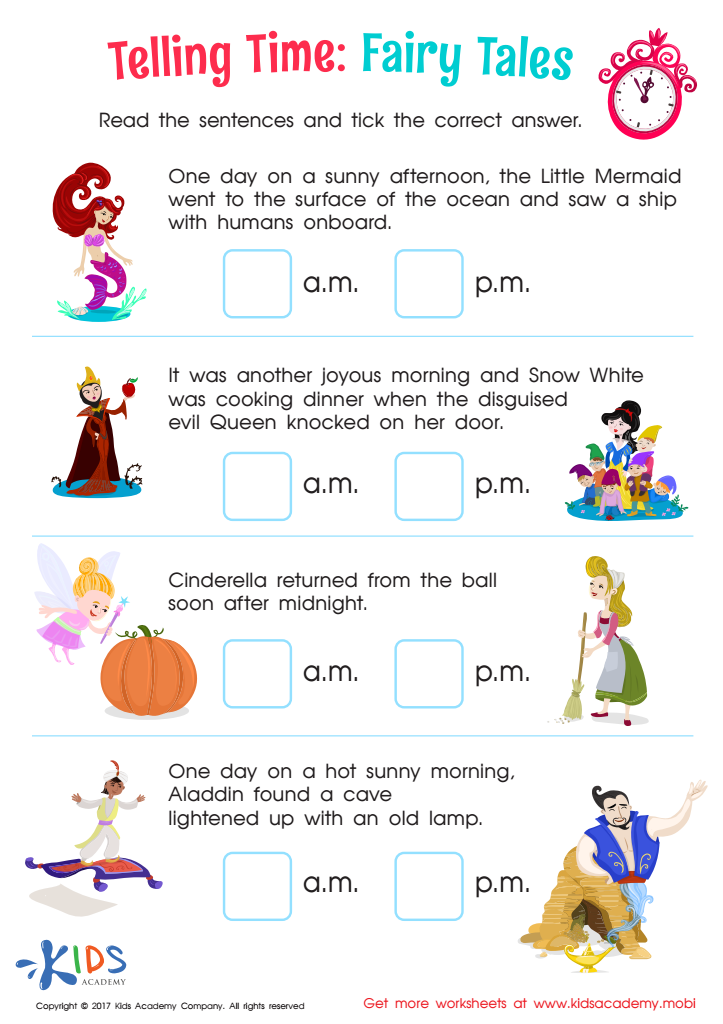
Telling Time: Fairy Tales Worksheet
 Assign to My Students
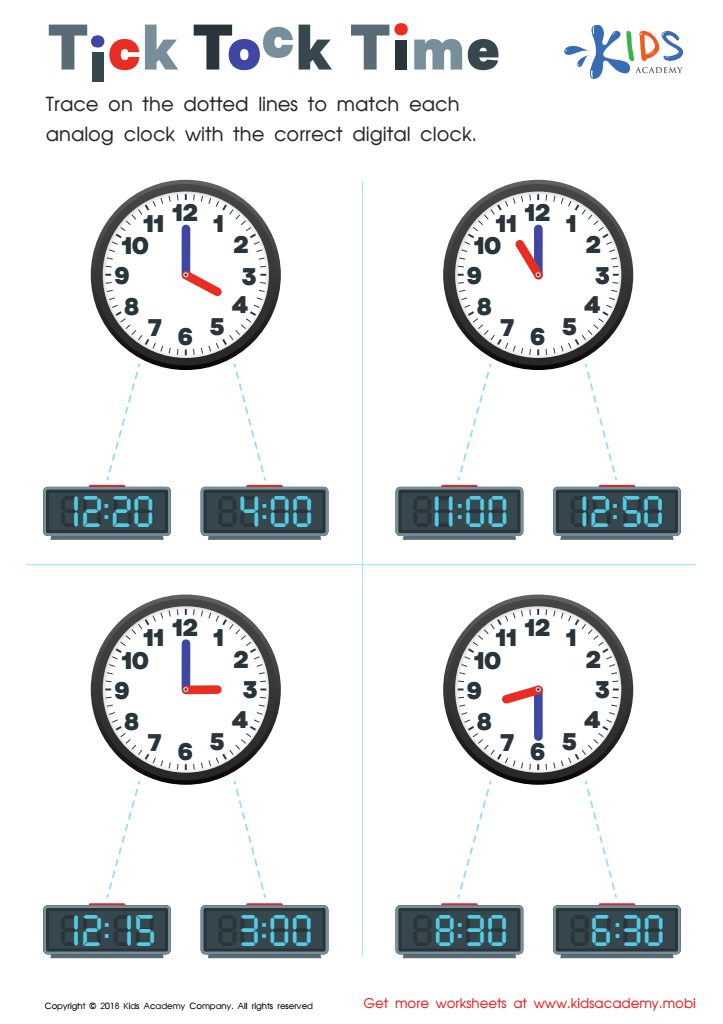
Tick Tock Time Worksheet
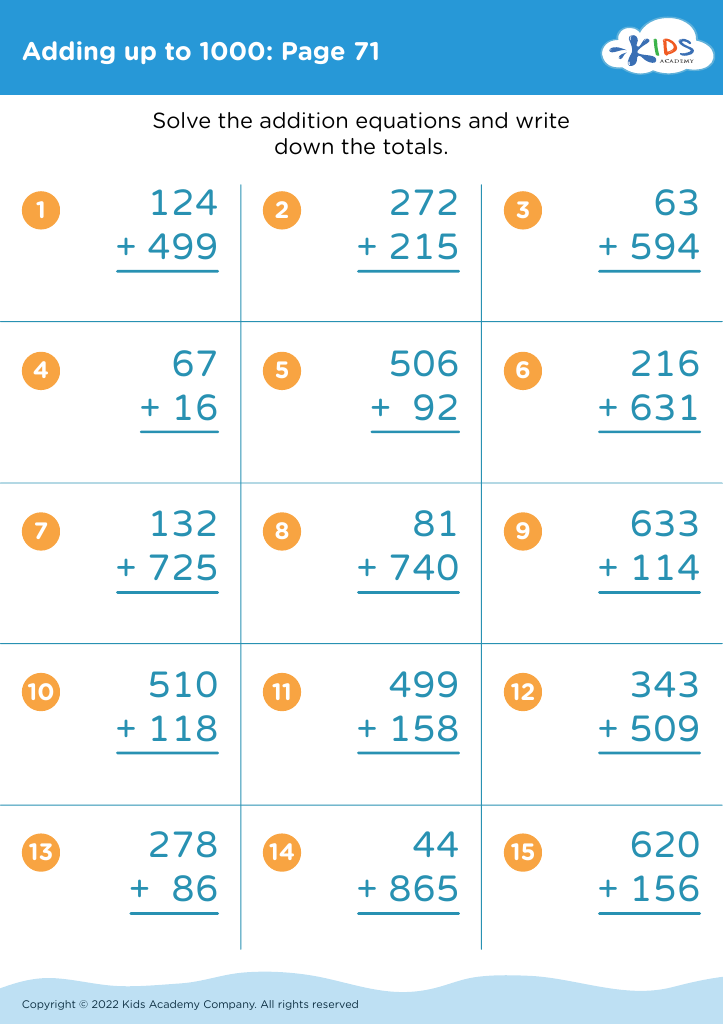
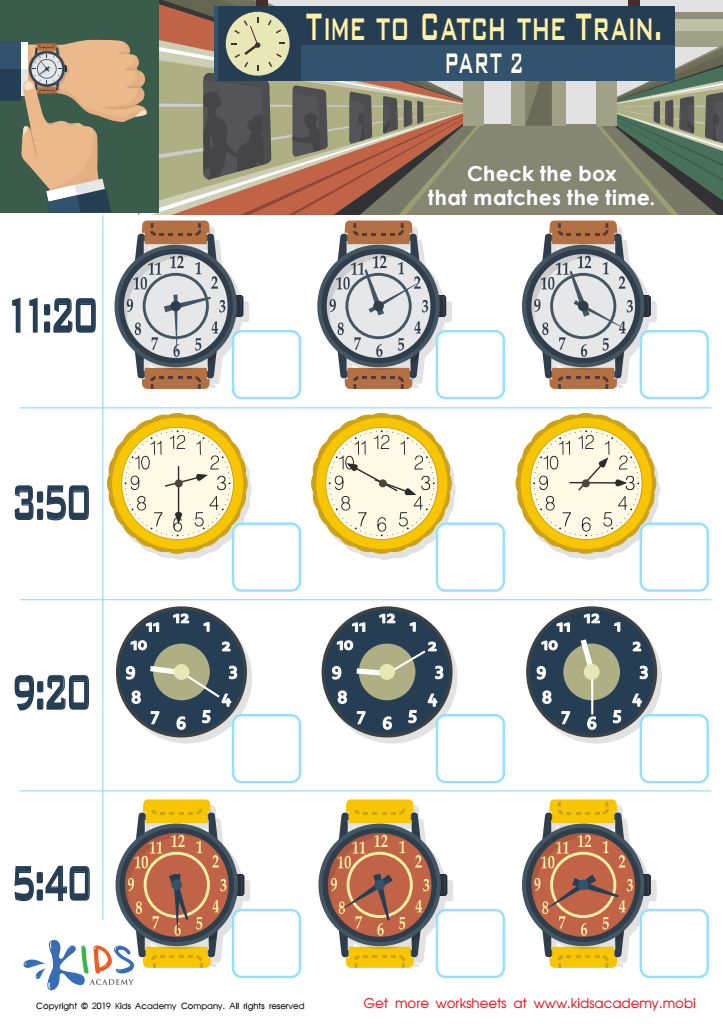
Time to Catch the Train Part 2 Worksheet





.jpg)

Understanding how to read an analog clock is an essential skill for children aged 6-8, and it's crucial that both parents and teachers prioritize this learning. First, analog clocks help develop critical thinking and problem-solving skills, as children must interpret the position of the hands and grasp the concept of time passing. This lays a strong foundation for numeracy skills, reinforcing concepts such as counting by fives and division.
Moreover, learning to tell time on an analog clock in this age group encourages children to develop a sense of independence and responsibility in managing their daily schedules. As they become more adept at telling time, they can better understand routines, such as school timings, meal times, and sleep schedules, fostering self-discipline.
Additionally, analog clocks remain prevalent in many environments, including homes, schools, and various public places. Familiarity with them ensures that children can navigate through different situations confidently. Lastly, this skill can foster a connection between digital and analog concepts, enhancing overall numerical literacy. In conclusion, teaching children how to read an analog clock instills invaluable life skills that prepare them for academic and personal growth.








