
Chess knowledge Worksheets for Ages 6-8
5 filtered results
Difficulty Level
Grade
Age
-
From - To
Subject
Activity
Standards
Explore our "Chess Knowledge Worksheets for Ages 6-8" and introduce young learners to the exciting world of chess! These engaging and interactive worksheets are designed to develop critical thinking, strategy, and problem-solving skills through fun activities. With easy-to-understand instructions, kids will master the moves of each piece, learn chess terminology, and practice game strategies. Perfect for beginners, our worksheets provide both an educational challenge and hours of enjoyment. Boost your child’s cognitive skills and foster a love for this classic game with our tailored resources. Ideal for home or classroom use!
Favorites
With answer key
Interactive
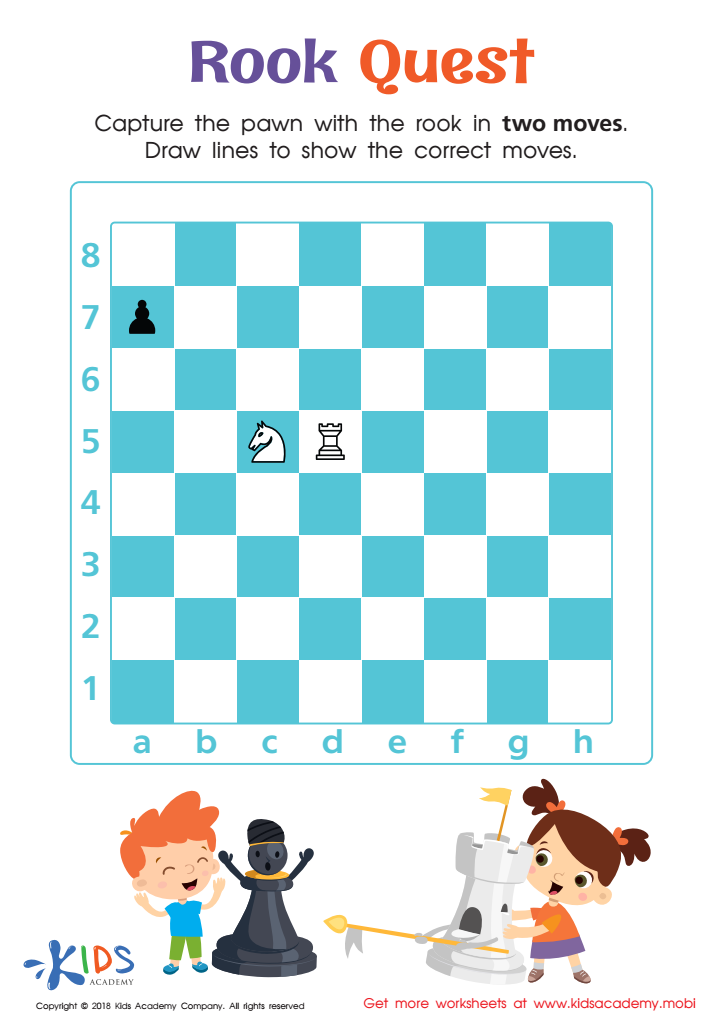
Rook Quest Worksheet
Is your child a chess whiz? Check their progress with this rook quest: get the enemy's pawn piece in just two moves. Have them draw the lines for the moves they'll make. See how quickly they master it!
 Assign to My Students
Rook Quest Worksheet
Worksheet
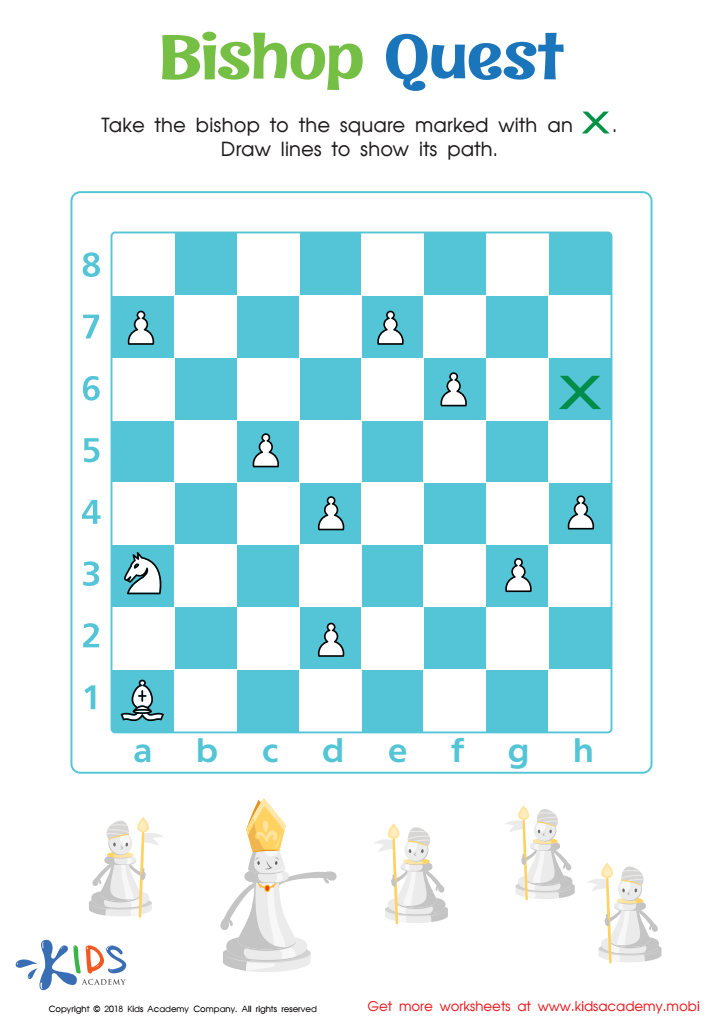
Bishop Quest Worksheet
Show kids the board and ask them to identify the bishop. Then ask them to move it to the square marked 'x', drawing lines to show its path. This worksheet helps teach kids how to move the bishop on a chessboard.
Bishop Quest Worksheet
Worksheet
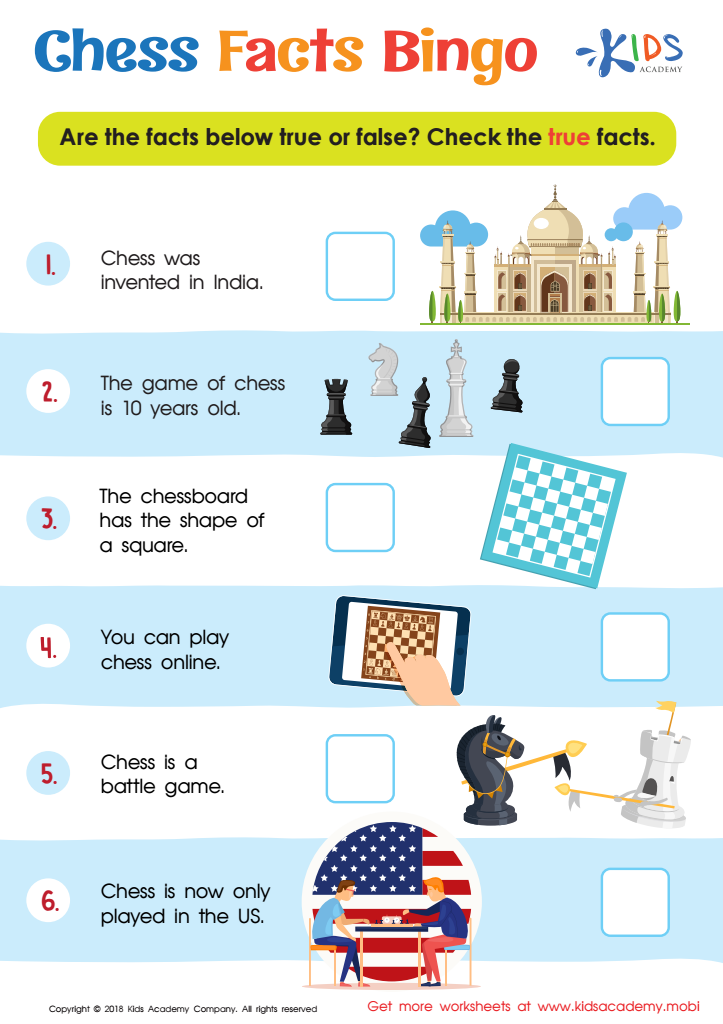
Chess Facts Bingo Worksheet
Help your child assess their knowledge of chess with our simple worksheet. It contains six questions; read them to your child and ask them if the statements are true or false. Once they check the boxes for the true statements, you'll have a better understanding of their understanding of the game.
Chess Facts Bingo Worksheet
Worksheet
Join Kids Academy for Free
Who is primarily going to use this learning content?







Introducing chess to children between the ages of 6 to 8 can have profound benefits on their cognitive and personal development. At this young age, children's brains are highly adaptable and capable of learning complex strategies introduced through chess. Here are a few compelling reasons why parents and teachers should consider making chess a part of early education:
Firstly, chess enhances critical thinking and problem-solving skills. Every move in chess requires kids to think ahead, weigh the consequences, and make strategic decisions. These skills are not just limited to the chessboard but translate into better decision-making abilities in daily life and academic tasks.
Secondly, playing chess boosts concentration and patience. The game demands sustained focus and the ability to monitor an opponent's moves as well as keep long-term strategies in mind. This can improve a child's ability to concentrate on schoolwork and other activities that require sustained attention.
Moreover, chess nurtures creativity and imagination. Children learn to visualize positions and predict future maneuvers, fostering imaginative play and mental creativity. The game also teaches the importance of planning and foreseeing possibilities, giving kids a sense of control and confidence.
Lastly, chess can foster social interaction and sportsmanship. Playing with peers or participating in chess clubs introduces children to cooperative play, taking turns, and handling win/lose situations gracefully, enriching their emotional and social maturity.
Overall, chess is an excellent tool for holistic development, making it a valuable addition to any child's learning repertoire.








