Detail identification Worksheets for Ages 6-8
4 filtered results
-
From - To
Discover our engaging Detail Identification Worksheets designed specifically for ages 6-8! These fun, printable activities enhance children's observational skills and critical thinking. Each worksheet encourages kids to carefully analyze images, recognizing intricate details that promote focus and attention. Aligned with educational standards, these worksheets support early learners in developing essential cognitive abilities, while keeping them entertained through colorful visuals and interactive tasks. Perfect for both home and classroom settings, our Detail Identification Worksheets motivate young learners to explore their surroundings and sharpen their investigative skills. Download today and watch your child's confidence and attention to detail soar!
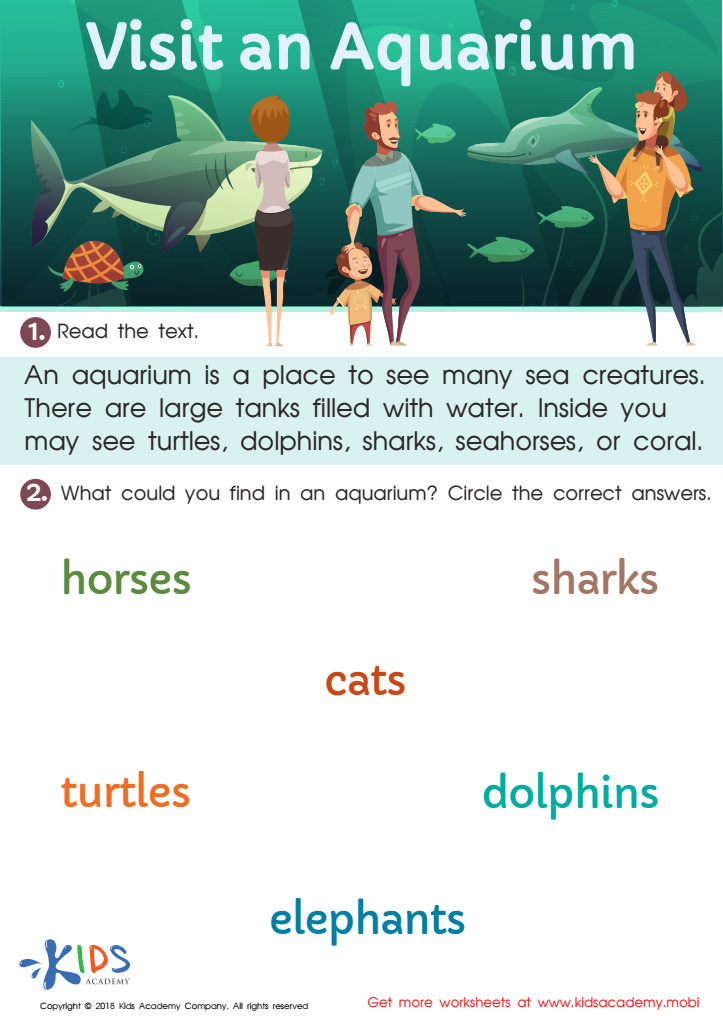
Visit an Aquarium Worksheet
 Assign to My Students
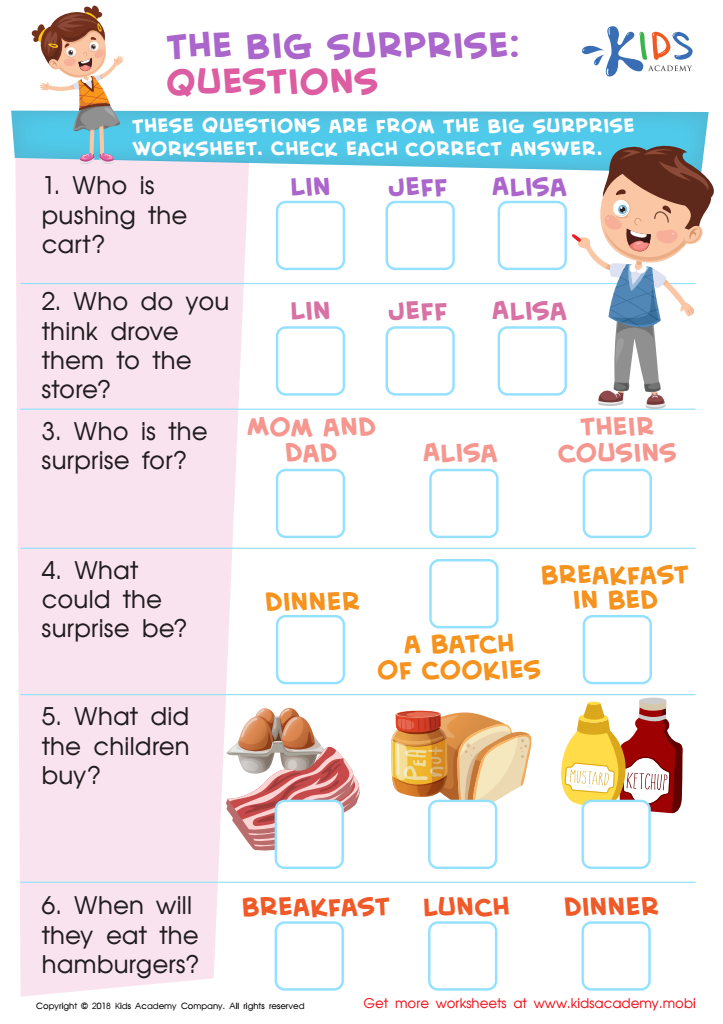
The Big Surprise: Questions Worksheet
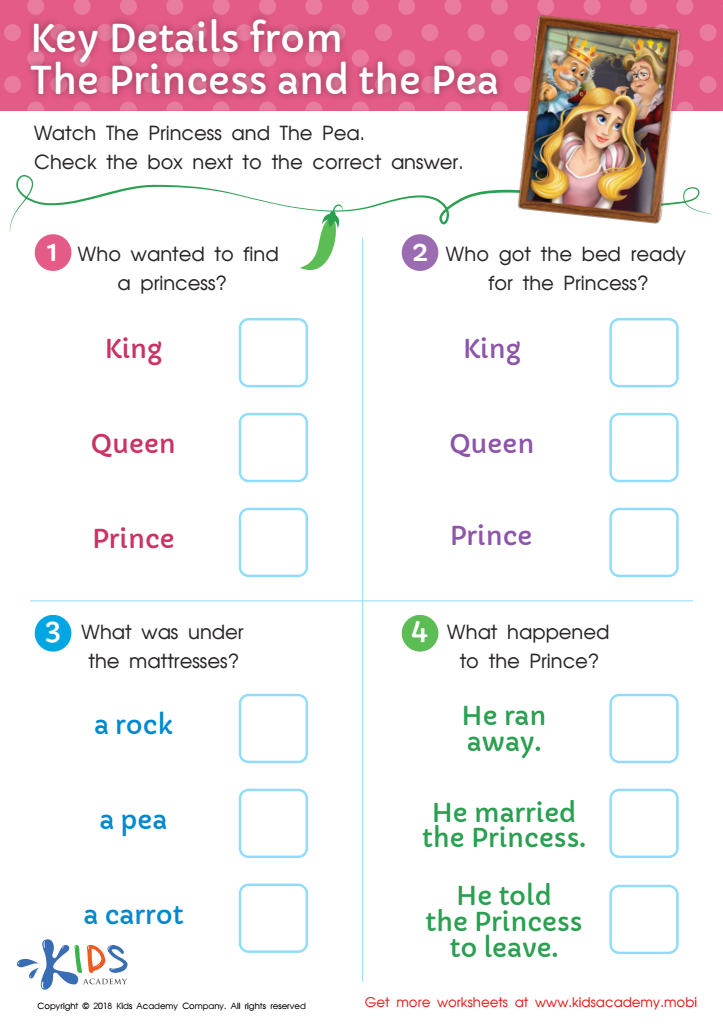
Key Details from the Princess and the Pea Worksheet
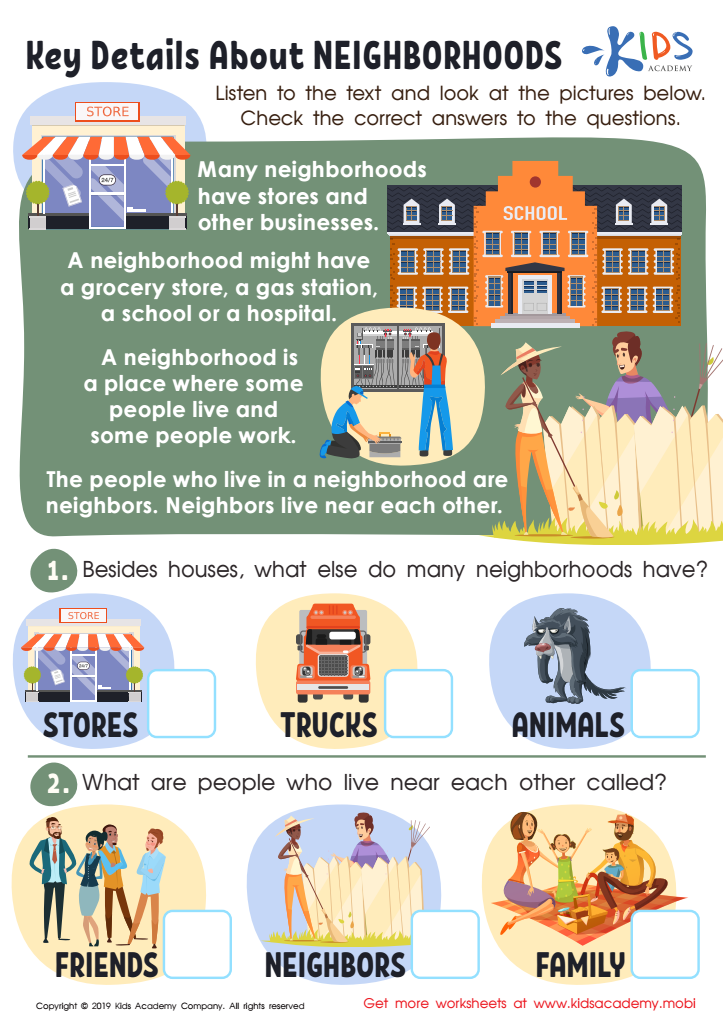
Key Details Neighborhoods Worksheet






.jpg)
Detail identification is a crucial skill for children ages 6-8, as it serves as a foundation for their academic and cognitive development. At this age, children are transitioning into more complex reading and comprehension tasks. By focusing on details, they learn to extract and understand key information from texts, allowing them to connect dots between ideas and analyze content critically.
For parents and teachers, nurturing this skill can significantly impact a child's ability to succeed in school. Mastering detail identification enhances reading comprehension, helping students grasp main ideas and infer meanings from context. It also sharpens their observational skills, enabling them to notice significant elements during lessons or while engaging with educational materials.
Moreover, this skill fosters curiosity and promotes a habit of inquiry, encouraging children to ask questions and think deeply about what they learn. Integrating detail identification activities into daily routines can make learning more engaging and enjoyable, supportive for both academic growth and personal development.
Parents and teachers play an essential role in this process, as guided practices in identifying details can empower young learners to become more confident and proficient in their studies, setting the stage for lifelong learning and critical thinking.








