Explore our "Enhance Critical Thinking Worksheets" for kids ages 6-8, designed to foster analytical skills and problem-solving abilities! These engaging worksheets challenge young minds with puzzles, riddles, and scenarios that encourage creative thinking and logical reasoning. Tailored to boost developmental skills, our activities promote critical analysis, decision-making, and pattern recognition, essential for cognitive growth. Perfect for home or classroom use, these worksheets are an enjoyable way to keep children intellectually stimulated while sharpening their critical thinking prowess. Unlock your child's potential and encourage a love for learning with our thoughtfully crafted resources that make skill-building fun!

Check out this FREE "Enhance critical thinking" Trial Lesson for age 6-8!

Goods and Services

Favorites
With answer key
Interactive
  • 6-8
  • Enhance critical thinking
Goods and Services: Matching Worksheet

Goods and Services: Matching Worksheet

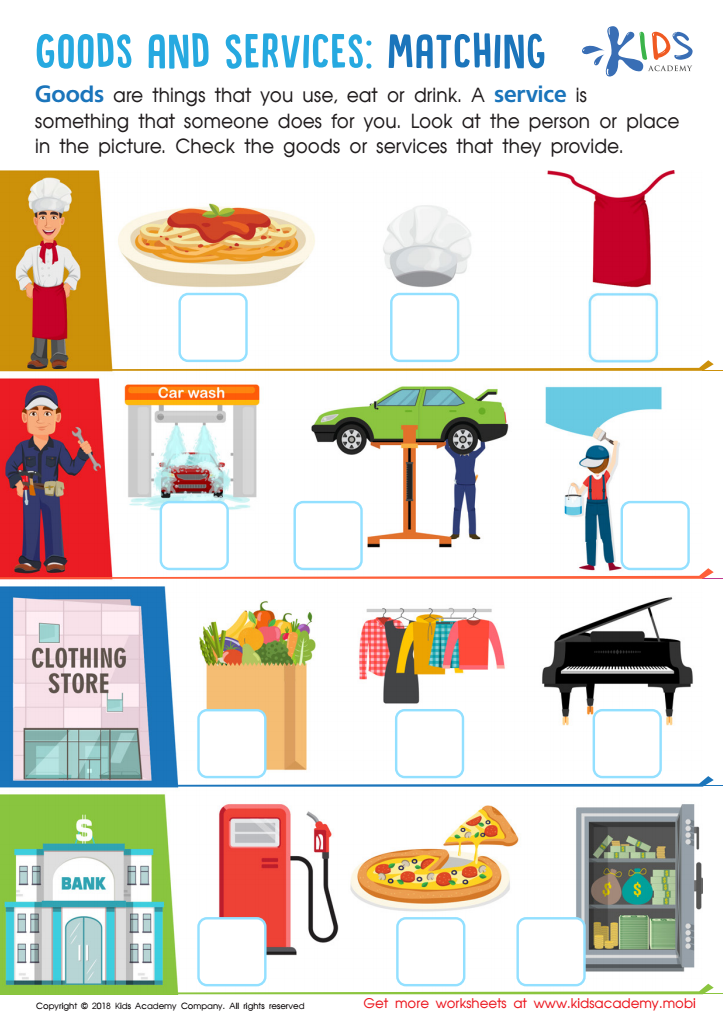
Goods are things that you use, eat or drink. Ask your kids to give examples of goods and services. Challenge them to identify the people and places in the worksheet, and check the goods or services they provide from the options on the right side.
Goods and Services: Matching Worksheet
Worksheet
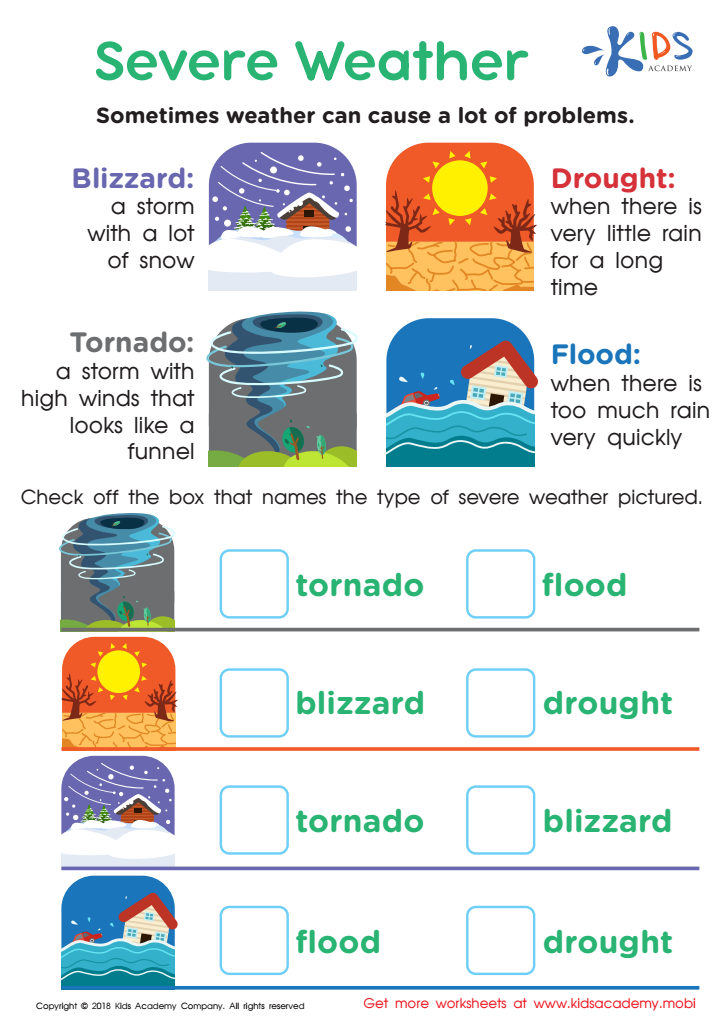
Severe Weather Worksheet

Severe Weather Worksheet

Weather can be dangerous, so teach your kids to stay safe with this interactive weather worksheet. Review the descriptions of tornadoes, blizzards, floods, and drought and match them with the colorful pictures. Tick the boxes to correctly identify each image and complete the sheet.
Severe Weather Worksheet
Worksheet
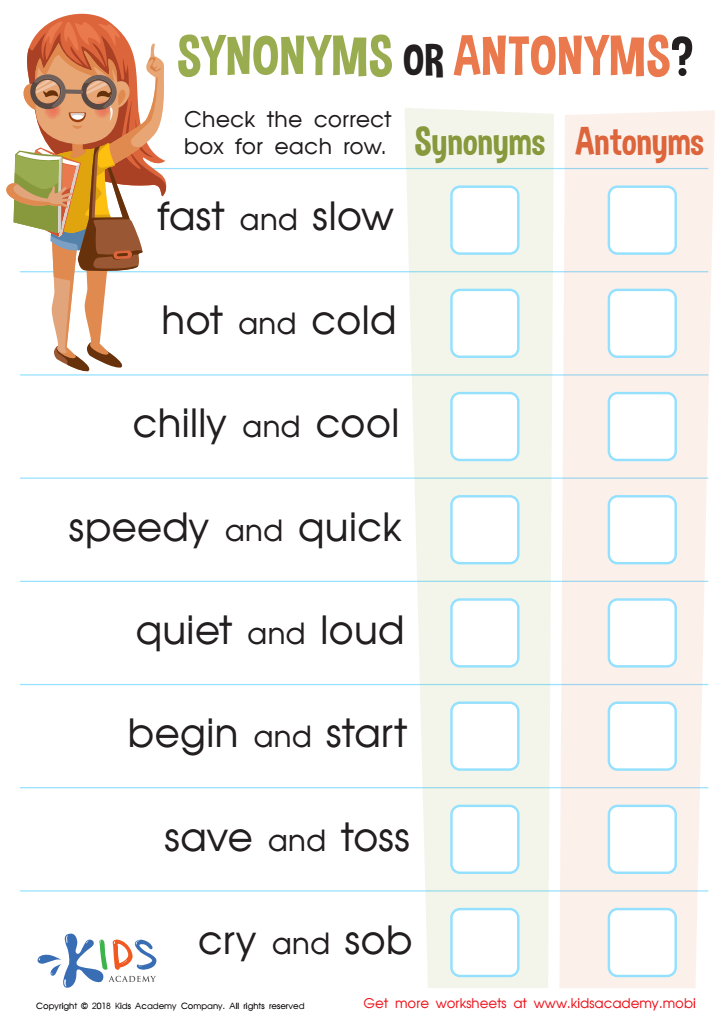
Synonyms or Antonyms: Assessment Worksheet
Synonyms or Antonyms: Assessment Worksheet
Test your child's knowledge with this fun worksheet! Ask them to read the words and select if they are synonyms or antonyms - e.g. 'happy' is a synonym and 'bad' is an antonym. For an extra challenge, ask them to provide two synonyms and two antonyms for each word.
Synonyms or Antonyms: Assessment Worksheet
Worksheet
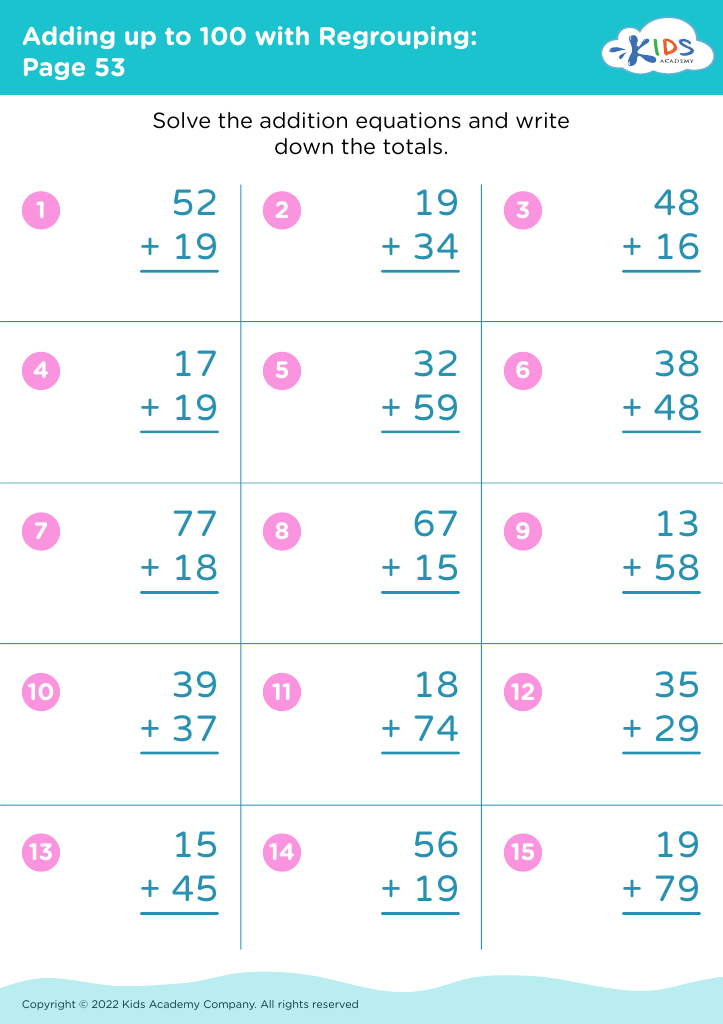
Adding up to 100 with Regrouping: Page 53
Worksheet
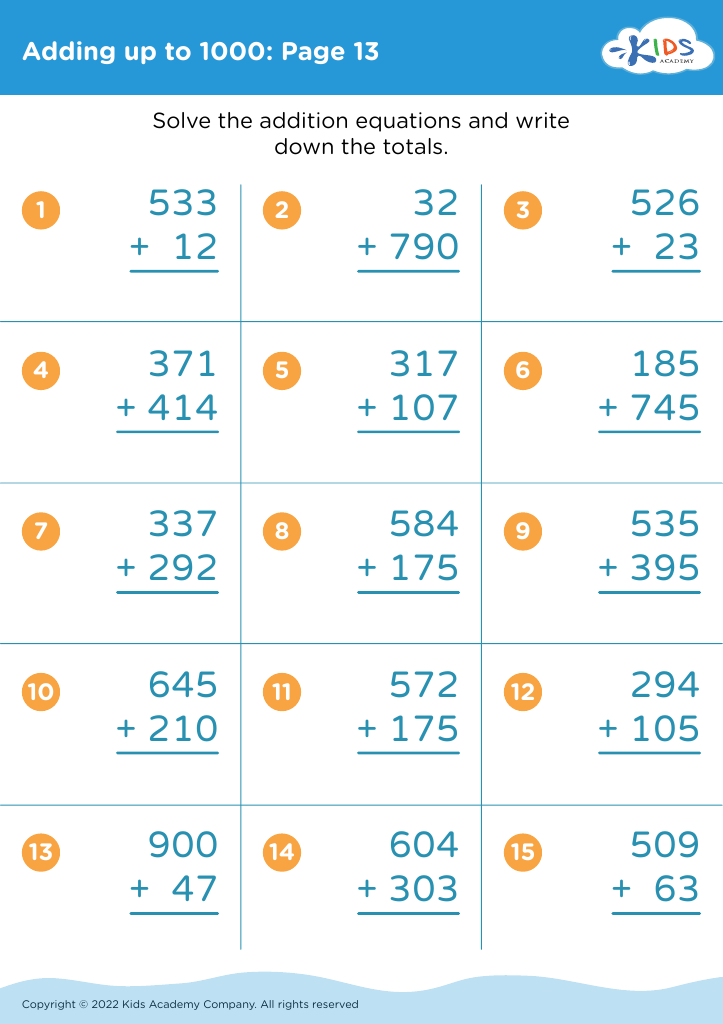
Adding up to 1000: Page 13

Adding up to 1000: Page 13

Adding up to 1000: Page 13
Worksheet
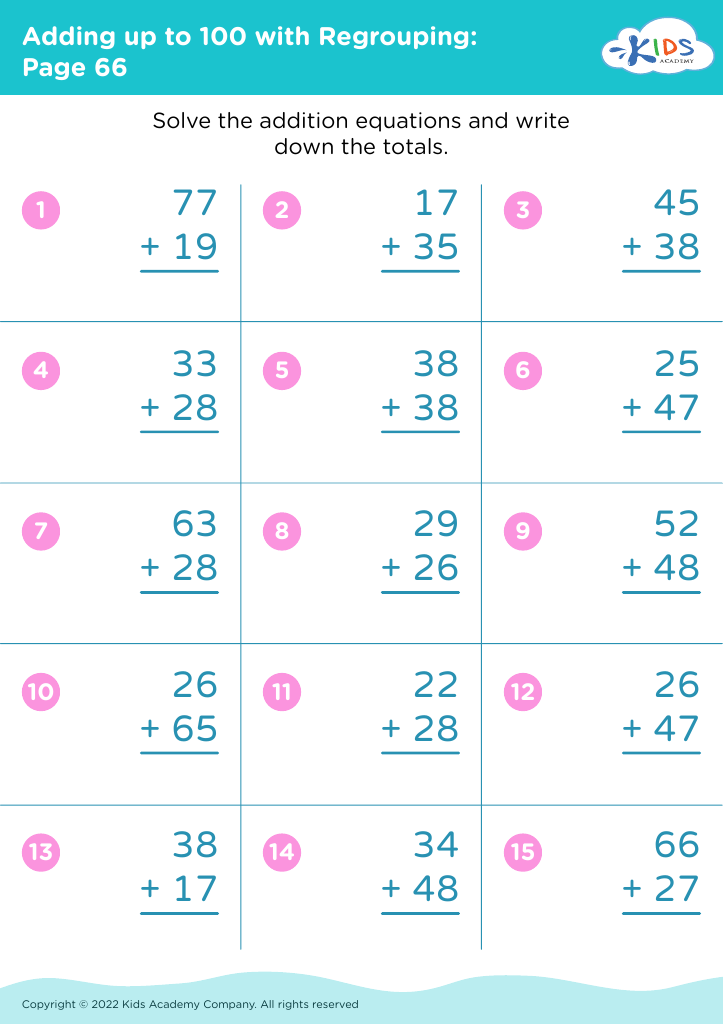
Adding up to 100 with Regrouping: Page 66
Worksheet
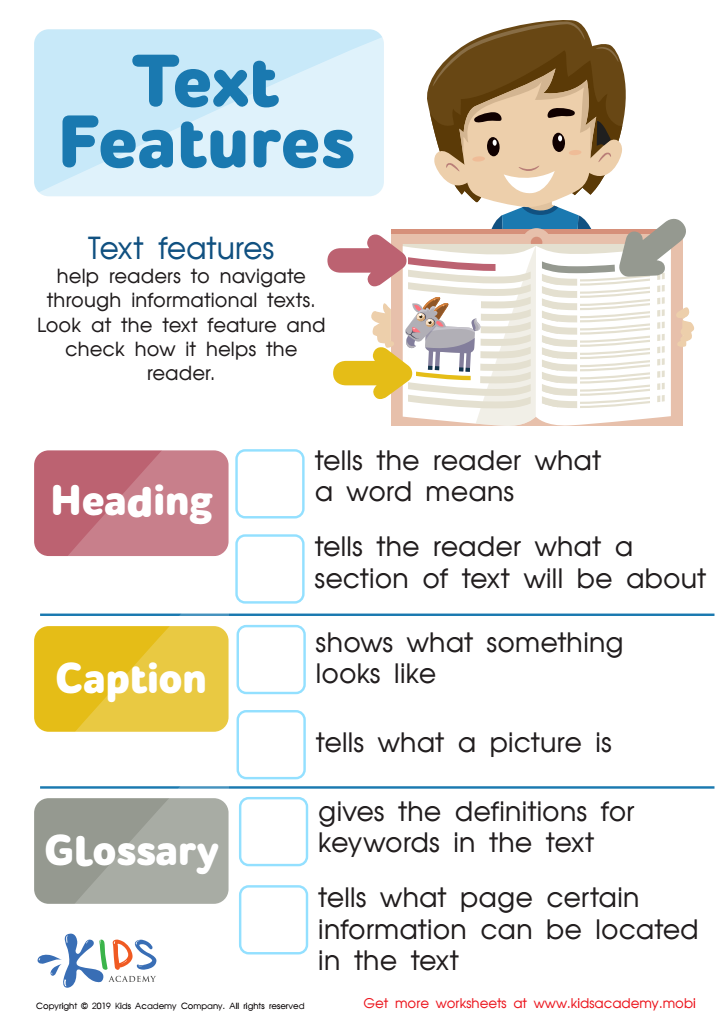
Text Features Worksheet

Text Features Worksheet

Help your kids get better at processing and analyzing texts by getting them to practice. Our worksheet with text features will help them find their way. This will help them understand how the features assist in finding information. Encourage practice, and they'll be able to improve quickly.
Text Features Worksheet
Worksheet
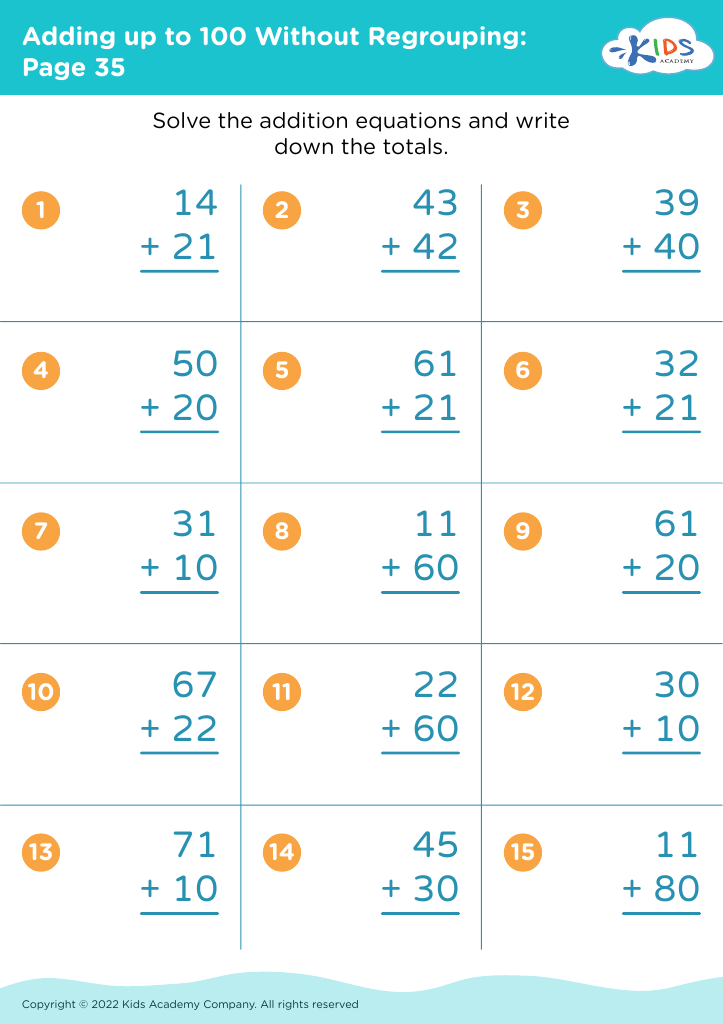
Adding up to 100 Without Regrouping: Page 35
Worksheet
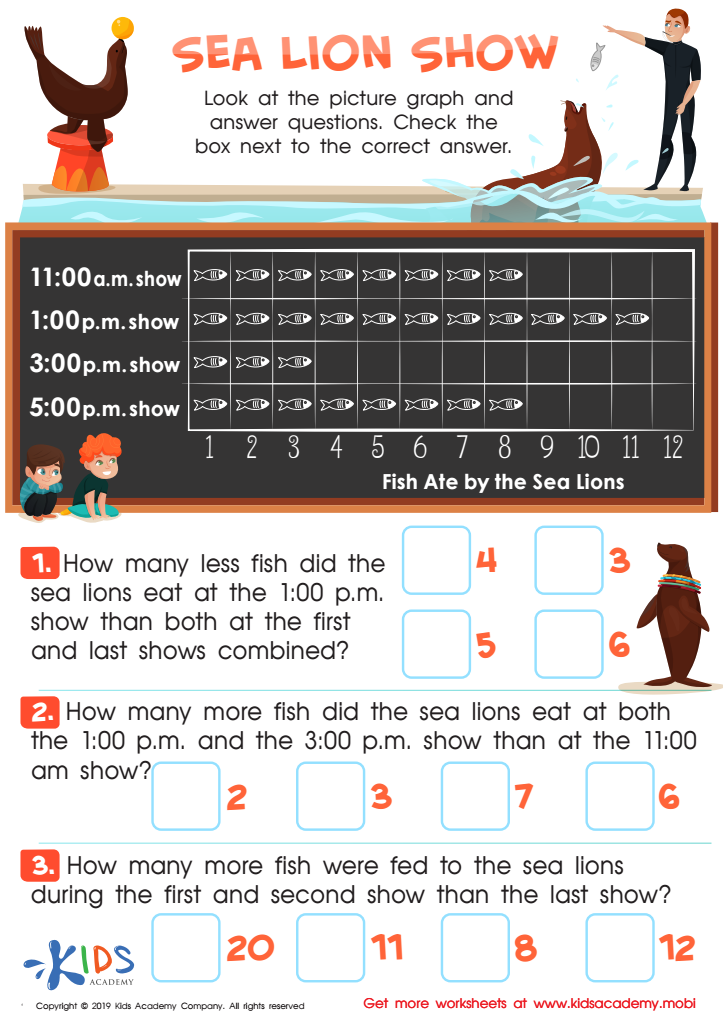
Sea Lion Show Worksheet


Sea Lion Show Worksheet

Help your kids understand and enjoy bar graphs better with this worksheet. Read and follow the simple instructions with your kids, and guide them through some exercises which will help them practice. As they learn maths in school, each day brings a new topic which might prove more difficult than the last. This worksheet will give your kids the best learning experience.
Sea Lion Show Worksheet
Worksheet
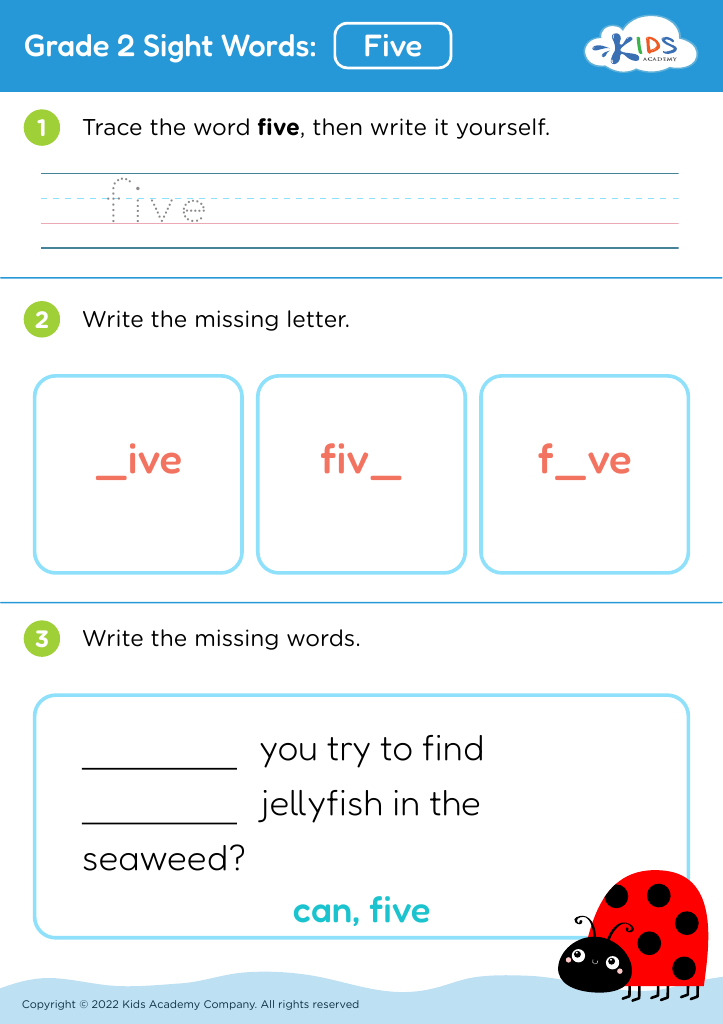
Grade 2 Sight Words: Five

Grade 2 Sight Words: Five

Grade 2 Sight Words: Five
Worksheet


Enhancing critical thinking skills in children aged 6-8 is crucial for their overall development and future success. During these formative years, children are naturally curious, eager to explore the world around them, and forming essential cognitive abilities. Teaching critical thinking nurtures their ability to analyze information, ask meaningful questions, and make reasoned decisions.

Parents and teachers should care about this developmental aspect because it lays the groundwork for lifelong learning. Children who engage in critical thinking become adept problem solvers, capable of navigating complex challenges both academically and personally. This skill empowers them to evaluate situations empathetically and weigh various perspectives, fostering not only academic excellence but also social skills and emotional intelligence.

Moreover, in an age dominated by misinformation, instilling critical thinking allows children to sift through vast amounts of information critically and to discern reliable sources from unreliable ones. Implementing activities that promote critical thinking—such as open-ended questions, collaborative projects, and creative tasks—ensures that children are not just passive consumers of information but active, engaged learners. Ultimately, fostering critical thinking today builds resilient, analytical, and thoughtful individuals capable of contributing positively to society in the future.