
Enhance Vocabulary Worksheets for Ages 6-8
5 filtered results
Difficulty Level
Grade
Age
-
From - To
Subject
Activity
Standards
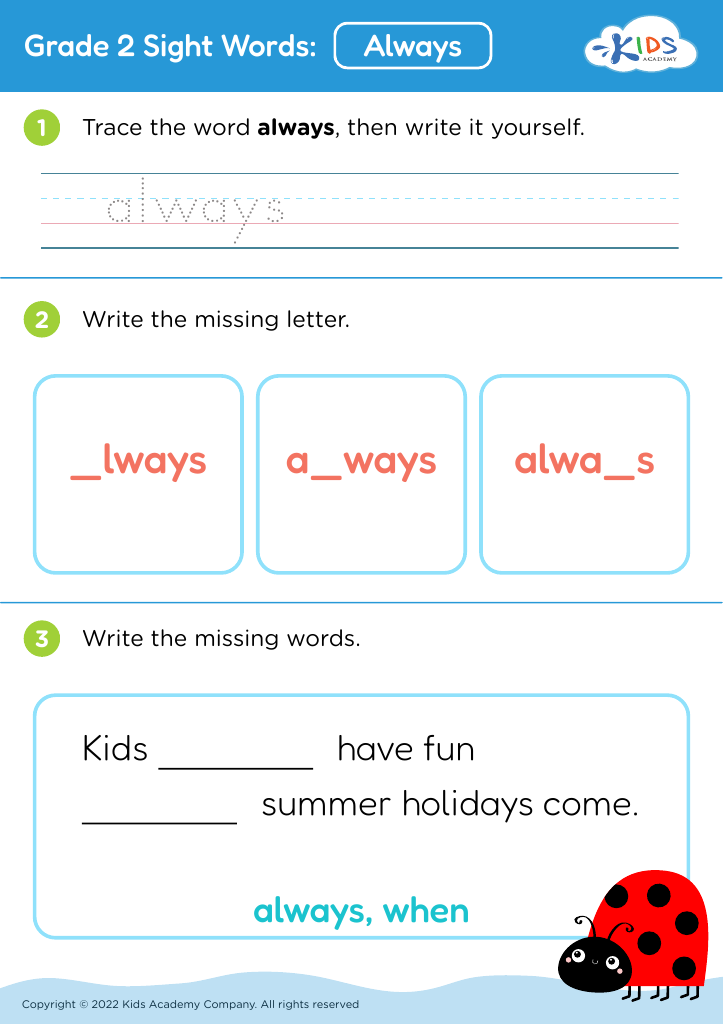
Unlock your child's language potential with our engaging "Enhance Vocabulary Worksheets for Ages 6-8". Specially designed by education experts, these worksheets inspire young learners to explore new words, understand meanings, and develop strong reading skills. Through fun and interactive activities, kids will learn synonyms, antonyms, and context clues to enhance their vocabulary in an enjoyable way. Perfect for both classroom use and home learning, our printable worksheets help build a solid foundation in language arts. Start boosting your child's vocabulary today with Kids Academy's expertly crafted resources and watch them excel in their reading journey!
Favorites
With answer key
Interactive
Join Kids Academy for Free
Who is primarily going to use this learning content?








Building a robust vocabulary for children aged 6-8 is paramount for their overall academic and social development. This formative period is ripe for vocabulary expansion, as children transition from learning to read to reading to learn. A strong vocabulary helps them better understand instructional content across all subjects, from science to social studies, underpinning their capacity to grasp complex concepts.
Moreover, a rich vocabulary positively impacts their reading comprehension skills. When children recognize and understand words, they can follow and engage in stories or informational texts more effectively, boosting their confidence and motivation to read. Enhanced vocabulary also facilitates clearer, more effective communication. When children can express their thoughts, needs, and questions precisely, it strengthens their social interactions and reduces frustration associated with miscommunication.
For parents and teachers, focusing on vocabulary growth lets them support a child’s cognitive development by introducing diverse words through conversations, reading, and intentional vocabulary exercises. Activities like reading aloud, playing word games, and immersive storytelling offer enjoyable yet educational experiences. Prioritizing vocabulary in these ways lays a solid foundation for future learning, ensuring that children are well-equipped to navigate more complex academic challenges ahead while becoming articulate and confident communicators.








