
Improve problem-solving skills Worksheets for Ages 6-8
8 filtered results
Difficulty Level
Grade
Age
-
From - To
Subject
Activity
Standards
Discover our engaging and age-appropriate "Improve Problem-Solving Skills Worksheets for Ages 6-8" at Kids Academy. These printable worksheets are designed to enhance critical thinking and analytical abilities in young learners. Each activity focuses on nurturing your child's ability to tackle challenges, think logically, and find creative solutions. Our carefully curated exercises make learning enjoyable and effective, covering a variety of problem-solving scenarios that boost confidence and academic success. Ideal for at-home practice or classroom enrichment, these worksheets build a strong foundation for lifelong learning. Start today and watch your child's problem-solving skills flourish!
Favorites
With answer key
Interactive
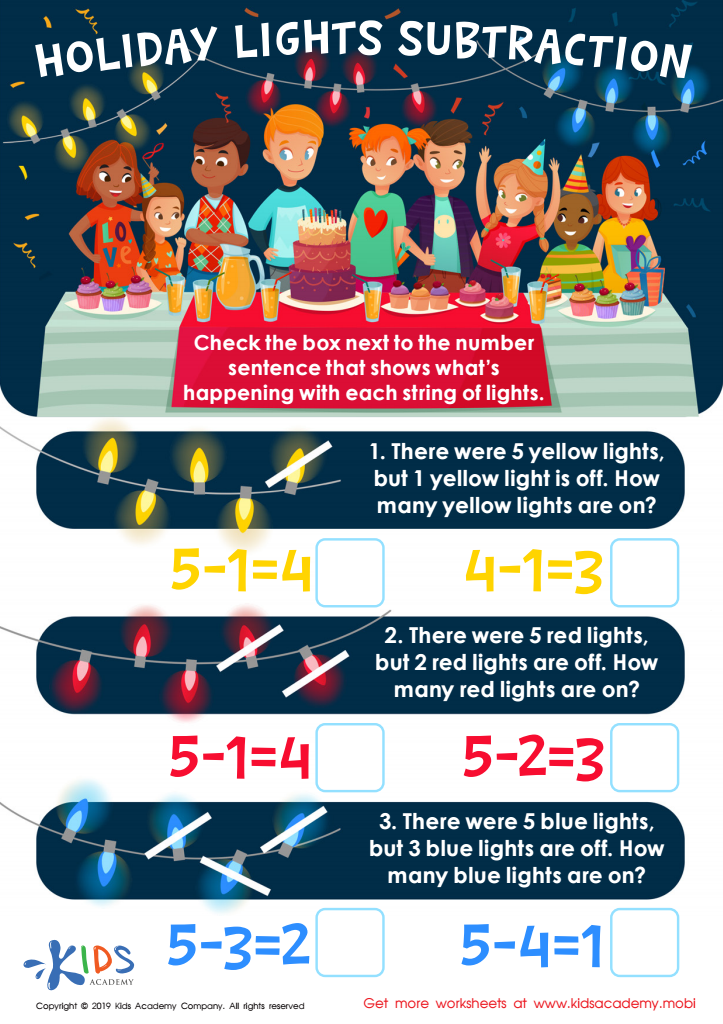
Holiday Lights Subtraction Worksheet
Before tackling the math problem, get your kids ready by asking them to share their favorite holiday and why. Then, look at the picture on the worksheet with them. Help them examine the numbers and problems, and select the number sentence that shows what's happening with each string of light. 80 words.
 Assign to My Students
Holiday Lights Subtraction Worksheet
Worksheet
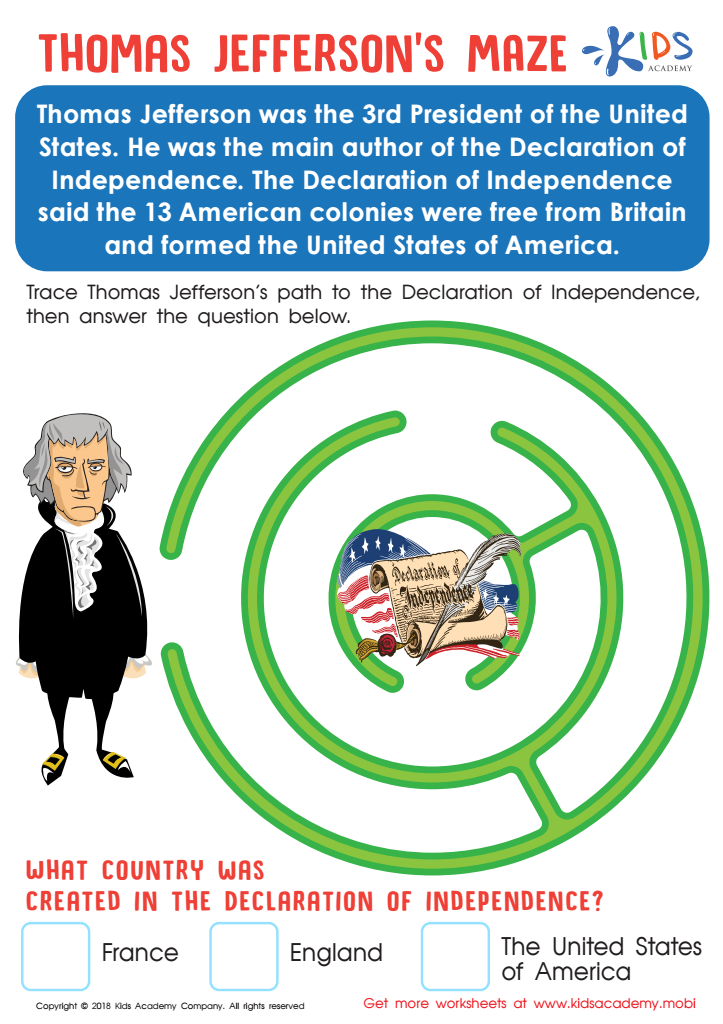
Thomas Jefferson's Maze Worksheet
Do your students know who Thomas Jefferson was? He was the 3rd US president and wrote the Declaration of Independence, setting the 13 Original Colonies free from British rule. This momentous act shaped American history and helped build the nation we know today.
Thomas Jefferson's Maze Worksheet
Worksheet
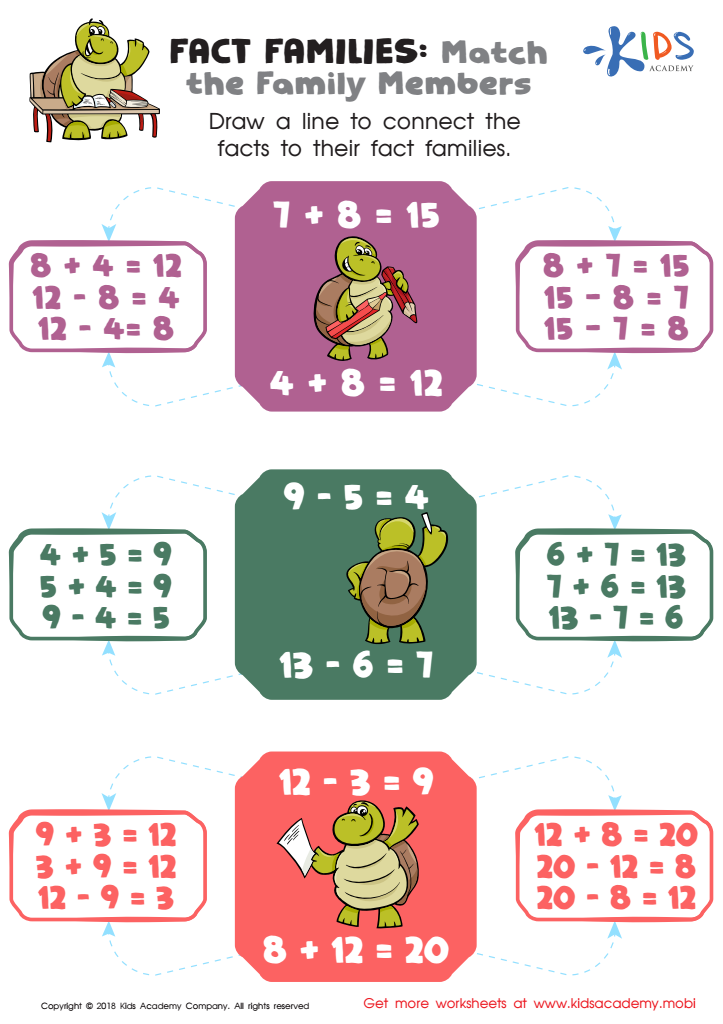
Fact Families: Match Family Members Worksheet
Give your kids a hand at solving this math pdf! Have them figure out the missing numbers and then draw lines to connect the correct fact families. This worksheet will help your students practice addition skills while aiding the turtle in the picture. Let's get those brains working!
Fact Families: Match Family Members Worksheet
Worksheet

Developing Solution Worksheet
Facing a challenge? Boost your child's problem-solving skills with this science worksheet from Kids Academy! Kerry is eating an ice cream cone and it's melting too fast. Read through the suggested solutions and help your child pick the best one! With this activity, your child will understand the cause of the problem and learn to act accordingly.
Developing Solution Worksheet
Worksheet
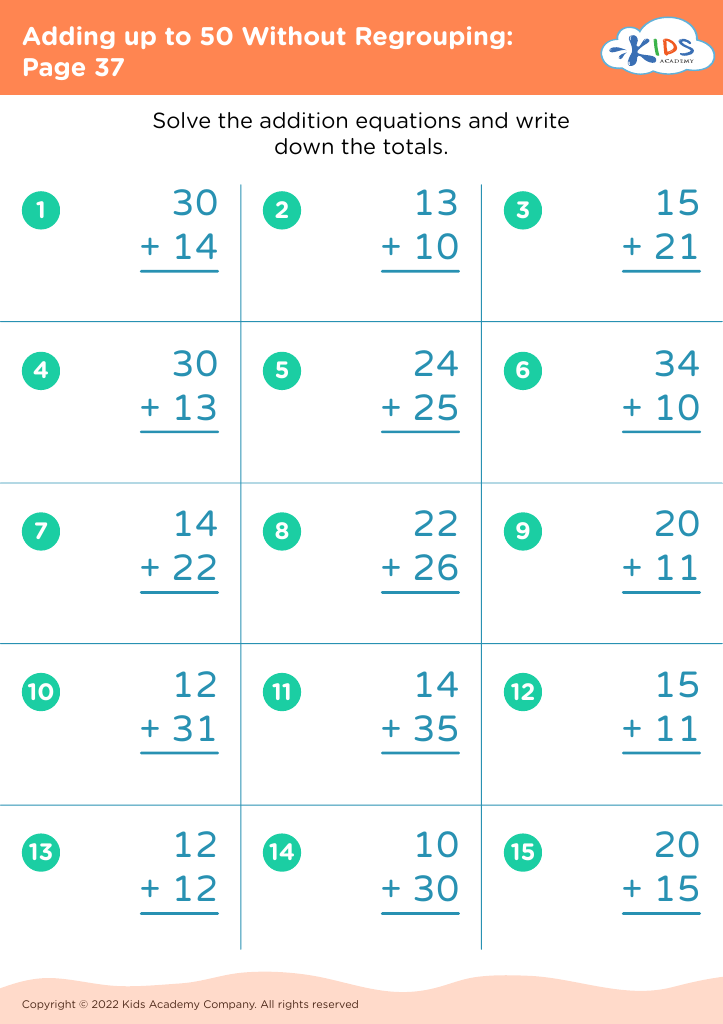
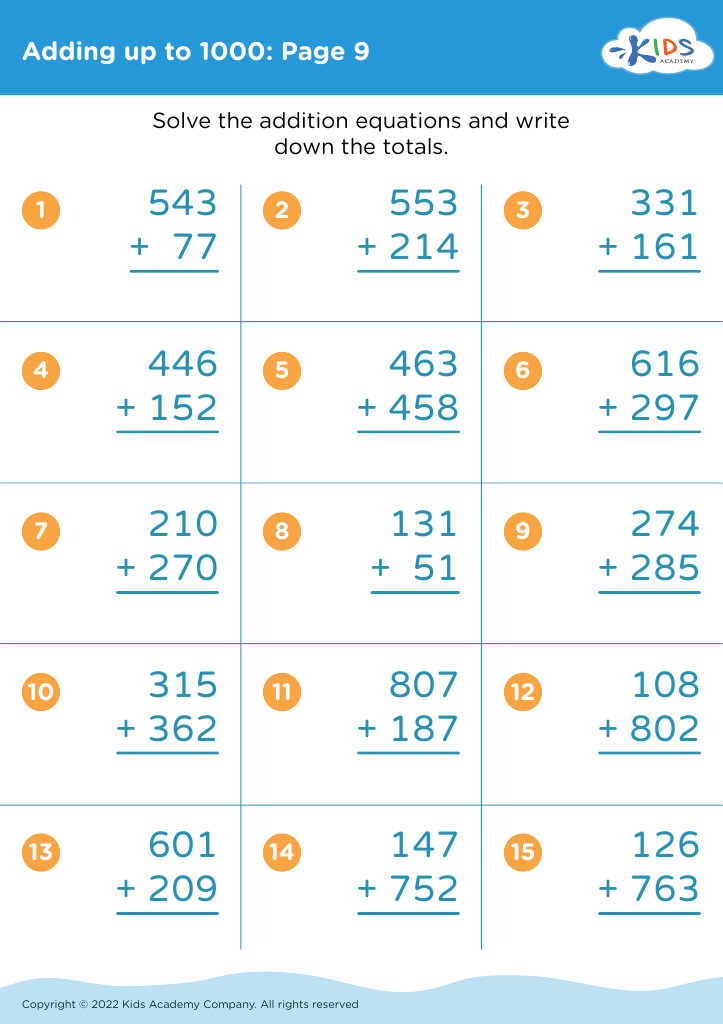
Join Kids Academy for Free
Who is primarily going to use this learning content?







Parents and teachers should prioritize improving problem-solving skills in children aged 6-8 because these foundational abilities are crucial for their cognitive, social, and emotional development. At this formative stage, children are naturally curious and beginning to engage with the world more independently. Sharpening problem-solving skills enhances critical thinking, allowing children to analyze situations, anticipate outcomes, and devise effective strategies to address challenges both in academic settings and daily life.
Academically, problem-solving is core to subjects like math and science, where understanding concepts and applying them to solve problems fosters deeper learning and encourages a genuine enthusiasm for education. Socially, effective problem-solving skills are instrumental in navigating interactions with peers, promoting healthier relationships and reducing conflicts. Children develop empathy and learn to see situations from different perspectives, which is crucial for collaborative activities and teamwork.
Emotionally, learning to solve problems contributes to building resilience and confidence. Children begin to understand that challenges are not blocks but opportunities for growth. This mindset empowers them, reduces feelings of frustration and helplessness, and fosters a positive attitude towards overcoming obstacles.
Investing time in nurturing these skills during these early years yields lifelong benefits, making children more competent, independent, and adaptive learners and individuals.








